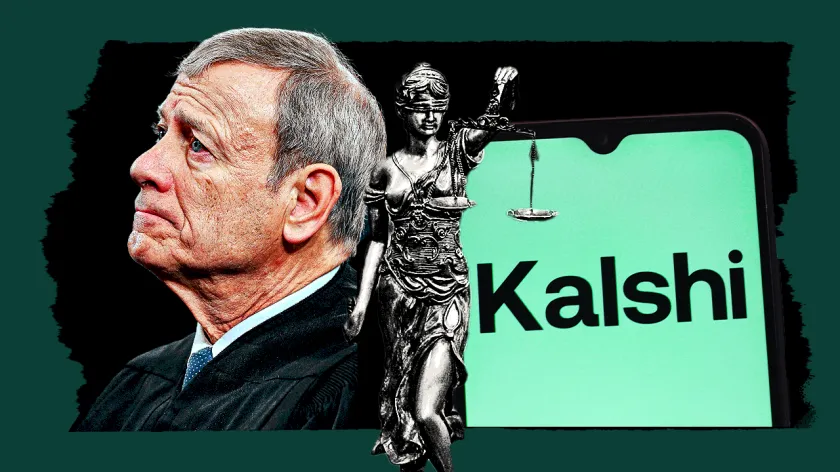
What went wrong between Kalshi and Nevada?
Kalshi is having a legal war with Nevada, unsurprisingly. On the one hand, you have the traditional Las Vegas casinos celebrating their long-standing monopoly on sports betting as the lifeblood of the state, funding its residents and public infrastructure. On the other hand, you have a new entrant riding the halo of being a federally regulated "financial product." The tension was never hard to spot, and it was always going to end up in court.
The US, founded on federalism, is no stranger to the question of state versus federal authority. And on this particular question: "who should win?" , this piece might just be your reference if you ever consider investing in an event contract on this topic.
If you don't know yet what is prediction market
Kalshi's position: federal jurisdiction, full stop
Kalshi argues that the federal agency, not the state, should have exclusive jurisdiction over prediction markets. Through its years-long legal uphill battle, Kalshi has established that its core product, the event contract, carries legal status as a "derivative," placing it squarely under the CFTC's (Commodity Futures Trading Commission) jurisdiction over "all trading accounts, agreements, contracts, and transactions" under the CEA (Commodity Exchange Act).
Kalshi further argues that event contracts, with real economic utility such as risk hedging and price discovery, structurally qualify for the "bona fide business" exception to the statutory definition of gambling.
This view that event contracts are fundamentally different from traditional gambling, which is merely speculative, has been publicly backed by the current CFTC acting chairman Michael Selig. Pointed out by Selig in his X post in March 2026, Arizona's Attorney General's criminal charge against the prediction market exchange should be qualified as a 'jurisdictional dispute' rather than a 'criminal charge' against operation of illegal gambling, further confirming the underlying jurisdictional tension.
Nevada's counter: silence isn't preemption
Nevada, however, argues that the CEA's text and history simply do not reach state gambling law, and that shifts the burden onto Kalshi to prove Congress clearly intended to displace it. Nevada's deeper argument is that neither field preemption nor conflict preemption is established here: the CEA was enacted to address price manipulation in commodity markets, not to federalize state gambling regulation, and Congress never contemplated displacing state gaming authority at all.
The state leans on Wyeth v. Levine (2009): when Congress has not clearly stated its intent to preempt an area of historic state police power, courts must presume that power survives. Gambling regulation sits squarely in that category. Mere silence on the field of prediction markets, according to Nevada, is not field preemption, rather it is just silence.
So who would actually win?
The case currently sits at the state court level. The Ninth Circuit denied Kalshi's emergency motion to block Nevada from enforcing its gaming regulations, and a Nevada state court judge then granted a temporary restraining order blocking Kalshi from operating in the state, with both hearings scheduled in April.
Will the case eventually arrive at the Supreme Court? Professionals have predicted most likely yes, may or may not because of Kalshi, the need for this jurisdictional question to be resolved lingers. Assume that it did, and how the nine sitting justices might split becomes worth an analysis.
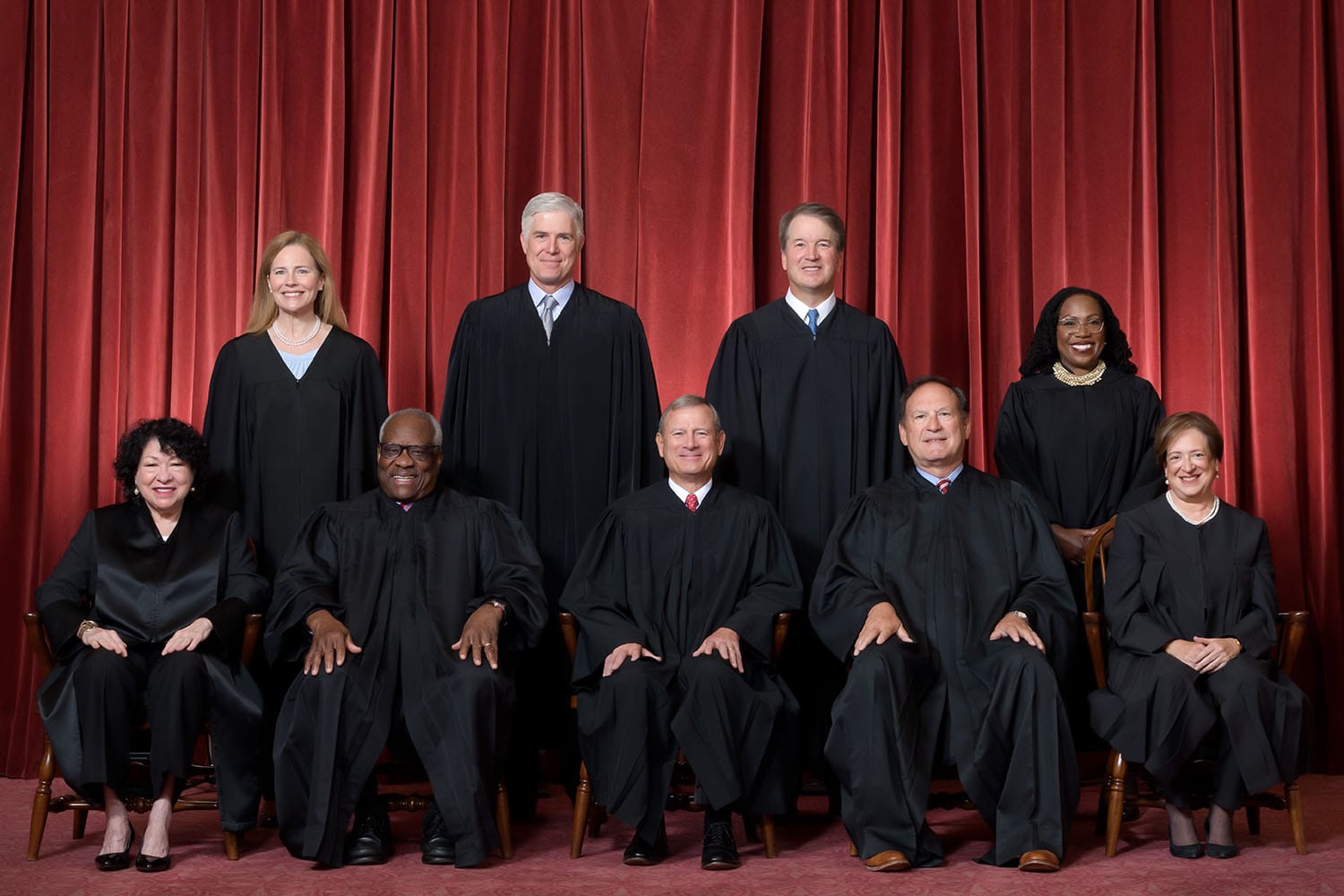
The split isn't going to be the usual left-right divide. It’s messier. Justice Gorsuch, notably faithful to textualism, is very likely to persist in the position he staked out in Virginia Uranium, Inc. v. Warren (2019): that preemption arguments must be grounded in statutory text rather than in vague federal interests. In Virginia Uranium, Gorsuch was also joined by Justice Thomas, an equally committed textualist, and Justice Kavanaugh, who has consistently resisted finding any congressional delegation of legislative power to federal agencies absent a clear statement to that effect.
On the other side stand Roberts and Alito, both of whom dissented in Virginia Uranium. Roberts has long favored the narrowest ruling available in any given case, making a sweeping declaration, that CFTC registration categorically overrides all state gambling regulations nationwide, an unlikely outcome from his pen. Alito presents a more genuinely uncertain picture: he has historically favored federal regulatory uniformity in commercial fields, but his record on state autonomy cuts in the other direction and makes his ultimate vote hard to predict.
The three liberals, Sotomayor, Kagan, and Jackson, are expected to side with Nevada, but their real concern is the precedent. If a federal registration alone is enough to wipe out a state's entire gaming regulatory architecture, that logic doesn't stop at Kalshi. Every federally regulated platform suddenly has a template to bypass state law entirely.
Which leaves the ultimate disposition turning on Kavanaugh and Barrett, whose votes are less predictable than those of their colleagues. Kavanaugh has a well-documented record of rejecting the practice of deferring to federal agencies on their own interpretation of ambiguous statutory language. That said, as a pragmatic textualist, there remains a chance he reads the specific CEA provision differently and lands in Kalshi's favor. Barrett, despite being a textualist, has criticized state court overreach in her dissent in Mallory v. Norfolk Southern Railway Co. (2023), but her vote will likely depend on how she reads "exclusive jurisdiction" in the CEA itself.
Given the analysis above, two scenarios emerge as most likely:
The first and most probable: a ruling substantially in favor of the states. Thomas, Gorsuch, and Kavanaugh on the conservative side, combined with Sotomayor, Kagan, and Jackson from the liberal bloc, form a plausible six-vote majority for the proposition that the CEA does not clearly preempt state gambling regulation. If Barrett's reading of the statutory text leads her to the same conclusion, that majority expands to seven, a ruling that would carry significant precedential weight and effectively close the door on similar preemption arguments by other federally regulated platforms seeking to bypass state law.
The second scenario: a Roberts compromise. Rather than resolving the case on broad preemption grounds, Roberts may draw a functional distinction between event contracts with genuine economic utility and those that are more speculative: i.e., sports results, elections. The line is not easy to draw, but it gives the Court a way to resolve this dispute without writing a rule that governs every prediction market product in existence. It's the outcome most consistent with Roberts' institutional instincts, leaving the broader regulatory debate open rather than closing it.
A clean ruling in Kalshi's favor, one that broadly establishes federal preemption of state gambling regulation, remains the least likely outcome on the board. It would require Roberts, Alito, Kavanaugh, and Barrett to coalesce around a broad federal preemption ruling, which is a configuration that runs against both the weight of Virginia Uranium and the judicial philosophy of at least two members of that coalition. Absent an extraordinary intervention by the Trump administration explicitly advocating for comprehensive federal preemption of state gambling law, the doctrinal obstacles to this result appear substantial.
The Long Game
Kalshi is fighting a tough war, and its exponential growth in market size hasn't made the legal picture any brighter. Kalshi may win an intermediate victory at the Ninth Circuit, but that doesn't guarantee a permanently comfortable position. Should a similar case eventually draw the Supreme Court's attention, the odds would not be in its favor. Kalshi's best option is likely a sit-down negotiation with state regulators or a push on Congress, both of which implicate further uncertainties. And personally, as an outside observer, I wouldn't take my bet if this event were ever listed as a contract, for the sake of my trading track record.
Disclaimer: The content is for informational purposes only. You should not construe any such information or other material as legal, tax, investment, financial, or other advice. Nothing contained in this article constitutes a solicitation, recommendation, endorsement, or offer by the author(s) or any third party service provider to buy or sell any securities or other financial instruments in your or in any other jurisdiction in which such solicitation or offer would be unlawful under the securities laws of such jurisdiction. The author(s) report(s) no conflict of interest.