Crypto finance conglomerate Galaxy Digital Inc. has launched a trading desk to offer large investors better access to prediction markets via over-the-counter derivatives similar to those used in markets from interest rates to commodities.
Galaxy Derivatives, the company’s swap dealer arm, entered into a $10 million wager in May with crypto hedge fund Arca on whether or not the Digital Asset Market Clarity Act of 2025 will pass through Congress, executives at the company confirmed in an interview. The parties used an over-the-counter (OTC) event swap, a bilateral version of contracts that are already common on prediction markets like Kalshi or Polymarket.
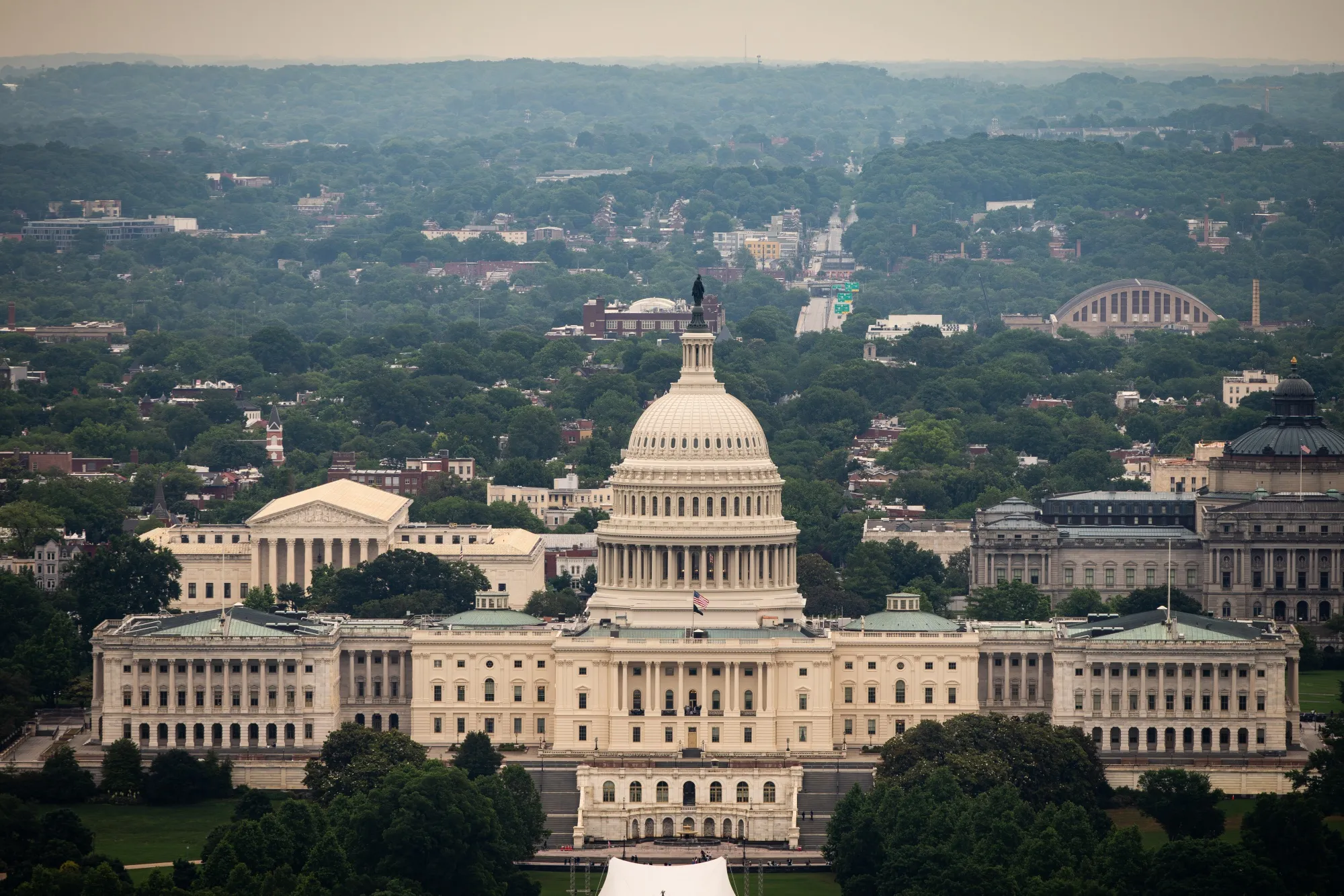
Arca sought to hedge the risk that the act won’t become law, which would likely deal a blow to the firm’s crypto holdings. Under the terms of the swap, Galaxy gets paid by Arca if the bill passes before 2027, while Arca collects if it doesn’t.
One advantage of using an OTC swap in this case was the ability to trade larger size. The most liquid contracts on these exchanges relate to sports, with contracts on political or economic events typically less liquid. A similar Kalshi-listed contract on when the crypto market structure bill will become law has only seen $2.2 million in volume during its existence, just a fifth of the value of the Galaxy-Arca OTC contract.
“This isn’t a gambling thing - this is a hedging mechanism,” Jason Urban, global co-head of Digital Assets at Galaxy, said in a phone interview.
Galaxy is betting that thin liquidity and wide bid-ask spreads on political and economic event contracts will make doing business over the counter more enticing for hedge funds, family offices and other institutional investors. Another concern for investors is that they might not want the trade seen by other market participants, even anonymously.
“The benefits of OTC trading include discretion,” said Gilbert Wassermann, head of prediction markets at Galaxy. “If a client has a block trade on Polymarket, there is the possibility that that wallet address could be doxxed,” he said, using internet slang for the identity behind an online pseudonym being unveiled.
ISDA Agreements
Existing legal pathways can be used to structure the swap agreement, explained Wassermann. Galaxy Derivatives’ core business already involves entering into crypto swap contracts with clients, such as bets on the price of a cryptocurrency in the future. Some investors prefer to interact with known quantities like Galaxy and its competitor FalconX rather than trading directly on crypto exchanges replete with asset custody and credit risk concerns.
Over the counter swaps rely terms laid out in a boilerplate agreement created by the International Swaps and Derivatives Association (ISDA), known as the ISDA Master Agreement. By using existing ISDA agreements, Galaxy’s clients don’t have to deal with the logistical and legal headaches around connecting to a prediction market exchange. There could also be credit concerns if the exchange is situated in an unfamiliar jurisdiction. They will, however, have credit exposure to Galaxy itself.
“Prediction markets are currently not a sophisticated institutional market with enough liquidity for a fund of our size,” Jeff Dorman, chief investment officer at Arca, said in a press release. “By utilizing the OTC market with Galaxy, we were able to execute a trade that best suits our fund strategy.”
To start with, Galaxy is only writing swaps on markets that are already listed on Kalshi or Polymarket. But in the future Urban said it would contemplate being a swap counterparty on more esoteric risks.
Swap dealers tend to offset their risk using other assets. In theory, Galaxy expects to hedge using exchange traded contracts on Kalshi or Polymarket, or a proxy in traditional financial markets, and hold on its books the risk of a misalignment between financial markets and the underlying event.
“We can warehouse this risk,” said Urban, meaning the Galaxy can enter into a contract, without necessary having a way to immediately offload it.