Premier info portal for prediction markets. The start point of information market.
Kalshi reveals insider trading case against editor for MrBeast
News
RegulatoryCelebritiesPrediction Market

Kalshi reveals insider trading case against editor for MrBeast

Kalshi suspended and fined a MrBeast editor and a California gubernatorial candidate for alleged insider trading, referring both cases to the CFTC as the booming prediction-market industry faces mounting scrutiny over market manipulation.

Pop Culture

An editor who works for YouTube's biggest creator, MrBeast, has been suspended from the prediction market platform Kalshi and reported to federal regulators for insider trading, Kalshi officials said on Wednesday. It's the first time the company has publicly revealed the results of an investigation into market manipulation on the popular app.

The MrBeast employee, who Kalshi identified as Artem Kaptur in regulatory filings, traded around $4,000 on markets related to the streamer, the company said.

Kalshi investigators discovered that Kaptur had "near-perfect trading success" on bets about the YouTuber's videos with low odds, making the wagers appear suspicious, according to company officials.

Many people place wagers about MrBeast on Kalshi. People bet hundreds of thousands of dollars on what he will say in his next video. There are markets on the number of subscribers he will bring on this year. And people are betting on when exactly MrBeast will get married.

But Kalshi investigators say Kaptur was using proximity to the streamer as a way of trying to make quick cash. Using confidential information to manipulate markets is prohibited by Kalshi's rules and could violate federal law.

"We investigated and found that the trader was employed as an editor for the streamer's show and likely had access to material non-public information connected to his trading," said Robert DeNault, the company's head of enforcement.

Kalshi said the company froze the account in question, so Kaptur was not able to withdraw any profits. He was fined $20,000 and suspended from the platform for two years. Kalshi also said the case was reported to regulators at the Commodity Futures Trading Commission, or CFTC, which oversees prediction markets like Kalshi.

A spokesman for Beast Industries, MrBeast's company, said it has "no tolerance" for insider trading.

"We have a longstanding policy in place against employees using proprietary company information in order to safeguard the highest standards and ethics throughout our organization," the spokesman told NPR, adding that employees are banned from trading on prediction markets in MrBeast-related markets.

The MrBeast-related trades "potentially violated" federal laws against misusing confidential information to manipulate commodity markets, otherwise known as insider trading, according to a statement from the CFTC.

Kalshi also unveiled a case against a former longshot Republican candidate in the California governor's race, Kyle Langford, who posted on X in May that he bet on himself to win the statewide contest. He encouraged others to do the same.

While it appeared to be a social media stunt, it was also a violation of Kalshi's rules, and regulators said potentially a federal crime. 

In a legal notice made public Wednesday, officials at Kalshi said that as a candidate, Langford was "a direct decision maker" for the market on the state's governor's race, prohibiting him from betting under internal guidelines against insider trading and market manipulation. 

Kalshi banned Langford for five years from its platform and handed him a $2,200 fine. 

"As a candidate in a race, you can (and probably should) follow and use Kalshi's market forecast, but you should not trade on it," Kalshi's DeNault said.

Langford did not return a request for comment.

How prediction markets are booming

Online prediction market platforms, such as Polymarket and Kalshi, have seen a surge in popularity during Trump's second term. People can place bets on these platforms on wide-ranging issues such as what words people say at events, the outcome of elections or how much snow will fall in New York City.

The explosive growth of the industry is in part driven by the use of what observers many consider a legal loophole, which the Trump administration supports.

Instead of falling under the purview of state gambling laws, prediction markets are regulated in a more obscure way, as a type of "futures contract," overseen by CFTC, which typically regulates bets on the future production of things like soybeans, corn and crude oil.

The Biden administration fought prediction market apps from listing most types of contracts. It argued there was little public interest value in most of them, not to mention that they invite speculators to manipulate markets through insider trading.

Trump officials, however, have broken down barriers to allow the industry to thrive, dropping multiple federal investigations into the industry and vowing to battle states that have sued Kalshi for allegedly operating as nothing more than an unlicensed gambling operation.

Until recently, regulators had allowed a few dozen markets a year for futures trading. Now, there are more than 200,000 active prediction markets.

Prediction markets stirring increased insider trading fears

The burgeoning and controversial industry has run headlong into global affairs. In January, a trader made $400,000 in profit on Polymarket by placing a successful bet on the capture of the Venezuelan leader Nicolás Maduro before there was any public indication that would happen.

Earlier this month, Israeli authorities arrested several people and charged two on suspicion of using classified information to place bets about upcoming military operations in Iran on Polymarket.

Insider trading on Polymarket and Kalshi is prohibited by each platform's rules, and is illegal under federal law, but experts say each company's internal systems can only catch so much insider activity, which can take place by word of mouth or other means outside the prediction market apps.

Still, Kalshi says in the past year it has opened 200 investigations into insider trading, 12 of which are still ongoing.

Kalshi said both instances of suspected insider trading revealed on Wednesday have been reported to the CFTC. The company said the fines paid by the two traders will be donated to a non-profit that provides consumer education about derivatives markets.

"No system is perfect. No financial exchange is immune from bad actors. Not stock exchanges, not banks, not prediction markets," said Kalshi's DeNault."We're committed to deterring and finding the bad actors, manipulators, and those who willingly cheat."

Source: https://www.npr.org/2026/02/25/nx-s1-5726050/kalshi-insider-trading-enforcement-actions
Trump Promises UFO Files Release—Prediction Market Odds On Aliens Climb
News
Prediction MarketCelebritiesAnecdote

Trump Promises UFO Files Release—Prediction Market Odds On Aliens Climb

Trump vows to declassify UFO files after sparring with Obama, sending “alien disclosure” odds surging on prediction markets despite Pentagon skepticism.

PoliticsPop Culture

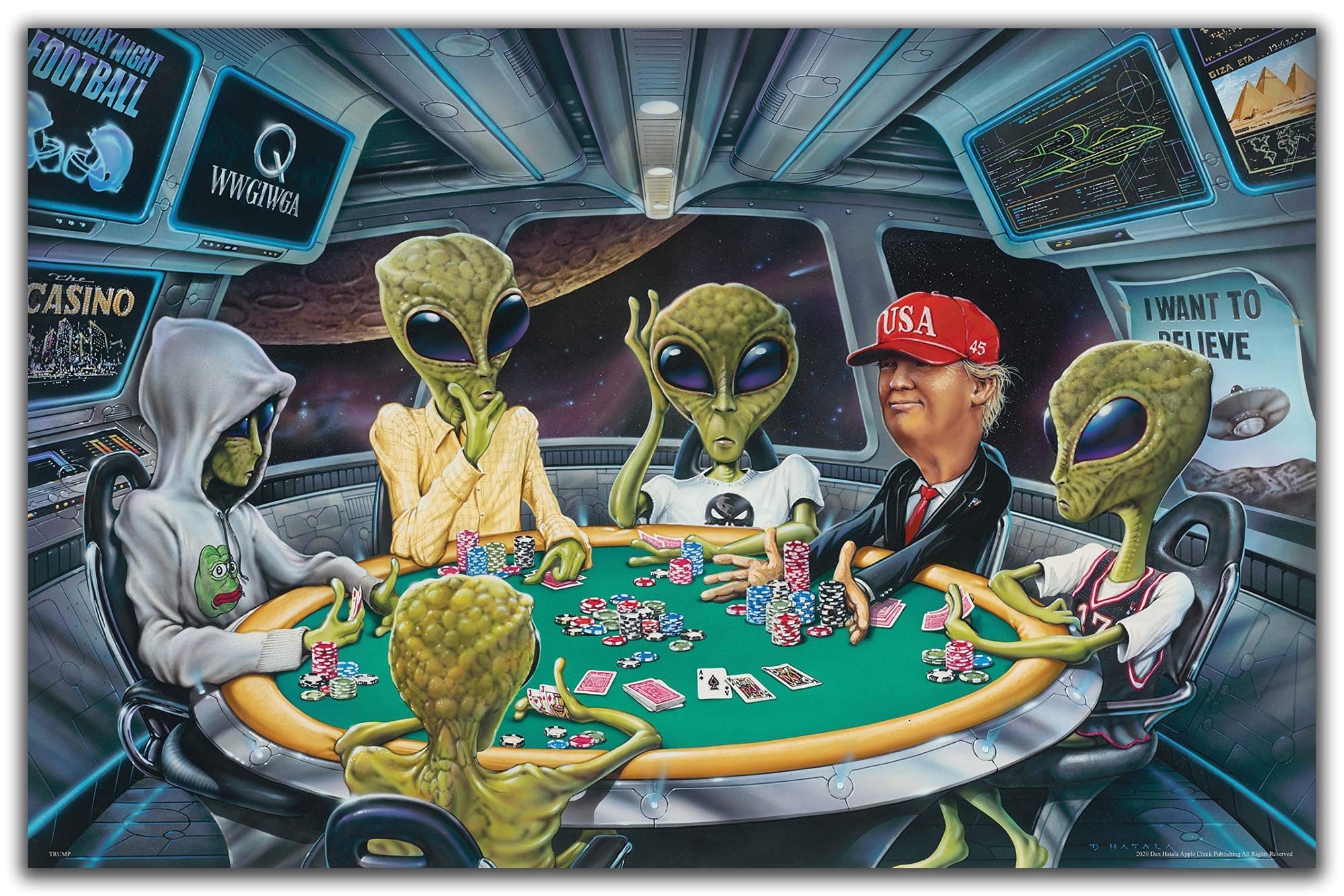
After chatter swirled online over comments from former President Barack Obama about aliens being “real”, President Donald Trump fired off a Truth Social post late Thursday promising to direct the Secretary of War and other agencies to begin identifying and releasing government files on extraterrestrials, unidentified aerial phenomena (UAP), and unidentified flying objects (UFOs).

Trump made the declaration after he accused Obama earlier in the day of revealing classified information when the former president said “aliens are real” on a podcast last week.

“He’s not supposed to be doing that,” Trump told reporters aboard Air Force One.

When asked if he also thinks aliens are real, Trump said: “Well, I don’t know if they’re real or not.”

Declassification Or Déjà Vu?

For long-time Trump watchers, comments on extraterrestrial life are not new.

During his first term, Trump acknowledged being briefed on UFO sightings by Navy pilots and said, “I want them to think whatever they think.”

Former U.S. Presidents have flirted with UFO transparency before. Bill Clinton has admitted that he sent federal agents to find out if aliens were hiding out at Nevada's so-called Area 51.

However, in a 2024 report, the Pentagon said there was “no evidence” that the U.S. government had encountered alien life, and that most UFO sightings were just ordinary objects.

Prediction Market Alien Odds Climb

Traders in prediction markets focused on “alien disclosure” have remained skeptical so far, citing a lack of concrete policy movement or verifiable evidence. But Trump’s Thursday remarks moved the needle to some extent.

On Polymarket, the contract “Will the U.S. confirm that aliens exist before 2027?” saw its implied probability climb from roughly 11% to the low-20s in the hours after Trump's announcement, with total trading volume approaching well over $4.3 million.

Contracts on Kalshi also saw a similar uptick. The odds of the U.S. confirming aliens before 2027 jumped from 17.3% on Feb. 19 to 28.4% at last check, with trading volume at $4.8 million.

Source: https://www.benzinga.com/markets/prediction-markets/26/02/50742848/trump-promises-ufo-files-release-prediction-market-odds-on-aliens-climb

TV antennas and Super Bowl rehearsals: How prediction market traders seek an edge
News
Prediction MarketSports-NFLSports Insight

TV antennas and Super Bowl rehearsals: How prediction market traders seek an edge

One prediction market trader made thousands of dollars by listening to a rehearsal of the event and correctly guessing how long Puth's rendition of the anthem would take.

SportsPop Culture

Ahead of the Super Bowl, 21-year-old Caden Booth of Cincinnati was looking for "alpha."

That's finance slang for finding a competitive edge. With the rise of prediction markets allowing people to bet on elections, sports, musical performances and live press conferences, traders are becoming increasingly creative to outmaneuver other bettors.

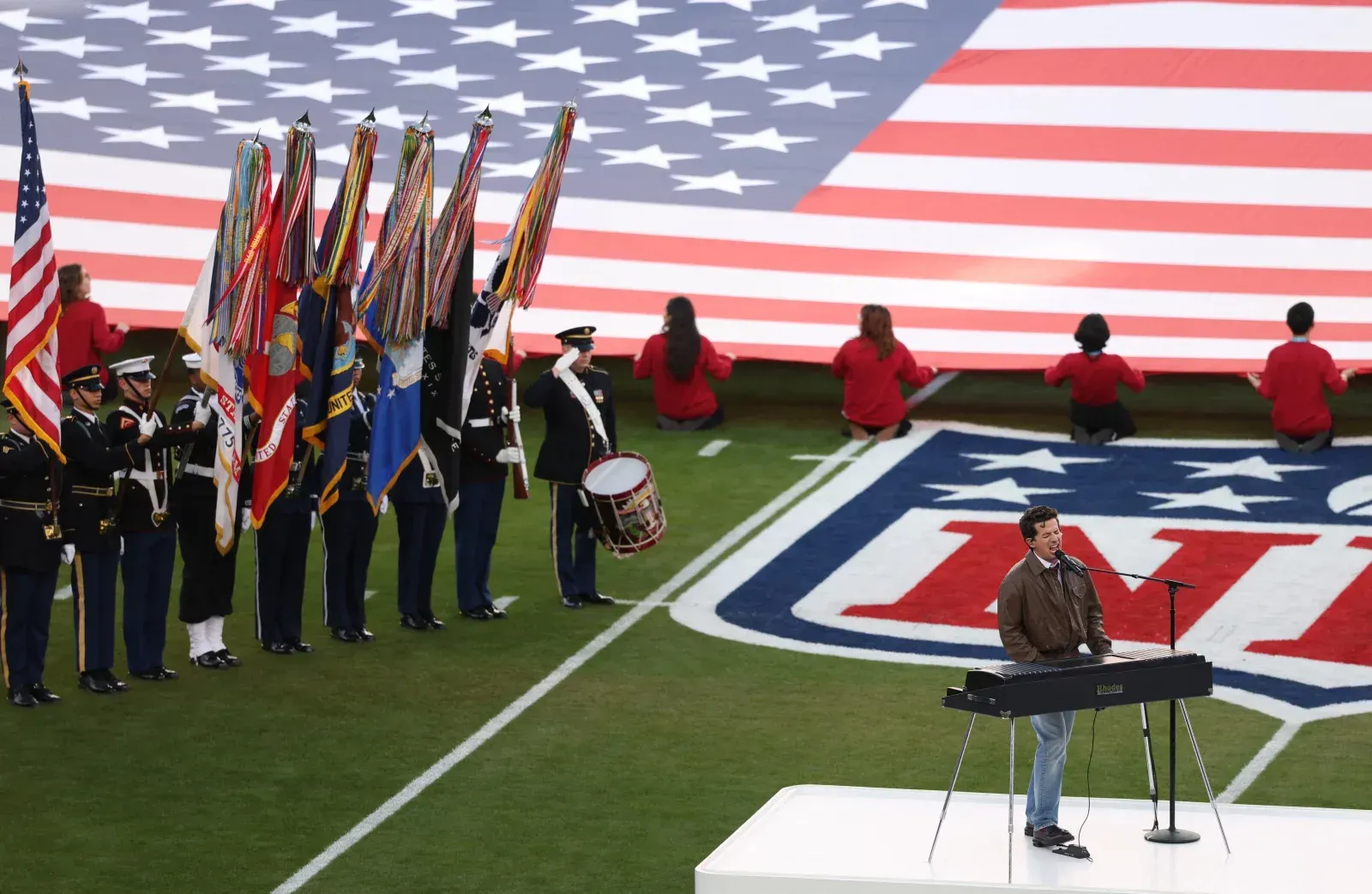
In Booth's case, it meant literally going the extra mile. Armed with a stopwatch and a recording device typically used for capturing bird sounds, Booth boarded a flight from Ohio to the San Francisco Bay Area so he could be outside of Levi's Stadium in Santa Clara, Calif. to time rehearsals of "The Star-Spangled Banner."

A gusher of money was flowing into prediction markets for niche questions unrelated to the game itself. One of them was: How long would it take to perform the national anthem? Traders poured in nearly $2 million taking guesses.

"I thought I'd show up and there would be 500 people in lawn chairs trying to make easy money," said Booth, who shares side hustle tips on his TikTok. "But I was the only one."

When he saw a formation of jets fly over the stadium, he knew singer Charlie Puth's rehearsal was about to kick off, so he got his stopwatch ready. He clocked the patriotic ballad at 104 seconds and placed winning bets that netted many thousands of dollars. He wouldn't reveal exactly how much he made since, he said, "I've gotten a lot of hate for doing this," with some calling him a cheater.

Booth said he's brushed off the haters.

"I try to make money on prediction markets for fun the same way I try to win a video game," he said. "Going to the stadium felt pretty obvious. I think you'll see more people outside the stadium next year."

Kalshi and Polymarket saw nearly $5 billion in wagers the week leading up to the Super Bowl, inviting opportunists of all kinds.

One account on Polymarket correctly guessed 17 out of 18 bets on the halftime show, including that Ricky Martin and Cardi B would perform. Another bettor on Kalshi put down $500,000 on Lady Gaga appearing, prompting accusations online that someone may have been cashing in on confidential intel.

Under federal derivatives laws, which apply to prediction markets in the U.S., using manipulative or deceptive practices, like trading on nonpublic information, is illegal.

Kalshi says it does not comment on investigations, but that the platform's surveillance team is constantly monitoring markets for suspicious trades.

When an edge is hiding under a website's hood

Alpha-seeking, as prediction market traders call it, is coming in all different forms.

Some are purchasing TV antennas to get a tiny fraction-of-a-second advantage during live events where traders wager six-figure sums on what words or phrases someone says. Others scour social media for clues, like a trader who bet on Lady Gaga performing at the Super Bowl after a muffled clip of her rehearsing before the game circulated on TikTok. Then there are traders uncovering information hiding on websites for a handsome payday.

Take, for instance, one of prediction market trader Brandon Fean's biggest wins. It came after poking around the website of hip-hop artist Travis Scott. Fean's digital sleuthing led him to inspect the HTML code of Scott's website, and he spotted a mistake: a not-yet-public announcement about single sales for Scott's song "4X4" was viewable in the site's code.

The sales figures indicated that Scott's track would be No. 1 for the upcoming week.

"You just need to know where to look to find alpha," said Fean, a 25-year-old public school teacher in the Philadelphia suburbs who is a devoted trader on Kalshi, one of the leading prediction market sites.

Fean used this his discovery to wager that Lady Gaga and Bruno Mars' song "Die With a Smile" would not be topping the Billboard charts, despite the market odds considering it the favorite. At the time, other traders thought Scott's single had only a 6% chance of being the week's top song.

But Fean's nugget of gold made him confident, and he bet $719 on Scott landing in the No. 1 spot. His payout: $10,438.

"This trick is hard to do now because most have figured out people are looking to see what unreleased info they can find on sites," he said. "But don't worry, I know a lot about music, so I think I still have an edge."

Prediction market traders put a new spin on an old idea

Tactics like these have a long history, said Chester Spatt, a finance professor at Carnegie Mellon University. High-frequency traders on Wall Street have used new technology to gain a two-millionths of a second advantage over rival traders. Even further back in history, he said, people in the 1800s would glimpse with a telescope the number of boats docking ashore to secure competitive intel about commodity imports.

"Participants in markets always have an incentive to invest on information that gives them an edge," he said. "Is that a bad thing? I'm not sure it is. But if you're betting in these prediction markets, that should give you some cautiousness before trading."

Multiple prediction market traders interviewed for this story refused to reveal their best "alpha," saying they didn't want to let others in on their secret sauce.

In chats among Kalshi traders on the online forum Discord, some show their reluctance to reveal their trading tricks by misdirecting.

Since it's a chronically online community, that can take the form of tongue-in-cheek quips, whether about an informational edge or a speedy antenna.

"Antenna is super slow," Discord user Oliv, whose avatar is a cartoon dog with green shorts, said sarcastically. "Don't try it."

The comment received eight cry-laughing emoji reactions.

Source: https://www.npr.org/2026/02/17/nx-s1-5716224/kalshi-polymarket-super-bowl-alpha

Ethereum Co-Founder Vitalik Buterin Calls for Prediction Market Reset
News
InsightPrediction Market

Ethereum Co-Founder Vitalik Buterin Calls for Prediction Market Reset

Ethereum co-founder Vitalik Buterin criticized the current direction of prediction markets, warning that an increasing focus on short-term bets risks distorting incentives and encouraging harmful behavior.

TechPop Culture

Buterin Questions Short-Term Betting Culture in Crypto Markets

In a recent post published to X, Buterin said prediction markets have reached sufficient scale to support professional traders and contribute meaningfully to public discourse. At the same time, he argued that platforms appear to be “over-converging” on cryptocurrency price speculation, sports wagering, and other high-engagement trades that offer “dopamine value” but limited long-term societal benefit.

He attributed part of this shift to revenue pressures during bear markets, writing that teams may feel compelled to lean into these categories because they generate income when broader conditions are weak. Buterin described the trend as a slide toward “corposlop,” cautioning that overreliance on uninformed traders can create unhealthy product incentives.

Buterin identified three types of participants in prediction markets: “smart traders” who supply information, “naive traders” who lose money on incorrect views, and “hedgers” who accept expected losses to reduce risk. He said current platforms lean heavily on the first two categories.

One X user responded to Buterin’s critique by writing, “The Overton window on gambling has shifted enough where you should realize how off base this now sounds. Like it or not, everyone not extremely wealthy is by default now financially desperate.”

Buterin replied: “Yeah, and encouraging financially desperate people to gamble is bad because the likely outcome is that they become even more financially desperate.”

Beyond criticism, Buterin proposed repositioning prediction markets as tools for hedging. He offered an example of a biotech investor who might bet on an unfavorable election outcome to offset potential portfolio losses. In his illustration, such a trade narrows return ranges and reduces volatility, creating measurable utility even if the expected value of the bet is negative.

He also revisited ideas associated with economist Robin Hanson, noting that so-called “info buyers” who subsidize markets to extract insight face public goods challenges, since the resulting information benefits non-paying observers.

Buterin extended the hedging framework to stablecoins, questioning whether users ultimately want exposure to fiat currency or simply price stability. He suggested that heavy reliance on U.S. dollar-backed stablecoins could constrain decentralization. His criticism follows recent reports that show stablecoins dominate crypto casinos and prediction markets in terms of settlement.

In the broad crypto betting sector, stablecoins had the upper hand in 2025, and analysts expect this trend to continue going forward. As an alternative, Buterin proposed creating price indices for major categories of goods and services, paired with prediction markets tied to those indices. Individuals or businesses could hold personalized baskets representing expected future expenses, rather than a single fiat-pegged token.

Such a system, he wrote, would require markets denominated in assets participants want to hold, instead of non-interest-bearing fiat, which he said carries high opportunity costs. Buterin concluded by urging builders to focus on long-term financial infrastructure rather than short-term speculative volume. 2025 was a big year for prediction markets, and in early 2026, growth is expected to continue.

Source: https://news.bitcoin.com/ethereum-co-founder-vitalik-buterin-calls-for-prediction-market-reset/

Cardi B’s appearance during Bad Bunny’s Super Bowl halftime performance divided prediction markets
News
Prediction Market

Cardi B’s appearance during Bad Bunny’s Super Bowl halftime performance divided prediction markets

Pop Culture

Wake up, babe, new Schrödinger’s cat just dropped: Cardi B exists in a simultaneous state of both performing at the Super Bowl Halftime Show and not performing at the Super Bowl Halftime Show … until observed settled by prediction markets.

Confused yet? So were many people who placed bets — or bought “event contracts” — on whether she would perform. At least one trader on Kalshi filed a complaint with the Commodity Futures Trading Commission over how the company resolved the market on Cardi B’s appearance.

Because … did she “perform”? Is dancing performing? Is lip-syncing performing? Some say, obviously yes, but others say that by the rules of engagement as spelled out on the markets, her appearance didn’t rise to the level of “performing.”

These event contracts work like this: a market lists a future event, and users can buy a “yes” or “no” contract on that event. So, for the question of “Who will perform at the Big Game?” as listed on Kalshi, you could buy a “yes” or “no” on several different performers, including musicians like Cardi B, Lady Gaga and Ricky Martin.

All three of these musicians did, in fact, appear on the halftime show stage with Bad Bunny. But users contested how Kalshi and Polymarket resolved the Cardi B market specifically. While Lady Gaga and Ricky Martin had solo singing parts, Cardi B danced with other celebrities and backup dancers, and although she appeared to be singing, she wasn’t mic’d up or given a specific singing role.

(Just to give you an idea of how divisive this was: My editor and I can’t even agree! I say she performed! He says, and I quote, “She was not a guest performer!” I would ask everyone to weigh in via the comments, but that would actually just tip us all over the edge of the dystopian cliff.)

Kalshi eventually decided the answer was ambiguous and refunded participants by settling their contracts at the last traded price.

A Kalshi spokesperson told us that people trading “No” on Cardi B made 74 cents per dollar traded, while “Yes” holders got the other 26 cents, adding “Kalshi keeps none of this, we just distribute the funds per our rules.” (Essentially, while everyone got refunded, most traders likely received a different amount than they invested.)

Kalshi saw over $47.3 million bet on this market, and each transaction includes fees. Prediction markets don’t make money as sportsbooks do; fees comprise the route to profitability for companies such as Kalshi. It is not clear if the fees were also refunded. The market was available through the halftime performance, even after Cardi B was sighted. Polymarket had over $10 million in activity on a similar market.

So, in the end, how did the prediction markets define “performance”?

Your browser does not support the video tag.

According to a Kalshi spokesperson, “singing and dancing counted as a performance, but just dancing in the background did not. In the as-broadcast performance, Cardi B was dancing and mouthing words to the song, but it was unclear if she was ‘singing.'” Thus, they defaulted to refunding traders.

On Polymarket, the fine print originally defined the event simply as “Cardi B performs live and in person….” This was updated on game day with additional context: “A qualifying performance includes participation in the halftime show without singing so long as the aforementioned criteria are met.” The market was resolved as a “Yes,” then disputed, with a final review pending on Wednesday. For those interested in the final judgment, Polymarket has a countdown clock on its website.

By contrast, on FanDuel Sportsbook in Ontario, the question was framed as who would “make a special guest appearance.” When asked by The Athletic how they defined a yes or no on this question, a FanDuel spokesperson said that the settlement clause was defined as, “the person(s) who physically make an appearance on stage alongside Bad Bunny at the SB LX Halftime Show. Must be shown on broadcast.”

Per that settlement, FanDuel paid out all customers who selected Cardi B, Karol G, Young Miko, Ricky Martin and Lady Gaga.

Fanatics also offered this market on their prediction platform, which is powered by Crypto.com. The verbiage on the market included the word “perform,” and the fine print said, “‘performing’ is defined as appearing on stage or as part of the official production to sing, speak, or dance. The mere presence of [Performer] in the stadium as a spectator, sideline guest, or in any other non-performing capacity does not qualify.” They settled the market as “Yes,” Cardi B did perform.

Overall, prediction markets had a massive day with the Super Bowl, which is consistently the most bet-on single-day sporting event in the U.S. Kalshi reported a daily record high on game day, with a 2,700 percent year-over-year increase in Super Bowl market activity compared to last year, with more than $1 billion in total trading volume.

Kalshi co-founder Luana Lopes Lara posted on X on Monday that the “traffic spike was way bigger than our most optimistic forecasts” after explaining that some deposits were delayed because of the amount of traffic.

Source: https://www.nytimes.com/athletic/7038991/2026/02/11/cardi-b-halftime-show-betting-prediction-markets-controversy/