Premier info portal for prediction markets. The start point of information market.
Breaking News - OpenAI cuts GPT-5.6 prices as cost sensitivity grows; will others follow?
News Flash
LLMsHyperscalersAI InfrastructureTechnology

Breaking News - OpenAI cuts GPT-5.6 prices as cost sensitivity grows; will others follow?

OpenAI on Thursday announced it is slashing the price of two of its latest artificial intelligence models, GPT-5.6 Terra and GPT-5.6 Luna, roughly three weeks after their public release, according to the company and a CNBC report (July 30, 2026).

TechEconomics & Finance
  • OpenAI announced it is slashing the price of two of its latest artificial intelligence models, GPT-5.6 Terra and GPT-5.6 Luna.
  • The company said it is reducing the price of Terra by 20% and the cost of Luna by 80%.
  • The company is facing pressure to cater to a more cost-sensitive customer base and fend off competition from Chinese startups and other tech giants.

Do you think, will other AI model makers cut prices, by the end of August 2026?

Yes
85.03%
No
14.97%
1,309 Polls

OpenAI on Thursday announced it is slashing the price of two of its latest artificial intelligence models, GPT-5.6 Terra and GPT-5.6 Luna, roughly three weeks after their public release. 

The company is facing pressure to cater to a more cost-sensitive customer base, where enterprises have been less inclined to deploy expensive models without a clear picture of the return on their investments. It’s also working to fend off competition from Chinese startups and tech giants Google and Microsoft, which have been touting cost-effective models.

OpenAI launched three models as part of its GPT-5.6 series, including Sol, the most powerful offering, Terra, the mid-tier model, and Luna, its fastest offering. 

The company said Thursday that it’s reducing the price of Terra by 20% to $2 per million input tokens and $12 per million output tokens. It’s cutting the cost of Luna by 80% to 20 cents per million input tokens and $1.20 per million output tokens. Sol’s pricing remains the same. 

“Our strategy remains focused on advancing both capability and efficiency so each generation of intelligence can accomplish more work at a lower cost,” OpenAI said in a release.

OpenAI kickstarted the AI boom with the launch of ChatGPT in 2022, prompting companies across the U.S. to rush to deploy the technology and incentivize adoption within their workforces. The era of so-called tokenmaxxing was born, where employers encouraged staffers to use as much AI as possible without worrying about costs.

Source: CNBC; https://www.cnbc.com/2026/07/30/open-ai-price-cut-gpt.html

Results Deep Dive - The P&L Inversion: What Big Tech Earnings Reveal About the "Inference Tax" and the "CapEx Wall"
Analysis
HyperscalersLLMsAI InfrastructureSilicon BakeryEarnings & OperationsIndustry Pulse Semi Analysis

Results Deep Dive - The P&L Inversion: What Big Tech Earnings Reveal About the "Inference Tax" and the "CapEx Wall"

Economics & FinanceTech

As the dust settles on this week’s major Big Tech earnings releases, the financial media remains predictably fixated on top-line revenue beats and cloud growth percentages. However, for institutional investors and universal asset owners, the most critical data points are no longer found in the revenue headlines, but buried deep within the cash flow statements. Silicon Valley is definitively exiting the high-margin, zero-marginal-cost era of traditional software. Driven by the relentless computational demands of artificial intelligence, Big Tech has rapidly mutated into a capital-intensive heavy industry.

The sheer scale of this transition is historically unprecedented. Over the past 36 months, the global financial system has funneled an estimated $1 trillion into physical AI infrastructure. Yet, as leadership at Norges Bank Investment Management (NBIM) recently highlighted, a profound structural asymmetry persists: while an estimated $1.4 trillion is required for global hardware buildouts, direct and verifiable AI revenues struggle to cross a mere $13 billion threshold. With macroeconomic projections from Morgan Stanley anticipating the combined capital expenditures (CapEx) for the five largest US tech giants to hit $1.16 trillion by 2027, the thematic hype cycle is officially over.

We have entered the era of the "CapEx Wall," where the fundamental measure of corporate survival is no longer algorithmic promise, but strict balance sheet resilience and the ability to defend Free Cash Flow.

The Microsoft & Alphabet Proxies: Quantifying the Capital Burden

The sheer magnitude of this infrastructure burden is already visible in the latest SEC filings. Alphabet’s trajectory—with its CapEx surging 74% (from $52.5 billion to $91.4 billion between 2024 and 2025)—was an early warning. Microsoft’s recent Q4 2026 results confirm this permanent escalation in capital intensity, with quarterly capital expenditures reaching an unprecedented $35.80 billion.

AI, a Capital-Intensive Industry Hit by the Inference Tax

The historical paradigm of the tech industry—distributing software at zero marginal cost—is obsolete. Generative AI now resembles a heavy industry, structurally penalized by an “inference tax.” While Microsoft CFO Amy Hood highlighted “a strong quarter to close out the fiscal year, underscored by $59.3 billion in Microsoft Cloud revenue,” the reality of the balance sheet shows profitability under pressure. The Intelligent Cloud division’s operating margin peaked at 40.6% (Q4), and the company’s regulatory filings confirm a squeeze on gross margin directly attributable to AI infrastructure costs.

This massive cash burn is exacerbated by a trap of accelerated depreciation. State-of-the-art GPUs (Nvidia H100 or Blackwell architectures) become obsolete within 3 to 4 years. This ultra-short life cycle forces perpetual reinvestment in hardware, which mechanically crushes free cash flow generation, transforming a competitive advantage into a permanent exercise in capital destruction.

The FinOps Pivot and Margin Cannibalization

To finance this unyielding infrastructure burden without defaulting on profitability, tech companies are aggressively cannibalizing their internal operating models. Historical Sales & Marketing (S&M) budgets are being drastically cut from 47% to 41% of revenue (KeyBanc), freeing up capital to prioritize R&D, which now exceeds 22% of revenue. This reallocation automatically extends the CAC payback period to 18 months, while 55% of IT decision-makers admit that their current infrastructure cannot support AI without significantly eroding their margins (Forrester).

Meta Platforms illustrates this dynamic with unprecedented accounting severity. Lacking a B2B cloud division to offset the hardware burden, the company relies exclusively on advertising, leaving it fully exposed to infrastructure risk. The second-quarter 2026 results confirm this “CapEx Wall”: capital expenditures (CapEx) reached $31.08 billion, forcing management to tighten its colossal annual guidance range to between $130 billion and $145 billion. This need to absorb the surge in computing costs led to a 55% year-over-year spike in operating expenses (OpEx), sharply reducing the operating margin from 43% to 31%. The sacrifice of short-term profitability is reflected in a crushing decline in free cash flow, which has been squeezed down to just $784 million. Although Mark Zuckerberg maintains that AI “is accelerating our core business today,” the financial statements reveal a more stark reality: the race toward hyper-infrastructure requires the temporary depletion of available cash.

As the "CapEx Wall" forces a FinOps pivot, what is the most severe P&L risk for enterprise software over the next 18 months?

Aggressive OpEx cannibalization (slashing S&M and headcount to fund compute)
10.58%
Further upward revisions of annual CapEx guidance despite market backlash
40.13%
Passing the "inference tax" directly to enterprise customers via price hikes
19.03%
Scaling back non-core R&D to protect short-term Free Cash Flow
30.26%
2,118 Polls

Macro-Financial Displacement and the Stock Market Divide

The price action observed during after-hours trading on July 29, 2026, confirms a clinical reassessment of the risk associated with artificial intelligence infrastructure. The markets are no longer penalizing revenue stagnation, but rather the destruction of free cash flow (FCF) attributable to the “CapEx Wall.” The -6.41% correction inflicted on Meta Platforms—which fell to $548.09 despite solid revenue—illustrates this perfectly: investors are penalizing the accumulation of capital expenditures that lack immediate profitability.

Conversely, the 8.97% jump in Microsoft’s stock (to $425.56) demonstrates a strict market requirement: depreciation costs must be offset by tangible monetization. Microsoft was rewarded for proving its Operating Alpha—the ability to generate cash despite the hardware drag. As highlighted by the financial press’s narrative illustrating this “great AI divide,” balance sheet resilience now takes precedence over the promise of expansion.

Beyond equity markets, this asymmetry is triggering a severe macro-financial “crowding-out” phenomenon in global credit. According to BIS data, nearly 60% of global FX derivatives are now concentrated among the ten largest banks to finance Big Tech’s data centers, automatically drying up credit conditions for traditional SMEs.

Conclusion: The Valuation Doghouse and the New Institutional Mandate

The cycle of abundant liquidity fueling innovation has come to an end. The markets are conducting a ruthless binary culling: 73% of publicly traded traditional SaaS companies are now relegated to a "Valuation Doghouse," trading at a median multiple of just 3.3x their future revenue (Meritech). Only the elite—those demonstrating true Operating Alpha by mastering the “Rule of 40”—are capturing liquidity.

Ultimately, this week’s Big Tech earnings confirm a definitive regime change: AI is no longer a speculative vector for exponential hyper-growth, but a highly capital-intensive, defensive infrastructure. For institutional allocators, the mandate is clear. Capital allocation must be rigidly anchored to organizations capable of navigating the CapEx wall, enforcing FinOps discipline, and protecting Free Cash Flow generation against the crushing weight of accelerated hardware depreciation.

As the market enforces a ruthless binary culling across the tech sector, what is the ultimate survival criterion for institutional portfolios?

Uncompromised Free Cash Flow (FCF) resilience against the hardware drag
37.22%
Accelerated B2B AI monetization to outrun capital intensity
62.78%
540 Polls
Results Review - SK Hynix, 2Q2026 a miss?
Quick Take
HyperscalersSemiconductorEarnings & OperationsAI Infrastructure Semi Analysis

Results Review - SK Hynix, 2Q2026 a miss?

SK hynix reported record-breaking 2Q26 financial results on July 29, 2026, driven by intense AI memory demand and higher chip prices. Yet, stock price took a huge dip...

Economics & FinanceTech

SK hynix reported record-breaking 2Q26 financial results on July 29, 2026, driven by intense AI memory demand and higher chip prices. Yet, stock price took a huge dip...

What will SK Hynix operating profit margin be for 3Q2026 (vs 2Q2026)?

Higher
63.86%
Lower
36.14%
1,162 Polls

TL;DR:

What's Good: Absolute profit and revenue growth were extraordinary by any historical standard. Operating profit of ₩60.54 trillion was up more than 550% year over year, and revenue and operating profit increased 257% and 557% year-over-year, respectively.

What's Good: Long-term contract book was locked in with key customers. SK hynix has finalized Long-Term Agreements with around 10 customers, including key strategic partners, aiming to secure mid-to-long-term supply stability, improve operational efficiency, and support sustainable growth.

What's Good: HBM4 hit technical milestones and began shipping. SK hynix began mass shipments of HBM4 in Q2 2026 and plans to ramp production in the second half, and HBM4 achieves customer-required operating speeds, industry-leading power efficiency, and cost competitiveness, demonstrating differentiated technological edge.

What's Good: Structural position within the AI memory shortage remains dominant. Goldman Sachs has estimated a 2026 DRAM supply-demand gap of 4.9%, described as the most severe shortage in 15 years, with DRAM spot prices up approximately 52% since January 2026, and industry analysts estimate SK Hynix holds approximately 60 to 70% of Nvidia's HBM4 allocation for the Vera Rubin AI platform, with Samsung capturing roughly 25-30% and Micron supplying the remainder — an allocation confirmed publicly by Nvidia CEO Jensen Huang during a Seoul visit in June.

What's Missed: Operating profit missed consensus by a meaningful margin, despite the YoY headline.

What's Missed: Multi-year HBM supply contracts are structurally capping upside capture. Korea Investment & Securities projected Q2 operating profit roughly 8% below consensus, revealing how the company's multi-year high-bandwidth memory supply contracts prevent it from capturing the full spot-price upside investors were modeling — the company is essentially leaving spot-market pricing gains on the table in exchange for locked-in volume certainty.

What's Missed: HBM4 ramp timing came in later than some analysts had priced. Investors had anticipated that shipments of SK Hynix's next-generation HBM4 [would scale in Q2], [but] that increase had not materialized at scale. Full-scale HBM4 mass production is now expected to begin in the third quarter of 2026 — a shift that also removed a source of upside analysts had priced into Q2 estimates.

Key Debates:

Is the "miss" actually a demand problem, or purely a contract-structure artifact?

How much of the sell-off is stock-specific versus sector-wide noise?

Does the HBM4 delay to Q3 change the growth trajectory, or just shift timing?

Source:

  1. SK Hynix press release; https://news.skhynix.com/en/q2-2026-business-results/
Market Rumor - Amazon overhauls its AI strategy, winding down most flagship models, Business Insiders - July 28, 2026
News Flash
HyperscalersLLMsMarket RumorAI InfrastructureMag 7

Market Rumor - Amazon overhauls its AI strategy, winding down most flagship models, Business Insiders - July 28, 2026

Business Insider reports that Amazon is overhauling its AI strategy by winding down much of its flagship Nova lineup and concentrating engineers and computing resources on a smaller number of frontier-model efforts (July 28, 2026).

Economics & FinanceTech

Business Insider reports that Amazon is overhauling its AI strategy by winding down much of its flagship Nova lineup and concentrating engineers and computing resources on a smaller number of frontier-model efforts.

Will Amazon raises, or holds, or cut CAPEX in 2Q2026 briefing?

Raise
66.67%
Hold
33.33%
Cut
0.00%
3 Polls
Ended

Amazon has reportedly begun deprecating Nova Premier, Omni, Reel, and Canvas. Employees described some models as being in “keep the lights on” mode, meaning they will remain supported for existing customers but are no longer major development priorities.

Resources are increasingly moving toward Frontier Model Research, led by Pieter Abbeel. He joined Amazon through its acquisition of AI robotics startup Covariant. FMR has become a top priority and is developing a new flagship foundation model expected to debut at this year’s re conference.

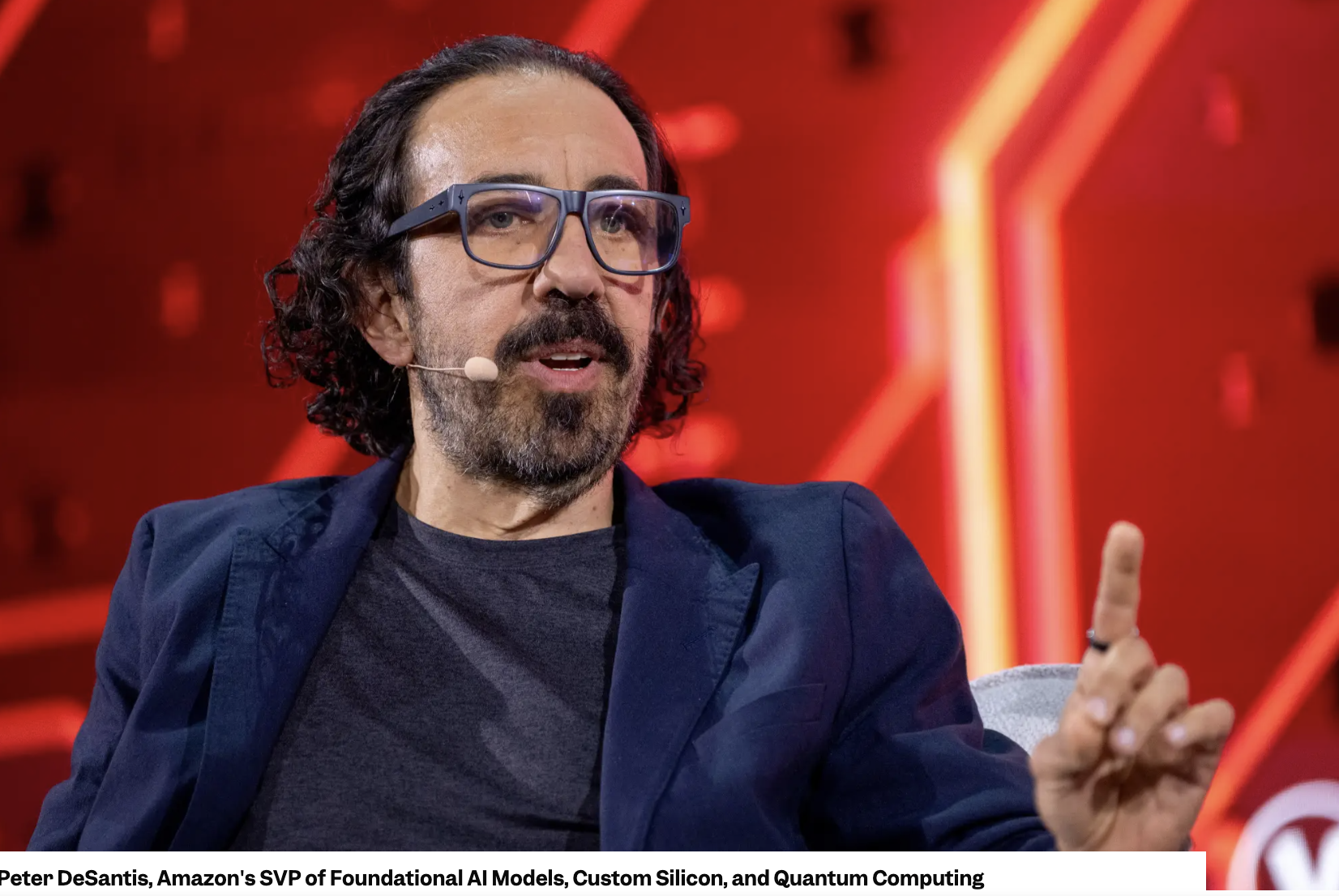
The shift follows layoffs in Amazon’s AGI organization and the shutdown of AGI Lab, the long-term research group created after Amazon hired key leaders from Adept. The broader AGI organization now sits under SVP Peter DeSantis, who also oversees Amazon’s custom-silicon and quantum-computing teams.

Amazon is not abandoning Nova entirely. Nova 2 Sonic, Nova 2 Lite, Nova Forge, and Nova Act remain active, while the new FMR model could also launch under the Nova brand.

An Amazon spokesperson told Business Insider that AI models remain among the company’s most important priorities. The spokesperson added that Amazon will continue supporting models customers rely on while providing guidance and migration paths as its lineup evolves.

Source:

Business Insider; https://www.businessinsider.com/amazon-overhauls-ai-strategy-phasing-out-most-nova-models-2026-7

Breaking News - Nvidia behind $50bn lease on Texas data center that will use its chips, media reports
News Flash
HyperscalersTechnologyBreaking NewsAI InfrastructureMag 7 Semi News

Breaking News - Nvidia behind $50bn lease on Texas data center that will use its chips, media reports

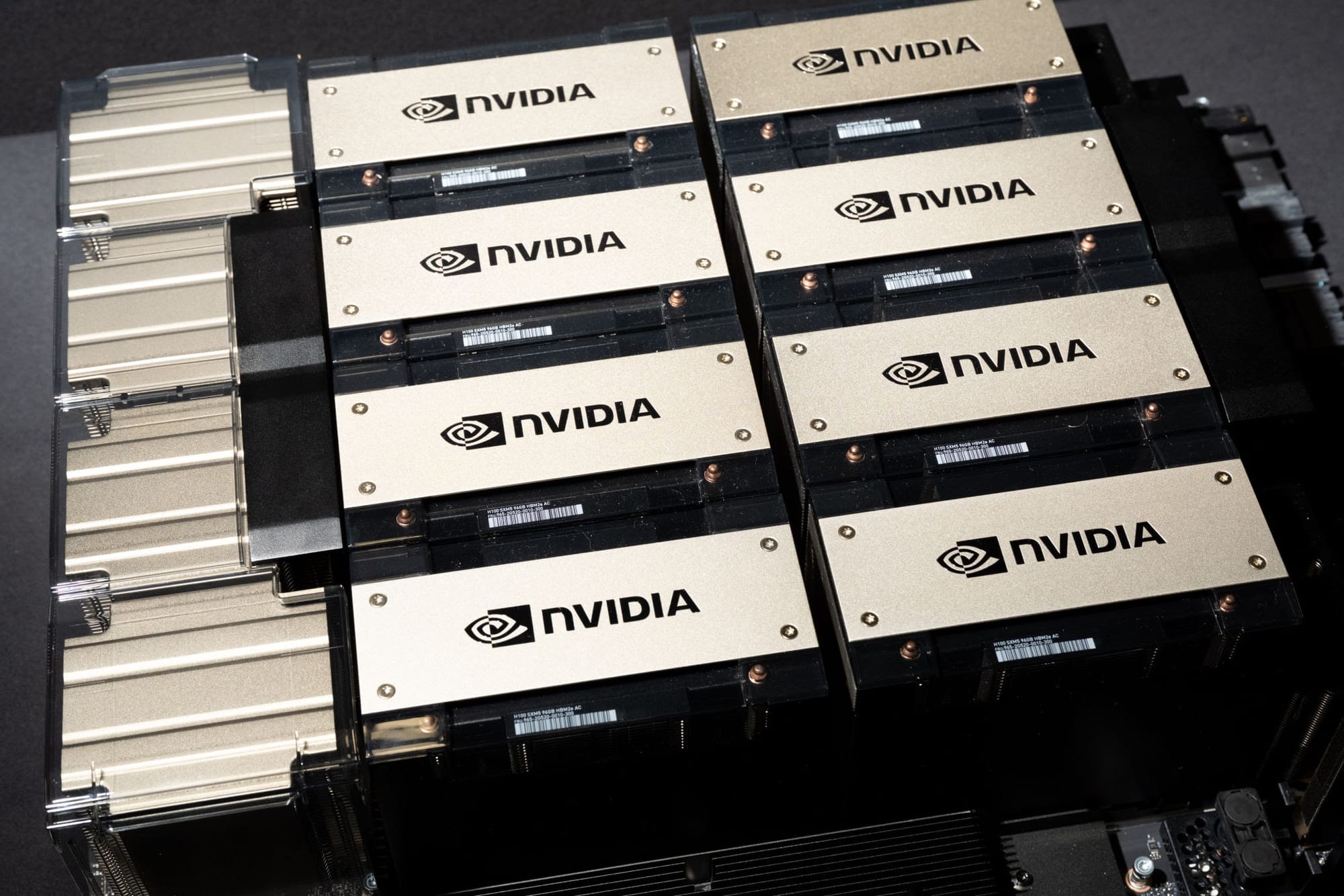
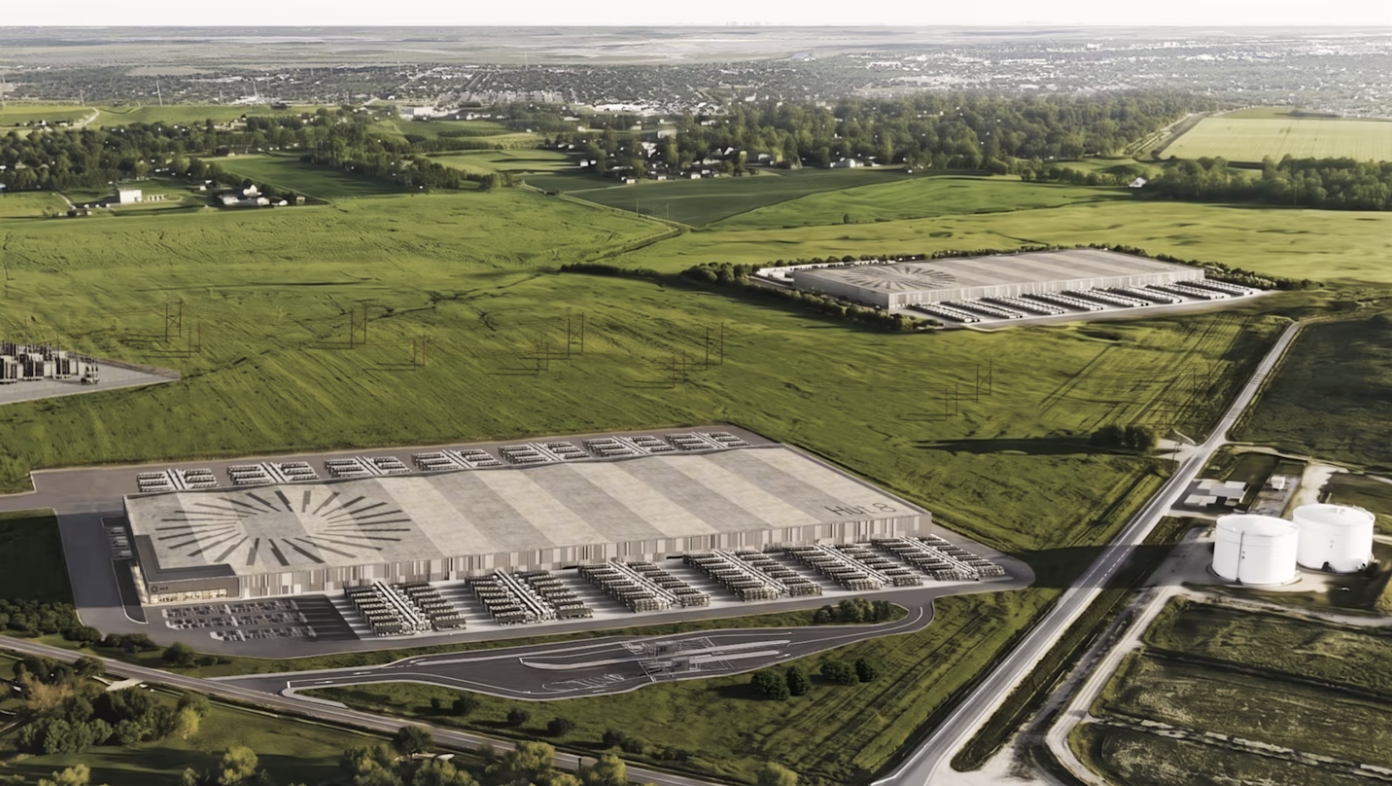
Nvidia is reported to be behind another Ai infrastructure move, leasing $50 billion Texas data center that will uses Nvidia's chips.

Economics & FinanceTech

Nvidia is reported to be behind another Ai infrastructure move, leasing $50 billion Texas data center that will uses Nvidia's chips, (The Financial Times, Channel News Asia).

What's your take on Nvidia?

Concerns on circular financing
51.69%
AI infra is just at the beginning
48.31%
1,033 Polls


The nearly $5tn company is leasing the entire 1 gigawatt facility that developer Hut 8 is building, which will house hundreds of thousands of Nvidia’s graphics processing units, said five people familiar with the deal.

The move is the latest example of Nvidia’s chief executive Jensen Huang aggressively using the company’s financial strength to keep it at the centre of the fast-growing market for AI computing power.

These efforts have included spending billions of dollars to foster a new generation of AI infrastructure providers, such as CoreWeave, to buy and run its GPUs. The Texas lease goes further, putting Nvidia behind the facilities that will house its chips.


The Texas site has secured access to electricity, something that is increasingly rare as developers compete for grid power. Nvidia wielded its financial muscle to lock in the site for its own chips, said an executive familiar with the deal.

“They have the balance sheet to acquire power, and in doing so, ensure their product is deployed,” the person said, asking not to be named. Once completed, Nvidia could sublease capacity to its “neocloud” partners that buy its GPUs and sell AI cloud computing, the person said.

The arrangement will intensify concerns about circular financing, as the chip group underwrites more of the market for its chips.

Source:

  1. The Financial Times; https://www.ft.com/content/685014e7-47dd-471b-a585-1b9b73ce5d6f?syn-25a6b1a6=1
  2. Channel News Asia; https://www.channelnewsasia.com/business/nvidia-behind-50-billion-lease-texas-data-center-ft-reports-6282306
Nvidia Credit Risk Surges as $750 Billion AI Push Raises Financing Fears
News
SemiconductorHyperscalersAI InfrastructureMag 7 Semi News

Nvidia Credit Risk Surges as $750 Billion AI Push Raises Financing Fears

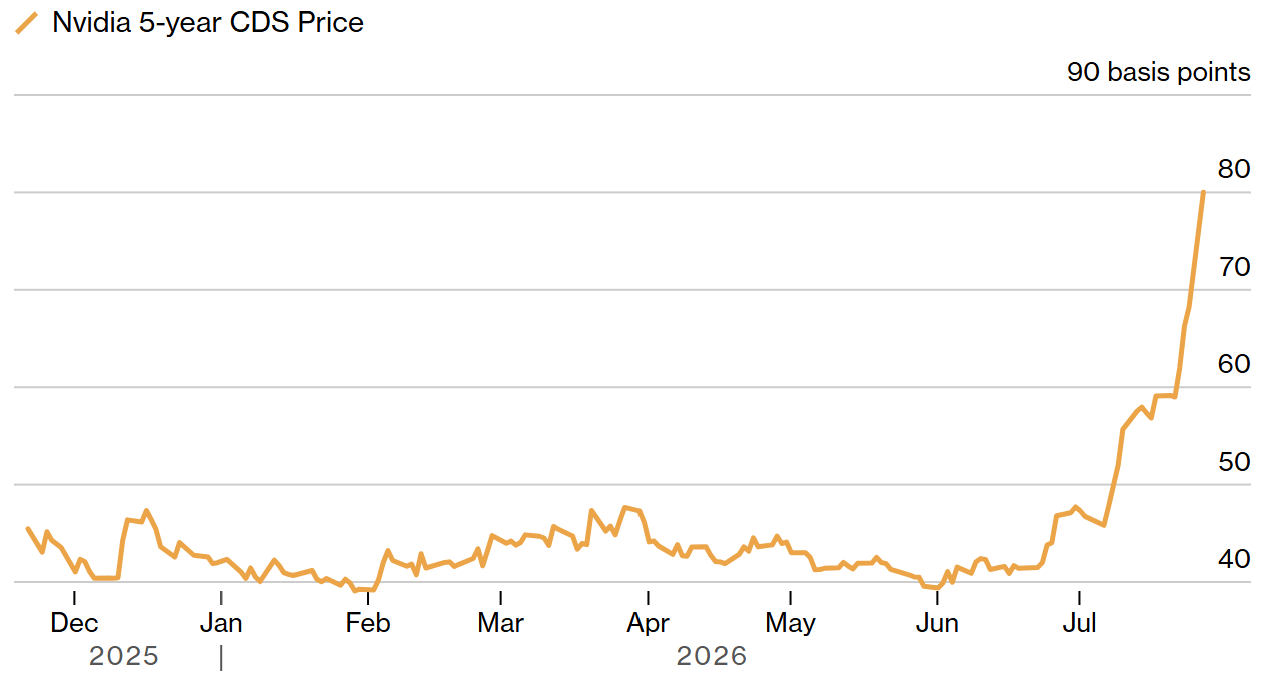
The cost of protecting Nvidia Corp.’s debt against default surged by the most on record Monday, after reports of the chipmaker being in conversations on more than $750 billion of artificial intelligence infrastructure deals stoked fears about the company’s obligations.

Economics & Finance

The cost of protecting Nvidia Corp.’s debt against default surged by the most on record Monday, after reports of the chipmaker being in conversations on more than $750 billion of artificial intelligence infrastructure deals stoked fears about the company’s obligations.

A partnership with SK Group unveiled late Friday means the companies will be doing more than $500 billion in business with each other, Nvidia said. Nvidia is also in talks to backstop as much as $250 billion to help OpenAI lease computing power from a US data center project in what would be among the chipmaker’s biggest financing deals with a customer.

Nvidia is also having discussions to finance $350 billion of OpenAI’s purchases of its chips for the US project, according to a person familiar with the matter.

Such borrowing would likely require investment-grade ratings, which are difficult for the likes of OpenAI and Anthropic PBC to currently support given they are rapidly burning cash to grow their businesses. Backing from big firms can help debt that funds AI infrastructure spending win high-grade ratings.

Meanwhile, the price of protecting Nvidia's debt against default for five years rose as much as 0.14 percentage point to 0.82 percentage point a year, according to ICE Data Services. That’s the biggest intraday rise since the swaps started to actively trade in November.

Nvidia's credit default swaps jumped on $750 Billion AI Push. Source: Bloomberg, ICE

“The amount of capex needed to build out the AI infrastructure is massive, and debt markets are being inundated with supply,” said Sal Naro, chief investment officer of Coherence Credit Strategies. “There’s a fear of financial alchemy driven by opaqueness, off-balance-sheet transactions and intercompany relationships, which could result in credit rating downgrades.

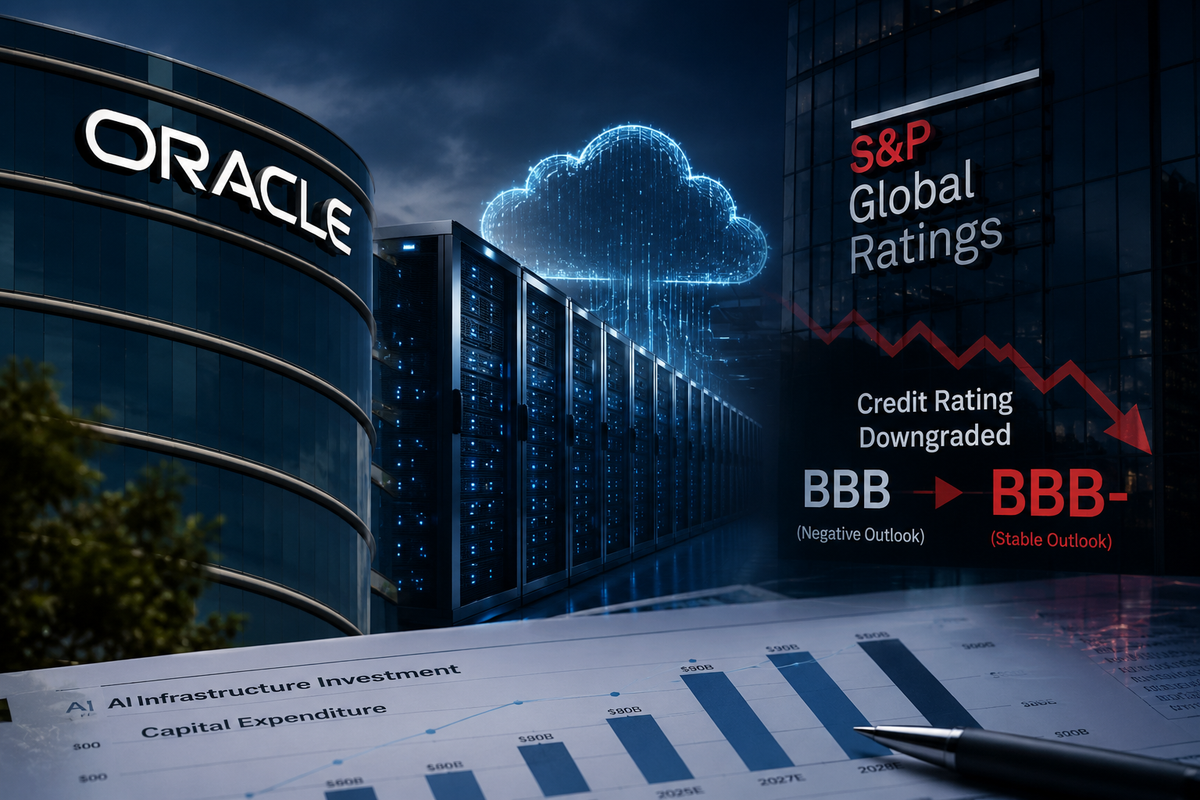
The move echoes Oracle’s downgrade to BBB- earlier in July, underscoring how the enormous financing demands of the AI buildout are beginning to strain even the industry’s largest companies’ credit profiles.

S&P Downgrades Oracle to BBB-
S&P Global downgraded Oracle’s long-term credit rating from BBB (Negative) to BBB- (Stable), citing elevated business risk and weaker near-term cash flows.

Will more AI infrastructure companies face rating downgrades after Oracle?

Yes
52.10%
No
47.90%
1,837 Polls

Source: https://www.bloomberg.com/news/articles/2026-07-27/nvidia-credit-risk-jumps-in-swaps-market-on-ai-deal-talk-reports

Market Rumor - China begins making homegrown DUV chipmaking tools, sources said
News Flash
SemiconductorHyperscalersMarket RumorMust ReadAI Infrastructure Semi News

Market Rumor - China begins making homegrown DUV chipmaking tools, sources said

China has begun manufacturing domestically developed immersion ​deep ultraviolet lithography machines, a key chipmaking tool long dominated ‌by Dutch supplier ASML, The Information reported on Monday (July 27, 2026).

Economics & Finance

China has begun manufacturing domestically developed immersion ​deep ultraviolet lithography machines, a key chipmaking tool long dominated ‌by Dutch supplier ASML, The Information reported on Monday (July 27, 2026, information in-directly sourced from Reuters).

Will any Chinese company acknowledge the delivery of China homegrown DUV tools in 3Q2026?

Yes
46.69%
No
53.31%
1,705 Polls

The machines are expected to be delivered this year to leading Chinese chipmakers, including Semiconductor Manufacturing International Corp, ​Hua Hong Semiconductor, and ChangXin Memory Technologies, the report ​said, citing people familiar with the matter.

Source:

  1. Reuters; https://www.reuters.com/world/china/china-begins-making-homegrown-duv-chipmaking-tools-information-reports-2026-07-27/
  2. The Information; https://www.theinformation.com/articles/china-starts-mass-producing-homegrown-duv-chipmaking-tools-advance-local-chip-industry
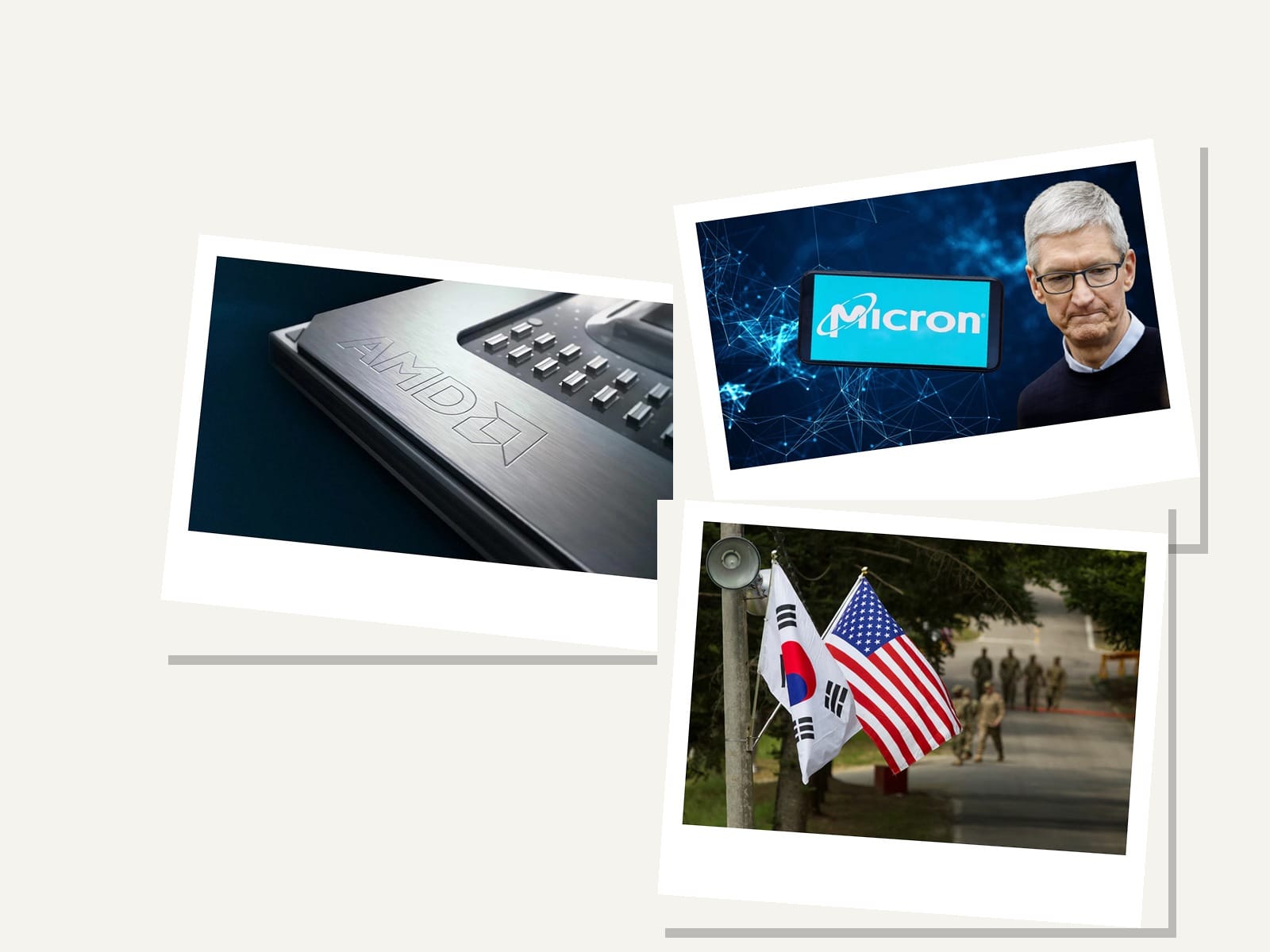
Silicon Bakery - Over The Weekend (Wk4 Jul 2026) - Korean tech names deepen partnership with U.S; AMD under the spotlight on next-gen infra; Apple vs Micron takes a wild turn?
News
HyperscalersLLMsMust ReadIndustry PulseAI InfrastructureSilicon BakeryOver The WeekendMag 7 Semi News

Silicon Bakery - Over The Weekend (Wk4 Jul 2026) - Korean tech names deepen partnership with U.S; AMD under the spotlight on next-gen infra; Apple vs Micron takes a wild turn?

Korean, global tech companies to pursue partnerships worth more than $950 billion in total; AMD introduces its next-gen ai-infra products; Apple vs Micron taking another wild turn...

Economics & FinancePoliticsTech

Korean, global tech companies to pursue partnerships worth more than $950 billion in total

According to Korean news sources, the largest deals involve Samsung Electronics and SK Group, with the former signing a $200 billion deal with Broadcom and the latter a $750 billion agreement with Nvidia and other firms.

Korean companies and global technology giants agreed to pursue partnerships worth more than $950 billion combined during President Lee Jae Myung’s visit to San Francisco, the Blue House said on Friday. Chief presidential secretary for policy Kim Yong-beom announced the agreements — which he said emerged from discussions that took place at the San Francisco AI Summit — during a briefing at the San Francisco press center, some quantitative items as below:

· Samsung Electronics signed a memorandum of understanding with Broadcom to supply $200 billion worth of advanced memory chips over the next five years and cooperate on AI chip production.

· SK agreed to supply $750 billion worth of advanced memory chips to Nvidia and other global tech companies over the next five years.

· Korean and global companies also agreed to pursue projects involving multiple AI data centers with a combined capacity of about 5 gigawatts and around 2 million GPUs.

· Nvidia will support SK hynix in constructing and expanding data centers with a combined 2 gigawatts of capacity, while SK hynix will prioritize allocations of Nvidia’s latest Vera Rubin systems.

· SK Telecom will work with Anthropic on gigawatt-scale AI data center projects based in Korea and related investments.

What will KOPSI reacts in the last week of July 2026?

Index up week-over-week
66.67%
Down W/W
33.33%
3 Polls
Ended

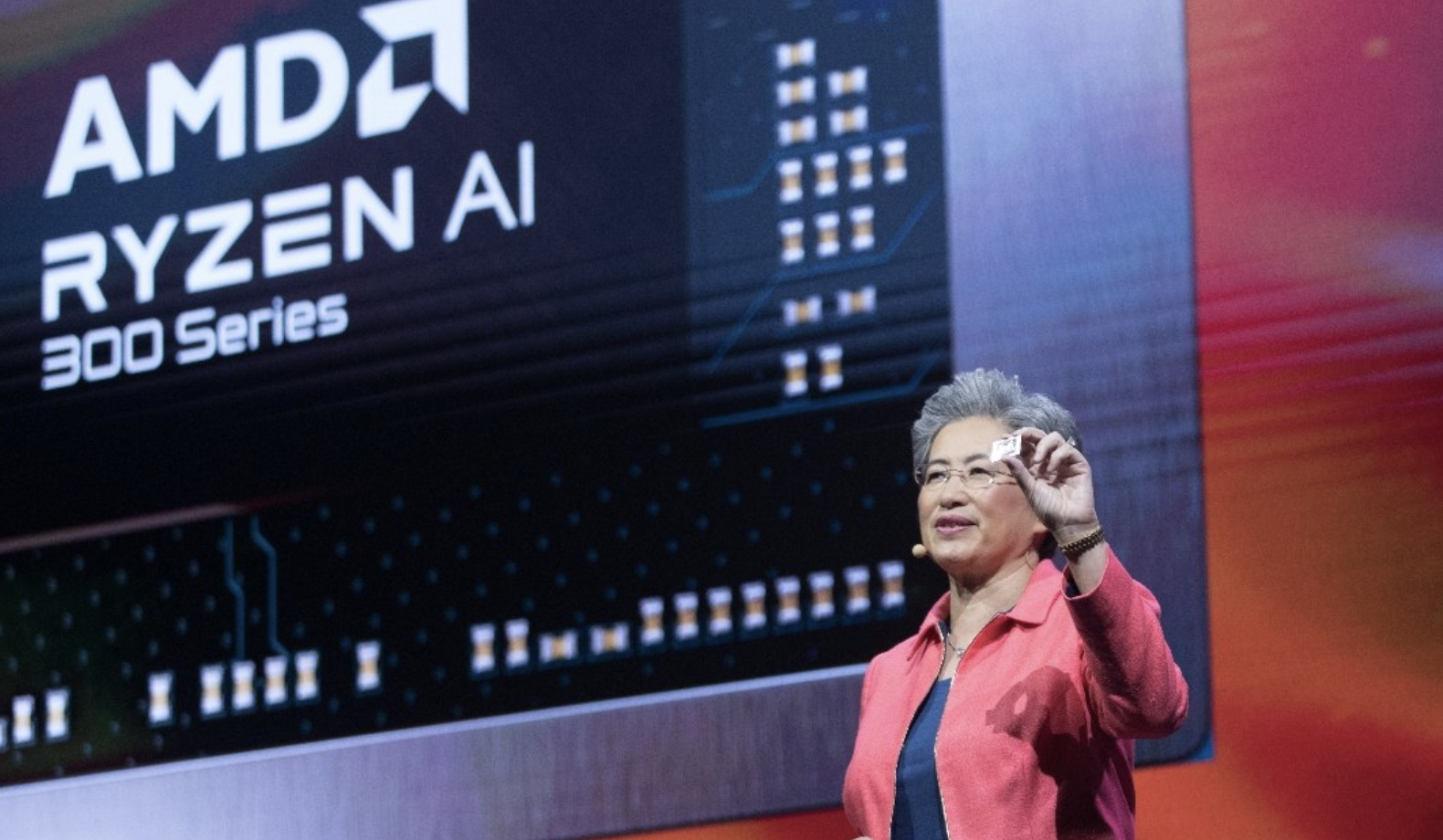
AMD Unveils Next-Gen Ai-Infra: CPU Roadmap

Breaking News - Nvidia, Amkor strike $1.5 billion chip packaging deal (July 23, 2026)
News Flash
Supply ChainSemiconductorHyperscalersBreaking NewsAI InfrastructureMag 7 Semi News

Breaking News - Nvidia, Amkor strike $1.5 billion chip packaging deal (July 23, 2026)

Amkor Technology Announces Strategic Partnership with NVIDIA to Expand Advanced Packaging and Test for Next-Generation AI Infrastructure. $1.5 Billion Multi-Year Advanced Packaging and Development Agreement to Support Expansion of Amkor’s U.S. Advanced Packaging Capacity.

Economics & FinanceTech

Amkor Technology Announces Strategic Partnership with NVIDIA to Expand Advanced Packaging and Test for Next-Generation AI Infrastructure. $1.5 Billion Multi-Year Advanced Packaging and Development Agreement to Support Expansion of Amkor’s U.S. Advanced Packaging Capacity.

Do you think, will more of semiconductor supply-chain flow back to the U.S by the end of 2027?

Yes
74.65%
No
25.35%
1,077 Polls

According to Amkor:

“AI is driving a generational shift in technology, transforming every industry and creating a unique opportunity to reinvigorate American manufacturing and supply chains,” said Debora Shoquist, Executive Vice President of Operations at NVIDIA. “Amkor’s global capabilities, combined with their committed investment in the United States, are critical components of building resilient AI infrastructure and accelerating next-generation technologies.”
“This strategic partnership with NVIDIA underscores the central role advanced packaging plays in enabling the future of AI,” said Kevin Engel, chief executive officer of Amkor Technology. “Our agreement with NVIDIA accelerates our long-term roadmap and supports our ability to deliver full turnkey advanced packaging and test solutions, leveraging our global footprint while expanding U.S. capabilities to support critical AI infrastructure.”

The partnership also reflects a shared commitment to expanding full turnkey advanced packaging and test capabilities in the United States, strengthening domestic semiconductor manufacturing and supply-chain resilience for AI infrastructure. NVIDIA’s capacity agreement supports Amkor’s expansion of U.S. capacity in Arizona, complementing the company’s established manufacturing footprint across Asia, to create a geographically diverse and resilient global supply chain.

Source:

  1. Company press release; https://ir.amkor.com/news-releases/news-release-details/amkor-technology-announces-strategic-partnership-nvidia-expand
  2. Reuters; https://www.reuters.com/world/asia-pacific/nvidia-amkor-strike-15-billion-chip-packaging-deal-2026-07-23/
Result Deep Dive - Alphabet’s Earnings Beat Overshadowed by Record AI Spending
Analysis
LLMsHyperscalersEarnings & OperationsAI InfrastructureMag 7

Result Deep Dive - Alphabet’s Earnings Beat Overshadowed by Record AI Spending

Alphabet reported Q2 revenue of $119.8 billion on Wednesday, up 24% year over year, as accelerating Google Cloud growth and a large investment gain lifted earnings. Net income reached $9.11 a share, well above Wall Street forecasts. All while reporting negative free cash flow.

Economics & Finance

Alphabet reported second-quarter revenue of $119.8 billion on Wednesday, up 24% year over year, as accelerating Google Cloud growth and a large investment gain lifted earnings. Net income reached $9.11 a share, well above Wall Street forecasts.

Yet the strong headline results failed to reassure investors. Alphabet shares fell as much as 5% in after-hours trading before recovering part of the decline, as attention quickly shifted from revenue growth to the company’s rapidly expanding capital expenditures.

Alphabet was the first of the big tech companies to report quarterly results, with Meta Platforms Inc., Microsoft Corp. and Amazon.com Inc. due next week. In April, the four companies indicated that they could spend as much as $725 billion this year on their AI ambitions. Alphabet’s revised outlook suggests that figure may rise further, even as the financial returns on those investments remain uncertain.

The quarter nevertheless provided some evidence that Alphabet’s AI spending is translating into demand. Google Cloud revenue rose 82% from a year earlier to $24.77 billion, comfortably exceeding analysts’ estimate of $22.46 billion. Cloud backlog, representing contracted revenue not yet recognized, increased to $514 billion from roughly $460 billion in the previous quarter.

Cloud demand was “powered by strong demand for AI infrastructure and AI solutions,” Chief Executive Officer Sundar Pichai saids. He added that most of the backlog came from conventional contracts across a broad mix of customers and that it expects to recognize more than half of the total as revenue over the next 24 months.

Google Cloud has therefore become one of the clearest tests of whether Alphabet’s AI investments can generate financial returns. Although the division still trails Amazon Web Services and Microsoft Azure, it is now one of Alphabet’s fastest-growing businesses, supported by AI startups and enterprises building and deploying AI applications.

However, the scale of the spending required to meet that demand remains the central concern. Alphabet raised its 2026 capital expenditure forecast to between $195 billion and $205 billion, up from a previous ceiling of $190 billion. The company said the increase would allow it to accelerate the expansion of AI computing capacity and capture more cloud revenue.

The higher outlook set a cautious tone for the rest of Big Tech earnings season, reviving concerns that fiscal discipline is being sacrificed in the race to dominate artificial intelligence.

Alphabet’s expanded spending plan “does not sit well,” Investing.com senior analyst Thomas Monteiro said. He argued that higher interest rates and continued supply constraints in AI infrastructure could challenge the assumption that the company will always be able to finance its investments entirely through internal cash flow.

Those concerns were reinforced by Alphabet’s cash-flow figures. The company generated $39.1 billion in operating cash flow during the quarter but spent $44.9 billion on capital expenditures, producing negative free cash flow of $5.8 billion—its first negative quarter as a publicly traded company.

Following the higher capex forecast, Alphabet is on track to spend roughly $120 billion in the second half of the year. Investors may therefore have to accept further periods of negative free cash flow while waiting for AI-related revenue to catch up.

That dynamic will intensify scrutiny of Alphabet’s AI strategy. Wall Street is looking for clearer evidence that the company’s spending—and similar investments by its rivals—is creating new, profitable growth rather than merely increasing costs.

Meanwhile, Alphabet has more potential uses for AI infrastructure than most of its peers. Its spending supports Google Cloud, the Gemini model family, consumer AI products and the core advertising business. The breadth of those applications may eventually justify the investment, but the timing and scale of the returns remain uncertain.

Google is continuing to expand Gemini, although delays to Gemini 3.5 Pro have raised questions about its competitive position in developer tools and AI coding. Pichai instead highlighted Gemini 4, a larger frontier model, and said Google plans to move toward an almost monthly release cycle.

YouTube revenue reached $11.1 billion, beating estimates, supported by connected TV, creator content and AI-powered tools. Alphabet also recorded nearly $100 billion in investment gains from stakes including Anthropic and SpaceX, sharply boosting net income.

Overall, Alphabet’s results showed that AI demand is already supporting exceptional cloud growth. But the market’s reaction made clear that revenue growth alone is no longer enough: investors increasingly want proof that the company can convert its enormous AI spending into durable cash flow and returns.

Will Alphabet return to positive free cash flow before the end of 2027?

Yes
48.51%
No
51.49%
1,340 Polls

Source: https://www.bloomberg.com/news/articles/2026-07-22/alphabet-posts-cloud-sales-beat-slight-miss-on-search-revenue

Market Rumor Confirmed - AMD and Anthropic Sign Major Chips-and-Investment Deal - July 22, 2026
News Flash
HyperscalersLLMsMarket RumorAI Infrastructure Semi News

Market Rumor Confirmed - AMD and Anthropic Sign Major Chips-and-Investment Deal - July 22, 2026

Advanced Micro Devices and Anthropic have signed a deal for tens of billions of dollars' worth of artificial-intelligence servers, strengthening AMD's competitive position against industry leader Nvidia and supplying Anthropic with much needed computing power (Yahoo Finance, July 22, 2026).

Economics & FinanceTech

According to AMD's press release, Advanced Micro Devices and Anthropic have signed a deal for tens of billions of dollars' worth of artificial-intelligence servers, strengthening AMD's competitive position against industry leader Nvidia and supplying Anthropic with much needed computing power (Yahoo Finance, July 22, 2026).

Check our our "Market Rumor" post, published eariler this week – This is confirmed now:

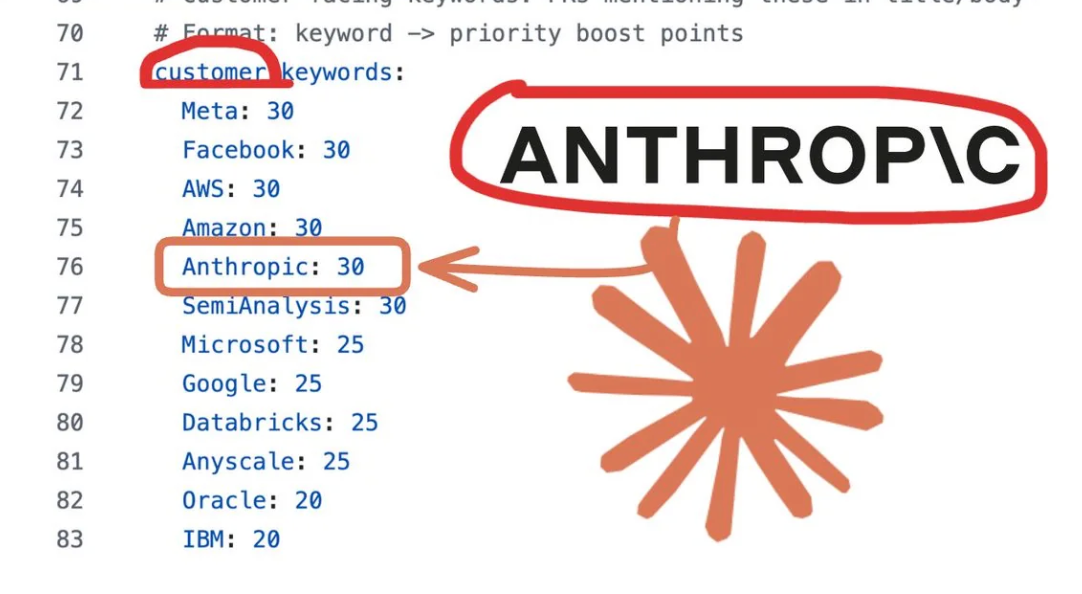
Market Rumor - AMD Stock Rises Overnight: Is Anthropic A New Customer? - July 20, 2026
A code file by Anush Elangovan, a vice president of AI software at AMD, reportedly listed Anthropic as a “customer.”

Under the terms of the agreement, Anthropic will purchase up to 2 gigawatts of AMD's latest-generation chips, called the Instinct MI450, starting in the first half of 2027. AMD will also invest up to $5 billion in Anthropic—its first check into the AI firm—as certain deployment milestones are met.

"We have very much wanted to be a major part of their infrastructure," AMD Chief Executive Lisa Su said, adding that the companies' engineering teams have been working together for some time.

Anthropic runs computing workloads across chips including Google's tensor-processing units, Amazon.com's Trainium chips, and Nvidia graphics processing units, or GPUs. As part of the deal, Anthropic will buy some AMD chips for its own data centers, as well as lease some of the capacity via other large cloud providers or neoclouds. Anthropic and AMD are working together to identify data centers for the chips, Su said.

Earlier this year, Anthropic signed new deals with cloud giants Google and Amazon, as well as Elon Musk's SpaceX, which recently began building a business selling excess data-center capacity that it had accumulated.

Source:

  1. Yahoo Finance; https://finance.yahoo.com/technology/ai/articles/amd-anthropic-sign-major-chips-123000630.html
  2. AMD's company reports; https://ir.amd.com/news-events/press-releases/detail/1292/amd-and-anthropic-announce-strategic-partnership-to-deploy-up-to-2-gigawatts-of-amd-instinct-mi450-series-gpus
Market Rumor - Microsoft Weighs Kimi K3 for Copilot Despite Trump Administration Pressure
News Flash
Market RumorLLMsHyperscalersMust ReadAI InfrastructureMag 7

Market Rumor - Microsoft Weighs Kimi K3 for Copilot Despite Trump Administration Pressure

Microsoft is evaluating Moonshot AI’s Kimi K3 model for use in Copilot as the company looks to reduce the rapidly rising cost of running its artificial intelligence products.

TechEconomics & Finance

Microsoft is evaluating Moonshot AI’s Kimi K3 model for use in Copilot as the company looks to reduce the rapidly rising cost of running its artificial intelligence products.

The US technology group is already working to make Kimi K3 available through its Azure cloud platform, according to The Information. Microsoft engineers are also assessing whether the Chinese open-weight model could support parts of Copilot, including its agentic enterprise workflows.

The evaluation comes as Microsoft shifts Copilot Cowork toward metered pricing, under which customers pay according to the number of tokens consumed. That model makes inference costs increasingly important, particularly for applications that perform long, multi-step tasks and generate large volumes of tokens.

Microsoft estimates that moving some Copilot workloads away from models developed by OpenAI and Anthropic and toward Kimi K3 could save as much as $600 million in inference costs.

Kimi K3, recently released by Beijing-based Moonshot AI, has 2.8 trillion parameters and is designed for multimodal and agentic workloads. It supports a context window of roughly 1 million tokens and has posted competitive results against several leading Western models.

AI start-up Moonshot launches largest Chinese AI model
Chinese AI start-up Moonshot has released a large language model with capabilities approaching those of frontier US labs such as Anthropic, as the gap narrows between the two countries on state-of-the-art AI.

Its headline cost advantage, however, is not straightforward. Kimi K3 reportedly costs about $0.94 per Intelligence Index task, compared with $0.55 for GPT-5.6 Terra and $1.04 for GPT-5.6 Sol when maximum reasoning is enabled. The model can also generate longer reasoning chains, increasing total token consumption.

Its infrastructure efficiency may be more important for Microsoft. Kimi K3 uses a mixture-of-experts architecture and distributes 896 experts across a large number of graphics processors. A smaller key-value cache and other memory optimizations reduce the hardware resources required to process each token, potentially lowering costs when the model is deployed at data-centre scale.

Will cost savings push more US tech companies to adopt Chinese open-source AI models?

Yes
15.32%
No
84.68%
1,919 Polls

Microsoft has previously considered other Chinese open-source models for Copilot. Axios reported in June that the company was examining DeepSeek’s V4 or a similar model that could be hosted on Microsoft’s own infrastructure.

Hosting the models internally would give Microsoft greater control over data, security and deployment, while reducing its dependence on external model providers. It would also allow the company to select different models for different Copilot tasks rather than relying on a single supplier.

Any adoption of Kimi K3 could nevertheless create political tension in Washington. The Trump administration has sought to discourage US companies from relying on Chinese AI technology, citing national-security and economic-competition concerns.

Microsoft therefore faces a trade-off between economics and geopolitics. Chinese open-weight models could materially reduce the cost of operating Copilot, but deploying them inside one of the most widely used US enterprise software ecosystems would likely attract regulatory scrutiny.

Will Microsoft deploy Kimi K3 in Copilot despite potential US political pressure?

Yes
68.31%
No
31.69%
1,376 Polls

Source: https://wccftech.com/microsoft-looking-to-save-as-much-as-600-million-by-swapping-gpt-and-claude-for-chinas-kimi-k3-in-copilot-risking-a-rap-on-the-knuckles-from-the-trump-administration/