As the dust settles on this week’s major Big Tech earnings releases, the financial media remains predictably fixated on top-line revenue beats and cloud growth percentages. However, for institutional investors and universal asset owners, the most critical data points are no longer found in the revenue headlines, but buried deep within the cash flow statements. Silicon Valley is definitively exiting the high-margin, zero-marginal-cost era of traditional software. Driven by the relentless computational demands of artificial intelligence, Big Tech has rapidly mutated into a capital-intensive heavy industry.
The sheer scale of this transition is historically unprecedented. Over the past 36 months, the global financial system has funneled an estimated $1 trillion into physical AI infrastructure. Yet, as leadership at Norges Bank Investment Management (NBIM) recently highlighted, a profound structural asymmetry persists: while an estimated $1.4 trillion is required for global hardware buildouts, direct and verifiable AI revenues struggle to cross a mere $13 billion threshold. With macroeconomic projections from Morgan Stanley anticipating the combined capital expenditures (CapEx) for the five largest US tech giants to hit $1.16 trillion by 2027, the thematic hype cycle is officially over.
We have entered the era of the "CapEx Wall," where the fundamental measure of corporate survival is no longer algorithmic promise, but strict balance sheet resilience and the ability to defend Free Cash Flow.
The Microsoft & Alphabet Proxies: Quantifying the Capital Burden
The sheer magnitude of this infrastructure burden is already visible in the latest SEC filings. Alphabet’s trajectory—with its CapEx surging 74% (from $52.5 billion to $91.4 billion between 2024 and 2025)—was an early warning. Microsoft’s recent Q4 2026 results confirm this permanent escalation in capital intensity, with quarterly capital expenditures reaching an unprecedented $35.80 billion.
AI, a Capital-Intensive Industry Hit by the Inference Tax
The historical paradigm of the tech industry—distributing software at zero marginal cost—is obsolete. Generative AI now resembles a heavy industry, structurally penalized by an “inference tax.” While Microsoft CFO Amy Hood highlighted “a strong quarter to close out the fiscal year, underscored by $59.3 billion in Microsoft Cloud revenue,” the reality of the balance sheet shows profitability under pressure. The Intelligent Cloud division’s operating margin peaked at 40.6% (Q4), and the company’s regulatory filings confirm a squeeze on gross margin directly attributable to AI infrastructure costs.
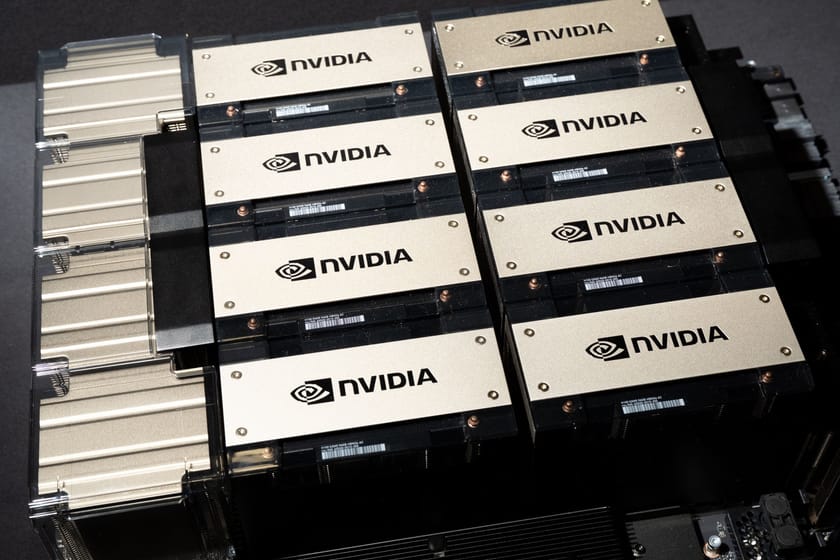
This massive cash burn is exacerbated by a trap of accelerated depreciation. State-of-the-art GPUs (Nvidia H100 or Blackwell architectures) become obsolete within 3 to 4 years. This ultra-short life cycle forces perpetual reinvestment in hardware, which mechanically crushes free cash flow generation, transforming a competitive advantage into a permanent exercise in capital destruction.
The FinOps Pivot and Margin Cannibalization
To finance this unyielding infrastructure burden without defaulting on profitability, tech companies are aggressively cannibalizing their internal operating models. Historical Sales & Marketing (S&M) budgets are being drastically cut from 47% to 41% of revenue (KeyBanc), freeing up capital to prioritize R&D, which now exceeds 22% of revenue. This reallocation automatically extends the CAC payback period to 18 months, while 55% of IT decision-makers admit that their current infrastructure cannot support AI without significantly eroding their margins (Forrester).
Meta Platforms illustrates this dynamic with unprecedented accounting severity. Lacking a B2B cloud division to offset the hardware burden, the company relies exclusively on advertising, leaving it fully exposed to infrastructure risk. The second-quarter 2026 results confirm this “CapEx Wall”: capital expenditures (CapEx) reached $31.08 billion, forcing management to tighten its colossal annual guidance range to between $130 billion and $145 billion. This need to absorb the surge in computing costs led to a 55% year-over-year spike in operating expenses (OpEx), sharply reducing the operating margin from 43% to 31%. The sacrifice of short-term profitability is reflected in a crushing decline in free cash flow, which has been squeezed down to just $784 million. Although Mark Zuckerberg maintains that AI “is accelerating our core business today,” the financial statements reveal a more stark reality: the race toward hyper-infrastructure requires the temporary depletion of available cash.
As the "CapEx Wall" forces a FinOps pivot, what is the most severe P&L risk for enterprise software over the next 18 months?
Macro-Financial Displacement and the Stock Market Divide
The price action observed during after-hours trading on July 29, 2026, confirms a clinical reassessment of the risk associated with artificial intelligence infrastructure. The markets are no longer penalizing revenue stagnation, but rather the destruction of free cash flow (FCF) attributable to the “CapEx Wall.” The -6.41% correction inflicted on Meta Platforms—which fell to $548.09 despite solid revenue—illustrates this perfectly: investors are penalizing the accumulation of capital expenditures that lack immediate profitability.
Conversely, the 8.97% jump in Microsoft’s stock (to $425.56) demonstrates a strict market requirement: depreciation costs must be offset by tangible monetization. Microsoft was rewarded for proving its Operating Alpha—the ability to generate cash despite the hardware drag. As highlighted by the financial press’s narrative illustrating this “great AI divide,” balance sheet resilience now takes precedence over the promise of expansion.
Beyond equity markets, this asymmetry is triggering a severe macro-financial “crowding-out” phenomenon in global credit. According to BIS data, nearly 60% of global FX derivatives are now concentrated among the ten largest banks to finance Big Tech’s data centers, automatically drying up credit conditions for traditional SMEs.
Conclusion: The Valuation Doghouse and the New Institutional Mandate
The cycle of abundant liquidity fueling innovation has come to an end. The markets are conducting a ruthless binary culling: 73% of publicly traded traditional SaaS companies are now relegated to a "Valuation Doghouse," trading at a median multiple of just 3.3x their future revenue (Meritech). Only the elite—those demonstrating true Operating Alpha by mastering the “Rule of 40”—are capturing liquidity.
Ultimately, this week’s Big Tech earnings confirm a definitive regime change: AI is no longer a speculative vector for exponential hyper-growth, but a highly capital-intensive, defensive infrastructure. For institutional allocators, the mandate is clear. Capital allocation must be rigidly anchored to organizations capable of navigating the CapEx wall, enforcing FinOps discipline, and protecting Free Cash Flow generation against the crushing weight of accelerated hardware depreciation.