China is planning to allow the country's leading AI companies to purchase a limited number of Nvidia's H200 AI chips, according to The Information, citing two people with direct knowledge of the matter.
The report said Chinese officials have recently informed companies including Alibaba, ByteDance, and DeepSeek that they may soon receive approval to buy a limited quantity of Nvidia's H200 chips. The move would mark a notable shift in Beijing's approach to advanced AI hardware imports.
Will China be able to buy H200?
YesResult
75.00%
NoResult
25.00%
4 Polls
EndedTBD
The development comes after the U.S. government approved Nvidia's sales of H200 chips to China and granted export licenses to around 10 Chinese companies. However, Chinese authorities had previously delayed their own approvals as they sought to support the growth of domestic AI chipmakers. Reuters reported in March that Nvidia had already secured Beijing's long-awaited approval to sell the H200 chips in China.
News of the potential policy change boosted investor sentiment. Nvidia shares rose in Wednesday morning trading following the report.
The reported shift also highlights the growing shortage of AI computing power in China. Demand for advanced AI chips has continued to outpace supply as Chinese technology companies expand their investments in large language models and other generative AI applications.
Reading the trajectory of AI infrastructure demand through the industry's purest — and riskiest — case study.
1.The Purest Tech Case Study (Introduction to the Meta Proxy)
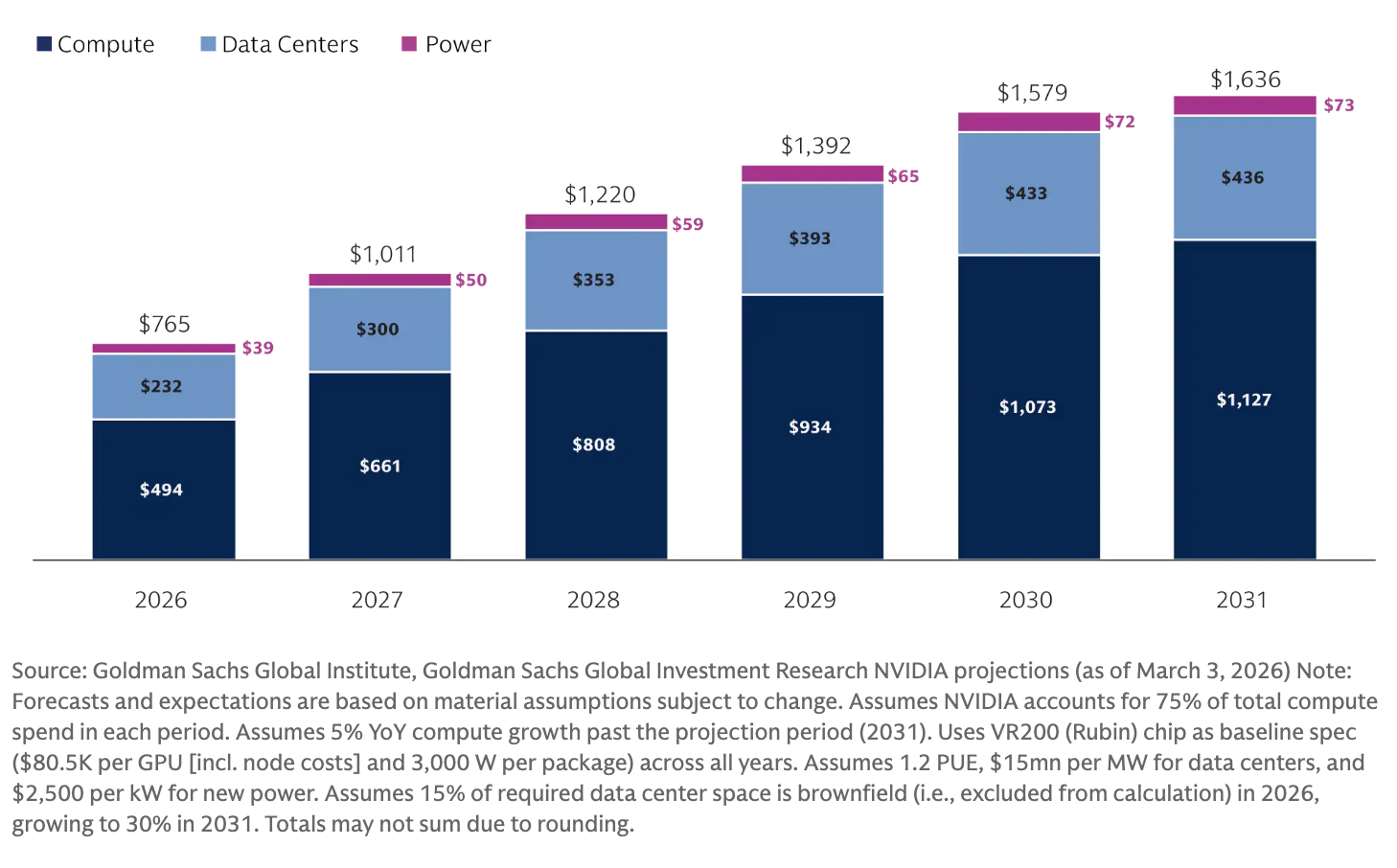
As the global financial system absorbs nearly $1 trillion in physical AI infrastructure, institutional skepticism is rising over the revenue gap. As Nicolai Tangen of Norway's sovereign wealth fund (NBIM) warned, a structural imbalance persists between the $1.4 trillion in projected global hardware expenditures and direct, verifiable AI revenues that struggle to cross $13 billion worldwide. In an era where markets demand proof of operational conversion and end-to-end viability, Meta emerges as the industry's most radical analytical proxy.
Unlike Microsoft’s Azure, Google’s GCP, or Amazon’s AWS, Meta operates as the purest unhedged bet in the generative AI landscape. The company possesses no external B2B cloud computing business to lease excess server capacity, monetize third-party compute, or subsidize its silicon infrastructure. Consequently, management's staggering CapEx guidance—officially projected between $125 billion and $145 billion for the fiscal year 2026 —must be justified entirely through internal monetization. Without a cloud safety net, every dollar spent on server farms and the pursuit of "superintelligence" represents an unhedged macroeconomic wager, completely reliant on translating brute compute power into ad-targeting efficiency and user engagement across Reels and Instagram.
2. The CapEx Wall and the Inference Tax
The paradigm of the modern internet economy is undergoing a structural mutation. For two decades, tech scaling relied on the zero marginal cost framework of traditional software. Generative AI shatters this foundation. Every prompt, synthetic recommendation, and AI-driven ad placement requires dedicated silicon cycles and immediate electron consumption. This reality imposes a permanent Inference Tax directly on Meta’s Cost of Revenue, structurally shifting it from an ethereal asset to a heavy-industry operating expense.
As Forrester Research highlights, this shift has created a "Pilot Graveyard," with 55% of global IT decision-makers admitting their legacy infrastructure cannot scale AI without severely eroding profit margins. For Meta, deploying generative models across its massive user base—particularly through its automated ad engine, Advantage+—means that higher engagement no longer yields pure profit. Instead, it triggers a linear surge in variable compute costs, threatening to permanently compress historically high gross margins under the weight of an unyielding CapEx wall.
Will Meta’s internal ad and engagement ROI justify its massive AI infrastructure CapEx over the next 24 months?
Yes — Internal monetization will absorb the Inference TaxResult
50.00%
No — The unhedged CapEx wall will crush operating marginsResult
50.00%
2 Polls
EndedTBD
3. The Accounting Depreciation Cycle: From Assets to Liabilities
The current valuation of hyperscalers suffers from a profound market mispricing regarding AI hardware infrastructure. While traditional industrial assets provided decades of predictable utility, modern AI clusters powered by Nvidia H100 or Blackwell architectures are bound to a brutal 3-to-4-year economic and technical useful life before complete obsolescence. This rapid decay creates an economic trap: tech giants are not building permanent capital moats, but are locked in a treadmill of perpetual reinvestment just to maintain baseline compute competitiveness.
To temporarily mask this structural erosion of margins, companies like Meta have resorted to an opportunistic accounting maneuver—a depreciation schedule extension for servers from four to five or six years. While this book-keeping extension artificially cushions reported operating income, it cannot alter the hard physical reality of hardware decay. The unavoidable necessity of replacing obsolete chips every 36 to 48 months directly eviscerates Free Cash Flow (FCF), converting what Wall Street treats as long-term capital assets into recurring operational liabilities.
4. Hitting the "Watt Wall" (The Energy Limit)
The true technical ceiling for AI is not financial, but thermodynamic: The Watt Wall. While hyperscalers possess virtually infinite capital, they are colliding with a hard physical glass ceiling: power grid saturation. According to the IEA, data centers now absorb 22% of Ireland’s total electricity—forcing grid connection freezes in Dublin—and will devour 50% of US electricity demand growth by 2030. This structural deficit forces an intense Physical Crowding Out, where compute clusters displace heavy industry and residential grid electrification. To bypass these transmission bottlenecks, operators like Meta are desperately pivoting to dedicated baseload power, signing PPAs for 1.1 GW of existing nuclear and 150 MW of next-gen geothermal energy. Ultimately, money cannot print megawatts; without grid infrastructure, AI growth stops.
What will be the primary bottleneck throttling the hyperscalers' AI infrastructure boom?
Rapid GPU Depreciation (The 3-4 year replacement cycle)Result
0.00%
Power Grid Saturation (Hitting the 'Watt Wall')Result
0.00%
Shareholder Pressure on Free Cash Flow (The valuation doghouse)Result
100.00%
1 Polls
EndedTBD
Comprehensive Analytical Bibliography:
Bank for International Settlements (BIS). (2025). BIS Quarterly Review: International banking and financial market developments. Basel: BIS, December 2025.
International Energy Agency (IEA). (2026). Electricity 2026 Report: Global Infrastructure & Thermodynamic Trends. Paris: IEA.
Norges Bank Investment Management (NBIM). (2026). Capital Allocation Doctrines and Institutional Mandates 2025/2026. Oslo: NBIM.
Organisation for Economic Co-operation and Development (OECD). (2026). Compendium of Productivity Indicators. Paris: OECD, January 2026.
Andreessen Horowitz (a16z). (2025). Where Value Will Accrue in AI: Structural Realities of Algorithmic Gross Margins. Research Briefing by Martin Casado and Sarah Wang.
Bessemer Venture Partners & Meritech Capital. (2026). State of the Cloud 2026 & Meritech Software Pulse Index. New York/San Francisco: Open Access Multiples Matrix.
Goldman Sachs Global Investment Research. (2024). Gen AI: Too much spend, too little benefit? Global Macro-Equity Strategy Briefing managed by Jim Covello.
Goldman Sachs Global Investment Research. (2026). Tracking Trillions: The Assumptions Shaping the Scale of the AI Build-Out, by George Lee & Lucas Greenbaum.
Morgan Stanley. (2026). US Software Outlook & Big Tech CapEx Projections. New York: Equity Research Division.
Brynjolfsson, Erik, Daniel Rock, and Chad Syverson. (2019). The Productivity J-Curve: How Intangibles Complement General Purpose Technologies. Cambridge: National Bureau of Economic Research, Working Paper No. 25148.
Chen, Xupeng. (2026). Abundant Intelligence and Deficient Demand: A Macro-Financial Stress Test of Rapid AI Adoption. Academic Working Paper, March 2026.
Also includes Ccrporate filling files and briefing or media materials.
Bloomberg (July 1) - Meta is reportedly developing a cloud infrastructure business that would sell access to AI computing power and models to outside customers. The plan could put Meta into a new competitive lane against cloud leaders such as Amazon Web Services, Microsoft Azure, and Google Cloud. The business would aim to generate revenue from excess AI computing capacity that Meta has built for its own artificial intelligence(AI) ambitions.
Who faces the biggest risk if Meta sells excess AI compute?
Neocloud providers e.g. CoreWeave and NebiusResult
16.67%
Big hyperscalers e.g. AWS, Azure, and Google CloudResult
66.66%
AI chip suppliersResult
0.00%
Meta itselfResult
16.67%
OthersResult
0.00%
6 Polls
EndedTBD
Reuters, citing Bloomberg’s report, added that the planned service could let developers access AI models hosted on Meta’s infrastructure and pay for the computing power needed to run them. Meta is also reportedly considering selling raw AI computing capacity, similar to neocloud providers. Meta declined to comment, and Reuters said it could not independently verify the Bloomberg report.
The bullish interpretation is straightforward: Meta may be trying to turn AI infrastructure from a cost center into a revenue source. If the company has already committed massive capital to data centers, chips and AI systems, then selling unused or excess capacity could help Wall Street better understand the return on that spending.
Reuters reported that Meta is projected to spend as much as $145 billion on AI infrastructure this year, a significant portion of Big Tech’s more than $700 billion outlay on the technology. The scale of that spending explains why investors are watching Meta’s AI strategy so closely.
But the bearish interpretation is also important. If Meta is already looking for ways to sell excess compute, investors may ask whether its internal AI products can absorb all the infrastructure it is building. In other words, the same news can be read in two opposite ways: either Meta has found a monetization path for AI Capex or it is revealing early signs of overcapacity.
Is Meta’s reported AI cloud plan bullish or bearish for the AI trade?
Bullish: it creates a new monetization pathResult
50.00%
Bearish: it signals possible compute overbuildResult
50.00%
Neutral: too early to tellResult
0.00%
Depends on pricing and marginsResult
0.00%
2 Polls
EndedTBD
The impact of competition may also be uneven. Large cloud providers like AWS, Azure, and Google Cloud may be harder to disrupt because they already have broad enterprise ecosystems. The bigger pressure may fall on neocloud companies such as CoreWeave and Nebius, who relay more heavily on AI compute demand and large anchor customers. Reuters quoted D.A. Davidson’s Gil Luria as saying Meta’s added capacity would likely matter more for neoclouds than for the biggest hyperscalers.
Now the key question is not simply whether Meta enters cloud. The real question is : the market prices this as AI monetization or AI overbuild.
If investors believe the cloud pivot proves that AI infrastructure can be resold profitably, Meta’s Capex story becomes easier to defend. If they believe it shows internal AI demand is weaker than expected, the trade could spread pressure across AI infrastructure stocks.
Reuters (July 2)- Meta CEO Mark Zuckerberg told employees at an internal town hall that the company’s AI agent technology has not progressed as quickly as he expected. AI agents are automated systems designed to execute tasks on behalf of users. And they are central to the broader market belief that generative AI will eventually translate into real productivity gains.
Zuckerberg also said Meta’s recent reorganization was not as “clean” as it could have been and that executives miscalculated the timing of the changes. Earlier this year, Meta laid off about 10% of its global workforce and reassigned roughly 7,000 employees to AI focused teams which triggered employee pushback and morale concerns.
Do you think Ai Capex has Peaked?
Yes, it's time to take profitsResult
66.67%
No, Big Tech has enormous potentialResult
33.33%
Let me finish my reading first...Result
0.00%
3 Polls
EndedTBD
Despite the slower progress, Zuckerberg did not signal a give up from AI. Reuters reported that he expects Meta to begin seeing more significant benefits from its AI investments within the next three to six months. Meta is projected to spend as much as $145 billion on AI infrastructure this year.
This is not a story about Meta abandoning AI. It is a story about timing.
The AI market has spent the past two years pricing in a rapid transition from infrastructure investment to application level productivity. Zuckerberg’s comments challenge that timeline. If AI agents are progressing more slowly than expected, the market ought to ask whether AI's payoff is being pushed further into the future.
That matters because Meta is not only spending on models. It is restructuring the company around AI, moving employees into AI workflows, and investing heavily in infrastructure. Reuters reported that Zuckerberg realized the shortcomings in Meta’s AI restructuring, while still emphasizing that the company was not fundamentally changing course on its AI push.
For investors, the tension is simple: AI infrastructure spending is immediate but AI agent revenue and productivity gains are still uncertain. If the benefits arrive within three to six months, as Zuckerberg expects, the current investment cycle may look justified. If progress remains slow, investors may become more skeptical of whether AI agents can deliver enough near-term value to support AI’s rising Capex.
Will Meta’s AI agents show meaningful business impact within the next 3–6 months?
YesResult
0.00%
NoResult
0.00%
Only limited impactResult
100.00%
Too early to judgeResult
0.00%
1 Polls
EndedTBD
This is also why the Reuters report should be read together with the Bloomberg report on Meta’s potential cloud business. If AI agents are slower to mature while Meta is also exploring ways to sell excess compute, the market debate will become sharper: is Meta simply creating more revenue channels for AI infrastructure or is it looking for a backup monetization path because internal AI use cases are not scaling fast enough?
The experimental app, internally called “Arena,” would be independent of Facebook and Instagram. It could compete for attention with Polymarket and Kalshi, the biggest prediction markets.
Will Meta launch Prediction Markets App by end of 2026?
Yes - it shipsResult
57.14%
No - quietly killedResult
42.86%
7 Polls
EndedTBD
What would actually get you to use a Prediction Product? (select all that apply)
Polymarket and Kalshi, prediction markets where users can bet on outcomes as varied as the Super Bowl and the length of the State of the Union address, have been some of the fastest-growing destinations on the internet.
Mark Zuckerberg has noticed — and he wants in on the action.
Mr. Zuckerberg, the chief executive of Meta, recently dispatched a small team at his company to create a smartphone app similar to Polymarket and Kalshi, two employees with knowledge of the matter said. Users would not wager money, and the app would probably rely on a video-game-like points system instead, one person said, though the company had not ruled out the eventual use of real money betting.
The app is internally referred to as “Arena” and would function independently from Meta’s social networking apps, which include Facebook, Instagram, WhatsApp and Messenger, said the employees, who spoke on the condition of anonymity to discuss confidential plans. Meta aims to grow the app by leveraging its large social networking audiences and directing them toward using it, they said.
The effort, which insiders characterized as experimental but a top priority, is part of a broader push by Mr. Zuckerberg to create new types of apps based on emerging social behavior online. More than 3.56 billion people visit one or more of Meta’s apps every day, an amount that has raised questions about whether those platforms have reached a saturation point.
Arena is one of a handful of apps that Meta is trying out. Others include one called Meta Photos, another stand-alone app, which would create new types of media using artificial intelligence, the employees said.
Meta declined to comment.
For years, Mr. Zuckerberg has chased growth by looking for how user behavior on the internet is changing and then quickly following fast-growing competitors such as Snap and others by cloning their apps and features.
Those efforts have had mixed success. Meta has struggled with new stand-alone apps before, largely because it has been difficult to get people to find and download them. In 2019, under a team called “New Product Experimentation,” employees tried creating various social apps, including those focused on podcasts and travel, as well as music and matchmaking. Few gained traction, three people familiar with the projects said.
But as Facebook and Instagram increasingly serve video-focused content, Meta executives believe there are fewer areas inside the apps to test new product ideas, the people said. That has pushed the company to set its sights on separate apps.
This is not the first time Meta has experimented with prediction markets. In 2020, it released Forecast, a crowdsourced prediction market app that prompted people to make guesses about the world in the early days of the Covid-19 pandemic. The app was positioned as a way to share crowdsourced knowledge. It used a points system to make predictions about the future. Meta shuttered the app in 2022.
Since then, prediction markets have exploded into a cultural phenomenon, featured during major sports events and in the Golden Globes telecast. In 2025, Kalshi and Polymarket drew a combined $50 billion in online trades. This year, the total has already surpassed $130 billion.
That success has drawn attention from other companies. A prediction market operator can make money by collecting fees on every bet, a potentially enormous source of revenue. Traditional gambling firms like FanDuel and DraftKings have started offering them, as has Gemini, a cryptocurrency exchange. Trump Media & Technology Group, President Trump’s social media business, has also rolled out prediction market plans.
A subway advertisement for Kalshi, a prediction market that, along with its rival Polymarket, has become increasingly popular. Karsten Moran for The New York Times
Kalshi declined to comment. Polymarket did not respond to a request for comment.
The surge of betting on prediction markets has brought intense legal scrutiny. Because these markets offer odds on virtually everything, they create new opportunities for people to use inside information to make money.
A pattern of suspicious trading on Polymarket in particular has generated concerns in Washington. In April, federal prosecutors in New York City charged a member of U.S. Special Forces with using confidential information to place bets about the top-secret plan to capture Nicolás Maduro, the president of Venezuela. The soldier made more than $400,000 betting on the operation, according to prosecutors.
Concerns about insider trading and other possible abuses have put a spotlight on the Commodity Futures Trading Commission, the obscure federal agency that oversees prediction markets. The agency, never particularly large, has shrunk under the Trump administration, leaving it with its smallest staff in years, just as its responsibilities have rapidly expanded.
Senator Richard Blumenthal, Democrat of Connecticut, criticized Meta’s plans on Tuesday in a social media post: “Meta copied slot machines to addict kids to Instagram. Now Zuckerberg is turning his company into a prediction market.”
He added that Meta’s business model was “profiting from addiction” and directed people to support two bills he was cosponsoring in Congress, the Kids Online Safety Act and the Prediction Markets Security and Integrity Act.
Meta insiders have cautioned that Arena remains in development and may not be released.
But as executives search for ways to keep the world’s largest social media sites thriving, Mr. Zuckerberg appears to be relying on his well-worn product development strategy: Follow the users.
Mike Isaac is The Times’s Silicon Valley correspondent, based in San Francisco. He covers the world’s most consequential tech companies, and how they shape culture both online and offline.
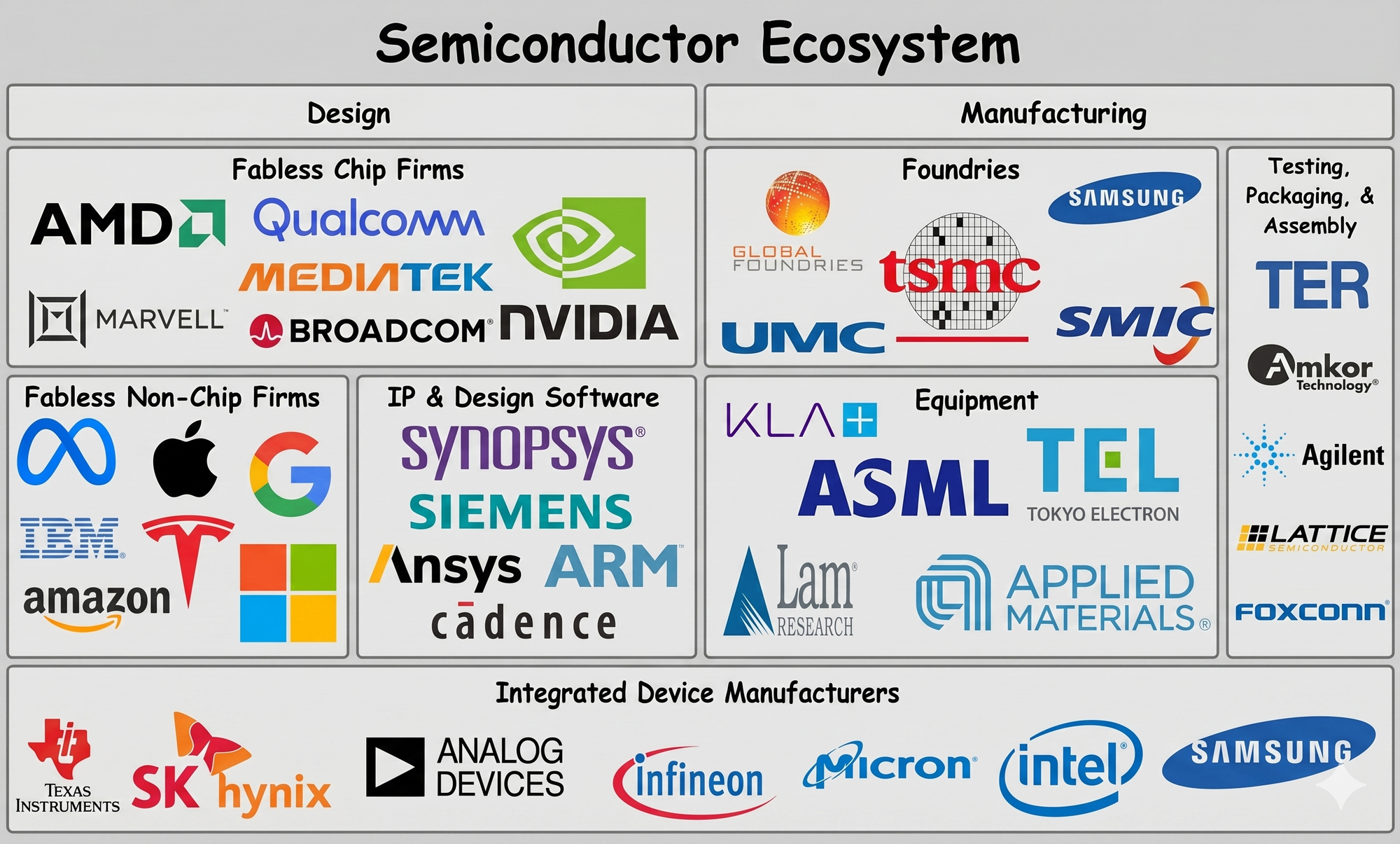
The semiconductor industry is officially entering its $1 trillion era, fueled by a massive $600 billion hyperscale capex surge projected for 2026. Industry consultants view this as a structural revolution beyond cyclicals. As the market begins to look past GPUs & Hyperscalers, the question remains: what will the next wave be?
AI Infrastructure Boom - A Rising Tide Lifts All Boats
The global semiconductor market is undergoing a seismic transformation. IDC’s latest forecast projects the industry will surge past the $1 trillion revenue threshold in 2026, significantly ahead of prior expectations. The growth will be driven overwhelmingly by AI infrastructure investment, which is reshaping the entire market. (IDC).
Hyperscale capital expenditure exceeded $100 billion for the first time in Q3 2025, and the i4 are expected to increase capex by 70% year over year to approximately $600 billion in 2026. IDC forecasts data center semiconductor revenues to reach $477.1 billion in 2026. By 2030, data center semiconductors will account for $843.2 billion, nearly half the total semiconductor market.
It seems the growth is self-sustaining rather than cyclical:
1) Compute intensity continues to rise. Generative AI and agentic workloads require far more compute density per rack than prior architectures, increasing the overall silicon footprint.
2) Inference demand compounds on itself. Each new model generation increases the volume of inference, requiring ongoing hardware upgrades
3) AI is spreading beyond the data center. As enterprises, edge deployments, and client devices begin running AI workloads locally, demand becomes more distributed.
Segments That Are Soaring - by Consensus
High-Bandwidth Memory (HBM3e / HBM4): Memory is no longer a "commodity" cycle; it’s the primary bottleneck for AI. Hyperscalers are paying massive premiums to secure HBM3e and early HBM4 supply. Micron (+136% YTD) and SK Hynix (+70% in last 30 days) are the star performers here, as AI accelerators cannot function without these specialized, high-density stacks.
Custom Silicons & AI ASICs: Companies are shifting away from general GPUs to bespoke "homegrown" chips to cut costs and power consumption. Broadcom’s long-term contracts with Google & Meta provides revenue visibility. Marvell Technology (+50% in a month) is a fast-growing challenger, winning orders from Amazon and Microsoft, outpacing the industry’s growth.
Co-Packaged Optics (CPO) & 1.6T Connectivity: The "Copper Wall" has been hit; data must now move via light. The upgrade from 800G to 1.6T networking is the new margin expansion story. As the leader in Indium Phosphide components, Coherent (+42% YTD) is the "arms dealer" for the 1.6T transceiver upgrade. Lumentum (+28% YTD) is benefiting from the rapid adoption of CPO technology so solve heat and power issues in massive data center clusters. (note: all as of mid May 2026)
What Has The Market Not Priced-in?
Besides the obsession over GPU shipments and HBM capacity, what are elements yet to be fully-priced in?
The agentic CPU re-rating story, as CPUs return to the center of the AI stack?
The machinery-to-data-center pivot, where traditional industrial cyclical players move into the power generation space for AI-infrastructure?
Niche players that are integrated into the upgraded supply-chain of hyperscalers?
Drop a comment below on what is trendy and will be the next wave of growth!
Gambling’s reach is extending deeper into the investment ecosystem as Google strikes a deal to pipe prediction market data from Kalshi Inc. and Polymarket into its finance platform.
In the partnership announced Thursday, Google Finance said it will offer up the changing odds from the prediction market exchanges when users ask for information about future events. Financial terms of the deal with the Alphabet Inc. unit weren’t disclosed.
Kalshi and Polymarket are getting the valuable imprimatur of Google as they seek to legitimize a product that has been derided, in some circles, as nothing more than gambling.
The exchanges have experienced record volumes, due in large part to the popularity of their sports betting products, which offer a federally regulated way to wager on the outcome of sports events of all sorts, despite significant legal pushback from state gaming regulators.
But the companies have been eager to present the trading on their exchanges as a better way to understand the probabilities around a wide array of global issues — from economic data to weather events.
Kalshi and Polymarket both hosted significant trading around the recent US elections, and the odds on the exchanges were cited by many news organizations, in part because they were updated in real time, unlike the more irregular results of polls.
Google said Thursday that the deal with allow its users to “harness the wisdom of the crowds.” As an example, it said that a user asking about future GDP growth will be offered the odds reflected on the exchanges.
Representatives for Kalshi and Polymarket declined to comment.
The integration marks another step in the merging of speculative and informational markets. Prediction data — once confined to niche crypto platforms — has increasingly been used by traders and analysts as an alternative signal for economic or political risk, even though volumes and liquidity have been patchy.
For Google, the move fits into a broader effort to enrich search results with probabilistic and real-time data, as artificial intelligence-powered tools offer new ways to forecast trends.