Reuters (July 2)- Meta CEO Mark Zuckerberg told employees at an internal town hall that the company’s AI agent technology has not progressed as quickly as he expected. AI agents are automated systems designed to execute tasks on behalf of users. And they are central to the broader market belief that generative AI will eventually translate into real productivity gains.
Zuckerberg also said Meta’s recent reorganization was not as “clean” as it could have been and that executives miscalculated the timing of the changes. Earlier this year, Meta laid off about 10% of its global workforce and reassigned roughly 7,000 employees to AI focused teams which triggered employee pushback and morale concerns.
Do you think Ai Capex has Peaked?
Despite the slower progress, Zuckerberg did not signal a give up from AI. Reuters reported that he expects Meta to begin seeing more significant benefits from its AI investments within the next three to six months. Meta is projected to spend as much as $145 billion on AI infrastructure this year.
This is not a story about Meta abandoning AI. It is a story about timing.
The AI market has spent the past two years pricing in a rapid transition from infrastructure investment to application level productivity. Zuckerberg’s comments challenge that timeline. If AI agents are progressing more slowly than expected, the market ought to ask whether AI's payoff is being pushed further into the future.
That matters because Meta is not only spending on models. It is restructuring the company around AI, moving employees into AI workflows, and investing heavily in infrastructure. Reuters reported that Zuckerberg realized the shortcomings in Meta’s AI restructuring, while still emphasizing that the company was not fundamentally changing course on its AI push.
For investors, the tension is simple: AI infrastructure spending is immediate but AI agent revenue and productivity gains are still uncertain. If the benefits arrive within three to six months, as Zuckerberg expects, the current investment cycle may look justified. If progress remains slow, investors may become more skeptical of whether AI agents can deliver enough near-term value to support AI’s rising Capex.
Will Meta’s AI agents show meaningful business impact within the next 3–6 months?
This is also why the Reuters report should be read together with the Bloomberg report on Meta’s potential cloud business. If AI agents are slower to mature while Meta is also exploring ways to sell excess compute, the market debate will become sharper: is Meta simply creating more revenue channels for AI infrastructure or is it looking for a backup monetization path because internal AI use cases are not scaling fast enough?
 Bloomberg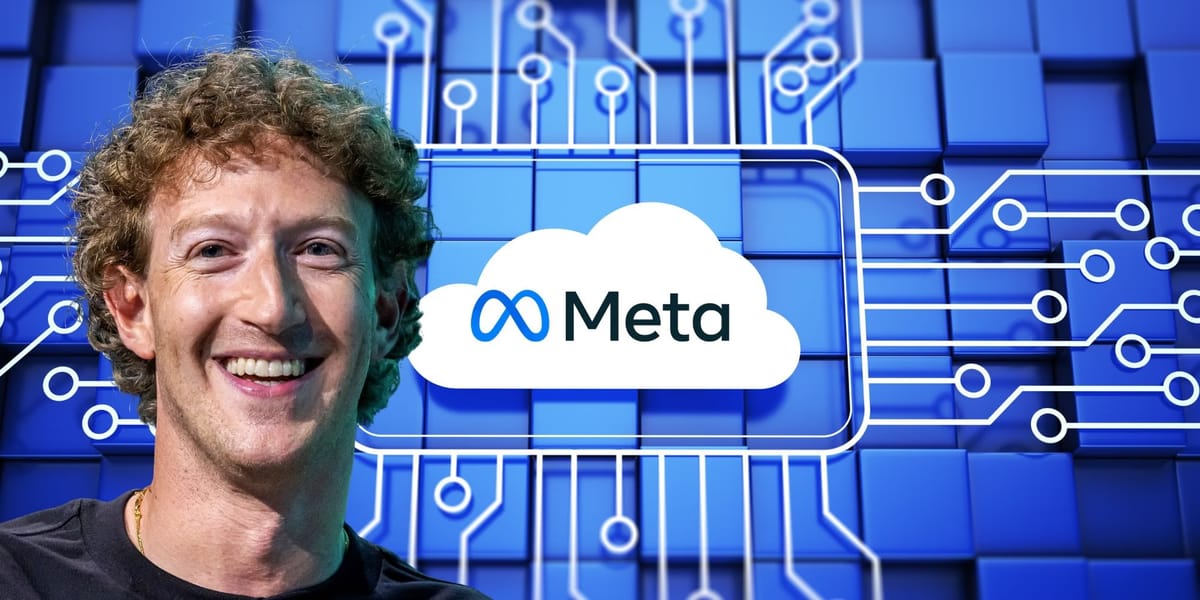
Source:
- Meta's Zuckerberg says AI agent tech progressing slower than expected, July 2, 2026 https://www.reuters.com/business/zuckerberg-says-ai-agent-development-going-slower-than-expected-2026-07-02/
- Bloomberg: Meta Is Planning a Cloud Business to Sell AI Computing Power, July 1, 2026 https://www.bloomberg.com/news/articles/2026-07-01/meta-is-building-a-cloud-business-to-sell-excess-ai-compute