Premier info portal for prediction markets. The start point of information market.
AI Speedrun - Anthropic vs Meta: Two Compute Signals, One Confusing Week
Editorial
LLMsMust ReadAI InfrastructureMag 7AI Speed RunIndustry Pulse Semi Analysis

AI Speedrun - Anthropic vs Meta: Two Compute Signals, One Confusing Week

Two headlines landed within days of each other and appear to point in opposite directions: Anthropic locking up two decades of dedicated data-center capacity, while Meta suggesting it has AI compute to spare -- analysts, investors, and the companies themselves haven't settled on one story.

Economics & FinanceTech

Two headlines landed within days of each other and appear to point in opposite directions: Anthropic locking up two decades of dedicated data-center capacity it won't even need until 2027, and Meta suggesting it has AI compute to spare right now. Whether that's a real contradiction or just two companies at different points in the same buildout cycle is genuinely contested — analysts, investors, and the companies themselves haven't settled on one story.

Do you think, will hyperscalers raise CAPEX again in 2026-2027 or not?

Yes - it is way not over
100.00%
No - it has peaked
0.00%
3 Polls

Anthropic Locks Up TeraWulf's Data Center Capacity in Kentucky Campus

On July 6, 2026, TeraWulf — a bitcoin miner turned AI landlord — announced a 20-year lease with Anthropic covering its Justified Data campus in Hawesville, Kentucky. The site, built on the grounds of a former aluminum smelter, will scale to roughly 401 megawatts of critical IT load in phases, with initial capacity live in the second half of 2027 and full build-out by early 2028.

TeraWulf expects the lease to generate approximately $19 billion in contracted revenue over its initial term, backed by investment-grade credit — a figure that exceeds TeraWulf's own ~$12 billion market cap. TeraWulf's own capital outlay is modest by comparison: roughly $3-4 billion, less than a fifth of the lease's value. Shares jumped as much as 19% on the news.

In a companion transaction, TeraWulf agreed to sell its 50.1% stake in the Abernathy, Texas joint venture (a 168 MW site developed with Fluidstack) for about $530 million, freeing capital to plow back into wholly-owned AI infrastructure. TeraWulf CEO Paul Prager framed the deal as validation of a strategy built around owning critical infrastructure and locking in direct, long-duration customer relationships — the same "picks and shovels" logic that has pushed bitcoin miners as a group to sell over 15,000 coins and sign more than $70 billion in AI hosting contracts this year alone.

Meta Says It Might Have Compute to Spare

Just days earlier, a very different signal came from the other end of the AI infrastructure chain. At Meta's May shareholder meeting, Mark Zuckerberg said entering the cloud business was "definitely on the table," noting that companies were approaching Meta "almost every week" asking to buy access to its models or spare GPU capacity. By early July, Bloomberg reported Meta was actively developing a "Meta Compute" offering to rent out excess capacity and hosted model access — putting it in direct competition with AWS, Azure, and Google Cloud.

Meta’s AI Cloud Pivot: Monetization Strategy or Overbuild Signal?
Bloomberg (July 1) - Meta is reportedly developing a cloud infrastructure business that would sell access to AI computing power and models to outside customers. The plan could put Meta into a new competitive lane against cloud leaders such as Amazon Web Services, Microsoft Azure, and Google Cloud. The business would

The numbers behind this are enormous: Meta has guided to $125-145 billion in 2026 capex, sits on $182.9 billion in AI infrastructure commitments, and by some estimates could have close to 5 gigawatts of capacity on hand by year-end — including a 2,250-acre Louisiana campus and gigawatt-scale sites in the Midwest. The market's reaction was sharp and split: chip stocks sold off hard (the Philadelphia Semiconductor Index fell over 6% in a session, with Micron, SanDisk, and Intel all down double digits) on fears that a major buyer signaling "excess" implies softer near-term demand, even as Meta shares rose on hopes that idle capex could become a revenue line.

Notably, Meta is not new to leasing capacity to AI labs. It already rents the entire Colossus 1 site in Memphis (300+ MW) to Anthropic for roughly $1.25 billion a month through May 2029, and a separate facility to Google for about $920 million a month — arrangements Bloomberg Intelligence estimates could generate $50 billion-plus by 2028.

Which signal will look more important for the AI infrastructure cycle by the end of 2028?

Anthropic style: long-term capacity locks up
0.00%
Meta style: monetization of spare compute
0.00%
Both will coexist as a normal parts of the same buildout cycle
100.00%
Neither: AI infrastructure demand will weaken materially
0.00%
1 Polls

Why the Discrepancy?

Meta could be needing to turn its capex into cash flow. Meta has guided to $125-145 billion in 2026 capex alone and has disclosed roughly $183 billion in cumulative AI infrastructure commitments. That is a lot of depreciation and power spend sitting on the balance sheet with no matching external revenue. Reframing idle or underused capacity as a rentable product — "Meta Compute" — lets Meta tell investors that some of that capex is an income-generating asset rather than a pure cost center. This is at least partly a financial-narrative move, and the market treated it that way: Meta's own shares rose on the announcement even as chip and neocloud stocks (CoreWeave, Nebius) sold off on fears that a top buyer signaling "spare" compute means softer near-term chip demand industry-wide.

A possible gap in model-side demand (the quality of product). If Anthropic's models are pulling in more training and inference demand per dollar of infrastructure than Meta's own Llama/"Watermelon" models are, that alone would produce exactly this pattern — Anthropic scrambling for guaranteed long-term capacity while Meta finds its internal AI workloads aren't absorbing everything it built. This is the hardest of the three to verify directly: Meta has claimed its upcoming Watermelon model matches GPT-5.5-tier performance, so the "quality gap" is contested rather than settled, and neither side's true utilization numbers are public. Worth flagging as a plausible driver, not a confirmed one.

Meta may be freeing up older silicon as it jumps to next-gen chips - a rise of capex, rather than a cut back. Meta is reportedly in talks for a roughly $6.5 billion deal with Samsung Foundry to produce its third-through-fifth generation MTIA accelerators on a 2nm process — a shift away from TSMC, whose leading-edge capacity is said to be booked through 2027. Meta is also targeting a new in-house chip generation roughly every six months as it scales toward 5 gigawatts of capacity by 2030. A hardware refresh cycle that aggressive, layered on top of GPU capacity bought during the initial AI buildout rush, plausibly leaves Meta holding a growing stack of still-functional but no-longer-frontier compute — exactly the kind of capacity that makes sense to lease out rather than idle, while the newest MTIA generations get reserved for Meta's own priority workloads. Separately, Anthropic itself is reportedly exploring Samsung's 2nm node for its own custom silicon, so both companies are pursuing chip diversification in parallel, just from different starting positions (Meta offloading older capacity while upgrading; Anthropic trying to reduce Nvidia dependence for future needs).

Sources:

  1. TeraWulf company announcement on July 6, 2026 (https://investors.terawulf.com/news-events/press-releases/detail/142/terawulf-announces-anthropic-lease-at-justified-data-campus-and-sale-of-majority-interest-in-abernathy-joint-venture-to-fluidstack)
  2. CNBC news report on Meta on July 1, 2026 (https://www.cnbc.com/2026/07/01/meta-stock-cloud-ai-compute.html)
  3. MSN news on Meta's potential talk with Samsung July 4, 2026 (https://www.msn.com/en-us/news/insight/meta-eyes-6-5b-samsung-ai-chip-deal-to-fuel-cloud-push/gm-GM294ACBD9?gemSnapshotKey=GM294ACBD9-snapshot-0&uxmode=ruby)
Silicon Bakery - SK Hynix Nasdaq IPO: Gunning for Micron or Recoiling From the Korea Discount?
Analysis
SemiconductorIPOsInsightIndustry PulseCapital MarketsAI InfrastructureSilicon Bakery Semi Analysis

Silicon Bakery - SK Hynix Nasdaq IPO: Gunning for Micron or Recoiling From the Korea Discount?

SK Hynix, one of the leading manufacturers of DRAM and NAND, will list American Depositary Receipts on Nasda. Here's our thoughts:

Economics & Finance

SK Hynix, one of the leading manufacturers of DRAM and NAND, will list American Depositary Receipts on Nasdaq, issuing up to 17.8 million new shares to raise around $29.6 billion at $166 per share. The offering is slated to be the largest ADR debut in Nasdaq history, surpassing both Alibaba's 2014 listing and Saudi Aramco's 2019 IPO — though it still falls well short of the recently concluded, record-breaking SpaceX IPO, which remains the largest IPO raise to date.

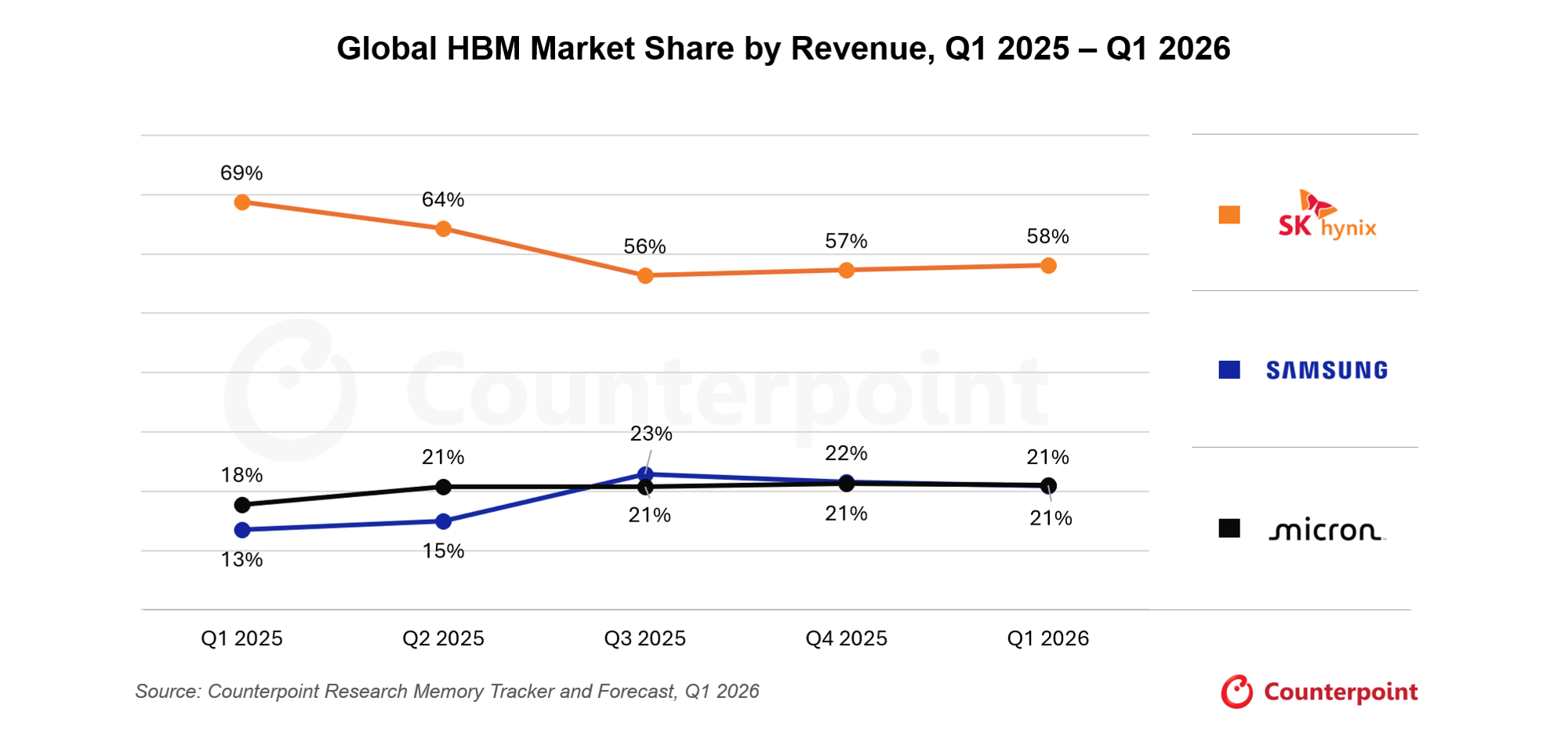
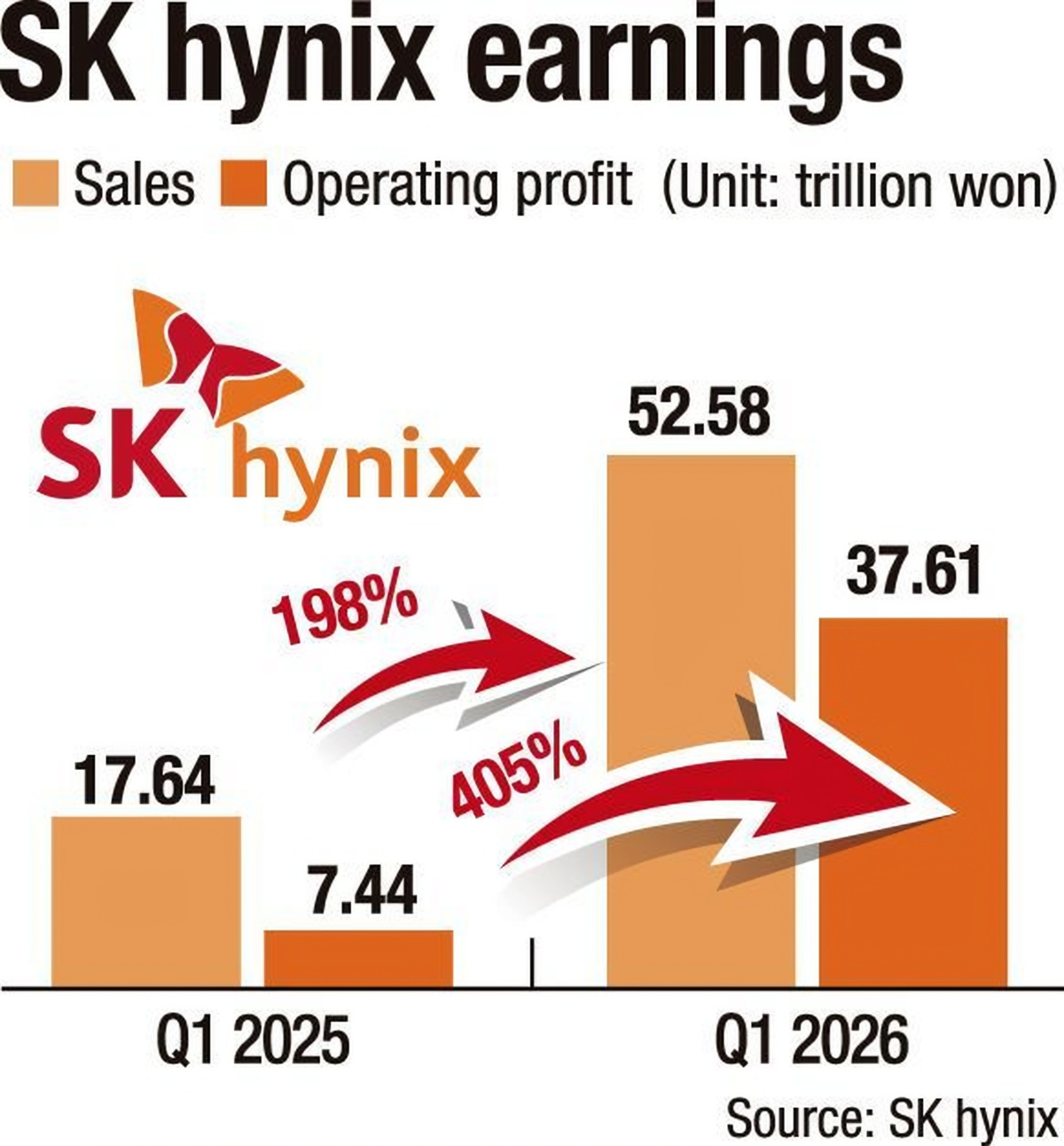
The timing is no accident. SK Hynix is up more than 300% this year, carries a $1.2 trillion market cap, and has just dethroned Samsung as South Korea's most valuable company for the first time this century. It is now the leading supplier of high-bandwidth memory (HBM), counting Nvidia and Google among its key clients, and by 2025 it had captured roughly 58% of the global HBM market — a comfortable lead over Samsung and Micron. Its Q1 operating margin of 72% was the product of a perfect storm: soaring AI demand colliding with a structural shortage of memory components, as hyperscalers and data centers aggressively reallocated capex toward memory.

That backdrop frames the question the listing really poses. Is this a move to recoil from the long-standing "Korea discount," or a bid to take the fight to Micron?

Shifting Away from the Korea Discount?

It wouldn't be a stretch to say the listing is designed to kill the Korea discount, with management targeting a valuation alongside Micron's. The funds raised will also help expand fabrication capacity and acquire critical manufacturing equipment from ASML.

According to HSBC, SK Hynix's valuation could rise 20% following the Nasdaq listing, narrowing a gap with Micron that has persisted for years — the US rival has traded at an average 35% premium to SK Hynix over the last 13 years. HSBC attributes that gap largely to Micron's access to a wider US investor base and its shareholder-friendly policies, and it has revised Hynix's price target to 4 million won from 2.9 million won, citing the listing as a key catalyst. Eugene Asset Management and Jupiter Asset Management strike a similar note, projecting up to 30% upside.

Micron Gets a Pure-Play Rival

The re-rating story has a flip side, though. It is not only about Hynix climbing toward Micron's multiple — it is about why Micron was elevated in the first place.

For more than a decade, Micron enjoyed a singular position: the only liquid, US-listed pure-play on AI memory. Any investor who wanted exposure to HBM had eyes only for Micron — a scarcity that helped the stock surge over 325% year-to-date and 854% over the last 12 months, backed by gross margins of roughly 81% in fiscal Q2.

But that premium is essentially a scarcity premium, and it is exactly the kind of advantage that evaporates once Hynix lists. A second pure-play removes the reason investors had to pay up for the only one available.

Looking Beyond the 72% Operating Margin

Both bull cases rest on margins holding, which raises the key question: is SK Hynix's 72% operating margin a level or a peak? At $166, the ADR is priced at roughly 8 to 9x forward earnings — a number that sits comfortably on top of memory's most aggressive up-cycle, with DRAM pricing expected to climb as much as 300% through 2027 and margins forecast to keep rising until the fourth quarter of that year.

Meanwhile, the company has slowed down on its HBM4 expansion to focus on the DRAM windfall. The decision to recalibrate its strategy is down to pragmatic profit taking, with the general DRAM segment seen as more lucrative than the HBM. Due to immense demand, the company has already sold out its HBM production capacity for 2026, thus confirming that aggressive expansion is unlikely to yield additional revenue.

Will SK Hynix's HBM Market Share Cross 70% by Q4 2026?

Yes
14.74%
No
85.26%
468 Polls

Following Up on TSMC Principles?

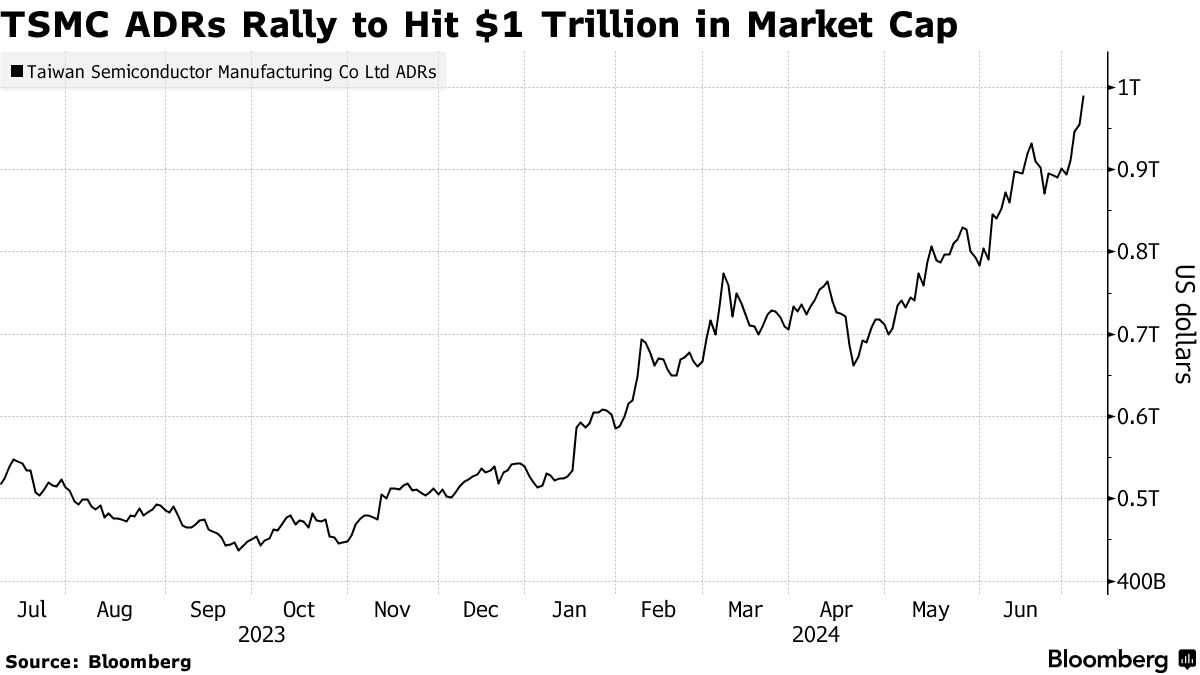
It's no surprise that parallels are being drawn to TSMC's ADR. The bull case leans on a tidy precedent: a foreign chipmaker lists in the US and ends up valued like a US company. TSMC's ADR has long traded at a durable premium to its Taipei-listed shares, at a multiple US investors are happy to pay.

But TSMC's premium has nothing to do with where it is listed and everything to do with what it is. The company trades at a premium because its moat — a near-monopoly over the foundry market and the pricing power that comes with it — justifies one. The premium wasn't created by the ADR; it was created by the business. Listing location alone doesn't manufacture a re-rating.

The Dilution Risk – If It’s a Risk

Issuing up to 17.8 million new shares does mean dilution, but it amounts to only around 2.5% of the company's issued and paid-up share capital. For a company worth more than $1.2 trillion, parting with 2.5% to raise around $29.6 billion is hardly a foreboding number — particularly when, as noted, the proceeds are already earmarked for capital expenditure. In effect, existing holders are giving up 2.5% of the company in exchange for HBM economics that could deliver greater returns.

The dilution is also a transfer of marginal ownership from Hynix's home-listed base to the US, with the aim of building the US institutional ownership that could finally close the Korea discount. 

The Real Test

The Korea discount is often described as a venue problem with a venue fix. But the more important reality is that SK Hynix is a cyclical priced at peak margins — which is why the Micron–Hynix spread is the metric to watch once the ADRs begin trading.

That is also where the two questions in the headline collapse into one. If the spread closes because Micron declines rather than because Hynix surges, the market won't have re-rated Hynix up toward Micron; it will have de-rated the entire AI-memory premium, confirming its ceiling.

Weekly Casserole - After the Hottest IPO Debut (Cerebras) of the Year, Will SpaceX Top Over It, and What Next?
Analysis
Capital MarketsTechnologySemiconductorAI InfrastructureIPOsWeekly Casserole Semi Analysis

Weekly Casserole - After the Hottest IPO Debut (Cerebras) of the Year, Will SpaceX Top Over It, and What Next?

Economics & FinanceTech

Cerebras Systems’ explosive Nasdaq debut has propelled the chip designer into the $100 billion club, boosting AI infrastructure landscape yet again, as it pivots from hardware sales to a direct cloud offensive against titans like Google and Microsoft. With OpenAI once eyeing the company as a "secret weapon" for AGI, this valuation milestone may only be the beginning of a massive capital markets supercycle, paving the way for highly anticipated public offerings from industry heavyweights like SpaceX, OpenAI, and Anthropic. What’s your take on the rally? Who’s going to be the next?

Welcome to the USD100B+ Club…

  • Listed at USD185/share, Cerebras Systems’ (CBRS) jumped 90% above its offering price in the NASDAQ debut on May 14th, 2026, giving the chip ‌designer a valuation of USD106.75B ​​on a fully ​diluted ​basis (Reuters).
  • In 2017, OpenAI looked at merging with Cerebras, viewing the chip company as potentially beneficial in the pursuit of artificial general intelligence, or AGI, according to testimony in Elon Musk’s trial against OpenAI. “Exclusive access to Cerebras hardware would give OpenAI an overwhelming hardware advantage over Google,” Greg Brockman, OpenAI’s co-founder and president, wrote in an email (CNBC).
  • Looking ahead, Cerebras had started shifting its focus away from selling hardware systems and more toward providing a cloud service based on its chips. That means it’s going up against cloud providers such as Google and Microsoft, which are both listed as competitors, along with Oracle and CoreWeave (CNBC).

What’s Next, for CBRS & for Capital Market as a Whole?

  • It seems there are more to come for CBRS - “There’s some whales out there, there’s some really big customers,” Cerebras CEO Andrew Feldman told CNBC in an interview on Thursday. “That is one of the characteristics of this market.” - So, will the stock price rally-on?
  • With promising tech players allegedly in the pipeline - SpaceX IPO prospectus could land as soon as next week, sources say, according to CNBC (CNBC). 
  • Meanwhile, the market is gearing up for model developers OpenAI and Anthropic that could hit the market later this year (CNBC). 

Look out for those names to pop-up on headlines! Will Cerebras double again? Who’s going to be the next star of the show? 

And more... Drop us a comment on what the market should be looking at! Your choice could shape the consensus!

Will Cerebras Systems (CBRS) Stock Price Hit USD555/Share (triple of IPO listed price)?

on or before May 31th, 2026 market close (regular hours)
42.86%
on or before June 30th, 2026 market close (regular hours)
28.57%
beyond June 30th, 2026 market close (regular hours)
28.57%
14 Polls

Will SpaceX stock price double (vs IPO) in 2026?

Yes
69.23%
No
30.77%
13 Polls

What's the favorite AI models (mutiple)? (drop us a comment on your favorites)

OpenAI GPT-5.5
22.22%
Anthropic Claude Opus 4.7
50.00%
Google Gemini 3.1
16.67%
DeepSeek V4
5.56%
Alibaba Qwen 3.6
0.00%
Others (drop us a comment!)
5.55%
12 Polls
Weekly Casserole - Cerebras IPO, US-China Talk Kick-Off in Seoul, Jensen Huang’s Last-Minute Invite, Alibaba/Tencent Results and more — Fueling another Rally or Forging a Rivalry?
Analysis
Capital MarketsIPOsSemiconductorGeopoliticsLLMsTechnologyWeekly Casserole Semi Analysis

Weekly Casserole - Cerebras IPO, US-China Talk Kick-Off in Seoul, Jensen Huang’s Last-Minute Invite, Alibaba/Tencent Results and more — Fueling another Rally or Forging a Rivalry?

Economics & FinancePoliticsTech

AI is pivoting toward a "transactional infrastructure" phase, where the focus has shifted from general AI hype to the specific mechanics of deployment and trade. In the semiconductor space, capital is aggressively chasing inference-specialized hardware to solve the high-latency bottlenecks currently stalling real-time AI applications. Meanwhile, the upcoming talks between the two superpowers are under the spotlight - What will be talked? What deals could be reached? What problems remain in limbo? All eyes on the development this week...

Another Hot Semiconductor Name to Be Listed…

  • As the second attempt to list, Cerebras Systems is focused ​on inference, the process by which AI systems respond to user queries, and has tied much of its growth to OpenAI, including a $20 billion multi-year deal under which the ChatGPT creator ​will deploy 750 megawatts of Cerebras chips (Reuters).
  • The company is considering a new IPO price range of $150-$160 a share, up from $115-$125 ​a share, and raising the number of shares marketed to 30 million from 28 million, said the ​sources, who asked not to be identified because the information isn't public yet. The increase follows a broader surge in AI adoption ​that has driven sharp demand for high-performance chips and turned semiconductors into a key bottleneck in the technology supply chain. Cerebras' IPO has drawn orders for more than 20 times the number of shares available, the people said, as the chipmaker looks ​to manage surging interest ahead of its May 13 pricing.

Two Superpowers Meet Again After Almost a Decade…

  • President Lee Jae Myung held rare back-to-back meetings with top US and Chinese economic officials in Seoul, as preparatory talks were being held ahead of a high-stakes US-China summit (Korea Herald).
  • Trump is expected to focus heavily on trade with the aim of securing what he can present as economic wins ahead of November’s midterm elections. Washington has pushed for China to increase purchases of American goods, including Boeing aircraft, beef and soya beans, while also seeking closer investment and trade cooperation (Al Jazeera).
  • Beijing, meanwhile, is expected to press the US to ease restrictions on advanced semiconductor exports and roll back measures limiting China’s access to critical chip-making technology. Taiwan is also likely to remain one of the most sensitive and contested issues in the summit.

What’s the Market Looking At?

  • On the IPO front, the market consensus is that Cerebras isn't an "Nvidia Killer" for training, but it is the first real threat in Fast Inference. The sentiment is that while Nvidia will continue to dominate 90%+ of the general market, Cerebras is "skimming the cream" by taking the highest-value, low-latency workloads (like real-time AI agents) from OpenAI.
  • On trade & technology, Jensen Huang’s surprise China trip could signal AI shift in US-China talks (New Fortune Times). The last-minute decision for Huang to join the trip has drawn global attention because his company, Nvidia, sits at the center of the global AI race. Market analysts said investors interpreted Huang’s attendance as a positive sign for future AI cooperation between the two countries.
  • Meanwhile, China tech giants Alibaba and Tencent both will disclose quarterly performance on May 13th. Will they beat or miss? What catalyst to look out for? How is AI integrated into their blueprint, and how’s the execution?
  • The “deals” over “diplomacy” - as a group of key figures across technology, industrials, basic materials, and finance joining the trip, the market could be eyeing a series of deals to be reached - but not to forget the prolonged trade tensions since 2025 Liberation Day.

Mark your calendars: Cerebras will go public on May 13, at what price will it close after debut? How will it influence semi-conductor landscape? What’s the keys to be discussed in the US-China meet-up and what will they come out with? 

Silicon Bakery - It’s Getting Hotter and Hotter, What’s the Next Wave in Semiconductors?
Editorial
Capital MarketsSemiconductorHyperscalersAI InfrastructureIndustry PulseSilicon Bakery Semi Analysis

Silicon Bakery - It’s Getting Hotter and Hotter, What’s the Next Wave in Semiconductors?

TechEconomics & Finance

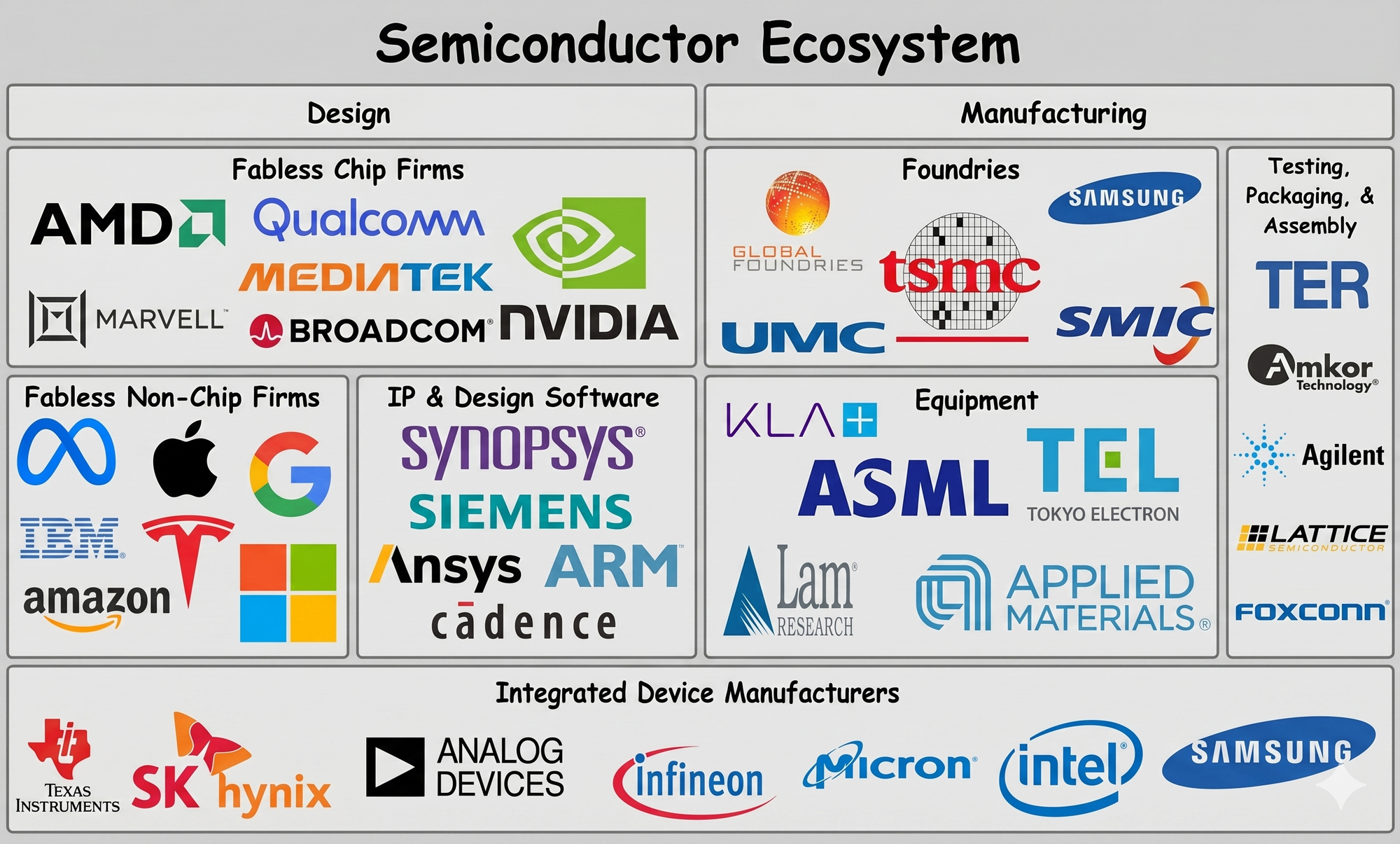
The semiconductor industry is officially entering its $1 trillion era, fueled by a massive $600 billion hyperscale capex surge projected for 2026. Industry consultants view this as a structural revolution beyond cyclicals. As the market begins to look past GPUs & Hyperscalers, the question remains: what will the next wave be?

AI Infrastructure Boom - A Rising Tide Lifts All Boats

  • The global semiconductor market is undergoing a seismic transformation. IDC’s latest forecast projects the industry will surge past the $1 trillion revenue threshold in 2026, significantly ahead of prior expectations. The growth will be driven overwhelmingly by AI infrastructure investment, which is reshaping the entire market. (IDC).
  • Hyperscale capital expenditure exceeded $100 billion for the first time in Q3 2025, and the i4 are expected to increase capex by 70% year over year to approximately $600 billion in 2026. IDC forecasts data center semiconductor revenues to reach $477.1 billion in 2026. By 2030, data center semiconductors will account for $843.2 billion, nearly half the total semiconductor market.
  • It seems the growth is self-sustaining rather than cyclical:
    • 1) Compute intensity continues to rise. Generative AI and agentic workloads require far more compute density per rack than prior architectures, increasing the overall silicon footprint.
    • 2) Inference demand compounds on itself. Each new model generation increases the volume of inference, requiring ongoing hardware upgrades
    • 3) AI is spreading beyond the data center. As enterprises, edge deployments, and client devices begin running AI workloads locally, demand becomes more distributed.

Segments That Are Soaring - by Consensus

  • High-Bandwidth Memory (HBM3e / HBM4): Memory is no longer a "commodity" cycle; it’s the primary bottleneck for AI. Hyperscalers are paying massive premiums to secure HBM3e and early HBM4 supply. Micron (+136% YTD) and SK Hynix (+70% in last 30 days) are the star performers here, as AI accelerators cannot function without these specialized, high-density stacks.
  • Custom Silicons & AI ASICs: Companies are shifting away from general GPUs to bespoke "homegrown" chips to cut costs and power consumption. Broadcom’s long-term contracts with Google & Meta provides revenue visibility. Marvell Technology (+50% in a month) is a fast-growing challenger, winning orders from Amazon and Microsoft, outpacing the industry’s growth.
  • Co-Packaged Optics (CPO) & 1.6T Connectivity: The "Copper Wall" has been hit; data must now move via light. The upgrade from 800G to 1.6T networking is the new margin expansion story. As the leader in Indium Phosphide components, Coherent (+42% YTD) is the "arms dealer" for the 1.6T transceiver upgrade. Lumentum (+28% YTD) is benefiting from the rapid adoption of CPO technology so solve heat and power issues in massive data center clusters. (note: all as of mid May 2026)

What Has The Market Not Priced-in?

  • Besides the obsession over GPU shipments and HBM capacity, what are elements yet to be fully-priced in?
  • The agentic CPU re-rating story, as CPUs return to the center of the AI stack?
  • The machinery-to-data-center pivot, where traditional industrial cyclical players move into the power generation space for AI-infrastructure?
  • Niche players that are integrated into the upgraded supply-chain of hyperscalers?

Drop a comment below on what is trendy and will be the next wave of growth!