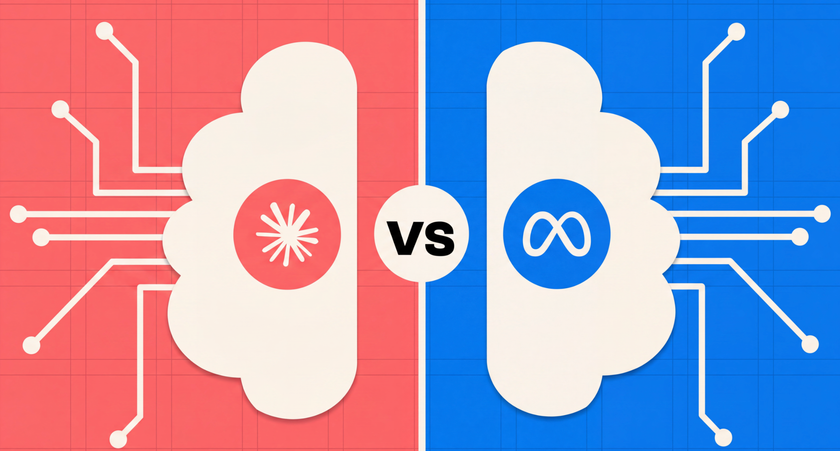
Two headlines landed within days of each other and appear to point in opposite directions: Anthropic locking up two decades of dedicated data-center capacity it won't even need until 2027, and Meta suggesting it has AI compute to spare right now. Whether that's a real contradiction or just two companies at different points in the same buildout cycle is genuinely contested — analysts, investors, and the companies themselves haven't settled on one story.
Do you think, will hyperscalers raise CAPEX again in 2026-2027 or not?
Anthropic Locks Up TeraWulf's Data Center Capacity in Kentucky Campus
On July 6, 2026, TeraWulf — a bitcoin miner turned AI landlord — announced a 20-year lease with Anthropic covering its Justified Data campus in Hawesville, Kentucky. The site, built on the grounds of a former aluminum smelter, will scale to roughly 401 megawatts of critical IT load in phases, with initial capacity live in the second half of 2027 and full build-out by early 2028.
TeraWulf expects the lease to generate approximately $19 billion in contracted revenue over its initial term, backed by investment-grade credit — a figure that exceeds TeraWulf's own ~$12 billion market cap. TeraWulf's own capital outlay is modest by comparison: roughly $3-4 billion, less than a fifth of the lease's value. Shares jumped as much as 19% on the news.
In a companion transaction, TeraWulf agreed to sell its 50.1% stake in the Abernathy, Texas joint venture (a 168 MW site developed with Fluidstack) for about $530 million, freeing capital to plow back into wholly-owned AI infrastructure. TeraWulf CEO Paul Prager framed the deal as validation of a strategy built around owning critical infrastructure and locking in direct, long-duration customer relationships — the same "picks and shovels" logic that has pushed bitcoin miners as a group to sell over 15,000 coins and sign more than $70 billion in AI hosting contracts this year alone.
Meta Says It Might Have Compute to Spare
Just days earlier, a very different signal came from the other end of the AI infrastructure chain. At Meta's May shareholder meeting, Mark Zuckerberg said entering the cloud business was "definitely on the table," noting that companies were approaching Meta "almost every week" asking to buy access to its models or spare GPU capacity. By early July, Bloomberg reported Meta was actively developing a "Meta Compute" offering to rent out excess capacity and hosted model access — putting it in direct competition with AWS, Azure, and Google Cloud.
 Bloomberg
The numbers behind this are enormous: Meta has guided to $125-145 billion in 2026 capex, sits on $182.9 billion in AI infrastructure commitments, and by some estimates could have close to 5 gigawatts of capacity on hand by year-end — including a 2,250-acre Louisiana campus and gigawatt-scale sites in the Midwest. The market's reaction was sharp and split: chip stocks sold off hard (the Philadelphia Semiconductor Index fell over 6% in a session, with Micron, SanDisk, and Intel all down double digits) on fears that a major buyer signaling "excess" implies softer near-term demand, even as Meta shares rose on hopes that idle capex could become a revenue line.
Notably, Meta is not new to leasing capacity to AI labs. It already rents the entire Colossus 1 site in Memphis (300+ MW) to Anthropic for roughly $1.25 billion a month through May 2029, and a separate facility to Google for about $920 million a month — arrangements Bloomberg Intelligence estimates could generate $50 billion-plus by 2028.
Which signal will look more important for the AI infrastructure cycle by the end of 2028?
Why the Discrepancy?
Meta could be needing to turn its capex into cash flow. Meta has guided to $125-145 billion in 2026 capex alone and has disclosed roughly $183 billion in cumulative AI infrastructure commitments. That is a lot of depreciation and power spend sitting on the balance sheet with no matching external revenue. Reframing idle or underused capacity as a rentable product — "Meta Compute" — lets Meta tell investors that some of that capex is an income-generating asset rather than a pure cost center. This is at least partly a financial-narrative move, and the market treated it that way: Meta's own shares rose on the announcement even as chip and neocloud stocks (CoreWeave, Nebius) sold off on fears that a top buyer signaling "spare" compute means softer near-term chip demand industry-wide.
A possible gap in model-side demand (the quality of product). If Anthropic's models are pulling in more training and inference demand per dollar of infrastructure than Meta's own Llama/"Watermelon" models are, that alone would produce exactly this pattern — Anthropic scrambling for guaranteed long-term capacity while Meta finds its internal AI workloads aren't absorbing everything it built. This is the hardest of the three to verify directly: Meta has claimed its upcoming Watermelon model matches GPT-5.5-tier performance, so the "quality gap" is contested rather than settled, and neither side's true utilization numbers are public. Worth flagging as a plausible driver, not a confirmed one.
Meta may be freeing up older silicon as it jumps to next-gen chips - a rise of capex, rather than a cut back. Meta is reportedly in talks for a roughly $6.5 billion deal with Samsung Foundry to produce its third-through-fifth generation MTIA accelerators on a 2nm process — a shift away from TSMC, whose leading-edge capacity is said to be booked through 2027. Meta is also targeting a new in-house chip generation roughly every six months as it scales toward 5 gigawatts of capacity by 2030. A hardware refresh cycle that aggressive, layered on top of GPU capacity bought during the initial AI buildout rush, plausibly leaves Meta holding a growing stack of still-functional but no-longer-frontier compute — exactly the kind of capacity that makes sense to lease out rather than idle, while the newest MTIA generations get reserved for Meta's own priority workloads. Separately, Anthropic itself is reportedly exploring Samsung's 2nm node for its own custom silicon, so both companies are pursuing chip diversification in parallel, just from different starting positions (Meta offloading older capacity while upgrading; Anthropic trying to reduce Nvidia dependence for future needs).
Sources:
- TeraWulf company announcement on July 6, 2026 (https://investors.terawulf.com/news-events/press-releases/detail/142/terawulf-announces-anthropic-lease-at-justified-data-campus-and-sale-of-majority-interest-in-abernathy-joint-venture-to-fluidstack)
- CNBC news report on Meta on July 1, 2026 (https://www.cnbc.com/2026/07/01/meta-stock-cloud-ai-compute.html)
- MSN news on Meta's potential talk with Samsung July 4, 2026 (https://www.msn.com/en-us/news/insight/meta-eyes-6-5b-samsung-ai-chip-deal-to-fuel-cloud-push/gm-GM294ACBD9?gemSnapshotKey=GM294ACBD9-snapshot-0&uxmode=ruby)