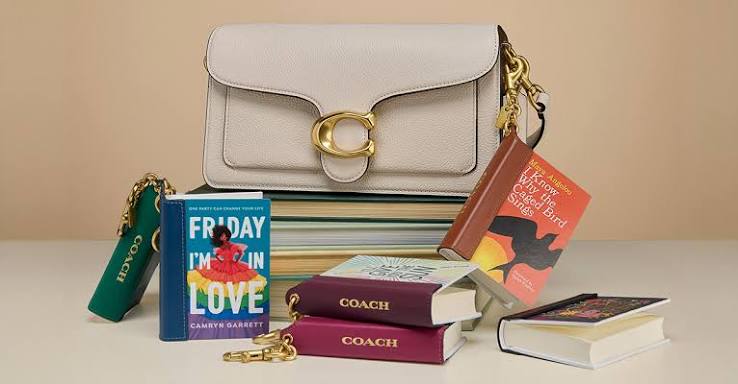
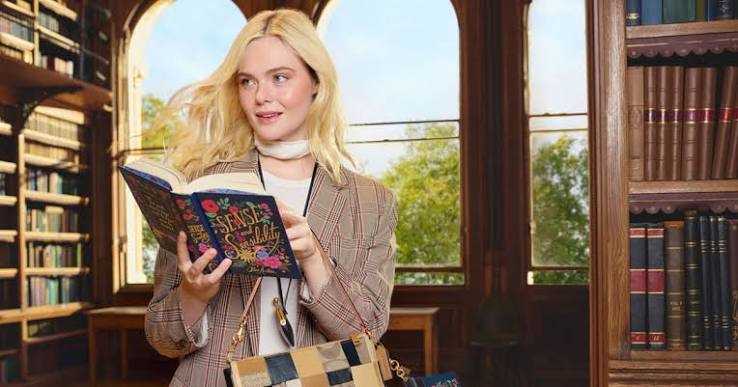
In February 2026, during New York Fashion Week, Elle Fanning sat in the front row of Coach's runway show with a Tabby bag on her lap and a miniature leather-bound edition of Sense and Sensibility dangling from its handle. The image ran on the cover of Vogue, WWD, and Harper's Bazaar within hours, and quickly spread across BookTok to an audience with no connection to fashion week whatsoever. The book charm retailed at $120. When it went on sale globally on March 7, several styles sold out within hours.
Where This Comes From
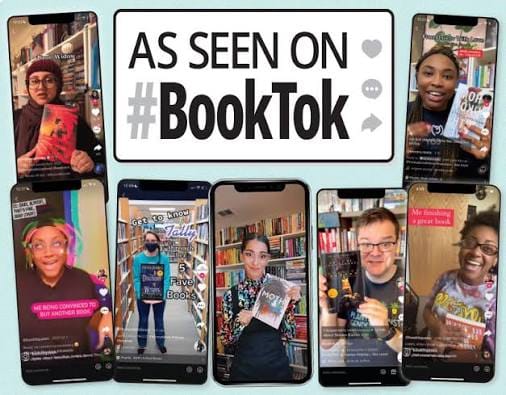
The conditions for this moment have been building for years. The #BookTok hashtag has accumulated over 200 billion views on TikTok. Forty-five percent of TikTok users say they have purchased a book after seeing it recommended on the platform, and titles that enter the BookTok ecosystem see average sales increases of 600%. Physical book revenue has grown 40% over the past decade. Barnes & Noble opened nearly 70 new stores in 2025 alone — a figure that would have seemed almost unimaginable at the height of the streaming era.The demographic driving this trend is Gen Z, and the apparent contradiction they present is worth examining. This is a generation raised on short-form video, algorithmic feeds, and near-constant digital stimulation — and yet, in significant numbers, they have turned to books as a site of identity formation and self-expression. Coach's chief marketing officer Joon Silverstein addressed this head-on at the campaign launch: "Gen Z doesn't experience identity on a single track." In that context, the book charm is not a rejection of screens — it is an extension of the same impulse that leads someone to post their reading list, annotate their margins, and carry a physical object that says something about who they are.
The Collaboration and What It Created
The Coach × Penguin Random House partnership centered on twelve miniature leather book charms, each containing a complete, readable text. The selection — including I Know Why the Caged Bird Sings, Sense and Sensibility, and Glennon Doyle's Untamed — was developed in consultation with Reese Witherspoon's Sunnie book club, lending the project a sense of curatorial purpose beyond pure merchandising. The campaign's geographic scope was deliberately broad: activations ran across the United States, China, Japan, and South Korea, with partners including Penguin Random House, the WNBA, and Bilibili. Coach retrofitted stores in key markets with dedicated "Book Nook" sections, while a university campus tour ran in parallel with the retail launch.The commercial results were unambiguous. The charms sold out at launch. Coach's parent company Tapestry reported a 25% revenue increase in the same quarter, alongside a 40% year-on-year rise in marketing spend — figures that suggest the campaign's impact went well beyond brand conversation. Penguin Random House's vice president was direct in his assessment: "This was a huge success." At the 2026 PEN America Literary Gala, actor and writer B.J. Novak delivered what became the evening's most-quoted line: "Reading is glamorous." Multiple outlets immediately identified it as the most precise summary of what the Coach campaign had accomplished.
Where the Industry Stands
Coach was not the first luxury brand to gesture toward literary culture — Valentino sponsored the Booker Prize in 2024, and Saint Laurent has operated a curated bookshop in Paris for several years. But the Coach × Penguin Random House collaboration represented a different order of scale and commitment. Since its launch, Dior incorporated book cover imagery into its Spring 2026 menswear under Jonathan Anderson, Prada partnered with writer Ottessa Moshfegh on a limited-edition literary campaign in 2025, and Miu Miu launched its Summer Reads activation across London, Paris, and Seoul.What remains open is whether this movement will reach the very top of the industry. Chanel, Gucci, and Louis Vuitton — the brands most associated with setting the direction of fashion rather than following it — have yet to make any formal statement within the "reading as fashion" framework. Yet each carries a brand identity with genuine potential connections to literary culture: Chanel's longstanding association with the intellectual woman, Gucci's history of layering cultural references, Louis Vuitton's core narrative of travel and aspiration, into which a book as a travel companion fits naturally. Whether any of them acts on that potential in the coming months will go a long way toward determining whether this moment is a passing trend or a genuine structural shift.