Summary:
A report from IEA shows that data center electricity use surged in 2025, turning power access into one of the most important constraints on the AI boom.
The AI trade has usually been framed around chips, models and capital. But the International Energy Agency’s latest report points to a less glamorous bottleneck: electricity.
Will electricity access become a bigger bottleneck for AI growth than chip supply by 2028?
According to the IEA, the capital expenditure of five major technology companies exceeded $400 billion in 2025 and is expected to rise by another 75% in 2026. Data center electricity demand grew 17% in 2025, while AI-focused data centers grew even faster, surging 50%, comparing with only 3% growth in global electricity demand overall.
It is important because AI is moving from a software story into a physical infrastructure story. The market can keep pricing model improvements, GPU supply and user growth. But how about a basic question: can AI companies get enough power, quickly enough, in the right locations, at prices that still support attractive returns?
The IEA expects global data center electricity consumption will roughly double by 2030, reaching about 945 TWh. China and the United States are predicted to account for nearly 80% of global data center electricity growth through 2030.
Due to AI tasks are becoming more complex, especially as video generation, reasoning models and agentic workflows grow. Even if each unit of compute becomes cheaper, total electricity demand can still rise if users do far more with AI.

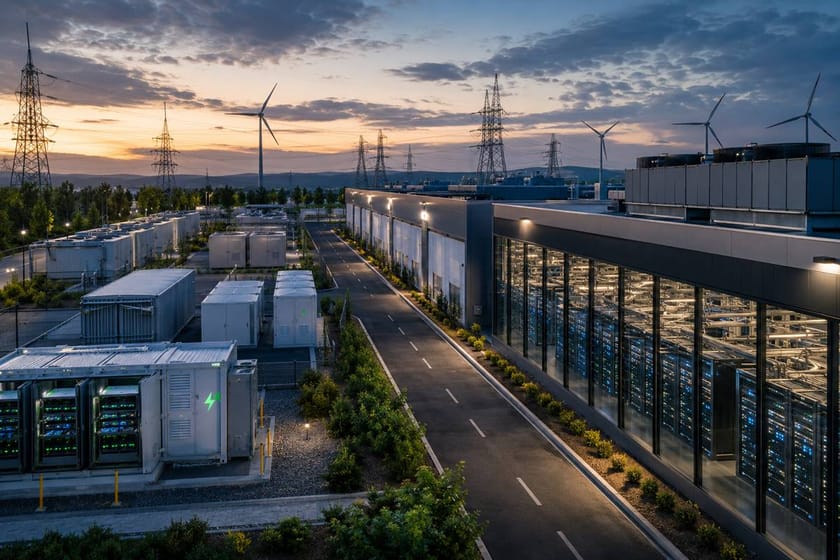
That is why electricity is becoming a form of competitive advantage. The best AI company may not simply be the one who owns the smartest models. It may be the one with the best power contracts, fastest grid connections, most flexible data center designs and strongest infrastructure financing.
PJM as the largest grid operator in U.S. can be seem as a foreshow. It has warned of possible electricity shortfalls as early as 2027 because data centre demand rises faster than supply. Reuters (May 2026) reported that PJM capacity prices have jumped by about 1,000% over recent auctions, increasing pressure on utility bills and forcing debate over market reforms.
This is a key market signal. When AI demand starts affecting capacity prices and grid reliability rules, electricity is no longer just an operating cost. It may becomes a pricing variable.
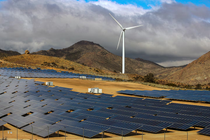
For investors, this means the AI trade is expanding into new markets: utilities, grid equipment, natural gas, renewable power purchase, regional electricity prices etc.
As the IEA's data already suggest the AI demand will rise, the better question is where will the bottleneck bites first?
Will electricity constraints slow down new AI data centre construction? Will PJM-style price spikes spread to other regions? Will hyperscalers move more aggressively into onsite power or even nuclear offtake? Will electricity access become material enough to affect AI company valuations?
The AI boom is still an energy consumer. But it is also becoming an energy market maker.
That may be the next phase of the trade.
Sources:
- Data centre electricity use surged in 2025, even with tightening bottlenecks driving a scramble for solutions, April 6, 2026 https://www.iea.org/news/data-centre-electricity-use-surged-in-2025-even-with-tightening-bottlenecks-driving-a-scramble-for-solutions
- Energy demand from AI https://www.iea.org/reports/energy-and-ai/energy-demand-from-ai
- US power grid operator PJM is considering market overhaul, May 6, 2026 https://www.reuters.com/business/energy/us-power-grid-operator-pjm-is-considering-market-overhaul-2026-05-06/