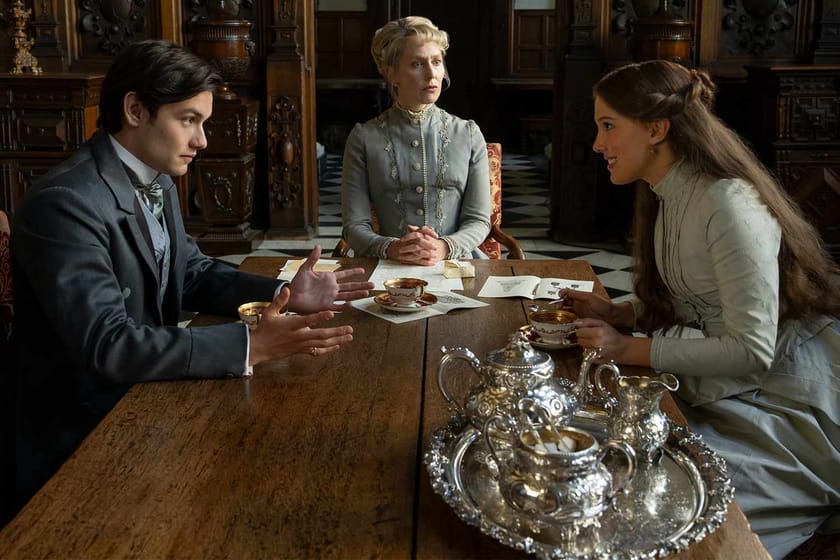
Millie Bobby Brown first stepped into the role of Enola Holmes in 2020, playing the sharp-witted younger sister of Sherlock Holmes in a Netflix original that earned 91% on the Tomatometer and established her as a credible lead outside of Stranger Things. The 2022 sequel improved on that — 93%, one of the cleaner upward trajectories of any Netflix franchise. When Enola Holmes 3 arrived on July 1, then, it carried a simple expectation: keep going. Instead, the third film opened to a 69% Tomatometer score, a drop of more than 20 percentage points from its predecessor and the lowest mark in the trilogy's history. The streak, quietly one of Netflix's most consistent critical runs, is over.
What Critics Are Actually Saying
The critical split on Enola Holmes 3 is real, but it's not quite as dramatic as the number suggests. Supporters point to the Maltese setting as a genuine visual refresh — the film trades London's familiar alleyways for sun-drenched Mediterranean coastlines, and several reviewers found the change of scenery enough to carry goodwill across a shakier plot. The film's darker, more mature tone has also drawn praise from critics who see it as the franchise growing up: Brown's Enola grapples with marriage, identity, and the question of what independence actually means for a woman in Victorian England, and the attempt to inject real thematic weight is acknowledged even by the film's detractors.
The detractors, however, are specific about what went wrong. The central complaint is that Enola has been quietly sidelined in her own film — the arrival of Professor Moriarty and Dr. Watson shifts the narrative gravity away from her. The film's habit of breaking the fourth wall, a signature device of the first two entries, has also worn thin: MovieWeb noted that it "should have been cut down slightly," while others found it actively distracting. The mystery itself, which involves kidnapping, British colonial intrigue, and a Maltese subplot, was described by multiple reviewers as the weakest of the three — complicated without being satisfying.

The directorial change is the thread running through most of the negative reviews. Harry Bradbeer, who directed both previous films and established the franchise's visual language and rhythm, did not return for the third entry. Philip Barantini steps in, and the difference is legible on screen. Flickering Myth's Robert Kojder, a Rotten Tomatoes-certified critic, put it plainly: "Millie Bobby Brown owns this role, so this is still moderately entertaining, but the shift in directors results in less flashiness, wit, and style." That framing — Brown herself is fine, the film around her is diminished — is close to a consensus position. It appears across reviews that ultimately landed on opposite sides of the fresh/rotten line, which is itself telling.
What the Numbers Suggest
The score's trajectory carries information. When only ten reviews were in, Enola Holmes 3 sat at 80% — comfortably fresh, in line with earlier franchise entries. As the count expanded to roughly 45 reviews by the second day, the score settled into the 69–70% range where it currently sits.On a separate dimension, Kalshi's active Netflix movie ranking contract — drawing $372,081 in trading volume — currently gives Enola Holmes 3 an 89% probability of topping the US Netflix movie chart this week. That figure reflects something different from critical quality: brand recognition, cast familiarity, and the relative weakness of the competition. It's a reminder that critical scores and audience behavior don't always move together.
Reviews are still arriving, and the final score won't fully stabilize until around July 20, roughly three weeks after release.