From brat to Music, Fashion, Film: Can Charli XCX Rewrite the Rules All Over Again?
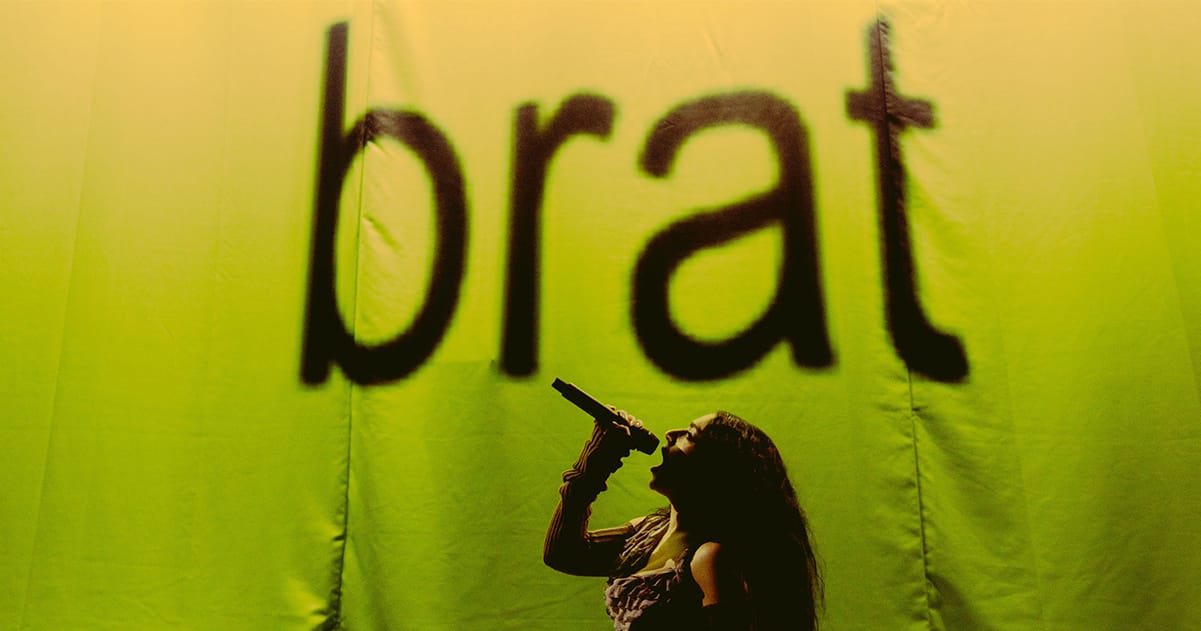
Two years ago, a neon-green album cover landed in the global pop landscape. No elaborate rollout, no manufactured buzz — just a single word that somehow made perfect sense and none at all: brat.
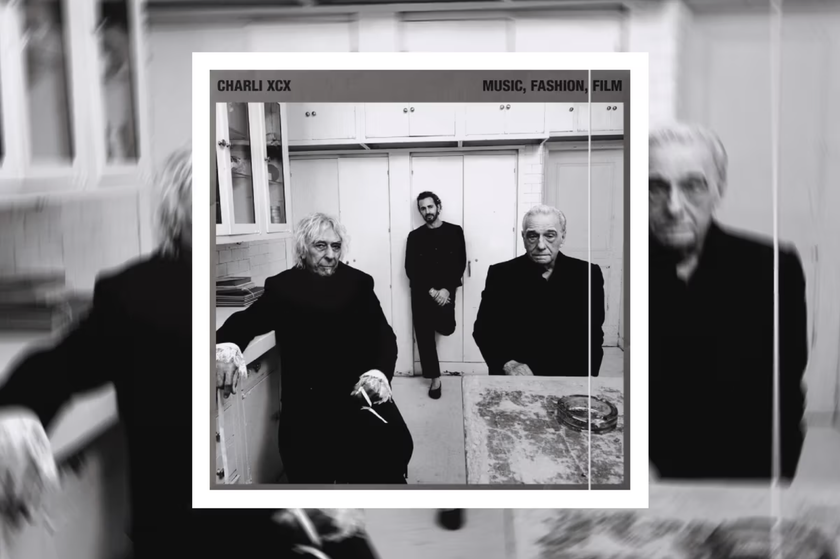
What followed was hard to argue with. brat debuted at No. 3 on the Billboard 200, topped the charts in the UK, Australia, and Ireland, earned a Metacritic score of 95 — the highest of 2024 — and ignited "brat summer," a cultural phenomenon that swept social media worldwide. By February 2025, it had claimed three Grammy Awards. Now, less than a month remains before the release of her seventh studio album, Music, Fashion, Film. The neon green is gone. In its place: a black-and-white photograph, three figures standing side by side with measured expressions — rock musician John Cale, fashion designer Marc Jacobs, and filmmaker Martin Scorsese. The shift in visual identity alone has been enough to keep listeners around the world watching closely, and speculation about the album's commercial performance is already running high.
What Is This Album, Exactly?
Music, Fashion, Film arrives via Atlantic Records on July 24 — 11 tracks, just over 30 minutes, leaner and more contained than brat's 15.
The lead singles have already sketched out a clear direction. "Rock Music" runs on electric guitar and raw momentum; "SS26" builds on that same guitar-forward texture, its title pulled from the lyric "nothing's gonna save us, not music, fashion, or film"; and "Wink Wink," described by Rolling Stone as "a sardonic nod to her own early career," rounds out the trio. Together, they point unmistakably toward a deliberate stylistic departure.
The album cover, then, reads less like design and more like a statement of intent. Placing John Cale, Marc Jacobs, and Martin Scorsese — each a defining figure in their respective field — on the front of a pop record suggests that Charli XCX is no longer interested in being measured purely against other pop artists. The ambition here is to occupy a different kind of cultural space altogether.
Creative Conviction or Calculated Gamble?
This is the question that has split the music world in the weeks since the singles dropped.
Those in the "conviction" camp point to her track record. Nearly every album in Charli XCX's catalog has been a deliberate act of self-reinvention: the lockdown-era ambient experiments of How I'm Feeling Now in 2020, the polished '80s synthpop of Crash in 2022, the raw underground rave energy of brat in 2024. Each pivot looked risky at the time. Each one, in retrospect, proved prescient.
Her own words in a British Vogue interview this past April carry weight here too. "If I made another dance album, it would feel really hard, really sad," she said — a statement that reads not as a marketing line, but as a candid admission of creative depletion. Her longtime collaborator and producer A.G. Cook put it more broadly: "She's not flexing. She's genuinely responding to a feeling a lot of people have in 2026 — of there being so much, almost too much."
The skeptics, however, are not without a case. When "Rock Music" dropped, fan communities fractured almost immediately. "This isn't rock — it's just electronic music with a guitar layered on top," was a criticism that spread quickly and widely. The deeper concern, though, goes beyond genre labeling. brat worked because it arrived at precisely the right moment: post-pandemic release, a collective Z-generation hunger for self-acceptance, a cultural appetite for anti-polish aesthetics — all of it converging on that one lime-green cover. The cultural landscape of 2026 is a different place. Whether lightning can strike the same artist twice, in a different storm entirely, is a question no one can answer in advance.
What the Numbers Tell Us
Charli XCX's trajectory on the Billboard 200 has been one of consistent upward movement: No. 42 with Charli in 2019, No. 14 with Crash in 2022, and then the career peak of No. 3 with brat in 2024, backed by 77,000 album-equivalent units in its first week.
It's worth noting, though, that brat's chart position benefited from relatively favorable timing. That particular week, both Taylor Swift and Billie Eilish had albums that were already several weeks into their runs, clearing some space at the top. The landscape this time is considerably more crowded. Olivia Rodrigo's latest album, released June 12, opened with over 80 million streams and a Metacritic score of 89, and remains a commanding presence on the charts. More directly, Tyla's A*POP is scheduled for release on the exact same day as Music, Fashion, Film — July 24 — setting up a direct head-to-head competition for first-week attention.
Album length is also a factor that often goes unmentioned. At 11 tracks, Music, Fashion, Film has a lower streaming ceiling than brat's 15 — a meaningful gap in an era where Billboard's formula increasingly weights paid-subscription plays.