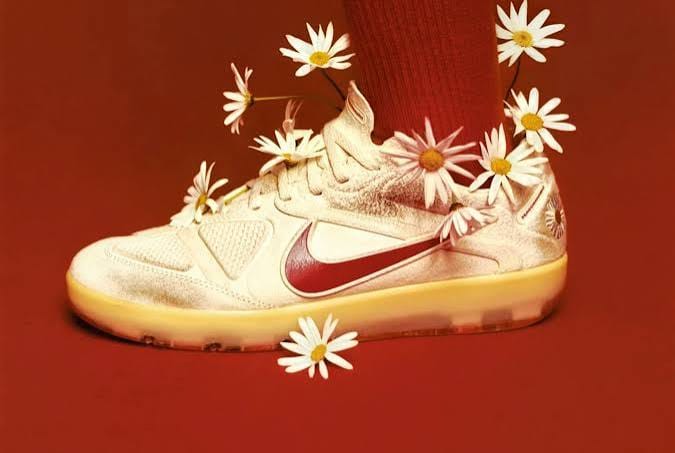
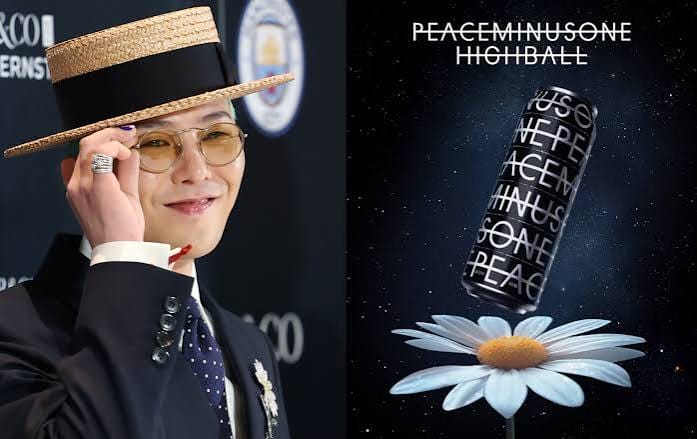
On June 18, South Korea's national football team walked into Estadio Guadalajara — and the cameras caught something unexpected. Spread across the back of their warm-up jackets was a large daisy, its petals outlined in the red and blue of the Korean flag, with a Nike Swoosh embedded at its center. The flower is the signature mark of PEACEMINUSONE, the label founded by K-pop icon G-Dragon and his sister in 2016. It had never appeared in a football context before.For this World Cup, Nike partnered with seven brands to design pre-match collections for seven national teams: Jacquemus for France, Patta for the Netherlands, the Virgil Abloh Archive for the United States, NOCTA for Canada, Palace for England, Slawn for Nigeria, and PEACEMINUSONE for South Korea. The others draw from haute couture, skate culture, and hip-hop. PEACEMINUSONE is the only Asian brand on the list — and the only one founded by a K-pop artist.
A Collaboration Built at the Intersection of Two Worlds
Nike has partnered with South Korea's national team for thirty years. Choosing PEACEMINUSONE for this occasion was not purely a commercial decision. The collection weaves PEACEMINUSONE's daisy motif together with Korean football iconography across warm-up jackets, apparel, and accessories — with Nike framing the project as an effort to "combine the symbols of Korean football with modern details, making designs that both players and fans on the field can share the same sense of pride." The result is more than sportswear. It is a cultural statement.The campaign imagery extended the collaboration's reach further. G-Dragon appeared alongside South Korea winger Hwang Hee-chan and aespa member Karina — who joined the shoot as a Nike brand ambassador — in a series of promotional visuals. The combination of a K-pop male artist, a professional footballer, and a K-pop girl group member in a single Nike campaign signals that the brand is actively redrawing the boundaries of who this tournament is for. As Campaign US reported, citing Meltwater analytics data, Nike's "cross-cultural casting" was the defining driver of its World Cup advertising performance between June 1 and 15, with the K-pop fan community's amplification effect playing a measurable role.The collection launched globally on June 16 and sold out on Nike Korea's website within the week — confirmed by Korea JoongAng Daily on June 22.
A Significance That Extends Beyond the Tournament
Placing PEACEMINUSONE alongside the other six brands makes the stakes clearer. Jacquemus is a French fashion house. Palace grew out of London skate videos. NOCTA is Drake's streetwear label. Each represents a distinct cultural ecosystem. PEACEMINUSONE represents K-pop — not simply as a music genre, but as a global cultural infrastructure with its own fanbase mechanics, visual language, and commercial reach. Nike has been explicit that its World Cup strategy this year is built around cultural crossover. The brand has recognised that the tournament's largest untapped audiences are not football fans — they are communities that organise around entertainment and cultural figures. Placing PEACEMINUSONE alongside Jacquemus and Palace is Nike's announcement that K-pop now belongs in that conversation at the same commercial level as European luxury fashion and British street culture.This collaboration does not exist in isolation. Across the 2026 World Cup, K-pop's presence has reached every major entertainment moment in the tournament's structure: EJAE performed Korean lyrics at the Mexico City opening ceremony, Lisa shared the Los Angeles stage with Katy Perry and Anitta, and BTS are confirmed as co-headliners of the July 19 final halftime show alongside Madonna and Shakira. The PEACEMINUSONE kit collaboration is part of this larger pattern. K-pop is no longer arriving at major sporting events as a novelty guest. It is being written into the operational architecture of the events themselves.
From the opening ceremony to the final halftime show, K-pop has left a mark on every significant entertainment moment of the 2026 World Cup — official soundtracks, opening performances, kit collaborations, and brand campaigns. The question is whether this level of integration represents a permanent shift or a convergence specific to this particular tournament.Will a K-pop artist or K-pop-affiliated brand participate in an official capacity at the next major global sporting event of comparable