Premier info portal for prediction markets. The start point of information market.
Anthropic Plans IPO Investor Meetings as Mega-Listing Nears
News
IPOsLLMsMust ReadAI Infrastructure

Anthropic Plans IPO Investor Meetings as Mega-Listing Nears

Anthropic PBC is seeking to meet with investors ahead of its potential mega-IPO, according to people familiar with the matter, as the company prepares to join the rush of artificial intelligence-driven stock market debuts.

Economics & FinanceTech

Anthropic PBC is seeking to meet with investors ahead of its potential mega-IPO, according to people familiar with the matter, as the company prepares to join the rush of artificial intelligence-driven stock market debuts.

Banks leading the offering are scheduling meetings between investors and the Claude chatbot maker in the coming weeks. Anthropic is considering an initial public offering as soon as in October, Bloomberg News has reported.

Will Anthropic complete its IPO by the end of October 2026?

Yes
74.51%
No
25.49%
506 Polls

Moving ahead with the IPO would put Anthropic ahead of rival OpenAI, which is now looking at going public in 2027 after having earlier targeted a fall 2026 debut. Both companies have filed confidentially for their respective listings.

An IPO this fall would also see Anthropic debut before DeepSeek, the Chinese AI firm that has been grabbing an increasing share of the market for the technology. DeepSeek is preparing for an IPO and could file as soon as this year.

DeepSeek Is Preparing For IPO Filing as Soon as This Year
Chinese AI pioneer DeepSeek has begun preparations for an initial public offering and may file as soon as this year, setting the stage for what could be a landmark debut for the country’s technology industry.

The listing plans follow a period of strong revenue growth for Anthropic fueled by traction for its AI models, including tools that help streamline the process of coding. However, the company also faces lingering uncertainty over its relationship with the Trump administration, which briefly imposed foreign access restrictions on two of Anthropic’s top models. Anthropic also previously sued the Defense Department for declaring it posed a risk to the US supply chain.

Anthropic is working with Morgan Stanley, Goldman Sachs Group Inc. and JPMorgan Chase & Co. on its IPO. The company was valued at $965 billion after a funding round in May, making it one of the world’s largest private companies and eclipsing OpenAI’s valuation for the first time...

Source: https://www.bloomberg.com/news/articles/2026-07-15/anthropic-is-said-to-plan-ipo-investor-meetings-as-listing-nears

Alibaba  Joins Apple To Bring Qwen AI To Devices In China
News Flash
LLMsConsumer SpendingSemiconductorAI InfrastructureMag 7 Semi News

Alibaba Joins Apple To Bring Qwen AI To Devices In China

BEIJING, July 15 (Reuters) - China's cyberspace regulator said on Wednesday ‌that Apple's on-device generative AI service, Apple Intelligence, has been registered for use on iPhones in China, paving the way for the long-anticipated ​rollout of the service in the country.

Economics & FinanceTech

BEIJING, July 15 (Reuters) - China's cyberspace regulator said on Wednesday ‌that Apple's on-device generative AI service, Apple Intelligence, has been registered for use on iPhones in China, paving the way for the long-anticipated ​rollout of the service in the country.

Will Apple announce Qwen AI configuration upon the release of next generation iPhone?

Yes
63.39%
No
36.61%
579 Polls

Apple Intelligence ​will incorporate capabilities from AI models developed by Baidu and ​Alibaba, a source familiar with the matter said, speaking on condition of anonymity.

The development ​could help bolster Apple's position in China, where consumers have ​been waiting for the rollout of Apple Intelligence.Alibaba said in a ‌statement ⁠to Reuters that its Qwen model will be integrated into Apple Intelligence across Apple's iPhone (iOS), iPad (iPadOS), Mac (macOS) and Vision Pro (visionOS) operating systems in China.

Apple is also working with Baidu to develop ​Apple Intelligence features ​for Chinese ⁠iPhone users, a Baidu spokesperson said.

The regulator's statement did not give a launch date for ​Apple Intelligence in China.

Source: Reuters; July 15, 2026 (local time); https://www.reuters.com/technology/apple-intelligence-ai-service-registered-with-chinas-cyberspace-regulator-2026-07-15/

AI Speedrun - AI Propped Up the Global Economy. Can It Keep Doing So?
Analysis
Capital MarketsAI InfrastructureHyperscalersLLMsIndustry PulseAI Speed Run

AI Speedrun - AI Propped Up the Global Economy. Can It Keep Doing So?

AI investment helped cushion global growth, but with hyperscaler capex nearing $725 billion, can demand and productivity justify the cost?

Economics & FinanceTech

Artificial intelligence has already become a macroeconomic force, just not in the way its most ambitious advocates predicted. The near-term boost is coming less from robots transforming offices and more from companies spending staggering sums on chips, data centers and power infrastructure.

The BIS says this investment helped sustain global growth, supported Asian technology supply chains and kept financial conditions relatively easy through 2025. When war in the Middle East triggered a severe energy shock, the global economy proved unusually resilient, and AI investment was part of the reason.

Amazon, Alphabet, Meta and Microsoft are tracking toward a combined roughly $725 billion in 2026 capex, up 77% from about $410 billion in 2025.

But none of this total tells you whether the growth contribution from this spending is accelerating or running out, so is the headline number actually the one that matters, or is the market reading the wrong line on the page?

What do you think is AI’s biggest economic impact right now?

Higher business productivity
9.42%
Massive spending on chips and data centers
47.11%
Stronger growth in AI-exporting economies
11.29%
Higher demand for energy and infrastructure
23.13%
Mostly higher technology valuations
9.05%
1,072 Polls

AI has become a global growth engine

In the first quarter, the biggest positive surprises came from the countries most closely tied to the AI hardware trade. Taiwan, Korea, Thailand and Malaysia recorded an average growth surprise of 4.4 percentage points on a seasonally adjusted annualized basis. The rest of the world averaged a negative surprise of 0.3 percentage points.

Much of the bullish case, though, rests on an assumption that is rarely stated explicitly: that spending will continue growing rapidly next year.

Here’s why the market is watching the wrong number

Investors remain fixated on the sheer amount of money being spent, but the total alone can be misleading.

For GDP growth, supplier revenues and earnings revisions, the more important variable is the rate of change in this spending, known as the capex impulse. A company spending $200 billion this year after spending $200 billion last year is investing at a historic level and contributing roughly nothing incremental to growth. In real (inflation-adjusted) terms, its investment would actually be lower.

For example, Meta raised its full-year 2026 capex guidance this spring, from $115-135 billion to $125-145 billion, citing higher component prices and additional data-center costs.  

Meta's stock fell more than 9% the day the raise was disclosed, the clearest sign yet the market won’t automatically reward higher spending without clearer evidence of returns.

So, the question is not whether AI spending will remain large, but rather: Can it continue rising in real terms to deliver another meaningful boost to growth?

The strongest case for the boom: Two years of being wrong

Betting against rapid AI capex growth has been the losing trade for two years running. At the start of both 2024 and 2025, Wall Street consensus penciled in roughly 20% capex growth; actual growth exceeded 50% both times. A market that's been that wrong about deceleration twice in a row has earned some benefit of the doubt.

But spending is not the same as returns. BIS research finds that AI can generate time savings of 20-50% in specific tasks, including coding, consulting and clerical work. Yet estimates of the economy-wide productivity effect generally remain below 1% over a much longer period.

For instance, a tool can make one task dramatically faster without transforming an entire company, let alone an entire economy. Productivity gains from general-purpose technologies take years to diffuse, as companies need to redesign workflows, restructure organizations, train staff, and make additional investments in data, software, and infrastructure. Adoption takes time, workflows have to change, and staff need training.

The spending is happening now, while the broader productivity gains remain uncertain and delayed.

If productivity catches up, today’s spending could look like the foundation of a long expansion, but if it does not, the same boom could leave companies with too much capacity, rising depreciation charges and weaker returns.

How to tell whether the boom is still working

The next tests arrive soon. Alphabet reports on July 22, followed by Microsoft and Meta on July 29, and Amazon on July 30, although Meta and Amazon are still unconfirmed, as of this writing.

1.    Are customers actually using all this new computing power?

The clearest early signal will come from the cloud businesses of Microsoft, Amazon and Google. If Azure, AWS and Google Cloud keep growing strongly, it suggests demand is keeping pace with the new data centers being built.

If growth slows while spending continues to surge, that would raise a more uncomfortable possibility: companies may be building capacity faster than customers can absorb it.

2.    Can these companies afford to keep spending at this pace?

The largest technology groups still generate enormous amounts of cash, but AI infrastructure is consuming a growing share of it. The quickest test is to compare capital expenditure with operating cash flow.

As long as operating cash flow comfortably covers the investment, the boom remains relatively secure. If companies begin relying more heavily on debt, leases or outside financing, the risks increase, especially if interest rates remain high or demand disappoints.

3.    Is the investment producing enough revenue and productivity to justify its cost?

Building data centers is only the first step, the question is whether businesses pay to use them, and whether AI helps those businesses earn more, cut costs or work more efficiently.

If these gains arrive, today’s spending could support years of growth. If they do not, companies may be left with expensive data centers, rising power bills and large depreciation charges on infrastructure that is not earning enough.

The bottom line

The market isn't wrong that AI capex has cushioned the global economy against a severe war-driven downturn this year. But "AI capex remains historically large" and "AI capex is still accelerating enough to keep lifting growth" are different claims, and most coverage treats them as the same one.

The first will probably stay true through 2026. The second is being tested right now, and the infrastructure being built must eventually generate enough revenue and productivity to cover its energy, depreciation and financing costs.

This leaves three possible paths: if productivity catches up with investment, AI could underpin a long expansion; if capex slows naturally while demand remains robust, it may settle into a more modest contribution to growth; if demand disappoints, excess capacity and rising costs could turn the boom into an overinvestment cycle.

Which sign would convince you the AI boom is turning into overcapacity?

Cloud growth slows while capex keeps rising
0.00%
AI revenue fails to catch up with spending
100.00%
Free cash flow falls sharply
0.00%
Companies rely more heavily on debt and leases
0.00%
Data-center utilization starts falling
0.00%
None, I think demand will keep absorbing the investment
0.00%
1 Polls

Sources

  1. Alphabet Investor Relations: Alphabet Announces Date of Second Quarter 2026 Financial Results Conference Call,
  2. Amazon Investor Relations: Events
  3. Bank for International Settlements: I. Progress and peril
  4. Goldman Sachs: Why AI Companies May Invest More than $500 Billion in 2026,
  5. International Monetary Fund: July 2026 World Economic Outlook Update
  6. Meta Investor Relations: Investor Events
  7. Meta Investor Relations: Meta Reports First Quarter 2026 Results
  8. Microsoft: Microsoft Announces Quarterly Earnings Release Date,
  9. Reuters Breakingviews: Meta’s fall shows punters crave clearer AI payoff
  10. Reuters: Meta shares fall on concerns over AI spending, legal scrutiny
  11. The Motley Fool: Stock Market Today, April 30
  12. Tom’s Hardware: Google, Microsoft, Meta, and Amazon capex spending to hit $725 billion in 2026, up 77% from last year
  13. Yahoo Finance: Meta stock sinks after Q1 earnings as company raises 2026 AI spending forecast

DeepSeek Is Preparing For IPO Filing as Soon as This Year
News Flash
IPOsLLMs

DeepSeek Is Preparing For IPO Filing as Soon as This Year

Chinese AI pioneer DeepSeek has begun preparations for an initial public offering and may file as soon as this year, setting the stage for what could be a landmark debut for the country’s technology industry.

Economics & FinanceTech

Chinese AI pioneer DeepSeek has begun preparations for an initial public offering and may file as soon as this year, setting the stage for what could be a landmark debut for the country’s technology industry.

The Hangzhou-based company has started planning for an IPO in the mainland and targeted a filing this year that would allow it to debut in 2027, said the people, asking not to be identified because the discussions are confidential. The startup is in talks with accounting and banking advisors, one of the people said.

DeepSeek is also seeking to raise more funds in the private market ahead of the IPO, mere weeks after closing a record $7 billion financing round, the people said. It has begun talks with new backers about a fresh round targeting a pre-money valuation of at least 480 billion yuan ($71 billion), they said.

That’s an increase from the roughly $50 billion price tag DeepSeek drew in its first round of external financing, which closed in early June with big names including Tencent Holdings Ltd. and Contemporary Amperex Technology Co. Ltd. DeepSeek is aiming to raise at least 10 billion yuan of additional funds, though the final amount could go several times higher depending on the number of investors that sign on, the people said.

Discussions remain in flux, and the IPO timing and funding plans could change. Execution will depend on market conditions and the company’s performance.

Will DeepSeek complete an IPO by the end of 2027?

Yes
66.67%
No
33.33%
3 Polls

The startup is working with accounting firms to finish its financial report by the end of December, a necessary step for the IPO filing, one person said, the company plans to make the filing near the end of this year or early in 2027, depending on when the financials are ready.

DeepSeek has drawn enormous interest from would-be investors because it’s one of a clutch of companies that sit at the heart of China’s effort to compete globally on AI. It developed a model last year that stunned the industry, demonstrating the ability to build a cutting-edge yet efficient platform with fewer computing resources. The breakthrough demonstrated that Chinese companies could compete with the best of Silicon Valley despite US export restrictions on advanced hardware

The startup is now chasing more funds to support an ambitious expansion plan, including an increase in computing capacity. AI labs around the world are striking deals to secure the data center infrastructure they need to train and operate AI services.

Founded in 2023, DeepSeek is owned by hedge fund Zhejiang High-Flyer Asset Management. Its earlier fundraising set a record for first-time financing by a Chinese tech startup. Apart from Tencent and CATL, it also notably drew the backing of the National Artificial Intelligence Industry Investment Fund, one of the vehicles that spearheads Beijing’s over-arching endeavors in the sector.

DeepSeek's founder, Wenfeng Liang

DeepSeek’s senior management has told potential investors that the startup will prioritize groundbreaking AI research over short-term commercialization, Bloomberg News has reported. Founder Liang Wenfeng pledged in at least one meeting with investors to keep developing open-source AI models while pursuing the broader goal of achieving artificial general intelligence, underscoring the company’s focus on advancing the frontiers of AI rather than monetization.

Liang’s net worth more than doubled after his firm’s most recent fundraising round, making the Chinese entrepreneur the world’s richest among creators of AI models.

He’s now worth $36 billion, up from about $16.7 billion previously. That ranks him well above Anthropic PBC co-founder Dario Amodei and OpenAI’s Greg Brockman.

The startup is now expanding into agentic AI in the wake of OpenClaw’s emergence, tapping a wave of enthusiasm for software that can carry out tasks without human intervention.

Source: https://www.bloomberg.com/news/articles/2026-07-14/deepseek-mulls-new-funding-weeks-after-7-billion-round-ft-says

Breaking News - Stripe, Advent offer to buy PayPal for more than $53 billion, sources say
News Flash
Capital MarketsTechnologyM&AFintech

Breaking News - Stripe, Advent offer to buy PayPal for more than $53 billion, sources say

Stripe and private equity firm Advent ​International have made a joint offer to ‌acquire PayPal Holdings Inc. for $60.50 per share, in a deal that would value the payments company at more ​than $53 billion, two people familiar with the ​matter said.

Economics & FinanceTech

July 14 - Payments company Stripe and private equity firm Advent ​International have made a joint offer to ‌acquire PayPal Holdings Inc. for $60.50 per share, in a deal that would value the payments company at more ​than $53 billion, two people familiar with the ​matter said.The offer, submitted earlier this month, ⁠is backed by about $50 billion in committed financing ​from banks, the people said, and represents around ​a 28% premium to PayPal's closing share price on Tuesday.

The ⁠proposal follows an initial approach made in early April, the sources said. Stripe and Advent have not received a response from PayPal and are ​seeking to ​reach an ⁠agreement by the end of the month, the sources added.

Will PayPal be privatized?

Yes
44.26%
No
55.74%
531 Polls

Under the proposal, Stripe ​and Advent would jointly own PayPal, ​with ⁠each holding an equal stake, rather than breaking up the company, the people said. There is no ⁠certainty ​the approach will result in ​a transaction, they added.

Source: https://www.reuters.com/business/finance/stripe-advent-offer-buy-paypal-more-than-53-billion-sources-say-2026-07-15/

Market Rumor - will Samsung think about potential US Share sale?
News
SemiconductorIPOsMarket RumorSignals Semi News

Market Rumor - will Samsung think about potential US Share sale?

According to Bloomberg (July 14, 2026), Samsung Electronics Co. is in the early stages of exploring a potential offering of American depositary receipts, according to people familiar with the matter.

Economics & FinanceTech

According to Bloomberg (July 14, 2026), Samsung Electronics Co. is in the early stages of exploring a potential offering of American depositary receipts, according to people familiar with the matter.

Will Samsung Electronics issue ADR?

Yes
58.33%
No
41.67%
12 Polls

The company has held preliminary discussions with banks, but hasn’t yet made a decision about whether to proceed, the people said, asking not to be identified discussing private deliberations. Samsung will monitor the volatile memory chip stocks as part of the decision making, they said. If the company moves ahead with a US listing, its sprawling business portfolio and recurring labor disputes could pose challenges in structuring the deal, according to the people.

The discussions are in the very early stages and may not result in a listing, they added. A representative for Samsung via text message said the company isn’t reviewing the possibility of issuing ADRs.

Samsung has in the past reviewed the possibility of an ADR offering before ultimately deciding against proceeding, though the successful US listing of SK Hynix Inc. has given Samsung fresh motivation to revisit the idea, according to the people. Still, the discussions are in the very early stages and remain more of a review rather than specific plans or mandating a bank for the sale, they said.

Stock price tumbled: Is SK Hynix rally over after Nasdaq debut?
The Korean memory chip-maker’s stock price tumbled more than 10% (as of morning July 13, 2026) after its stunning Nasdaq debut last Friday (up 12.8%). Is the rally over, or is this a buying oppotuntiy?

Last month, Samsung Group and SK Group said they plan to build two chipmaking plants apiece for a total of 800 trillion won ($536 billion), to rapidly expand production capacity to meet increasing demand. South Korea also announced 550 trillion won of investment from companies including internet leader Naver Corp. to build 8.4 gigawatts of AI data-center capacity by 2029.

Samsung and SK Hynix plan massive sites as part of South Korean national project
Samsung Electronics and ‌SK Hynix ‌plan to each build ​two new massive chip fabrication sites in South Korea’s southwest ‌region ⁠as part of a national project ⁠to build chip production “ecosystem” valued at 800 trillion won.

Source: Bloomberg, July 14, 2026 (local time); https://www.bloomberg.com/news/articles/2026-07-14/samsung-is-said-in-early-discussions-on-potential-us-share-sale

China's ChangXin Memory Technologies (CXMT) sets July 27 listing date, sources say
News Flash
SemiconductorIPOsAI Infrastructure Semi News

China's ChangXin Memory Technologies (CXMT) sets July 27 listing date, sources say

Economics & FinanceTech

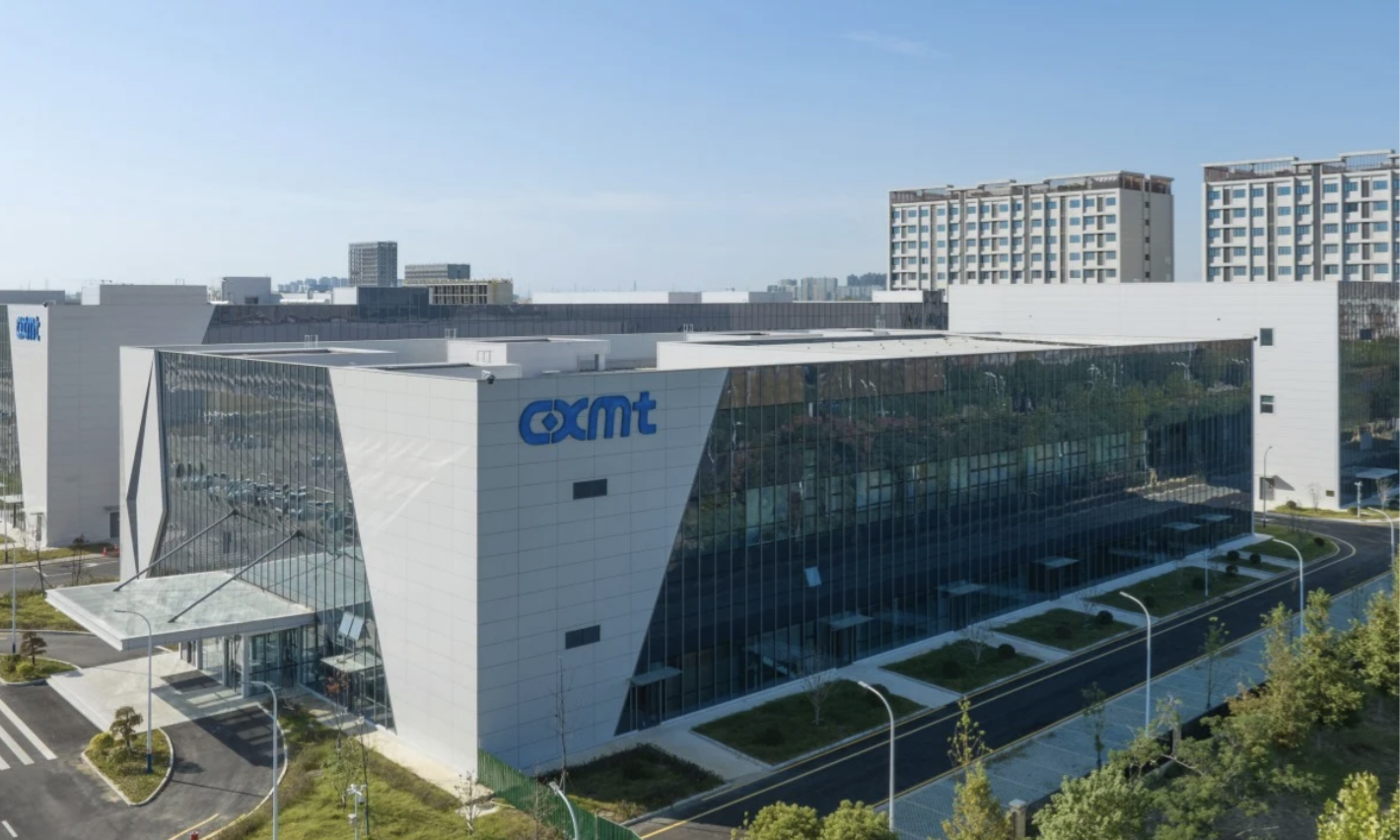
China’s leading memory chipmaker ChangXin Memory Technologies (CXMT) is set to debut on the Shanghai Stock Exchange on July 27, marking Asia’s biggest initial public offering this year, Reuters reported on Tuesday, citing people familiar with the matter.

The company plans to raise 29.5 billion yuan ($4.35 billion) through the listing after beginning book-building on July 15. The IPO will also be China’s largest A-share semiconductor offering since SMIC’s market debut in 2020, according to Reuters.

CXMT has emerged as the world’s fourth-largest DRAM chipmaker with a 7.7% global market share in 2025. Reuters reported the company plans to use the proceeds to expand production capacity and upgrade technology.

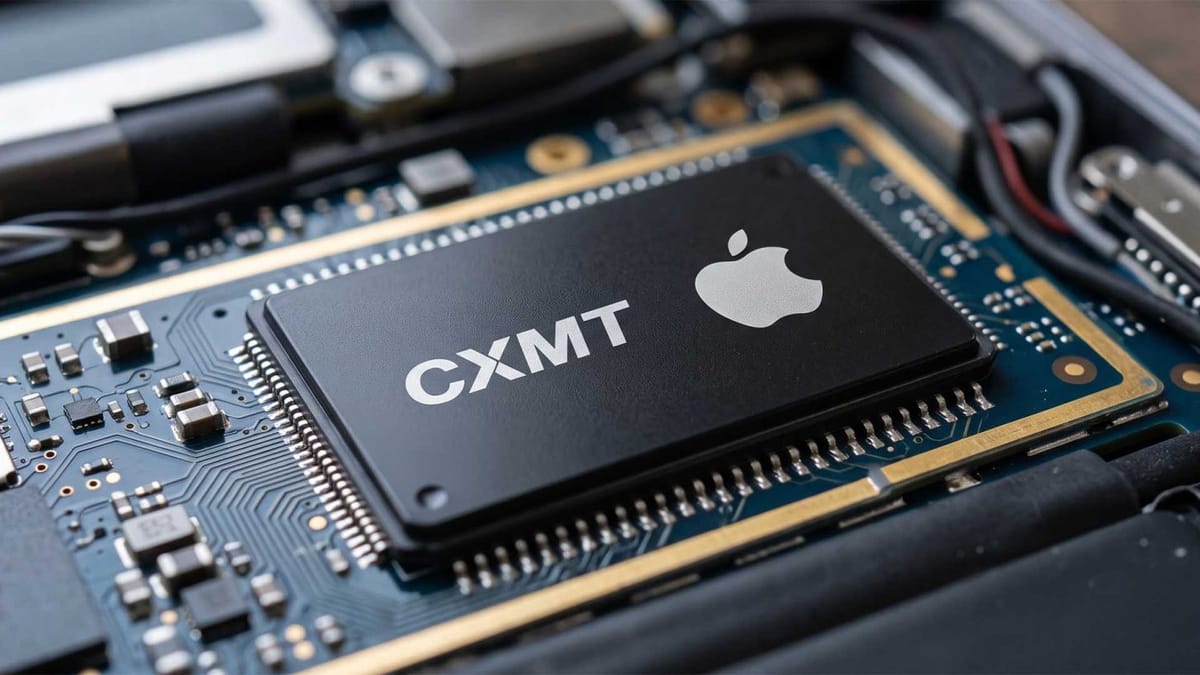
The Financial Times (FT) recently reported that Apple is testing CXMT’s DRAM products as it explores local sourcing for the Chinese market, although no supply agreement has been finalized.

Apple interest thrusts China’s CXMT into memory chip spotlight
CXMT has been thrust into the global spotlight by the race for memory chips. Apple has begun testing the company’s DRam chips for devices sold in China, according to two people familiar with the matter
Intel announces $5.7 billion AI-driven capital investment in Ireland
News
HyperscalersSignalsAI Infrastructure Semi News

Intel announces $5.7 billion AI-driven capital investment in Ireland

According to Intel's official announcement: LEIXLIP, Ireland, July 13, 2026 —Intel today announced a €5 billion ($5.7 billion) capital investment at its Leixlip campus in Ireland, marking the next phase in the site’s capacity expansion. 

Economics & FinanceTech

According to Intel's official announcement: LEIXLIP, Ireland, July 13, 2026 —Intel today announced a €5 billion ($5.7 billion) capital investment at its Leixlip campus in Ireland, marking the next phase in the site’s capacity expansion.  

Will Intel's stock price stands before market open on July 24, 2026? (earning release after market close July 23, 2026)

<115
20.00%
115 to 125
40.00%
>125
40.00%
5 Polls

"Global demand for AI and high-performance computing is driving the need for advanced silicon to power AI Factories, and Intel is scaling capacity in Ireland to deliver Intel Xeon 6 and next gen Intel Xeon built on its Intel 3 node. This strategic investment expands current production output, advances research and development activities and utilises capacity across existing cleanroom space, strengthening Europe’s semiconductor supply chain and serving industry need.  
The expansion involves upgrading existing fabrication facilities and the installation of leading-edge manufacturing equipment. Key infrastructure enhancements include the expansion of the automated track system to integrate disparate campus modules into a singular, high-velocity production environment. "

According to Retuers, Intel is one of the key multinationals in Ireland's foreign investment-focused economy, having already invested €30 billion in the country since 1989, more than half of which ​was spent between 2019 and 2023 on the fabrication facility that doubled the available capacity ​in Ireland. The leading-edge manufacturing equipment that Intel has begun to install will help deliver Intel ‌Xeon ⁠6 processors and next-generation Intel Xeon built on the group's Intel 3 manufacturing process, the company said.

Source:

  1. Intel; "Intel Invests €5 Billion to Expand Manufacturing in Europe"; July 13, 2026 (local time); https://newsroom.intel.com/intel-foundry/intel-invests-5-billion-euro-to-expand-manufacturing-in-europe
  2. Reuters; "Intel announces $5.7 billion AI-driven capital investment in Ireland"; July 13, 2026 (local time); https://www.reuters.com/business/intel-announces-57-billion-capital-investment-irish-manufacturing-hub-2026-07-13/
Energy Matrix - China's Green Exports Gain Momentum as Global Energy Transition Accelerates
News
EconomicsEnergyIndustry PulseAI PowerEnergy Matrix

Energy Matrix - China's Green Exports Gain Momentum as Global Energy Transition Accelerates

China's exports of green technology products continued to accelerate in the first half of the year, driven by the accelerating global energy transition.

Economics & FinanceTech

China's exports of green technology products continued to accelerate in the first half of the year, driven by the accelerating global energy transition.

Shipments of lithium batteries and wind turbines increased by 38% and 36%, respectively, over January-June, according to Wang Jun, deputy director of China’s General Administration of Customs.

“As the global shift toward green and low-carbon development continues to gain momentum, rising investment and consumer demand in renewable energy sectors are increasingly aligned with China’s green product offerings,” Wang said at a media briefing on Tuesday.

The growth builds on an already strong first quarter, when lithium battery exports surged by 50% from the same period a year earlier. Exports of basic organic chemicals and primary-shaped plastics also increased by 25% and 35% respectively. The sustained demand reflects a global search for alternative energy sources that has been hastened by the energy-supply crunch arising from the Middle East war.

Will the global energy transition continue to gain momentum even if the conflict in the Middle East subsides?

Yes
100.00%
No
0.00%
3 Polls

The private sector, already a dominant force in China’s foreign trade, continued to play a pivotal role. Shipments of electric vehicles, lithium batteries and solar products by private companies recorded a 46% increase in the first half, according to China Customs’ spokesperson Lyu Daliang.

“This shows that private companies have emerged as a key supply pillar for the global green transformation,” Lyu said at the same briefing.

Overall, China’s growth in exports and imports topped all forecasts in June, as surging chip prices and global demand for hardware needed to power artificial intelligence data centers lift trade across Asia.

Source: https://www.bloomberg.com/news/articles/2026-07-14/china-s-green-tech-exports-surge-on-energy-transition-demand?srnd=homepage-asia

Breaking News - China to Allow Top AI Firms to Buy Nvidia H200 Chips
News Flash
SemiconductorHyperscalersAI InfrastructureMag 7Breaking NewsSilicon BakeryGeopolitics Semi News

Breaking News - China to Allow Top AI Firms to Buy Nvidia H200 Chips

China is planning to allow the country's leading AI companies to purchase a limited number of Nvidia's H200 AI chips, according to The Information, citing two people with direct knowledge of the matter.

Economics & FinanceTechPolitics

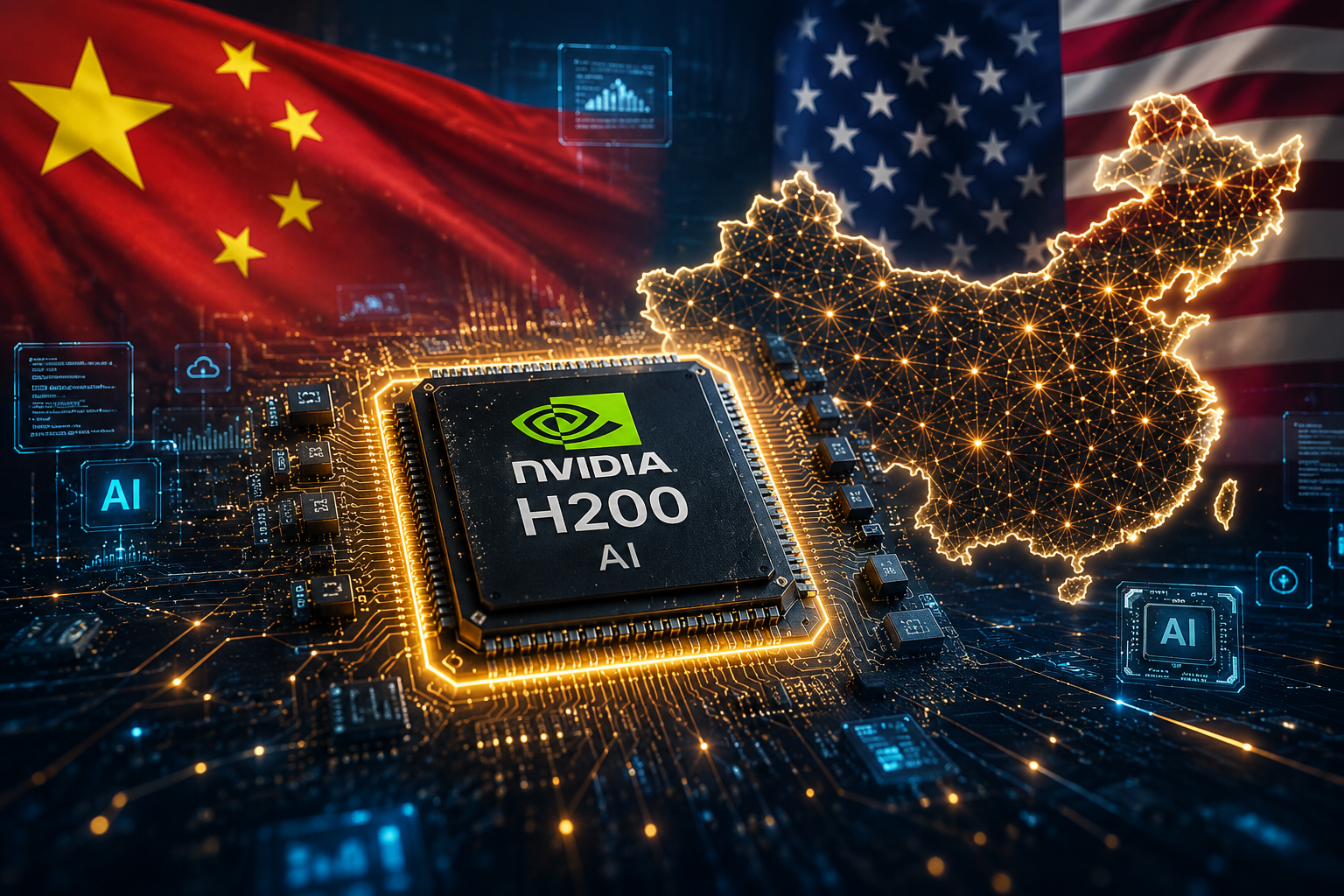
China is planning to allow the country's leading AI companies to purchase a limited number of Nvidia's H200 AI chips, according to The Information, citing two people with direct knowledge of the matter.

The report said Chinese officials have recently informed companies including Alibaba, ByteDance, and DeepSeek that they may soon receive approval to buy a limited quantity of Nvidia's H200 chips. The move would mark a notable shift in Beijing's approach to advanced AI hardware imports.

Will China be able to buy H200?

Yes
75.00%
No
25.00%
4 Polls

The development comes after the U.S. government approved Nvidia's sales of H200 chips to China and granted export licenses to around 10 Chinese companies. However, Chinese authorities had previously delayed their own approvals as they sought to support the growth of domestic AI chipmakers. Reuters reported in March that Nvidia had already secured Beijing's long-awaited approval to sell the H200 chips in China.

News of the potential policy change boosted investor sentiment. Nvidia shares rose in Wednesday morning trading following the report.

The reported shift also highlights the growing shortage of AI computing power in China. Demand for advanced AI chips has continued to outpace supply as Chinese technology companies expand their investments in large language models and other generative AI applications.

Source: https://www.reuters.com/video/watch/idRW634908072026RP1/

Breaking News - SK Hynix US Offering Is More Than Seven Times Oversubscribed
News Flash
IPOsSemiconductorBreaking NewsMemory ChipCapital MarketsAI InfrastructureSilicon Bakery Semi News

Breaking News - SK Hynix US Offering Is More Than Seven Times Oversubscribed

SK Hynix Inc.'s US listing is more than seven times oversubscribed, according to people familiar with the matter, as the South Korean memory chipmaker prepares to price its offering Thursday.

Economics & FinanceTech

SK Hynix Inc.’s US listing is more than seven times oversubscribed, according to people familiar with the matter, as the South Korean memory chipmaker prepares to price its offering Thursday.

The sale of 177.9 million American depositary receipts has attracted demand from institutional investors including global long-only funds, technology sector-focused funds, sovereign wealth funds and Asia-focused global investors, some of the people said.

Each SK Hynix ADR is equivalent to a 10th of a common share, according to an earlier filing with the US Securities and Exchange Commission. Based on Wednesday’s closing price in Seoul of 2.076 million won ($1,380) each, the US offering would raise about $24.5 billion.

Will SK Hynix's US ADR offering raise more than $25 billion?

Yes
66.67%
No
33.33%
3 Polls
Ended

At that size, the offering would rank among the largest ever debuts in the US by a foreign company, second only to Alibaba Group Holding Ltd.’s $25 billion debut.

The offering comes as the Korea-listed shares of SK Hynix as well as rivals such as US-listed Micron Technology Inc. have fallen sharply in recent days, as runaway enthusiasm for artificial intelligence infrastructure bets appeared to cool. SK Hynix shares declined 5.7% in Korea on Wednesday and are now down 30% from a record-high close in late June, though they remain roughly triple where they started the year.

Source: https://www.bloomberg.com/news/articles/2026-07-08/sk-hynix-us-offering-is-more-than-seven-times-oversubscribed?srnd=homepage-asia

Volts to Intelligence - The Compute Gold Rush: What Meta's Bet Reveals About the Future of AI Compute Demand
Analysis
HyperscalersLLMsAI InfrastructureMag 7AI PowerIndustry PulseVolts to IntelligenceData CenterCloud Computing

Volts to Intelligence - The Compute Gold Rush: What Meta's Bet Reveals About the Future of AI Compute Demand

Reading the trajectory of AI infrastructure demand through the industry's purest and riskiest case study - forming consensus of your own.

TechEconomics & Finance

Reading the trajectory of AI infrastructure demand through the industry's purest — and riskiest — case study.

1.The Purest Tech Case Study (Introduction to the Meta Proxy)

As the global financial system absorbs nearly $1 trillion in physical AI infrastructure, institutional skepticism is rising over the revenue gap. As Nicolai Tangen of Norway's sovereign wealth fund (NBIM) warned, a structural imbalance persists between the $1.4 trillion in projected global hardware expenditures and direct, verifiable AI revenues that struggle to cross $13 billion worldwide. In an era where markets demand proof of operational conversion and end-to-end viability, Meta emerges as the industry's most radical analytical proxy.

Unlike Microsoft’s Azure, Google’s GCP, or Amazon’s AWS, Meta operates as the purest unhedged bet in the generative AI landscape. The company possesses no external B2B cloud computing business to lease excess server capacity, monetize third-party compute, or subsidize its silicon infrastructure. Consequently, management's staggering CapEx guidance—officially projected between $125 billion and $145 billion for the fiscal year 2026 —must be justified entirely through internal monetization. Without a cloud safety net, every dollar spent on server farms and the pursuit of "superintelligence" represents an unhedged macroeconomic wager, completely reliant on translating brute compute power into ad-targeting efficiency and user engagement across Reels and Instagram.

2. The CapEx Wall and the Inference Tax

The paradigm of the modern internet economy is undergoing a structural mutation. For two decades, tech scaling relied on the zero marginal cost framework of traditional software. Generative AI shatters this foundation. Every prompt, synthetic recommendation, and AI-driven ad placement requires dedicated silicon cycles and immediate electron consumption. This reality imposes a permanent Inference Tax directly on Meta’s Cost of Revenue, structurally shifting it from an ethereal asset to a heavy-industry operating expense.

As Forrester Research highlights, this shift has created a "Pilot Graveyard," with 55% of global IT decision-makers admitting their legacy infrastructure cannot scale AI without severely eroding profit margins. For Meta, deploying generative models across its massive user base—particularly through its automated ad engine, Advantage+—means that higher engagement no longer yields pure profit. Instead, it triggers a linear surge in variable compute costs, threatening to permanently compress historically high gross margins under the weight of an unyielding CapEx wall.

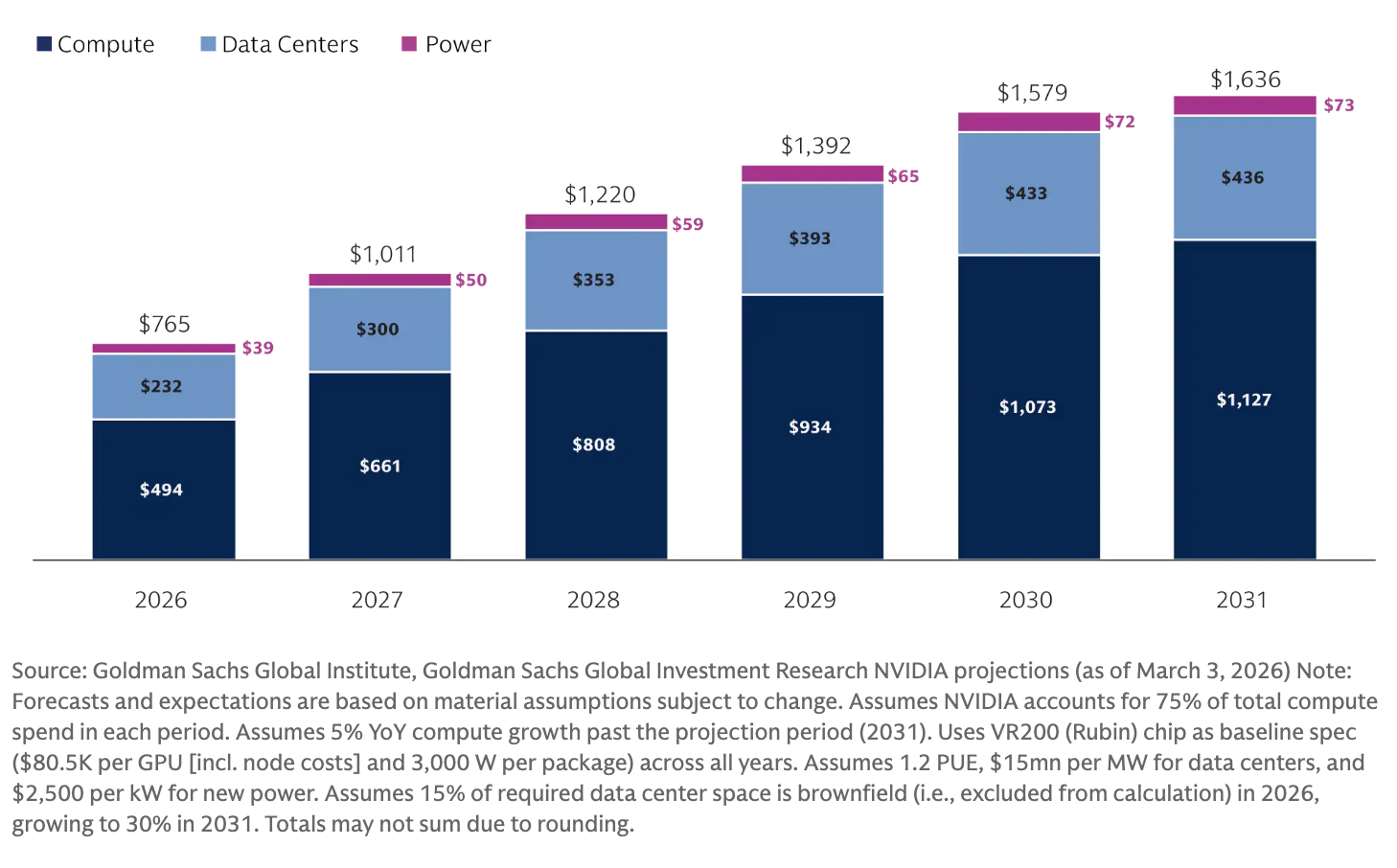
Baseline aggregate AI CapEx estimates (bn) ~$7.6tr of capital between 2026 and 2031 across compute, data centers, and power

Will Meta’s internal ad and engagement ROI justify its massive AI infrastructure CapEx over the next 24 months?

Yes — Internal monetization will absorb the Inference Tax
50.00%
No — The unhedged CapEx wall will crush operating margins
50.00%
2 Polls

3. The Accounting Depreciation Cycle: From Assets to Liabilities

The current valuation of hyperscalers suffers from a profound market mispricing regarding AI hardware infrastructure. While traditional industrial assets provided decades of predictable utility, modern AI clusters powered by Nvidia H100 or Blackwell architectures are bound to a brutal 3-to-4-year economic and technical useful life before complete obsolescence. This rapid decay creates an economic trap: tech giants are not building permanent capital moats, but are locked in a treadmill of perpetual reinvestment just to maintain baseline compute competitiveness.

To temporarily mask this structural erosion of margins, companies like Meta have resorted to an opportunistic accounting maneuver—a depreciation schedule extension for servers from four to five or six years. While this book-keeping extension artificially cushions reported operating income, it cannot alter the hard physical reality of hardware decay. The unavoidable necessity of replacing obsolete chips every 36 to 48 months directly eviscerates Free Cash Flow (FCF), converting what Wall Street treats as long-term capital assets into recurring operational liabilities.

4. Hitting the "Watt Wall" (The Energy Limit)

The true technical ceiling for AI is not financial, but thermodynamic: The Watt Wall. While hyperscalers possess virtually infinite capital, they are colliding with a hard physical glass ceiling: power grid saturation. According to the IEA, data centers now absorb 22% of Ireland’s total electricity—forcing grid connection freezes in Dublin—and will devour 50% of US electricity demand growth by 2030. This structural deficit forces an intense Physical Crowding Out, where compute clusters displace heavy industry and residential grid electrification. To bypass these transmission bottlenecks, operators like Meta are desperately pivoting to dedicated baseload power, signing PPAs for 1.1 GW of existing nuclear and 150 MW of next-gen geothermal energy. Ultimately, money cannot print megawatts; without grid infrastructure, AI growth stops.

What will be the primary bottleneck throttling the hyperscalers' AI infrastructure boom?

Rapid GPU Depreciation (The 3-4 year replacement cycle)
0.00%
Power Grid Saturation (Hitting the 'Watt Wall')
0.00%
Shareholder Pressure on Free Cash Flow (The valuation doghouse)
100.00%
1 Polls

Comprehensive Analytical Bibliography:

  • Bank for International Settlements (BIS). (2025). BIS Quarterly Review: International banking and financial market developments. Basel: BIS, December 2025.
  • International Energy Agency (IEA). (2026). Electricity 2026 Report: Global Infrastructure & Thermodynamic Trends. Paris: IEA.
  • Norges Bank Investment Management (NBIM). (2026). Capital Allocation Doctrines and Institutional Mandates 2025/2026. Oslo: NBIM.
  • Organisation for Economic Co-operation and Development (OECD). (2026). Compendium of Productivity Indicators. Paris: OECD, January 2026.
  • Andreessen Horowitz (a16z). (2025). Where Value Will Accrue in AI: Structural Realities of Algorithmic Gross Margins. Research Briefing by Martin Casado and Sarah Wang.
  • Bessemer Venture Partners & Meritech Capital. (2026). State of the Cloud 2026 & Meritech Software Pulse Index. New York/San Francisco: Open Access Multiples Matrix.
  • Forrester Research. (2026). Predictions 2026: Artificial Intelligence and Corporate Infrastructure Stress. Cambridge: Forrester.
  • Goldman Sachs Global Investment Research. (2024). Gen AI: Too much spend, too little benefit? Global Macro-Equity Strategy Briefing managed by Jim Covello.
  • Goldman Sachs Global Investment Research. (2026). Tracking Trillions: The Assumptions Shaping the Scale of the AI Build-Out, by George Lee & Lucas Greenbaum.
  • Morgan Stanley. (2026). US Software Outlook & Big Tech CapEx Projections. New York: Equity Research Division.
  • Brynjolfsson, Erik, Daniel Rock, and Chad Syverson. (2019). The Productivity J-Curve: How Intangibles Complement General Purpose Technologies. Cambridge: National Bureau of Economic Research, Working Paper No. 25148.
  • Chen, Xupeng. (2026). Abundant Intelligence and Deficient Demand: A Macro-Financial Stress Test of Rapid AI Adoption. Academic Working Paper, March 2026.
  • Also includes Ccrporate filling files and briefing or media materials.