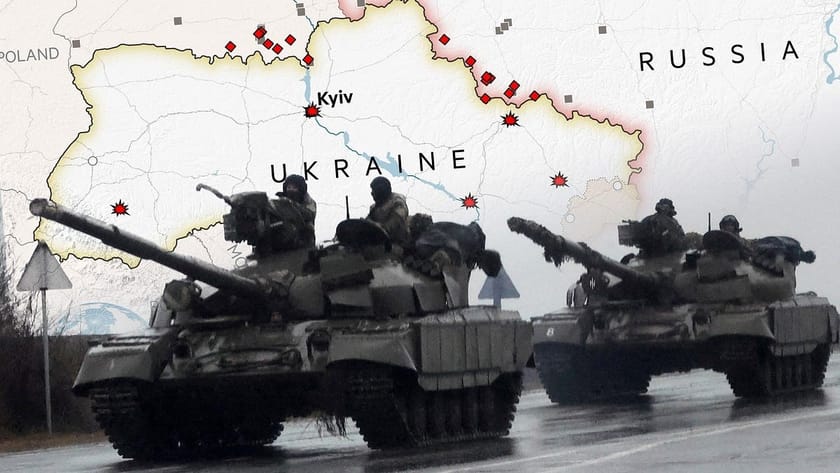
Polymarket traders are not expecting a Ukraine-Russia peace deal before 2027.
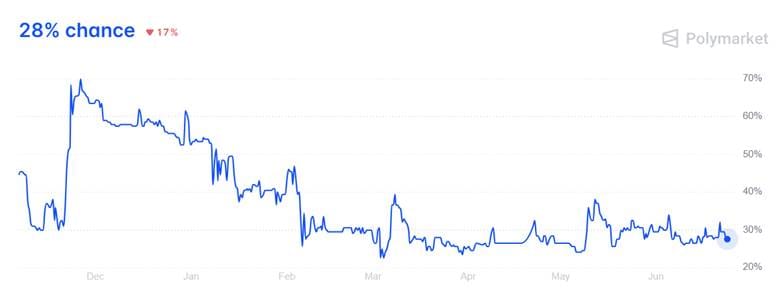
The market gives “Yes” about a 28% chance, with “No” around 72%, and about $2.3 million traded.
The risk is that traders are pricing the headline like a final treaty market, but the rules are much more relaxed.
The market can resolve “Yes” if Ukraine signs, by December 31, a written instrument that includes both Ukraine and Russia as parties and either establishes a ceasefire or commits both sides to a defined process toward ending the war. A framework, roadmap, armistice, exchange of letters, or mediated agreement text could all qualify.
And even on this broader definition, traders are still leaning heavily toward “No.”
Why is the market skeptical?
Put simply, maximalist terms. Both sides are still talking about talks, but not on terms that look close to a deal.
The first blocker is Russia's territorial demand. On June 23, Russian Foreign Minister Sergei Lavrov said Moscow was ready to resume talks with Ukraine “from the point where they left off.” But this did not come with a softer Russian position. In fact, Lavrov gave no sign Moscow had moved away from its demand that Ukraine surrender the remaining parts of Donbas it still holds.
Putin's latest comments point in the same direction. On June 24, The Independent reported Putin saying Russia was ready for peace negotiations after Ukrainian strikes on Russian infrastructure, but he also said talks should proceed on the basis of earlier Istanbul agreements and that he saw no reason to depart from them. In market terms, this keeps the No side protected: Moscow may be open to a process, but it still wants that process built around its own starting terms.
The second blocker is Ukraine's refusal to concede territory. A ceasefire along current lines is one thing, but an actual document that looks like Ukraine signing away territory is another.
The third blocker is escalation. Ukraine has intensified drone and infrastructure strikes, including attacks on Crimea’s rail, power, and fuel systems. The Guardian reported on June 24 that Russian-installed authorities in Crimea had imposed temporary security measures after Ukrainian strikes, while Putin acknowledged a “huge stream” of Ukrainian drones.
But the weak assumption is the word “peace”
Despite the obvious pressure, 28% may be too dismissive if traders are reading the market title too literally.
The headline says “peace deal,” which sounds like a final settlement. But the rules are wider. A roadmap or framework could be enough if it commits both sides to a defined process toward ending the war.
This is where the market could reprice. The document must include Ukraine and Russia as parties, and it must either end hostilities, establish a ceasefire, or commit both sides to a defined process toward peace or normalization.
The rules do not require a separate Russian signature or ratification, but they do require more than a unilateral Ukrainian statement.
What would make the market reprice?
The first trigger is a named US-mediated process. Reuters reported on June 23 that Russia had accused the US of failing to deliver on “understandings” reached between Putin and Trump at their Alaska summit, with three senior Russian officials making similar complaints in three days. This sounds a bit hostile, but for this market, it also reveals something useful: Moscow still sees the US channel as the one that matters.
In the same vein, International Crisis Group analyst Oleg Ignatov said Russia wanted the US to resume diplomacy to help Russia end the war on its own terms. This also tells traders where the repricing risk sits: not in a sudden Russia-Ukraine breakthrough, but in a US-mediated text that both sides are pressured to engage with.
The second trigger is Ukraine turning ceasefire language into paper. On June 22, Ukraine’s UN envoy Andrii Melnyk said Kyiv may “recalibrate and modify” its offer if the UN Security Council does not move toward a full and unconditional ceasefire. He also called a ceasefire along the de facto front line “already a great compromise.”
Finally, for this market, the key is whether Ukraine’s position turns into a document that follows the rules. A speech at the UN does not settle the market, but a Ukrainian-signed framework that references Russia as a party and lays out principles, steps, and a timetable might. So, it must include both Ukraine and Russia as parties and either establish a ceasefire or commit both sides to a defined process toward ending the war.
Here’s what to watch next
In short, this is a market about whether the war produces a serious enough document before the end of 2026.
The 28% price is interesting because traders are not only fading a final treaty, they’re also giving low odds to a ceasefire, roadmap, or formal process that meets the market’s rules.
Maybe this caution is right. The war is still active, the territorial dispute is still central, and security guarantees remain the difference between a ceasefire and a pause before the next attack.
But the “Yes” side does not need a perfect peace, so this market could turn on three things.
First, whether US mediation becomes structured again: named negotiators, dates, venues, or a draft text. Second, whether Ukraine’s ceasefire position moves from speeches and letters into a signed framework. Third, the exact language of any document. The market does not need a final peace treaty, but it does need more than a temporary pause or humanitarian arrangement.
Sources:
1. Reuters: Lavrov says Russia is ready to resume talks with Ukraine from point where they left off
2. Reuters: Russia says US hasn't followed through on Trump-Putin 'understandings'
3. Reuters: Ukraine may recalibrate its offer of ceasefire with Russia, envoy tells UN
4. The Guardian: Ukraine war briefing: Crimea locks down as Putin acknowledges ‘huge stream’ of Ukrainian drones