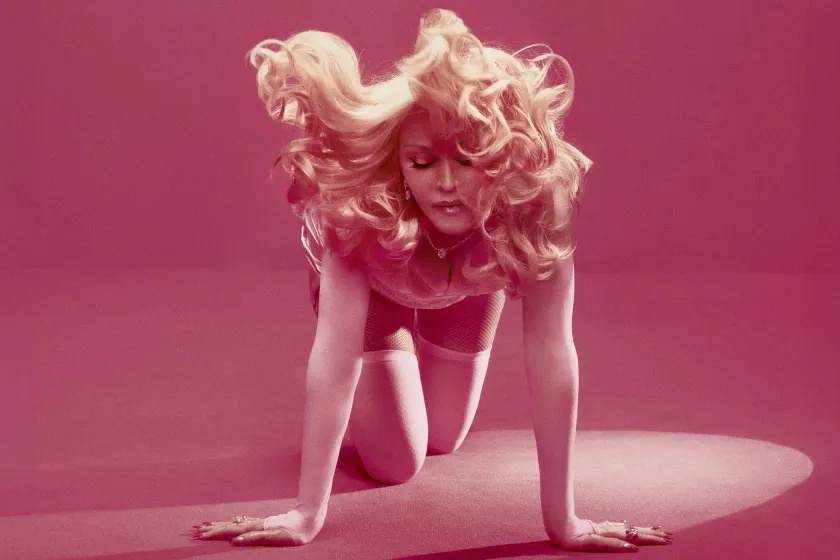
“The dancefloor is not just a place,” Madonna intones in a breathy voiceover near the start of One Step Away, a new track that strongly recalls her 2000s electronic heyday. “It’s a threshold. / A ritualistic space where movement replaces language.” Good for the Soul doubles down on the message, while another half-dozen tunes concur: dancing, as Madonna has it, is Love Without Words.
Celebrating the dancefloor is hardly a novel idea. Many artists have made the point that dancing is so much more than a superficial pastime but a means of escape, connection and reinvention. Also, it’s an excuse to get messy – not least Madonna herself, on tracks such as Into the Groove (1985) and Vogue (1990).
Recently, it’s been hard to move for all the body-jacking music that has been pumped out since the pandemic by a slew of mononymous, or near-mononymous, stars: Dua, Kylie, Beyoncé, Gaga, Charli and Twigs, for starters.
Madonna’s 15th album, Confessions II throws another 12in disc on to this teetering pile, seeking to reconnect to her core audience in the fifth decade of her career. It nods overtly to her 2005 album, Confessions on a Dancefloor – produced then, as now, by Stuart Price – while offering up a standalone set of up-to-date club pop tunes, roping in siren of the moment Sabrina Carpenter and Colombian artist Feid.
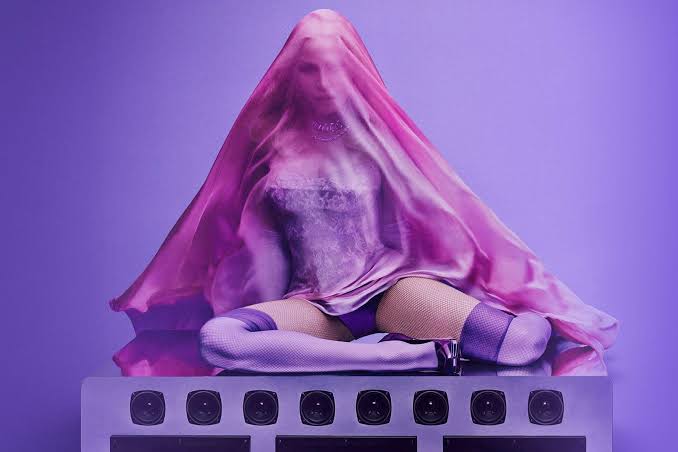
Nostalgia – for discos past, for old Madonna songs – looms large, but recent events are also very present in these 16 tracks, which are presented as a continuous mix. The first Confessions sampled Abba; this one finds room for the house standard French Kiss by Lil Louis and Inner City’s Good Life. Madonna apparently played rough mixes during workouts and canned the tracks that did not bring the rush.The idea of dancefloor-as-succour is no less true for repetition. But a fresher spin on the old floor-filling message – “Just let the music set you free” – might well have elevated this very good record and made it a truly great one.
Confessions II underlines the singer’s “I was there” clubland credentials, and signals her longstanding queer allyship. Moreover, it may well be supplying healing for an artist who has been through an eventful few years. Madonna’s next big project was supposed to have been a sumptuous Universal Pictures biopic, scripted by the artist herself. It ran into budgeting disagreements in early 2023. Netflix later swooped in proposing a series, which was thwarted by rights issues, among other things.
In June 2023, on the eve of her career-retrospective Celebration world tour, Madonna was hospitalised with a bacterial infection, contracted sepsis, and was placed in an induced coma. When she recovered, she made amends with her estranged brother Christopher, who then died of cancer in late 2024. Their brother Anthony had died in early 2023. Another significant bereavement followed: the siblings’ stepmother, Joan Ciccone.
Confessions II often feels like the product of all that stymied autobiographical effort and all that loss; a displacement activity – a proxy in which to work through a lot of stuff. She dedicates a song each to Christopher (Fragile, with breakbeats to the fore) and her stepmother (the very conflicted Betrayal, with ghostly piano and horns). The Test features her daughter Lourdes Leon.
These autobiographical impulses recur. Danceteria is named after the celebrated New York nightclub where Madonna rubbed shoulders with Keith Haring, Nile Rodgers and Jean-Michel Basquiat, all named in the lyrics. The closing LES Girl is an abbreviation for New York’s Lower East Side, where Madonna used to live. It’s a paean to a long-ago boyfriend, but also to Polaroids and last night’s eyeliner.
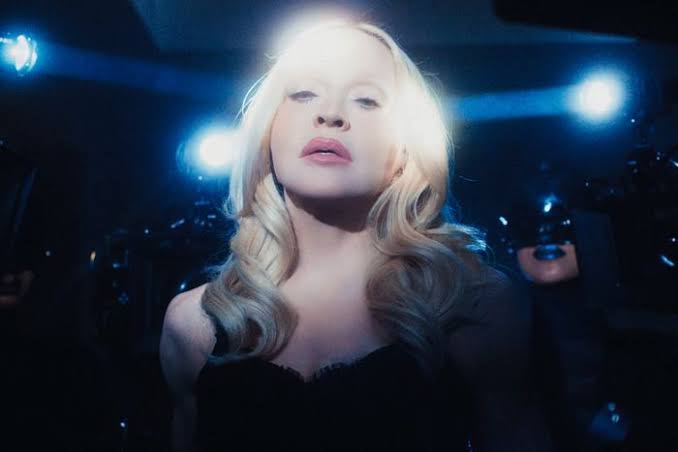
An extended music video scratches her visual itch and provides a six-track taster for the album; on Danceteria, a cadre of disparate celebrities (Benedict Cumberbatch, Kate Moss, Cole Palmer, Honey Dijon) hold a rave in a men’s toilet while Madonna interpolates the base riff from Lou Reed’s Walk on the Wild Side.
At the album’s apex is Everything, one of the hardest-slapping beats on the record, on which you can virtually smell the poppers. Madonna’s lyrics range far and wide, but at one point she appears to boggle at people not going out any more. Because however much another record about partying may appear surplus to requirements, the art of losing yourself on the dancefloor could well be in peril, with major nightclub closures mirroring those of small grassroots venues.
People, it seems, are staying at home, perhaps to save money, or to doomscroll. “No one wants to go outside, it’s not OK, it blows my mind,” Madonna sings on Everything. “It’s not OK! I don’t fuck with it!”