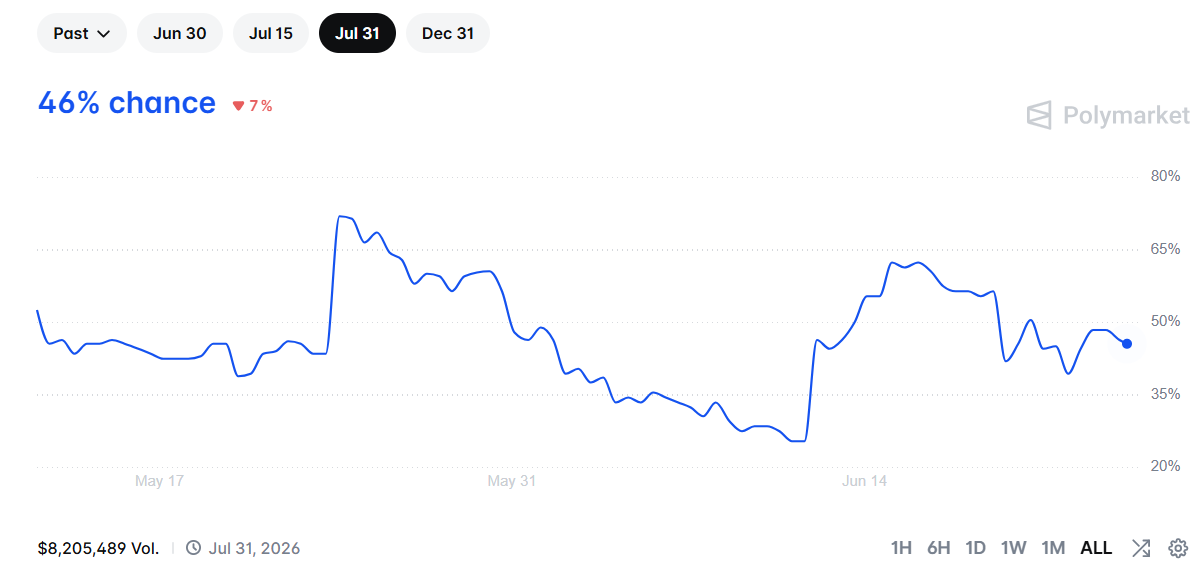
Last week, we argued that reopening Hormuz would be a sequence, not a switch. The July Polymarket market now puts that thesis into a tradable form.
The contract resolves Yes if IMF PortWatch publishes a 7-day moving average of Strait of Hormuz transit calls, or “Arrivals of Ships,” at or above 60 before July 31.
This makes the question narrower than "is Hormuz reopening?" and stricter than "are tankers moving again?"
Oil prices are already reacting to better headlines. Brent and WTI have fallen as traders price smoother crude flows through the strait. But the Polymarket contract needs something harder: a broad enough recovery in counted ship traffic to show up in the official data before the clock runs out.
Why July Yes has a real case: Traffic is coming back
Reuters reported that three stranded supertankers passed through Hormuz, including two Trafigura-operated VLCCs carrying about 2 million barrels each and another VLCC chartered by GS Caltex carrying Saudi crude. Seven empty Qatar-linked LNG tankers also entered the Gulf in recent weeks, an early sign that Gulf gas shipping is trying to restart.
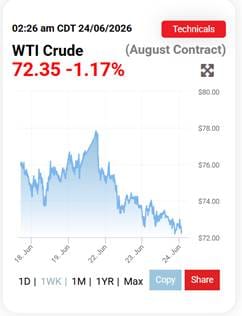
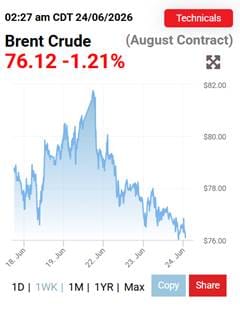
By June 24, Brent was trading at $76.12 and WTI around $72.35, near four-month lows, as traders priced recovering crude flows through Hormuz.
Source: IMF
In simple words, this is what a reopening trade should look like: first, the risk premium comes out of oil, then shipowners and charterers test the route, then flows normalize.
So, July Yes has a real case.
Here’s the risk: Early movement versus normal flow
The risk is that traders confuse movement with normalization, and the July market may be giving the 30-day restoration target too much credit.
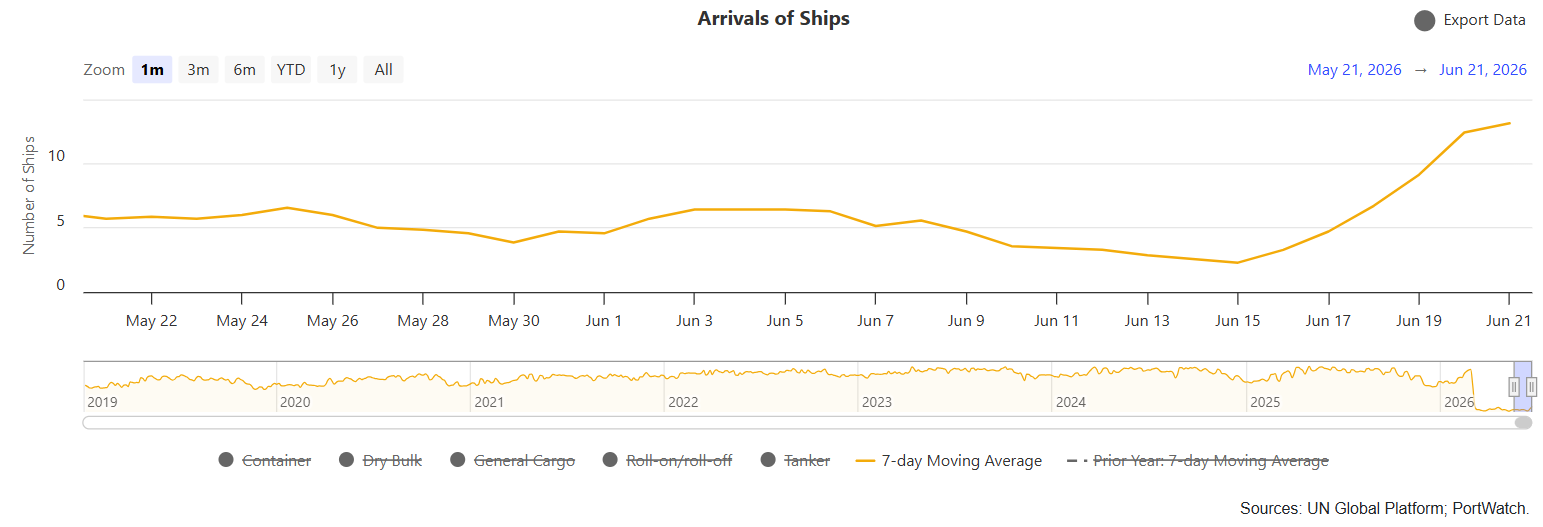
First off, sailings through Hormuz are still only a fraction of the roughly 125 daily crossings seen before the Iran war began. As of this writing, the seven-day moving average is around 13 versus a required 60.
The market needs a broad and sustained jump across the counted categories, early enough for the average to register before the deadline. A burst of traffic in the final 24 or 48 hours could look bullish on a shipping screen and still fall short of the contract.
Source: IMF PortWatch
A few supertankers leaving the Gulf are important for oil supply. Several LNG tankers repositioning is important for Gulf gas trade. But the PortWatch threshold needs a broader recovery across counted ship categories, not just a handful of high-profile oil and LNG movements.
If the count starts climbing into the 30s or 40s by mid-July, Yes becomes much easier to defend. If it stays stuck in single digits or low teens, the current price should face pressure no matter what.
This is why the July price is too clean.
What could move this market? Three triggers to watch
The first number to watch is the IMF PortWatch seven-day average. If arrivals climb toward 60 before the final week of July, Yes gets support; if traffic remains lumpy into mid-July, the current price should face pressure.
Next, shipping-risk confirmation is important. The Saudi supertanker movements matter, but Reuters also reported that shipping and insurance officials still wanted safety assurances, mine-clearance clarity, and legal guidance.
Commercial risk is the last check. A vessel leaving with crude or LNG may simply be clearing old inventory. Empty tankers moving back in are a stronger sign that operators are willing to resume the trade cycle.
The bottom line
This market comes down to one question: can the reopening become measurable fast enough for the July Polymarket contract?
The contrarian case weakens if three things happen together: the PortWatch average rises early, empty vessels keep entering the Gulf, and insurance costs lower. In this case, July Yes may be cheap.
For now, the headline can say Hormuz is reopening, but the July price asks a lot from the shipping system. This contract needs a harder proof point: traffic has to recover, stay recovered, and show up in the data before the clock runs out.
Sources:
1. IMF PortWatch: IMF - Strait of Hormuz - Daily Transit Calls & Transit Trade Volume
2. Reuters: Gulf oil tanker rates nearly double as Middle East producers ramp up exports
3. Reuters: More vessels transit Hormuz, Qatar-linked LNG tankers return, data show
4. Reuters: Oil extends slide on expectations of smoother crude flows via Hormuz
5. Reuters: Scouring the Strait of Hormuz for mines could take weeks
6. Reuters: Three Saudi-flagged supertankers sail through Hormuz after Iran deal signed, data shows