Will OpenAI Actually Handing Stake to Trump Administration / the Gov?
Will Anthropic Follows Suit (after OpenAI) to Hand Stake to the Gov?
According to FT, OpenAI has held discussions regarding the possibility of granting a 5 percent equity stake to the US government. The $852 billion artificial intelligence startup is attempting to clear political hurdles by obtaining financial investment from the Trump administration.
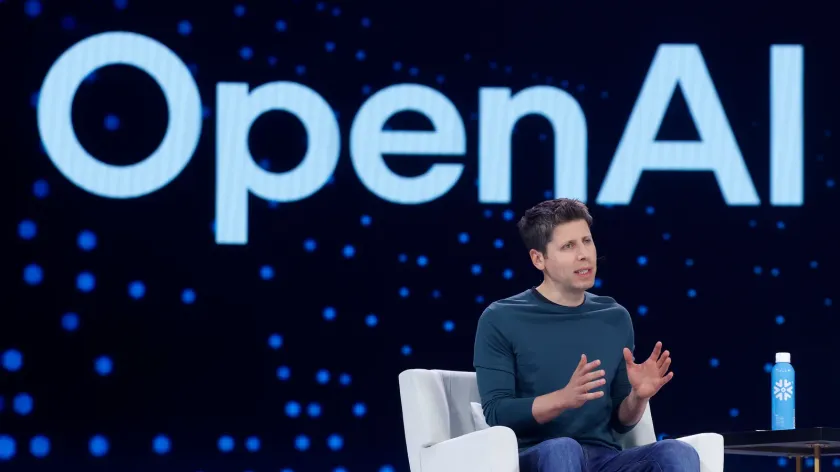
Based on the soruce, two individuals acquainted with the matter, Sam Altman, the chief executive of the ChatGPT creator, has contended that providing the public with a financial interest in the company represents the optimal method for sharing the benefits of AI. He has proposed a stake of this magnitude during preliminary talks with the administration.
The envisioned structure would require other American AI firms to surrender an equivalent percentage, though it remains uncertain whether competing labs would agree to the terms.
Providing the government with an equity position could assist in establishing favorable relations with the administration. This move represents an effort to mitigate political backlash by distributing the wealth created by AI to the general population.
AI developers have encountered a progressively difficult climate in Washington as both American politicians and the public voice growing anxieties regarding extensive data center development, cyber security risks, and the technology's impact on employment.
Both OpenAI and its primary competitor, Anthropic, have recently experienced delays in launching their latest cutting-edge models due to US scrutiny. Furthermore, certain Republicans and advisers to President Donald Trump are advocating for significantly stricter regulations across the industry.
Both rivals are concurrently getting ready for public listings, which would broaden their shareholder bases and produce substantial returns for existing investors, though OpenAI's initial public offering might not occur until next year.
Altman and other OpenAI leadership have proposed that each of the top AI developers in the United States allocate 5 percent of their equity toward an entity modeled after the Alaska Permanent Fund—a sovereign fund that reinvests the state's oil revenues into equities and distributes dividends to residents and the state government.
The targeted firms could encompass Anthropic, alongside Google, Meta, and others, though it is uncertain if any of these entities would consent to OpenAI's plan.
Following public criticism of Intel's chief, Trump shifted his stance to support the US chipmaker after the federal government acquired a 10 percent stake.
The sources noted that these "conceptual" discussions between OpenAI and the government are in their infancy, and implementing any such agreement would likely necessitate an act of Congress. Nonetheless, the negotiations highlight a potential framework for dispersing the financial profits generated by the technology.
Altman has maintained active dialogues concerning public ownership with administration figures, including Trump, Treasury Secretary Scott Bessent, and Commerce Secretary Howard Lutnick, according to several people familiar with the situation.
Additionally, the OpenAI chief executive has conversed with Democratic Senator Bernie Sanders in recent weeks. Sanders has advocated for public ownership closer to 50 percent of each American AI corporation through a sovereign wealth fund.
In past economic policy recommendations, both OpenAI and Anthropic have implied that structures like sovereign or public wealth funds might eventually be necessary to allocate shares to citizens.
In April, OpenAI put forward a proposal for a "public wealth fund" designed to offer every citizen, including individuals who do not participate in financial markets, an equity stake in AI-fueled economic expansion.
In May, the company's non-profit division, the OpenAI Foundation, stated that an AI-driven future would likely require fresh strategies to provide individuals with lasting ownership in the value-generating systems, explicitly highlighting public or sovereign wealth funds.
The foundation noted in a blog post that the objective extends beyond merely supporting citizens through economic transitions after choices are finalized; it aims to provide them with a stake and a voice in directing how that evolution takes place.
OpenAI chose not to comment on the matter, and the White House did not instantly reply to a request for comment.
Source: 1. The Financial Times; OpenAI proposes handing Trump administration 5% stake; July 2, 2026: https://www.ft.com/content/7c803eab-8e80-4431-9a87-e943bf00e00b?syn-25a6b1a6=1