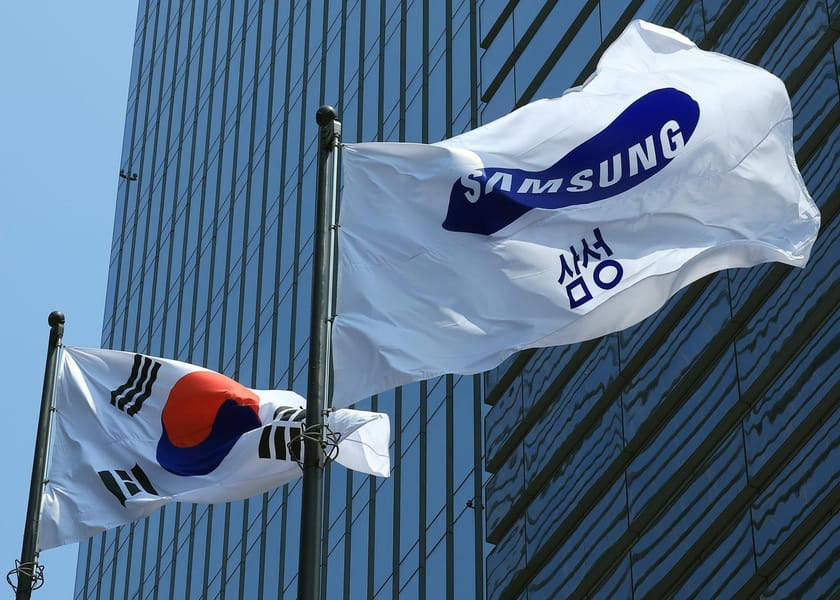
Samsung Electronics has just announced its earnings guidance for the second quarter of 2026. Normally it will push its stock higher.
Instead, investors sold.
Samsung’s second quarter revenue reached approximately KRW 171 trillion, while operating profit hit about KRW 89.4 trillion — its third consecutive record quarter. Profit is approximately 19 times that reported a year ago, which was 4.7 trillion won at that time. And exceeded the KRW 87.3 trillion LSEG SmartEstimate cited by Reuters(July 7).
Will Samsung's operating profit hit another record in Q3 2026?
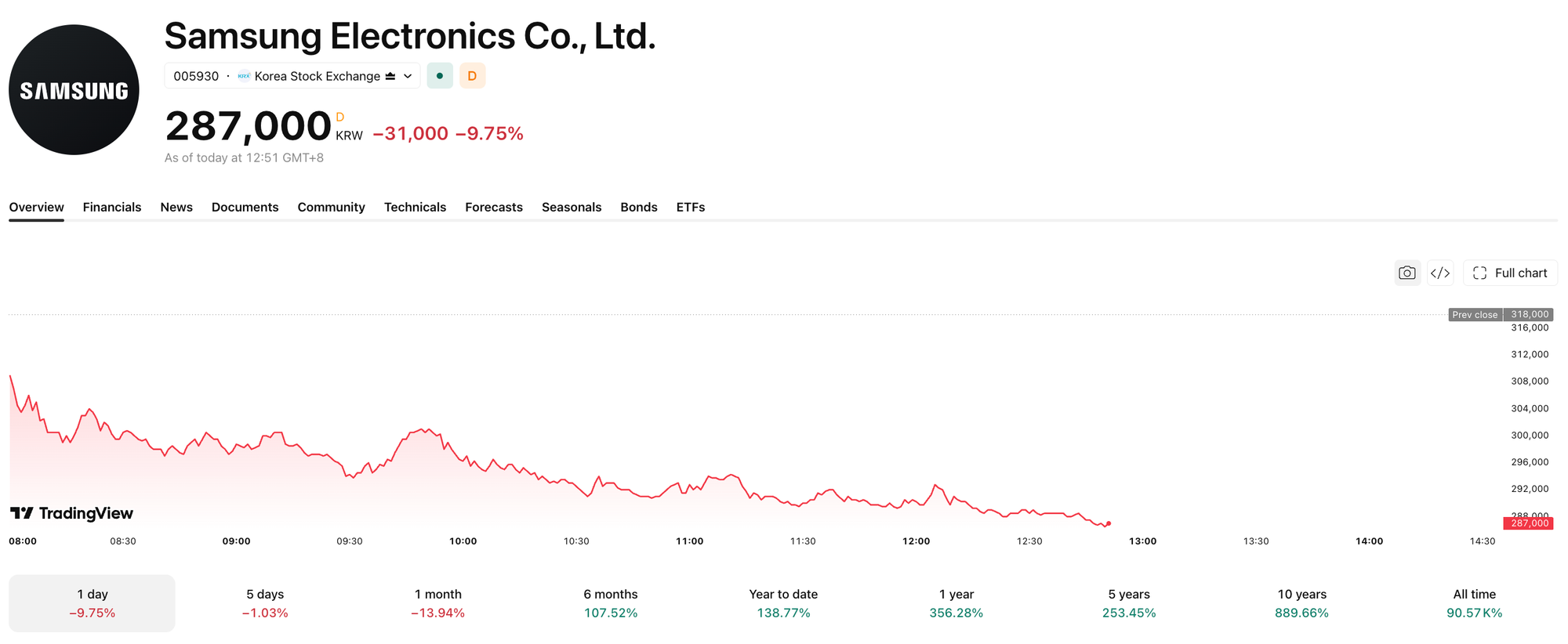
Yet Samsung shares fell as much as 9.75% in the middle-day trading. While SK Hynix dropped 10.58% at the same time. This reaction may be more important than the earnings beat itself.
The obvious explanation for Samsung’s profit surge is AI. But the more interesting part is that the boom is no longer confined to high bandwidth memory(HBM).
As chipmakers devote more production capacity to AI related products, supply has tightened across conventional memory used in smartphones, PCs and servers. Reuters reported that Citi Research estimated second quarter average selling prices rose 44% quarter-on-quarter for DRAM and 53% for NAND.
 YU GU
YU GU
So why did the stock fall?
Because investors are increasingly asking whether today’s extraordinary profits represent the beginning of a structurally tighter memory market or the peak of another semiconductor cycle.
Reuters reported that concerns are mainly about the durability of AI infrastructure spending. Delays in data centre construction caused by power constraints, labour shortages or local opposition could eventually weaken demand across the hardware supply chain. Investors are also questioning whether major technology companies can keep financing enormous AI capital expenditure when returns remain uncertain.
This is the real market question behind Samsung’s results.
The bullish case is because AI changed the old ecosystem: HBM consumes capacity, conventional DRAM and NAND remain tight, new fabrication plants take years to build, and customers are increasingly seeking longer term supply agreements. The bearish case is that today’s record high prices already assumes an AI buildout that cannot slow materially.
Samsung’ full earnings release planed to announce on July 30. Therefore, it matters more than another confirmation of record profit. Investors will be watching the memory pricing, HBM progress and management commentary. These help them to find evidence that this boom still has room to run.
The headline says Samsung just had an extraordinary quarter.
The stock market is asking whether extraordinary has already become the baseline.
What is the biggest risk to the current AI memory boom?
Source:
- Samsung flags 19-fold jump in profit, but shares slump on jitters AI boom may stall, July 7, 2026 https://www.reuters.com/world/asia-pacific/samsung-estimates-19-fold-rise-q2-operating-profit-beating-expectations-2026-07-06/