Premier info portal for prediction markets. The start point of information market.
Oracle Credit Risk Hits Near 18-Year High on AI Spending Concerns
News
HyperscalersAI InfrastructureCapital Markets

Oracle Credit Risk Hits Near 18-Year High on AI Spending Concerns

The cost of protecting Oracle Corp.’s debt against default reached a fresh multi-year high on Monday while its existing bonds sold off, as doubts grew over whether the company’s massive investments in artificial intelligence will pay off.

Economics & Finance

The cost of protecting Oracle Corp.’s debt against default reached a fresh multi-year high on Monday while its existing bonds sold off, as doubts grew over whether the company’s massive investments in artificial intelligence will pay off.

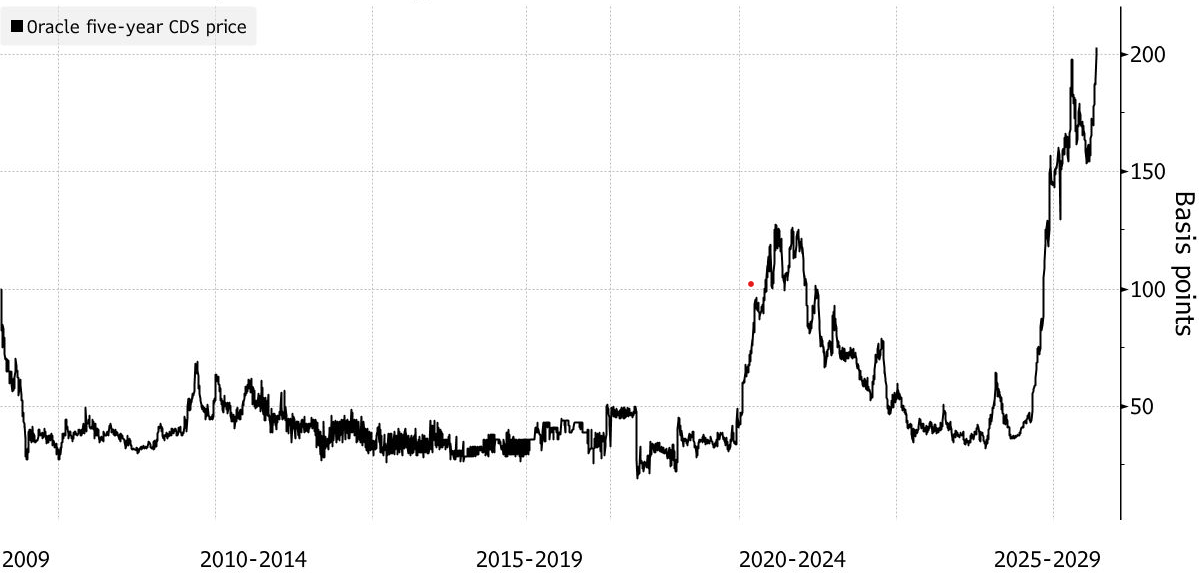
Five-year credit default swaps(CDS) on the company’s debt, a gauge of perceived credit risk, rose to about 2.03 percentage points annually early Monday, according to ICE Data Services. That marked the highest level on record for data going back to the end of 2008, surpassing the previous peak of 198.23 basis points reached on Friday.

Oracle debt risk hits record high, cost of default protection surges amid tech sector selloff. Source: Bloomberg

Meanwhile, Oracle’s bonds weakened across the curve on Monday. The spread on Oracle’s 6.7% bonds maturing in 2056, one of its most actively traded bonds, widened by about 8 basis points to 263 basis points, according to Trace data. Its 5.7% notes due in 2036 widened by around 9 basis points to 205 basis points.

An artificial intelligence model from a Chinese startup has renewed fears over the impact of massive capex spending on tech earnings, which kick off Wednesday.

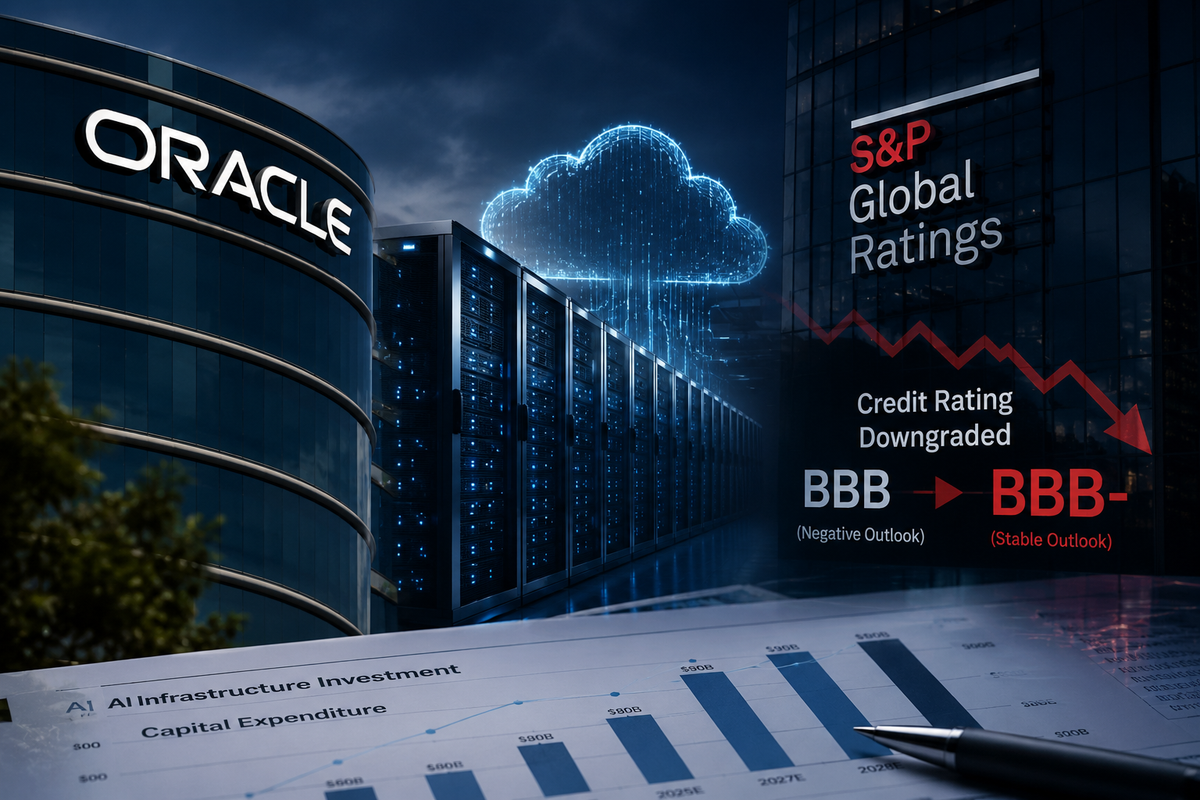
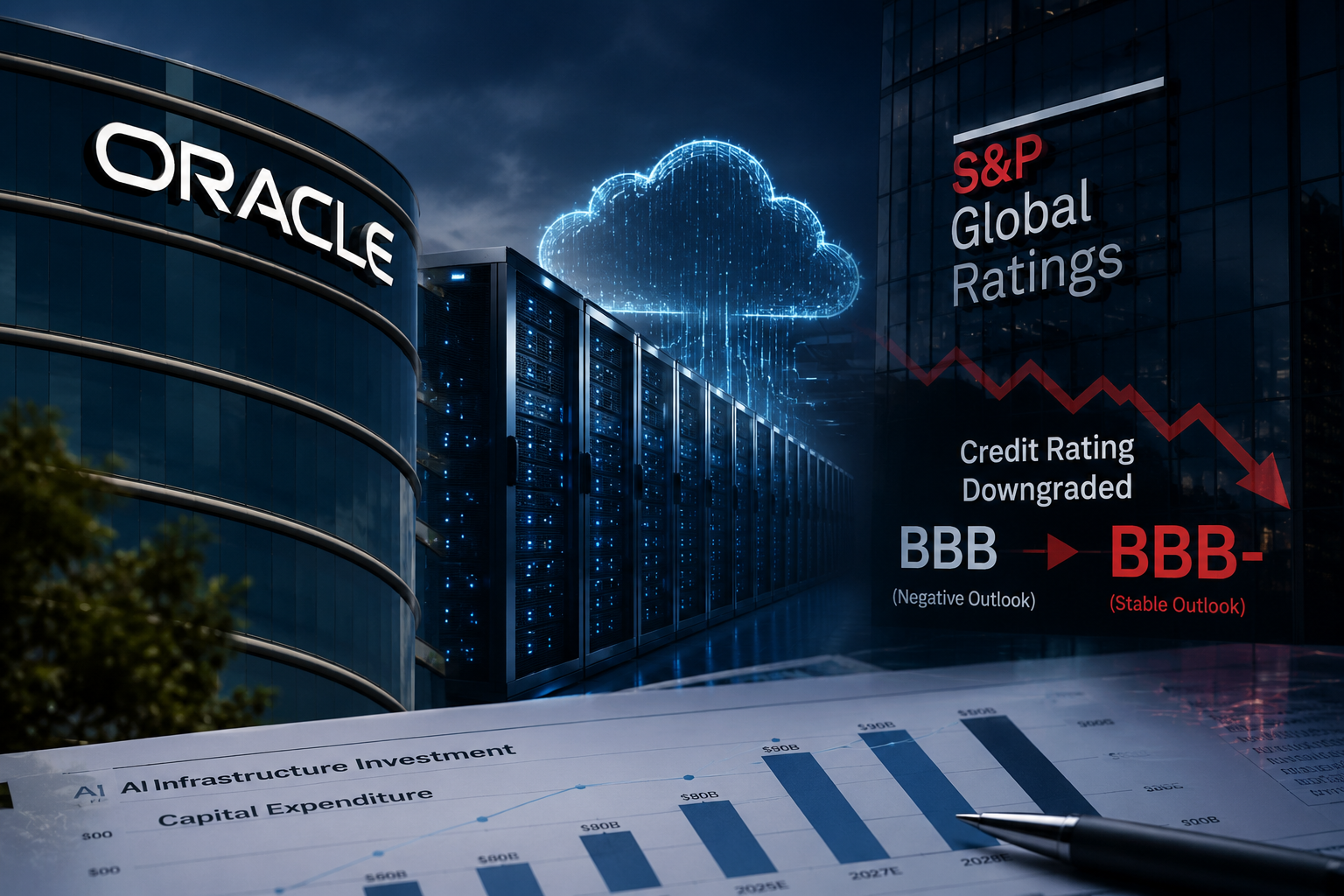
Oracle, the biggest issuer in Bloomberg’s US high-grade corporate bond index outside of the financial sector, has become the credit market’s barometer for AI risk. S&P Global Ratings downgraded the company earlier this month to one notch above junk, citing the company’s growing spending on artificial intelligence.

S&P Downgrades Oracle to BBB-
S&P Global downgraded Oracle’s long-term credit rating from BBB (Negative) to BBB- (Stable), citing elevated business risk and weaker near-term cash flows.

Investor focus should shift to any changes by Moody’s Ratings, which has a Baa2 rating on the firm with a negative outlook, as Oracle continues its spending spree, according to Morgan Stanley credit analyst Lindsay Tyler.

“Fallen-angel risk is not immediate, especially with equity and prepayment levers, but remains medium-term dependent on execution and monetization,” Tyler wrote in a note dated July 9.

Will Oracle monetize its AI investments fast enough to ease credit concerns?

Yes
71.36%
No
28.64%
894 Polls

Source: Bloomberg

The Sovereign AI Power Grab: Monetizing the Physical Bottleneck
Analysis
HyperscalersCommodityInsight

The Sovereign AI Power Grab: Monetizing the Physical Bottleneck

By silently securing baseload power generation and controlling the physical bottlenecks of the grid, sovereign capital is transitioning from a passive investor in technology to the ultimate price-setter of the computational era.

Economics & FinancePolitics

The consensus narrative treating artificial intelligence as a frictionless, zero-marginal-cost software expansion is mathematically invalid. Global equity markets are currently exhibiting a severe structural mispricing by evaluating computational infrastructure through the lens of legacy SaaS multiples. In reality, AI has rapidly mutated into a capital-intensive heavy industry, permanently burdened by an inference tax that imposes a positive marginal cost on every query. Unlike traditional software applications where distribution costs approach zero, every generative prompt or algorithmic adjustment necessitates massive, real-time matrix multiplication within a data center. This mechanism linearly consumes electricity and silicon compute time, creating a permanent structural drag on unit gross margins and fundamentally invalidating the legacy "growth-at-all-costs" SaaS playbook.

The asymmetry between deployed capital and extracted economic value is systemic. As explicitly highlighted by leadership at Norges Bank Investment Management (NBIM), the global financial ecosystem has funneled an estimated $1.4 trillion into physical hardware buildouts, yet direct, verifiable AI revenues struggle to cross a mere $13 billion threshold. For Universal Asset Owners, navigating this transition requires discarding software-era complacency and aggressively confronting the physical constraints of a new industrial reality.

What is the ultimate, non-negotiable constraint on the global AI infrastructure buildout?

Chip design and semiconductor fabrication (Silicon)
100.00%
Baseload power and grid interconnection queues (Electrons)
0.00%
3 Polls

The CapEx Wall and the Depreciation Trap

The hyperscaler economic model is colliding with a formidable CapEx wall. Unlike the old industrial economy, where physical assets were comfortably amortized over 30 to 40 years, the computational foundation of AI is trapped in a hyper-accelerated hardware depreciation cycle. State-of-the-art graphics processing units (GPUs), such as the Nvidia H100 or Blackwell architectures, possess a strictly limited economic useful life of just 3 to 4 years before reaching absolute technical obsolescence.

This perpetual reinvestment mandate structurally devours Free Cash Flow (FCF) across the technology sector. The accounting reality is brutally evident in recent financial disclosures: Alphabet’s capital expenditures surged by 74% year-over-year, climbing from $52.5 billion in 2024 to $91.4 billion in 2025. Furthermore, macroeconomic projections anticipate the combined CapEx for the top five US tech giants will hit $1.16 trillion by 2027. Hyperscalers are now forced to rebuild their entire infrastructure base every 48 months, transforming what was once an "asset-light" growth narrative into a deeply capital-intensive race against time.

The Thermodynamic Bottleneck

Computational scaling has definitively collided with the immutable laws of physics, specifically thermodynamics. The ultimate limit on artificial intelligence expansion is no longer algorithmic logic or software engineering, but rather the availability of baseload power generation, advanced cooling capacity, and backlogged grid interconnection queues.

The International Energy Agency (IEA) Electricity 2026 Report exposes this reality: data centers now absorb 22% of Ireland's total national electricity, forcing regulatory freezes on new allocations. Furthermore, data centers are projected to account for 50% of all electricity demand growth in the United States through 2030.

This trajectory triggers a severe physical crowding out effect. Hyperscale infrastructure is preempting access to global energy grids, imposing structural delays on traditional heavy industry projects and establishing a permanently high floor on wholesale energy prices. The bottleneck is no longer digital; it is purely material.

The Sovereign Arbitrage

A profound structural mispricing is unfolding across global markets: hyperscalers cannot simultaneously finance a trillion-dollar silicon depreciation cycle and underwrite the construction of the global power grid. This bifurcated reality creates an unprecedented entry point for Sovereign Wealth Funds (SWFs) and long-term institutional capital. These entities alone possess the balance sheet duration and mandate to absorb this massive infrastructure CapEx. Furthermore, traditional credit markets are facing a systemic liquidity funnel. According to the Bank for International Settlements (BIS), the top 10 global banks now concentrate nearly 60% of all global foreign exchange (FX) derivatives and associated swap lines. This financial architecture is disproportionately mobilized to hedge the cross-border data center deployments of US tech giants. By committing massive tranches of their Risk-Weighted Assets (RWAs) to underwrite hyperscaler expansion, global banks have effectively exhausted their balance sheet capacity, triggering a severe financial crowding-out effect that leaves sovereign capital as the sole unencumbered liquidity provider.

Consequently, sovereign capital is aggressively rotating out of the traditional software sector—a space now relegated to a "valuation doghouse," where 73% of the public SaaS market languishes at a median 3.3x NTM revenue multiple. As evidenced by the 2025/2026 capital allocation doctrines of funds like GIC Singapore and Norges Bank Investment Management (NBIM), institutional preference has pivoted decisively toward mature real-asset operators capable of generating verifiable operational efficiency. These sovereign allocators are actively deploying an "Operator Alpha" framework: stripping away thematic tech premiums to focus exclusively on the rigorous restructuring of internal operating capital and the optimization of physical asset utilization. In this paradigm, engineering resilient Free Cash Flow from legacy infrastructure and heavy industry outranks speculative algorithmic hyper-growth.

By silently securing baseload power generation and controlling the physical bottlenecks of the grid, sovereign capital is transitioning from a passive investor in technology to the ultimate price-setter of the computational era.

As AI energy requirements escalate, who will be the natural owner of the underlying baseload power assets?

Big Tech directly (Hyperscalers funding their own grids)
100.00%
Sovereign Wealth Funds & Long-duration Capital
0.00%
1 Polls

References & Institutional Sources

  • Alphabet Inc., Microsoft Corp., Amazon.com Inc.: Annual Reports SEC Form 10-K (February 2026)
  • Bank for International Settlements (BIS): BIS Quarterly Review (December 2025)
  • International Energy Agency (IEA): Electricity 2026 Report
  • Morgan Stanley: US Software Outlook 2026 (Big Tech CapEx projections)
  • Norges Bank Investment Management (NBIM) & GIC Singapore: Annual Reports and Capital Allocation Doctrines (2025/2026)
  • Meritech Capital: Software Pulse and Cloud Index EV/NTM multiples (May 2026)
Market Rumor - AMD Stock Rises Overnight: Is Anthropic A New Customer? - July 20, 2026
News Flash
HyperscalersLLMsMust ReadMarket RumorSemiconductorAI Infrastructure Semi News

Market Rumor - AMD Stock Rises Overnight: Is Anthropic A New Customer? - July 20, 2026

A code file by Anush Elangovan, a vice president of AI software at AMD, reportedly listed Anthropic as a "customer."

Economics & FinanceTech

  • A code file by Anush Elangovan, a vice president of AI software at AMD, reportedly listed Anthropic as a "customer."
  • AMD's Advancing AI conference will run over Wednesday and Thursday.
  • Stocktwits sentiment for AMD was 'bullish' as of late Sunday.
  • This could open up a new chapter on decentralizing single-chip dominance.

Will AMD announce partnership with Anthropic in its July 2026 AMD Conference?

Yes
66.67%
No
33.33%
3 Polls
Ended

What's The Rumor?

Advanced Micro Devices appears to have secured, or is close to securing, Claude developer Anthropic as a chip customer, with speculation swirling online after a senior executive referenced the AI startup in code published on GitHub. AMD shares rose 1.3% in the overnight session late Sunday.

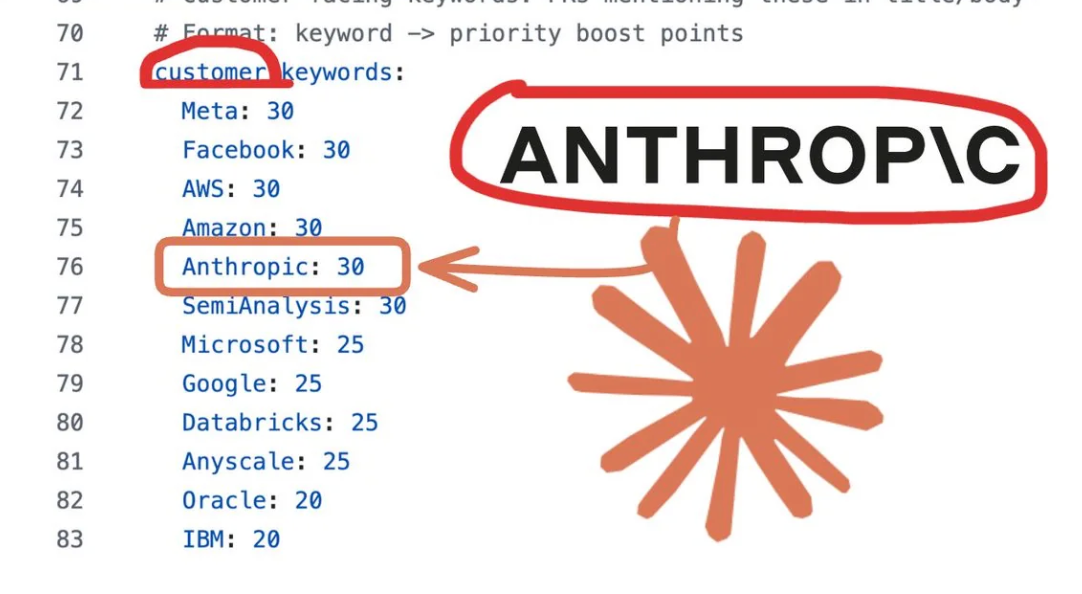
A YAML code file by Anush Elangovan, a vice president of AI software at AMD, reportedly listed Anthropic as a "customer," chip news site SemiAnalysis reported on Sunday.

SemiAnalysis said Anthropic was assigned the maximum 30 "priority boost points," placing it alongside existing hyperscale customers such as Meta – fueling speculation that AMD could formally announce a partnership with the AI startup at its flagship Advancing AI conference next week.

"Note that Anthropic is still in the evaluation phase, and if AMD doesn't announce Anthropic at its upcoming Advancing AI conference, that means @AnushElangovan's FDE team has yet to address all of Anthropic's concerns regarding software quality, and further improvement will be needed," SemiAnalysis wrote.

Meanwhile, Anthropic has reportedly been hiring engineers with ROCm experience (AMD's AI software stack), suggesting it is preparing to further diversify its computing infrastructure, Jefferies analyst Blayne Curtis said in a recent note.

Anthropic is not a publicly confirmed AMD customer. The AI startup has publicly said it trains and serves Claude using a mix of Nvidia GPUs, Amazon's Trainium chips, and Google's TPUs, with Amazon remaining its primary cloud and training partner.

Next to Watch-out: AMD Conference

The AMD Advancing AI 2026 conference will run over Wednesday and Thursday at the Moscone Center in San Francisco. The company is expected to focus its announcements around AI infrastructure, new silicon-to-software pipelines, and enterprise-tier development.

Source:

Yahoo Finance; July 20, 2026; https://finance.yahoo.com/markets/stocks/articles/amd-stock-rises-overnight-anthropic-035353827.html

Market Rumor - Chinese memory maker CXMT has reportedly seen its DRAM capacity booked through 2027
News
HyperscalersSemiconductorInsightMarket Rumor Semi News

Market Rumor - Chinese memory maker CXMT has reportedly seen its DRAM capacity booked through 2027

As PC OEMs and hardware companies look to Chinese memory manufacturer CXMT to secure supply, this alternate source is also reaching its capacity, according to industry sources familiar to this matter.

TechEconomics & Finance

As PC OEMs and hardware companies look to Chinese memory manufacturer CXMT to secure supply, this alternate source is also reaching its capacity, according to industry sources familiar to this matter.

Do you think CXMT's DRAM will be used in devices sold outside of China?

Yes
100.00%
No
0.00%
2 Polls

PC OEMs and hardware makers are booking Chinese memory maker CXMT's DRAM capacity into 2027 as demand from PCs, data centers, and AI outstrips supply; CXMT plans to reach 350,000 DRAM wafers/month by end-2026 but allocations are scarce for smaller vendors and U.S. policy has made CXMT usage contentious.

When it comes to the memory crisis facing the consumer technology market, whether that's laptops, desktop PCs, or even smartphones, it can be hard to understand the sheer scale of the unprecedented demand. According to analysts, current and near-term demand for DRAM and memory from the data center and AI industries actually eclipses all DRAM in circulation.

Do you think memory chips' prices will peak by the end of 2026 or not?

Yes
0.00%
No
100.00%
1 Polls

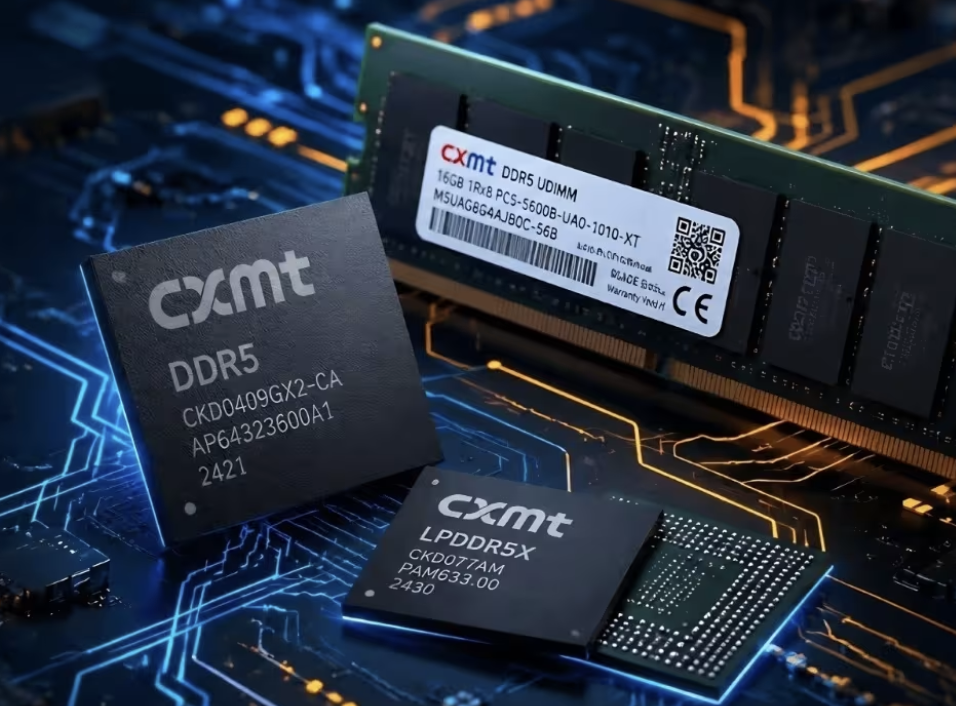
This is one of the main reasons we're continuously hearing and reporting new data on how the situation is getting 'worse' and that there's currently no quick fix or solution on the table. Case in point, PC and hardware makers are looking to Chinese memory companies like CXMT for DDR5 and LPDDR5X memory. However, even here, PC OEMs like Dell, HP, Lenovo, and even Apple are having to secure large long-term DRAM supply at high prices.

Apple interest thrusts China’s CXMT into memory chip spotlight
CXMT has been thrust into the global spotlight by the race for memory chips. Apple has begun testing the company’s DRam chips for devices sold in China, according to two people familiar with the matter

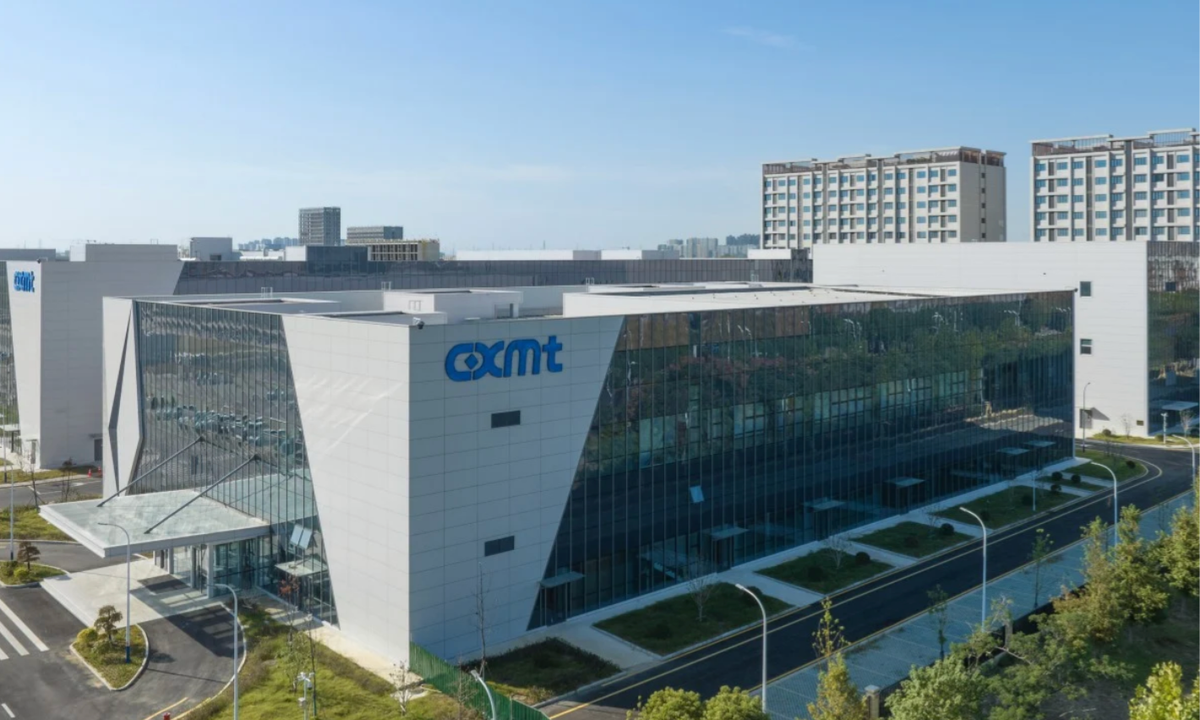
Even as CXMT expands its DRAM wafer production to reach an impressive 350,000 per month by the end of 2026, which is right up there with companies like Micron, it's still not enough to meet the demand. Especially for smaller companies and vendors looking to secure memory. As reported by DigiTimes, there's virtually no CXMT allocation available for the smaller brands.

CXMT is reported to be listed on Shanghai Stock Exchange on July 27, 2026.

China’s ChangXin Memory Technologies (CXMT) sets July 27 listing date, sources say
China’s leading memory chipmaker ChangXin Memory Technologies (CXMT) is set to debut on the Shanghai Stock Exchange on July 27, marking Asia’s biggest initial public offering this year, Reuters reported on Tuesday, citing people familiar with the matter. The company plans to raise 29.5 billion yuan ($4.

Source:

DigiTimes, July 17, 2026; https://www.digitimes.com/news/a20260717PD219.html

Breaking News - SpaceX moves its first post-IPO Starship launch attempt to Thursday July 23, 2026
News Flash
SpaceHyperscalersIndustrialsFly Me to The Moon

Breaking News - SpaceX moves its first post-IPO Starship launch attempt to Thursday July 23, 2026

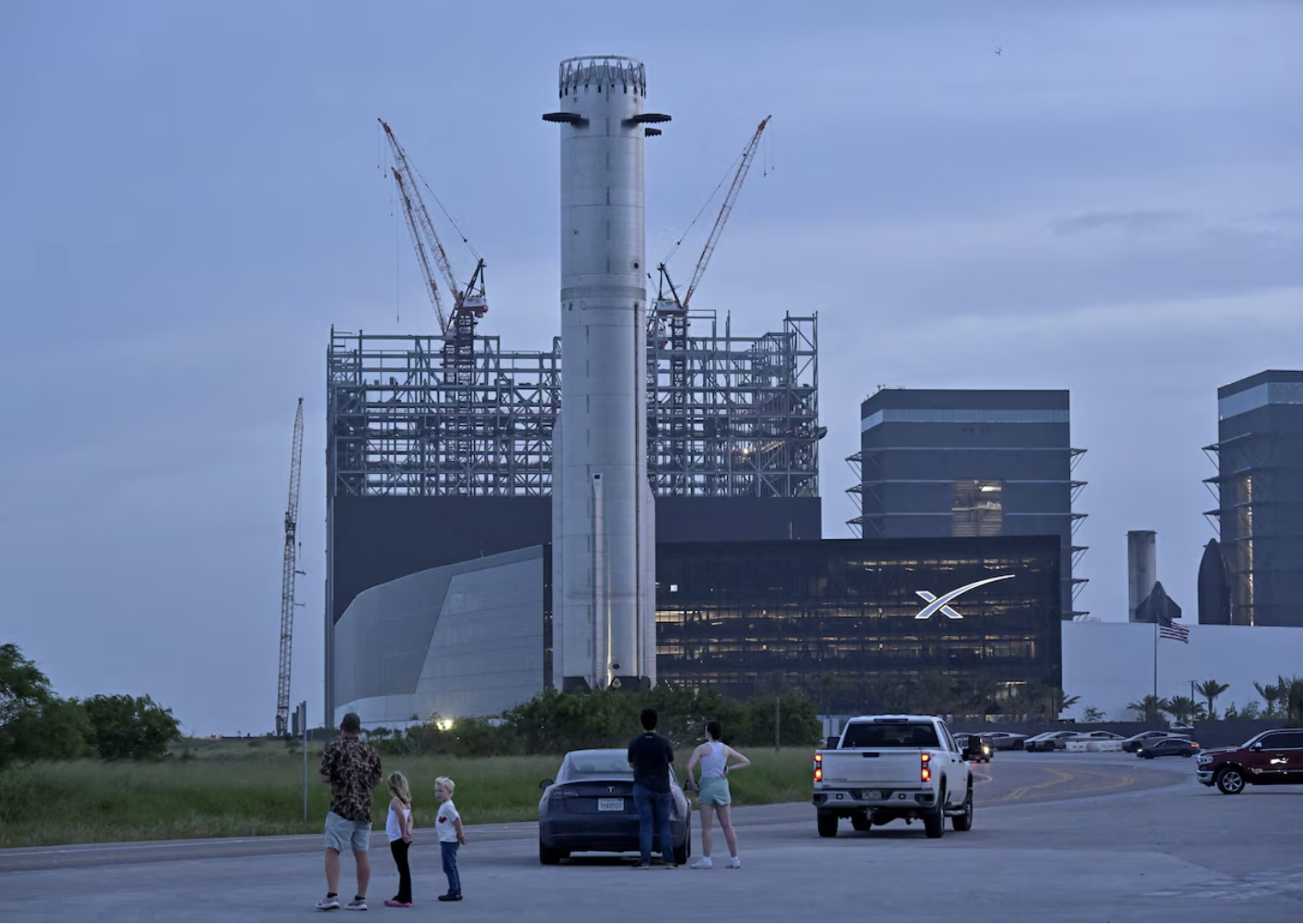
SpaceX is targeting Thursday, July 23, 2026, for another attempt to ​launch its Starship rocket, the company said in ‌a statement on Sunday.

TechEconomics & Finance

SpaceX is targeting Thursday, July 23, 2026, for another attempt to ​launch its Starship rocket, the company said in ‌a statement on Sunday.

Will SpaceX first post-IPO Starship launch be delayed again (rescheduled to July 23, 2026)?

Yes
65.92%
No
34.08%
892 Polls

SpaceX CEO Elon Musk initially posted on X that the next Starship launch would occur on Friday. ​He later replied to that post, saying, "I mean ​Thursday," aligning with the company's earlier statement.

On July ⁠16, SpaceX's Starship rocket triggered a last-second abort before ​liftoff for its 13th flight test from Texas, which ​erased about $100 billion from the company's market value.

SpaceX said it has modified Starship's propulsion system to address the engine issue experienced ​on the previous flight.

A launch delay for the $15 ​billion rocket development program better known for dramatic engineering feats and ‌explosive ⁠testing failures is not uncommon.

Last Friday, SpaceX said it would attempt the launch on July 20.The company has launched 12 Starship test flights since 2023.On its 13th flight ​test, Starship will ​carry 20 ⁠Starlink satellites to demonstrate its satellite-dispensing system and the Starlink network's laser communication links, ​but those satellites will follow the ship's ​suborbital ⁠trajectory and burn up in Earth's atmosphere soon after deployment.

In its prospectus, SpaceX said that it aims to ⁠launch the ​first Starlink satellites to orbit ​on Starship by year's end, followed by routine launches.

Big Tech Faces Growing Pressure to Justify Its AI Spending
News
SemiconductorLLMsHyperscalersAI Infrastructure

Big Tech Faces Growing Pressure to Justify Its AI Spending

After last week’s wipeout in chips and the broader selloff in technology stocks, pressure is building for the biggest spenders on artificial intelligence to justify their expenditures to beleaguered traders with increasingly itchy fingers hovering over their sell buttons.

Economics & FinanceTech

After last week’s wipeout in chips and the broader selloff in technology stocks, pressure is building for the biggest spenders on artificial intelligence to justify their expenditures to beleaguered traders with increasingly itchy fingers hovering over their sell buttons.

The AI euphoria that drove the stock market to all-time highs just a month ago is clearly waning. Information technology was the worst performing group in the S&P 500 Index last week, which slid 1.6% while the tech-heavy Nasdaq 100 Index lost 4.1%. Chip stocks were the main culprit, with the Philadelphia Stock Exchange Semiconductor Index sinking 10% for its worst week since April 2025.

The losses extended to Asia, where Japanese memory chipmaker Kioxia fell 16 per cent on last Friday. The Nikkei 225 index declined 5 per cent. Markets in South Korea, which have faced the most volatility from the AI trade, were closed.

Will semiconductor stocks recover from their recent sell-off before the end of 2026?

Yes
75.33%
No
24.67%
843 Polls

The tech sell-off is the latest sign of how investors are questioning the lofty valuations assigned to companies at the centre of the AI boom. It also shows how some traders have begun unwinding leveraged bets that are magnified by using substantial amounts of debt.

“The investor deleveraging phase that started in June appears to be still ongoing and we see more room for deleveraging in leveraged equity ETFs, options and margin accounts, thus acting as a headwind for equities going forward,” said Nikolaos Panigirtzoglou, a strategist at JPMorgan.

Investors with one eye on cheap Chinese alternatives to groups such as Anthropic and OpenAI are also growing increasingly nervous about when data centre spending by US tech groups will generate returns. Chinese AI start-up Moonshot late on Thursday released a large language model with capabilities approaching those of US AI labs.

AI start-up Moonshot launches largest Chinese AI model
Chinese AI start-up Moonshot has released a large language model with capabilities approaching those of frontier US labs such as Anthropic, as the gap narrows between the two countries on state-of-the-art AI.

Sentiment is bleaker among the megacaps.Alphabet shares fell 6.5% over the past two sessions as the company is reportedly months behind schedule on delivering Gemini 3.5 Pro, its most powerful flagship AI model. While the stock remains up 11% this year, it has fallen 14% from a May peak.

Microsoft is coming off of its worst month since 2000 and has lost 19% this year. Meta Platforms is down slightly in 2026 despite a July rebound amid optimism about efforts to potentially rent computing capacity. Amazon has climbed 7.1% for the year and Nvidia has gained 8.8%, both underperforming the Nasdaq 100.

Indeed, valuations for tech giants have come down across the board. The Bloomberg Magnificent 7 Index is priced at 24 times profits expected over the next 12 months, down from 33 in October and 29 to start the year. The Nasdaq 100 trades at 22 times.

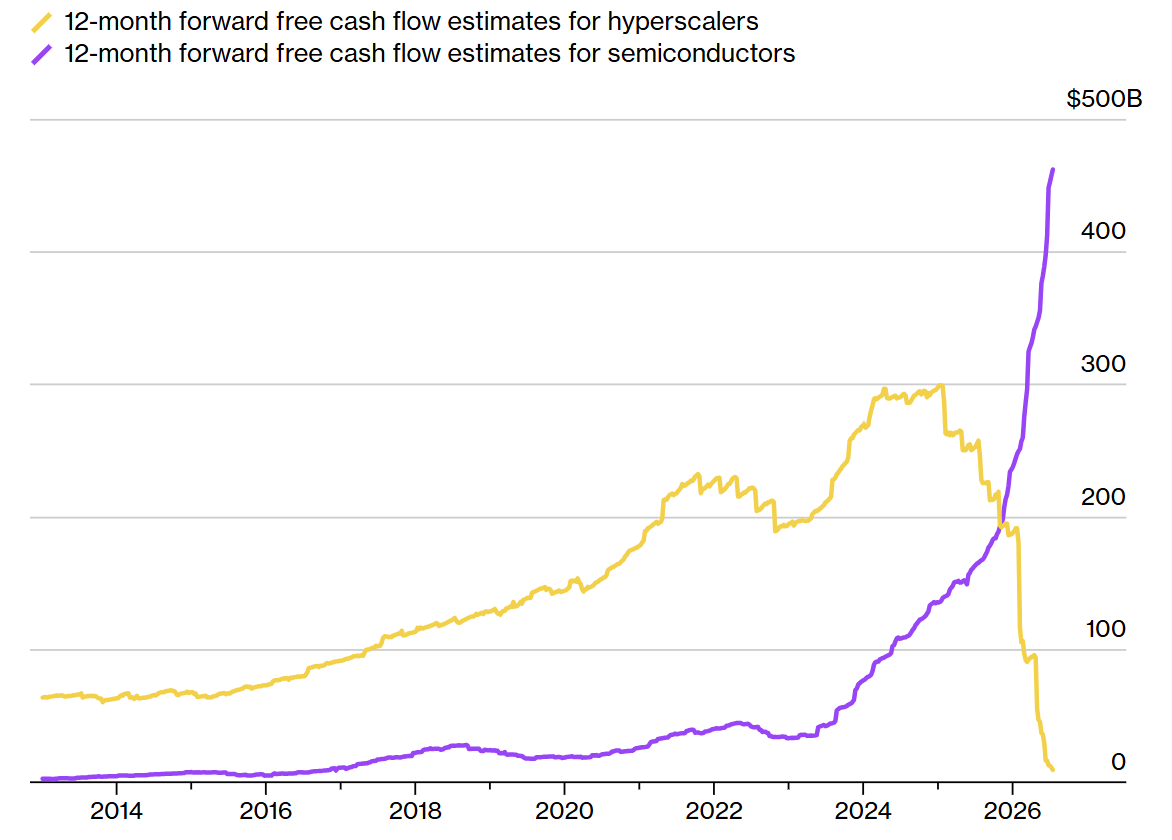
 Hyperscalers: Amazon, Alphabet, Meta and Oracle. Semiconductors: Nvidia, Micron, Broadcom, Applied Materials. Source: Bloomberg

That has shifted the risk to other areas of the stock market that have seen massive run ups, like chipmakers, according to Ahlsten, whose firm has $45 billion in assets under management.

The Philadelphia semiconductor index, or SOX, has soared this year because much of the spending on AI infrastructure is flowing to its constituents. But it has tumbled 20% since hitting a record last month, reaching the technical threshold for a bear market, and volatility has soared. In the past four weeks, the index has seen moves of more than 2% in all but two sessions.

Even positive signals from earnings reports have failed to halt the SOX’s slide. Taiwan Semiconductor Manufacturing Co. and ASML Holding NV both raised revenue forecasts for the year. Meanwhile, results from International Business Machines Corp. showed that customers are prioritizing spending on servers and semiconductors over mainframes and software.

“I’d be more careful going into this period on account of these issues,” Ahlsten said. “Some of the stocks, especially on the infrastructure side, look a bit toppy, potentially. They’ve gotten a high multiple for accelerating growth that may not ultimately be as accelerated as some people were thinking.”

In a sign of how wary investors are of heavy spending on AI, Apple, which has avoided big capital expenditures in favor of partnering with model providers to power its AI services, is by far the best performer among the Magnificent Seven this year with a 23% gain.

Source: https://www.bloomberg.com/news/articles/2026-07-19/big-tech-needs-to-justify-ai-spending-as-investors-dump-stocks;

https://www.ft.com/content/c92a5a36-55a0-4d04-b84c-d1705976987b?syn-25a6b1a6=1

AI Speedrun - AI Propped Up the Global Economy. Can It Keep Doing So?
Analysis
Capital MarketsAI InfrastructureHyperscalersLLMsIndustry PulseAI Speed Run

AI Speedrun - AI Propped Up the Global Economy. Can It Keep Doing So?

AI investment helped cushion global growth, but with hyperscaler capex nearing $725 billion, can demand and productivity justify the cost?

Economics & FinanceTech

Artificial intelligence has already become a macroeconomic force, just not in the way its most ambitious advocates predicted. The near-term boost is coming less from robots transforming offices and more from companies spending staggering sums on chips, data centers and power infrastructure.

The BIS says this investment helped sustain global growth, supported Asian technology supply chains and kept financial conditions relatively easy through 2025. When war in the Middle East triggered a severe energy shock, the global economy proved unusually resilient, and AI investment was part of the reason.

Amazon, Alphabet, Meta and Microsoft are tracking toward a combined roughly $725 billion in 2026 capex, up 77% from about $410 billion in 2025.

But none of this total tells you whether the growth contribution from this spending is accelerating or running out, so is the headline number actually the one that matters, or is the market reading the wrong line on the page?

What do you think is AI’s biggest economic impact right now?

Higher business productivity
9.42%
Massive spending on chips and data centers
47.11%
Stronger growth in AI-exporting economies
11.29%
Higher demand for energy and infrastructure
23.13%
Mostly higher technology valuations
9.05%
1,072 Polls

AI has become a global growth engine

In the first quarter, the biggest positive surprises came from the countries most closely tied to the AI hardware trade. Taiwan, Korea, Thailand and Malaysia recorded an average growth surprise of 4.4 percentage points on a seasonally adjusted annualized basis. The rest of the world averaged a negative surprise of 0.3 percentage points.

Much of the bullish case, though, rests on an assumption that is rarely stated explicitly: that spending will continue growing rapidly next year.

Here’s why the market is watching the wrong number

Investors remain fixated on the sheer amount of money being spent, but the total alone can be misleading.

For GDP growth, supplier revenues and earnings revisions, the more important variable is the rate of change in this spending, known as the capex impulse. A company spending $200 billion this year after spending $200 billion last year is investing at a historic level and contributing roughly nothing incremental to growth. In real (inflation-adjusted) terms, its investment would actually be lower.

For example, Meta raised its full-year 2026 capex guidance this spring, from $115-135 billion to $125-145 billion, citing higher component prices and additional data-center costs.  

Meta's stock fell more than 9% the day the raise was disclosed, the clearest sign yet the market won’t automatically reward higher spending without clearer evidence of returns.

So, the question is not whether AI spending will remain large, but rather: Can it continue rising in real terms to deliver another meaningful boost to growth?

The strongest case for the boom: Two years of being wrong

Betting against rapid AI capex growth has been the losing trade for two years running. At the start of both 2024 and 2025, Wall Street consensus penciled in roughly 20% capex growth; actual growth exceeded 50% both times. A market that's been that wrong about deceleration twice in a row has earned some benefit of the doubt.

But spending is not the same as returns. BIS research finds that AI can generate time savings of 20-50% in specific tasks, including coding, consulting and clerical work. Yet estimates of the economy-wide productivity effect generally remain below 1% over a much longer period.

For instance, a tool can make one task dramatically faster without transforming an entire company, let alone an entire economy. Productivity gains from general-purpose technologies take years to diffuse, as companies need to redesign workflows, restructure organizations, train staff, and make additional investments in data, software, and infrastructure. Adoption takes time, workflows have to change, and staff need training.

The spending is happening now, while the broader productivity gains remain uncertain and delayed.

If productivity catches up, today’s spending could look like the foundation of a long expansion, but if it does not, the same boom could leave companies with too much capacity, rising depreciation charges and weaker returns.

How to tell whether the boom is still working

The next tests arrive soon. Alphabet reports on July 22, followed by Microsoft and Meta on July 29, and Amazon on July 30, although Meta and Amazon are still unconfirmed, as of this writing.

1.    Are customers actually using all this new computing power?

The clearest early signal will come from the cloud businesses of Microsoft, Amazon and Google. If Azure, AWS and Google Cloud keep growing strongly, it suggests demand is keeping pace with the new data centers being built.

If growth slows while spending continues to surge, that would raise a more uncomfortable possibility: companies may be building capacity faster than customers can absorb it.

2.    Can these companies afford to keep spending at this pace?

The largest technology groups still generate enormous amounts of cash, but AI infrastructure is consuming a growing share of it. The quickest test is to compare capital expenditure with operating cash flow.

As long as operating cash flow comfortably covers the investment, the boom remains relatively secure. If companies begin relying more heavily on debt, leases or outside financing, the risks increase, especially if interest rates remain high or demand disappoints.

3.    Is the investment producing enough revenue and productivity to justify its cost?

Building data centers is only the first step, the question is whether businesses pay to use them, and whether AI helps those businesses earn more, cut costs or work more efficiently.

If these gains arrive, today’s spending could support years of growth. If they do not, companies may be left with expensive data centers, rising power bills and large depreciation charges on infrastructure that is not earning enough.

The bottom line

The market isn't wrong that AI capex has cushioned the global economy against a severe war-driven downturn this year. But "AI capex remains historically large" and "AI capex is still accelerating enough to keep lifting growth" are different claims, and most coverage treats them as the same one.

The first will probably stay true through 2026. The second is being tested right now, and the infrastructure being built must eventually generate enough revenue and productivity to cover its energy, depreciation and financing costs.

This leaves three possible paths: if productivity catches up with investment, AI could underpin a long expansion; if capex slows naturally while demand remains robust, it may settle into a more modest contribution to growth; if demand disappoints, excess capacity and rising costs could turn the boom into an overinvestment cycle.

Which sign would convince you the AI boom is turning into overcapacity?

Cloud growth slows while capex keeps rising
0.00%
AI revenue fails to catch up with spending
100.00%
Free cash flow falls sharply
0.00%
Companies rely more heavily on debt and leases
0.00%
Data-center utilization starts falling
0.00%
None, I think demand will keep absorbing the investment
0.00%
1 Polls

Sources

  1. Alphabet Investor Relations: Alphabet Announces Date of Second Quarter 2026 Financial Results Conference Call,
  2. Amazon Investor Relations: Events
  3. Bank for International Settlements: I. Progress and peril
  4. Goldman Sachs: Why AI Companies May Invest More than $500 Billion in 2026,
  5. International Monetary Fund: July 2026 World Economic Outlook Update
  6. Meta Investor Relations: Investor Events
  7. Meta Investor Relations: Meta Reports First Quarter 2026 Results
  8. Microsoft: Microsoft Announces Quarterly Earnings Release Date,
  9. Reuters Breakingviews: Meta’s fall shows punters crave clearer AI payoff
  10. Reuters: Meta shares fall on concerns over AI spending, legal scrutiny
  11. The Motley Fool: Stock Market Today, April 30
  12. Tom’s Hardware: Google, Microsoft, Meta, and Amazon capex spending to hit $725 billion in 2026, up 77% from last year
  13. Yahoo Finance: Meta stock sinks after Q1 earnings as company raises 2026 AI spending forecast

Results Review - IBM, what does the 25% stock price drop tell?
Quick Take
HyperscalersTechnologyEarnings & OperationsMemory ChipAI Infrastructure Semi Analysis

Results Review - IBM, what does the 25% stock price drop tell?

On May 14, 2026, IBM (International Business Machines) shares plummeted 25% on Tuesday after the hardware, software and consulting provider released preliminary second-quarter results that fell short of expectations.

Economics & Finance

On May 14, 2026, IBM (International Business Machines) shares plummeted 25% on Tuesday after the hardware, software and consulting provider released preliminary second-quarter results that fell short of expectations.

Subjective Q: are you buying IBM's dip?

Yes
32.43%
No
67.57%
845 Polls

CEO Arvind Krishna blamed the shortfall on weakness in the software and infrastructure business, as clients shifted spending toward hardware purchases such as memory chips:

In the last few weeks of June, we saw clients shift their quarterly capex spend toward servers, storage, and memory purchases to secure supply-constrained infrastructure ahead of expected price increases. This dynamic impacted client buying patterns. While we anticipated some supply chain related impact in our expectations, we did not anticipate the magnitude of the capex reprioritization. In addition, clients were distracted with rapidly-evolving, industry-wide cybersecurity concerns in the quarter.

IBM's industry observation could open up some interesting discussions:

*Is Ai chips & services squeezing out subscription-based products? Before Ai boom, upgrading softwares or maintaining the existing infrastructure seemed to be the only option to spend for budget. Now, amid Ai boom, investing into the theme sounds way more "sexy-ier".

*Is Ai capex build-up over yet? Capital continues to flow into servers, storage, and memory chips – against recent stock price drops in that sector. The shift in business model requires heavier hardware investments. Supply-demand dynamics remains tight amid constrained manufacturing capacity.


Will you buy the dip?

Source:

  1. IBM press room; July 14, 2026; https://newsroom.ibm.com/2026-07-14-Arvind-Krishnas-Letter-to-IBM-Investors
Intel announces $5.7 billion AI-driven capital investment in Ireland
News
HyperscalersSignalsAI Infrastructure Semi News

Intel announces $5.7 billion AI-driven capital investment in Ireland

According to Intel's official announcement: LEIXLIP, Ireland, July 13, 2026 —Intel today announced a €5 billion ($5.7 billion) capital investment at its Leixlip campus in Ireland, marking the next phase in the site’s capacity expansion. 

Economics & FinanceTech

According to Intel's official announcement: LEIXLIP, Ireland, July 13, 2026 —Intel today announced a €5 billion ($5.7 billion) capital investment at its Leixlip campus in Ireland, marking the next phase in the site’s capacity expansion.  

Will Intel's stock price stands before market open on July 24, 2026? (earning release after market close July 23, 2026)

<115
20.00%
115 to 125
40.00%
>125
40.00%
5 Polls

"Global demand for AI and high-performance computing is driving the need for advanced silicon to power AI Factories, and Intel is scaling capacity in Ireland to deliver Intel Xeon 6 and next gen Intel Xeon built on its Intel 3 node. This strategic investment expands current production output, advances research and development activities and utilises capacity across existing cleanroom space, strengthening Europe’s semiconductor supply chain and serving industry need.  
The expansion involves upgrading existing fabrication facilities and the installation of leading-edge manufacturing equipment. Key infrastructure enhancements include the expansion of the automated track system to integrate disparate campus modules into a singular, high-velocity production environment. "

According to Retuers, Intel is one of the key multinationals in Ireland's foreign investment-focused economy, having already invested €30 billion in the country since 1989, more than half of which ​was spent between 2019 and 2023 on the fabrication facility that doubled the available capacity ​in Ireland. The leading-edge manufacturing equipment that Intel has begun to install will help deliver Intel ‌Xeon ⁠6 processors and next-generation Intel Xeon built on the group's Intel 3 manufacturing process, the company said.

Source:

  1. Intel; "Intel Invests €5 Billion to Expand Manufacturing in Europe"; July 13, 2026 (local time); https://newsroom.intel.com/intel-foundry/intel-invests-5-billion-euro-to-expand-manufacturing-in-europe
  2. Reuters; "Intel announces $5.7 billion AI-driven capital investment in Ireland"; July 13, 2026 (local time); https://www.reuters.com/business/intel-announces-57-billion-capital-investment-irish-manufacturing-hub-2026-07-13/
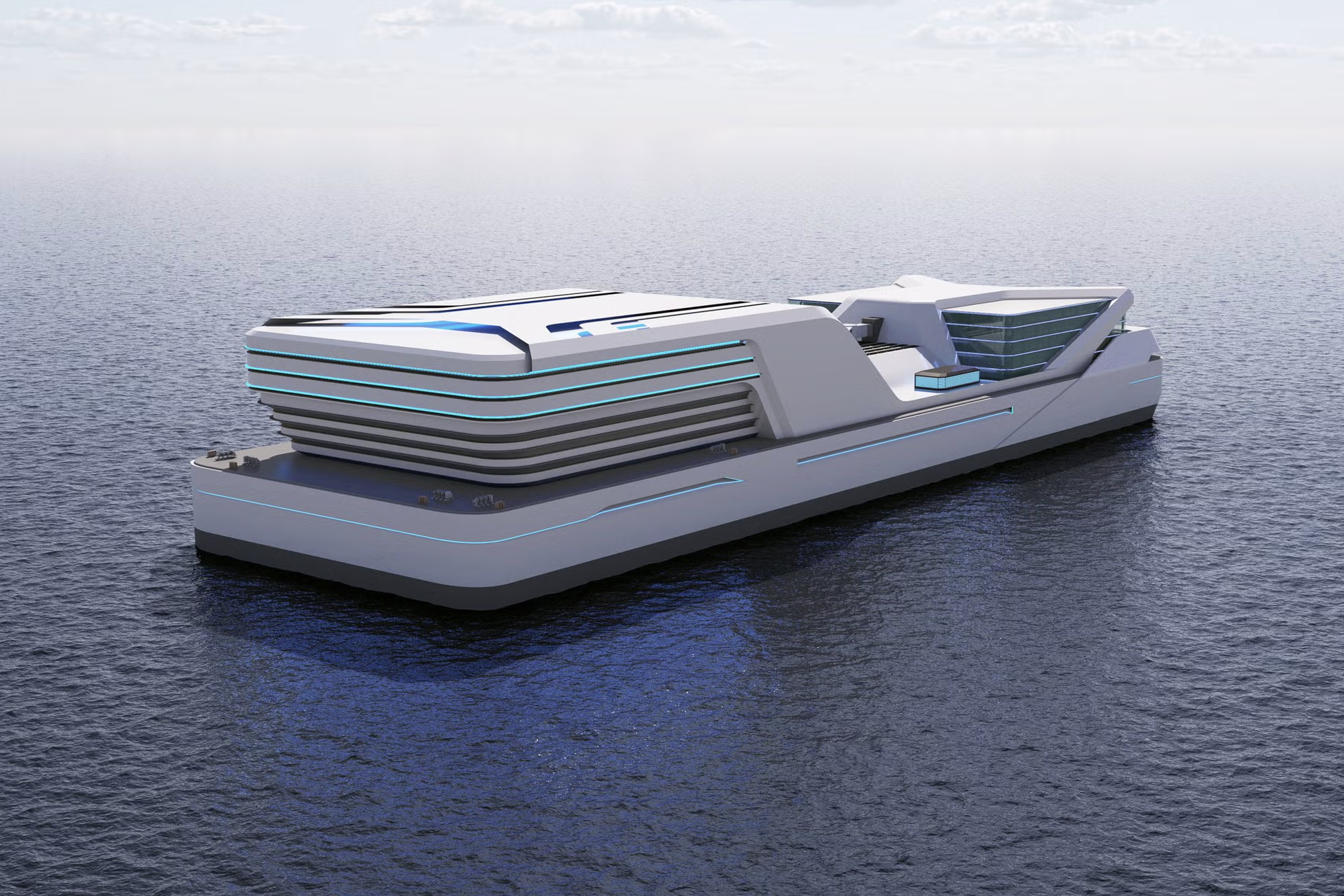
Samsung Heavy targets 2028 for first floating AI data center
News
HyperscalersMaritimeIndustrialsShipbuildingAI Infrastructure

Samsung Heavy targets 2028 for first floating AI data center

Samsung is reportedly planning to launch its floating data centers in the second quarter of 2028.

Economics & Finance

Samsung is reportedly planning to launch its floating data centers in the second quarter of 2028...

Will floating data center launch in or before 2Q2028?

Yes
50.00%
No
50.00%
2 Polls

The Korean company’s heavy industries division intends to have orders for the data centers in place to coincide with the launch, according to a report from shipping industry publication TradeWinds News.

Apparently, Samsung Heavy Industries is "pursuing multiple feasible projects in line with the goal of commercializing the FDC by the second quarter of 2028."

The report notes that Samsung Heavy Industries has signed a memorandum of understanding with Greek shipbuilding firm Capital and UK-based financial services company Lloyds Register to develop floating data centers. The agreement will see Samsung developing the floating data center technology, with Capital overseeing project sourcing and investment, and Lloyd’s Register handling regulatory issues.

In May, DCD reported that Samsung’s maritime engineering division had signed a deal with a new company, Mousterian Corporation (M3), to develop floating data centers.

Texas-based M3 will work with Samsung Heavy Industries to “jointly develop and deliver institutional-grade floating data center projects worldwide.” The firm’s founders previously worked for Nautlius, another floating data center project that DCD visited in 2022.

Companies around the world are embarking on floating data center projects, with many seeing them as a cost-effective alternative to expensive land-based facilities at a time when space in many jurisdictions is at a premium.

Keppel has started work on a 25MW floating facility in Singapore, due to come online in 2028, while US-based Panthalassa wants to harness the power of waves for floating data centers at sea.

Floating wind firm Aikido has also announced its entrance into the data center space with the launch of a floating offshore wind platform integrated with a modular AI-focused data center.

Source: TradeWinds, company news, and industry sources.

Breaking News - S&P Downgrades Oracle to BBB-
Quick Take
HyperscalersCredit MarketAI InfrastructureCapital MarketsBreaking News

Breaking News - S&P Downgrades Oracle to BBB-

S&P Global downgraded Oracle's long-term credit rating from BBB (Negative) to BBB- (Stable), citing elevated business risk and weaker near-term cash flows.

Economics & Finance

S&P Global downgraded Oracle's long-term credit rating from BBB (Negative) to BBB- (Stable), citing elevated business risk and weaker near-term cash flows.

While the downgrade came as a surprise given Oracle's positive credit factors such as customer prepayments and the expansion of its Bring Your Own Cloud (BYOC) model, analysts believe the decision primarily reflects S&P's increasingly cautious view of the AI infrastructure sector rather than a sharp deterioration in Oracle's standalone fundamentals.

According to Barclays, the downgrade is driven by concerns over the industry's high capital expenditure requirements, intensifying competition, and rising component costs as AI infrastructure investment accelerates.

Will AI infrastructure capital expenditure growth decelerate in 2H2027?

Yes
27.27%
No
72.73%
11 Polls

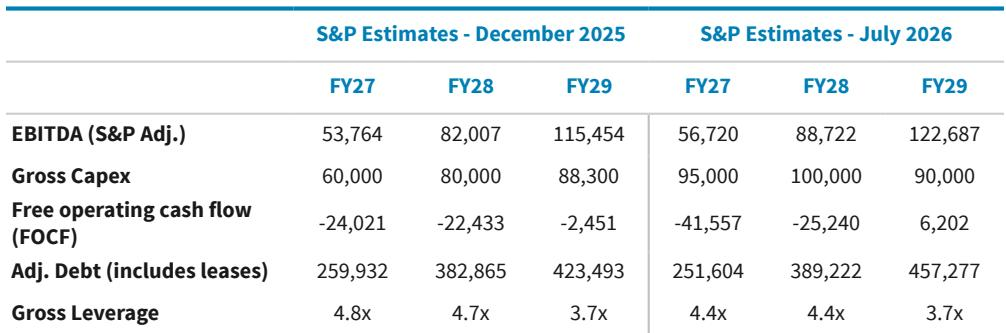
At the same time, S&P actually raised several of its long-term financial forecasts for Oracle, signaling continued confidence in the company's earnings potential. The agency increased its 2027 adjusted EBITDA forecast to $56.72 billion (from $53.76 billion) and lowered its projected peak leverage to 4.4x (from 4.8x), despite raising expected capital expenditures to $95 billion (from $60 billion) and forecasting free operating cash flow (FOCF) of -$41.56 billion (versus -$24.02 billion previously).

Source: S&P

Will Oracle's gross leverage exceed 4.4x at the end of FY2027?

Yes
0.00%
No
100.00%
2 Polls

Although Oracle now sits at BBB-, the lowest investment-grade rating before high yield, the accompanying Stable outlook was more constructive than many investors had expected. The rating also leaves Oracle with limited room for further leverage-driven deterioration, which may increase management’s incentive to rely more on equity financing or other non-debt funding sources after 2026.

Market pricing suggests that a meaningful amount of credit concern has already been reflected in Oracle’s spreads. The company’s credit spreads trade wider than those of Charter Communications, despite both issuers sitting near the investment-grade boundary. This indicates that Oracle is already being valued with a significant risk premium. For investors who believe Oracle can eventually convert its AI-related capital spending into stronger earnings and cash flow, current spread levels may offer a more attractive risk-reward profile, even as the company navigates an unusually capital-intensive investment cycle.

Source: https://www.macrostream.ai/articles/6a501de8ee1fb5bdec94ab1d

Volts to Intelligence - Meta to Build First Data Center in Canada, Expanding Global Fleet
News
AI InfrastructureData CenterHyperscalersAI PowerIndustry PulseVolts to IntelligenceMag 7

Volts to Intelligence - Meta to Build First Data Center in Canada, Expanding Global Fleet

Meta Platforms Inc. will invest around $10 billion to build its first data center in Canada as the company expands its infrastructure to support its artificial intelligence ambitions.

Economics & Finance

Meta Platforms Inc. will invest around $10 billion to build its first data center in Canada as the company expands its infrastructure to support its artificial intelligence ambitions.

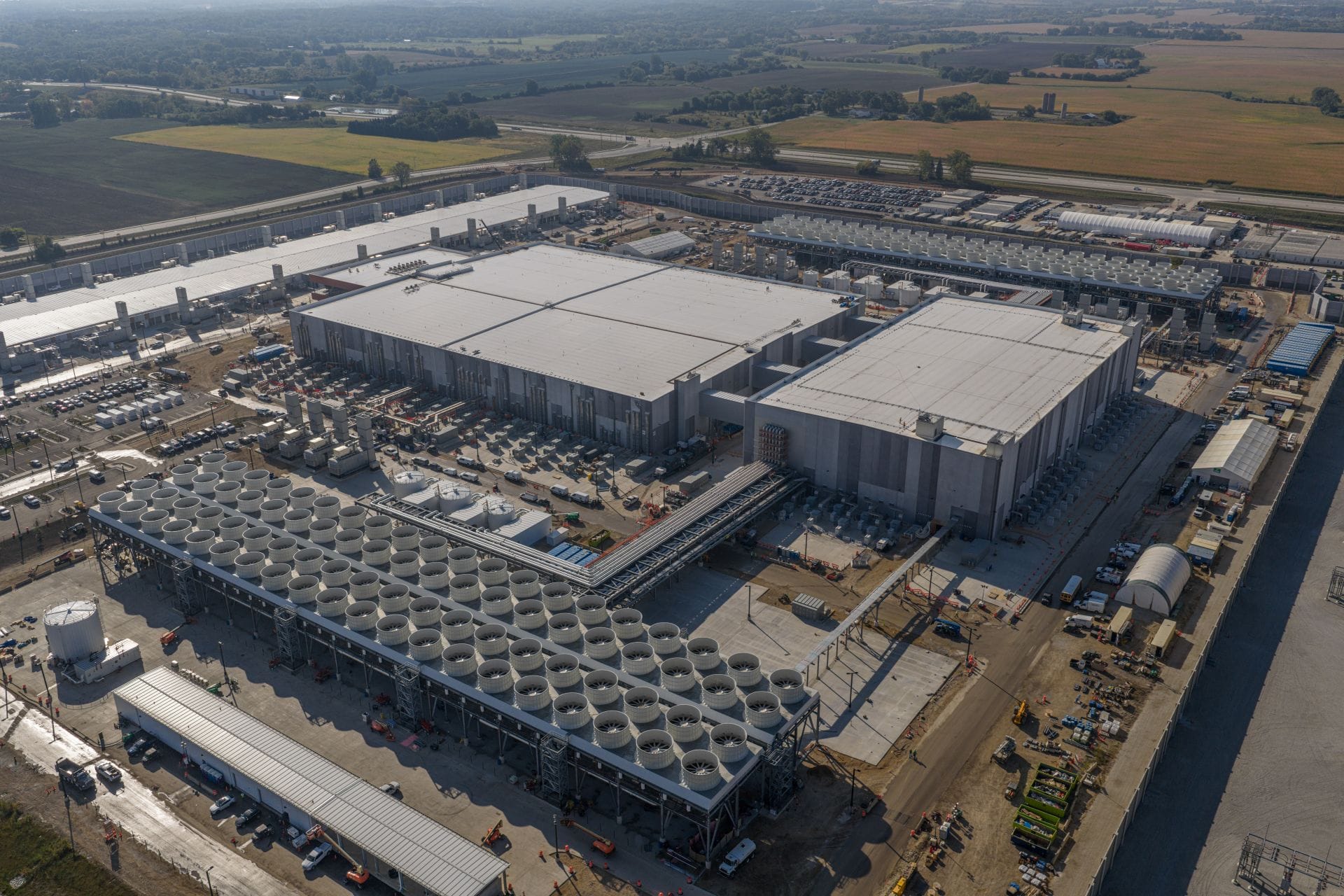
The Sturgeon County, Alberta-based data center will have one gigawatt of power capacity — the equivalent of the power used by around 750,000 homes — and will be largely run on natural gas-fired power. Meta said it’s funding the new electrical generation, which will be connected to Alberta’s grid.

The data center will be Meta’s largest outside the US, according to Gary Demasi, Meta’s vice president of data center development and strategy.

The company is expanding its global data center footprint to secure more computing capacity. The Alberta project marks the 33rd data center in its fleet. Meta plans to use the computing power for its own AI models and social media apps, including Instagram and Facebook, but it’s also exploring setting up a cloud business that could sell some of that capacity to other companies.

While Chief Executive Officer Mark Zuckerberg has said the company plans to spend hundreds of billions of dollars to build out AI infrastructure in the US before the end of the decade, Canada has recently sought to lure investment north of the border.

Canadian Prime Minister Mark Carney was elected last year pledging to make the country “the best place in the world to build data centers.” The country has vast reserves of relatively cheap natural gas as well as hydropower.

The largest projects are concentrated in Alberta, the source of most of the country’s oil and gas production. Meta’s latest data center announcement comes after Canadian midstream company Pembina Pipeline Corp. Partners Morgan Stanley Infrastructure Partners and Kineticor Asset Management said they would move ahead with a $3.2 billion gas-fired electricity plant in Sturgeon County. Meta confirmed the plant will support its data center.

Source: https://www.bloomberg.com/news/articles/2026-07-08/meta-to-build-first-data-center-in-canada-expanding-global-fleet