Premier info portal for prediction markets. The start point of information market.
Intel announces $5.7 billion AI-driven capital investment in Ireland
News
HyperscalersSignalsAI Infrastructure Semi News

Intel announces $5.7 billion AI-driven capital investment in Ireland

According to Intel's official announcement: LEIXLIP, Ireland, July 13, 2026 —Intel today announced a €5 billion ($5.7 billion) capital investment at its Leixlip campus in Ireland, marking the next phase in the site’s capacity expansion. 

Economics & FinanceTech

According to Intel's official announcement: LEIXLIP, Ireland, July 13, 2026 —Intel today announced a €5 billion ($5.7 billion) capital investment at its Leixlip campus in Ireland, marking the next phase in the site’s capacity expansion.  

Will Intel's stock price stands before market open on July 24, 2026? (earning release after market close July 23, 2026)

<115
20.00%
115 to 125
40.00%
>125
40.00%
5 Polls

"Global demand for AI and high-performance computing is driving the need for advanced silicon to power AI Factories, and Intel is scaling capacity in Ireland to deliver Intel Xeon 6 and next gen Intel Xeon built on its Intel 3 node. This strategic investment expands current production output, advances research and development activities and utilises capacity across existing cleanroom space, strengthening Europe’s semiconductor supply chain and serving industry need.  
The expansion involves upgrading existing fabrication facilities and the installation of leading-edge manufacturing equipment. Key infrastructure enhancements include the expansion of the automated track system to integrate disparate campus modules into a singular, high-velocity production environment. "

According to Retuers, Intel is one of the key multinationals in Ireland's foreign investment-focused economy, having already invested €30 billion in the country since 1989, more than half of which ​was spent between 2019 and 2023 on the fabrication facility that doubled the available capacity ​in Ireland. The leading-edge manufacturing equipment that Intel has begun to install will help deliver Intel ‌Xeon ⁠6 processors and next-generation Intel Xeon built on the group's Intel 3 manufacturing process, the company said.

Source:

  1. Intel; "Intel Invests €5 Billion to Expand Manufacturing in Europe"; July 13, 2026 (local time); https://newsroom.intel.com/intel-foundry/intel-invests-5-billion-euro-to-expand-manufacturing-in-europe
  2. Reuters; "Intel announces $5.7 billion AI-driven capital investment in Ireland"; July 13, 2026 (local time); https://www.reuters.com/business/intel-announces-57-billion-capital-investment-irish-manufacturing-hub-2026-07-13/
Breaking News - China to Allow Top AI Firms to Buy Nvidia H200 Chips
News Flash
SemiconductorHyperscalersAI InfrastructureMag 7Breaking NewsSilicon BakeryGeopolitics Semi News

Breaking News - China to Allow Top AI Firms to Buy Nvidia H200 Chips

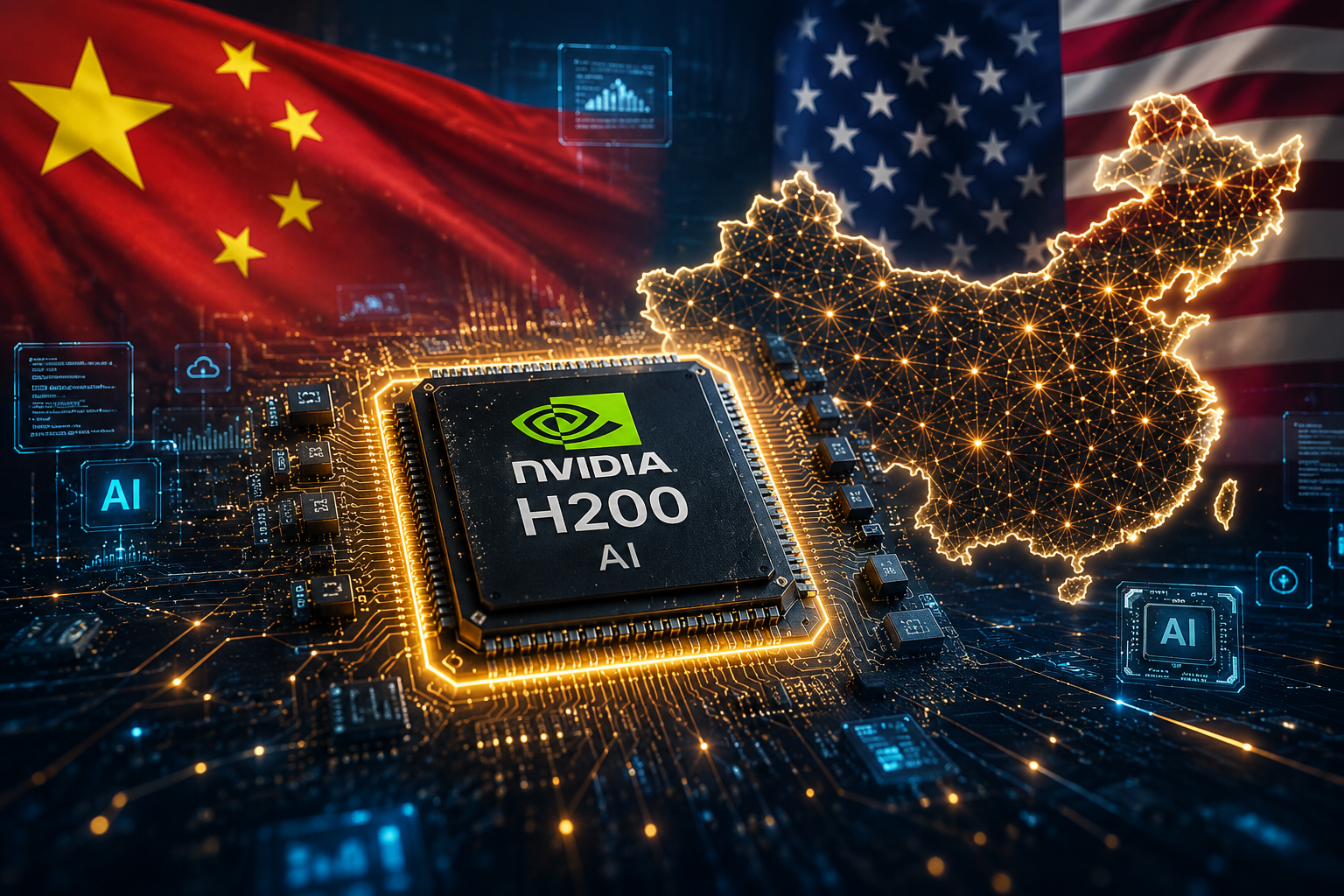
China is planning to allow the country's leading AI companies to purchase a limited number of Nvidia's H200 AI chips, according to The Information, citing two people with direct knowledge of the matter.

Economics & FinanceTechPolitics

China is planning to allow the country's leading AI companies to purchase a limited number of Nvidia's H200 AI chips, according to The Information, citing two people with direct knowledge of the matter.

The report said Chinese officials have recently informed companies including Alibaba, ByteDance, and DeepSeek that they may soon receive approval to buy a limited quantity of Nvidia's H200 chips. The move would mark a notable shift in Beijing's approach to advanced AI hardware imports.

Will China be able to buy H200?

Yes
75.00%
No
25.00%
4 Polls

The development comes after the U.S. government approved Nvidia's sales of H200 chips to China and granted export licenses to around 10 Chinese companies. However, Chinese authorities had previously delayed their own approvals as they sought to support the growth of domestic AI chipmakers. Reuters reported in March that Nvidia had already secured Beijing's long-awaited approval to sell the H200 chips in China.

News of the potential policy change boosted investor sentiment. Nvidia shares rose in Wednesday morning trading following the report.

The reported shift also highlights the growing shortage of AI computing power in China. Demand for advanced AI chips has continued to outpace supply as Chinese technology companies expand their investments in large language models and other generative AI applications.

Source: https://www.reuters.com/video/watch/idRW634908072026RP1/

Breaking News - SK Hynix US Offering Is More Than Seven Times Oversubscribed
News Flash
IPOsSemiconductorBreaking NewsMemory ChipCapital MarketsAI InfrastructureSilicon Bakery Semi News

Breaking News - SK Hynix US Offering Is More Than Seven Times Oversubscribed

SK Hynix Inc.'s US listing is more than seven times oversubscribed, according to people familiar with the matter, as the South Korean memory chipmaker prepares to price its offering Thursday.

Economics & FinanceTech

SK Hynix Inc.’s US listing is more than seven times oversubscribed, according to people familiar with the matter, as the South Korean memory chipmaker prepares to price its offering Thursday.

The sale of 177.9 million American depositary receipts has attracted demand from institutional investors including global long-only funds, technology sector-focused funds, sovereign wealth funds and Asia-focused global investors, some of the people said.

Each SK Hynix ADR is equivalent to a 10th of a common share, according to an earlier filing with the US Securities and Exchange Commission. Based on Wednesday’s closing price in Seoul of 2.076 million won ($1,380) each, the US offering would raise about $24.5 billion.

Will SK Hynix's US ADR offering raise more than $25 billion?

Yes
66.67%
No
33.33%
3 Polls
Ended

At that size, the offering would rank among the largest ever debuts in the US by a foreign company, second only to Alibaba Group Holding Ltd.’s $25 billion debut.

The offering comes as the Korea-listed shares of SK Hynix as well as rivals such as US-listed Micron Technology Inc. have fallen sharply in recent days, as runaway enthusiasm for artificial intelligence infrastructure bets appeared to cool. SK Hynix shares declined 5.7% in Korea on Wednesday and are now down 30% from a record-high close in late June, though they remain roughly triple where they started the year.

Source: https://www.bloomberg.com/news/articles/2026-07-08/sk-hynix-us-offering-is-more-than-seven-times-oversubscribed?srnd=homepage-asia

Weekly Casserole - Hedge funds dumped chip stocks for a fourth week as AI shares sold off - Week of July 6, 2026
News Flash
SemiconductorCapital MarketsAI InfrastructureWeekly Casserole Semi News

Weekly Casserole - Hedge funds dumped chip stocks for a fourth week as AI shares sold off - Week of July 6, 2026

U.S. hedge funds sold tech hardware stocks for a fourth week in a row, according ​to a client note from Goldman Sachs. Do you think the rally is over?

Economics & Finance

LONDON, July 6 (Reuters) - U.S. hedge funds sold tech hardware stocks for a fourth week in a row, according ​to a client note from Goldman Sachs on ‌Friday, in line with a recent decline in global chip shares and just before many of these companies will report earnings.Tech shares ​and especially semiconductors have propelled the broader equity market ​higher this year. But tech stocks have been ⁠swinging dramatically on a combination of profit-taking and concern ​about the high levels of spending on AI and when ​the companies behind those outlays might see returns. The SOX index , which tracks the performance of semiconductor stocks, declined 4.2% in the week ​to July 3.

Do you think the Ai/Chip rally is over (poll initiated as of July 7, 2026)?

Yes - it has peaked in June 2026
0.00%
No - it will hit a new high some time in the rest of 2026
100.00%
2 Polls

Here's what the Goldman Sachs note said ​about hedge fund trading in that week:

  • Info tech stocks including semiconductor and ‌hardware ⁠companies was the most net sold U.S. stock sector for the fourth week in a row.
  • Hedge funds had more sold stocks than bought for the third straight week.
  • Last week ​hedge funds mostly ​sold single ⁠U.S. stocks
  • Hedge funds sold other stock sectors including industrial and consumer discretionary shares.
  • These investors bought ​index and ETF products, which often rise alongside ​the ⁠wider market.
  • Hedge funds bought commercial services, consumer staples, real estate and energy stocks.
  • Hedge funds might sell stocks to close bets ⁠based ​on an expectation for those shares ​to rise, or as part of a bet on those shares falling in ​value over time.

Reporting by Nell Mackenzie; Editing by Amanda Cooper.

Source:

Reuters, July 6, 2026: https://www.reuters.com/business/finance/hedge-funds-dumped-chip-stocks-fourth-week-ai-shares-sold-off-2026-07-06/

Results Deep Dive - Samsung’s Record Profit Wasn’t Enough? Is the AI Memory Boom Nearing Its Peak?
News Flash
SemiconductorSignalsMust ReadEarnings & Operations Semi News

Results Deep Dive - Samsung’s Record Profit Wasn’t Enough? Is the AI Memory Boom Nearing Its Peak?

Economics & Finance

Samsung Electronics has just announced its earnings guidance for the second quarter of 2026. Normally it will push its stock higher.

Instead, investors sold.

Samsung’s second quarter revenue reached approximately KRW 171 trillion, while operating profit hit about KRW 89.4 trillion — its third consecutive record quarter. Profit is approximately 19 times that reported a year ago, which was 4.7 trillion won at that time. And exceeded the KRW 87.3 trillion LSEG SmartEstimate cited by Reuters(July 7).

Will Samsung's operating profit hit another record in Q3 2026?

Yes, Strong AI demand and rising memory prices could drive new highs
33.33%
No, Slower AI investment or falling prices could limit profits
66.67%
3 Polls

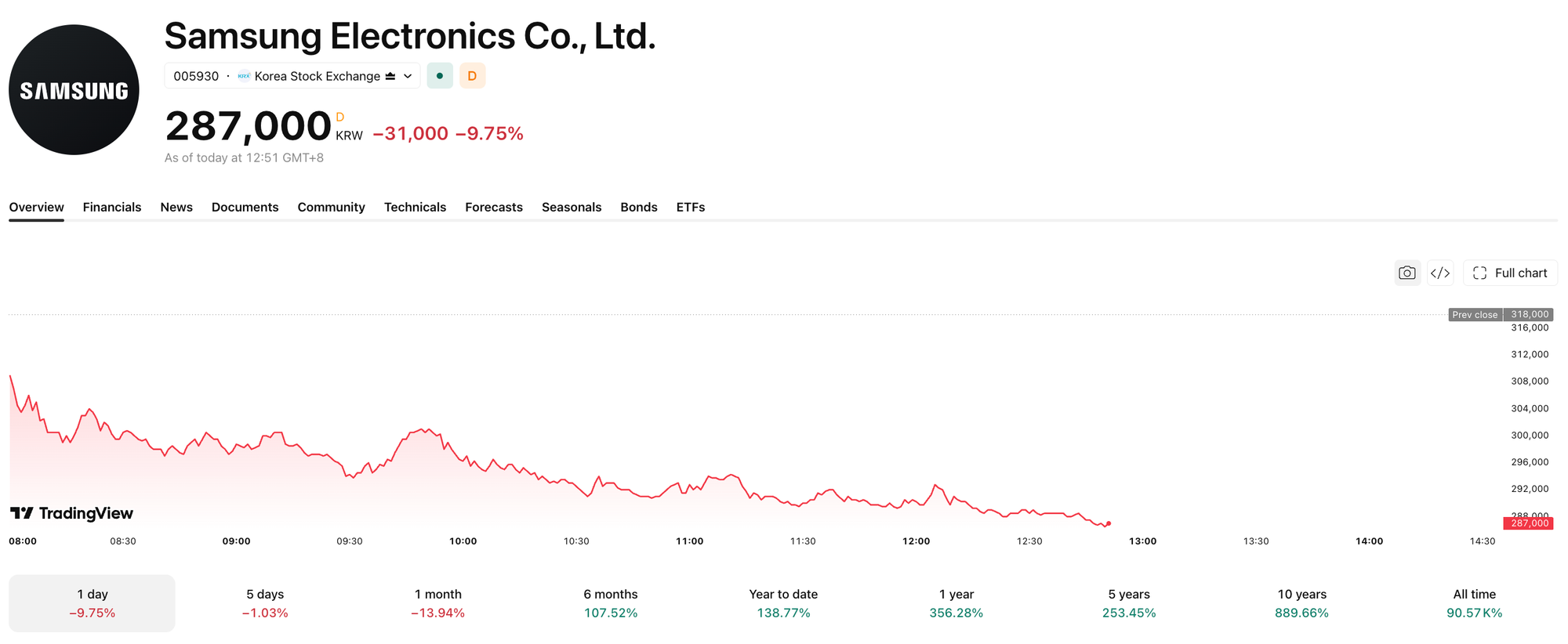
Yet Samsung shares fell as much as 9.75% in the middle-day trading. While SK Hynix dropped 10.58% at the same time. This reaction may be more important than the earnings beat itself.

Update by July 7 12:51 UTC+8 https://www.tradingview.com/symbols/KRX-005930/

The obvious explanation for Samsung’s profit surge is AI. But the more interesting part is that the boom is no longer confined to high bandwidth memory(HBM).

As chipmakers devote more production capacity to AI related products, supply has tightened across conventional memory used in smartphones, PCs and servers. Reuters reported that Citi Research estimated second quarter average selling prices rose 44% quarter-on-quarter for DRAM and 53% for NAND.

Teach-in Series 3 - IDM
Companies that design and manufacture their own chips — memory, analog, power, and Intel.

So why did the stock fall?

Because investors are increasingly asking whether today’s extraordinary profits represent the beginning of a structurally tighter memory market or the peak of another semiconductor cycle.

Reuters reported that concerns are mainly about the durability of AI infrastructure spending. Delays in data centre construction caused by power constraints, labour shortages or local opposition could eventually weaken demand across the hardware supply chain. Investors are also questioning whether major technology companies can keep financing enormous AI capital expenditure when returns remain uncertain.

This is the real market question behind Samsung’s results.

The bullish case is because AI changed the old ecosystem: HBM consumes capacity, conventional DRAM and NAND remain tight, new fabrication plants take years to build, and customers are increasingly seeking longer term supply agreements. The bearish case is that today’s record high prices already assumes an AI buildout that cannot slow materially.

Samsung’ full earnings release planed to announce on July 30. Therefore, it matters more than another confirmation of record profit. Investors will be watching the memory pricing, HBM progress and management commentary. These help them to find evidence that this boom still has room to run.

The headline says Samsung just had an extraordinary quarter.

The stock market is asking whether extraordinary has already become the baseline.

What is the biggest risk to the current AI memory boom?

Memory oversupply
100.00%
Slower hyperscaler AI spending
0.00%
Data centre power constraints
0.00%
Weaker demand for PCs and smartphones
0.00%
Others
0.00%
1 Polls

Source:

  1. Samsung flags 19-fold jump in profit, but shares slump on jitters AI boom may stall, July 7, 2026 https://www.reuters.com/world/asia-pacific/samsung-estimates-19-fold-rise-q2-operating-profit-beating-expectations-2026-07-06/
Volts to Intelligence - Meta’s AI Cloud Pivot: Monetization Strategy or Overbuild Signal?
News
Capital MarketsLLMsHyperscalersAI InfrastructureMag 7Volts to IntelligenceSilicon BakeryAI Speed RunIndustry Pulse Semi News

Volts to Intelligence - Meta’s AI Cloud Pivot: Monetization Strategy or Overbuild Signal?

Economics & FinanceTech

Bloomberg (July 1) - Meta is reportedly developing a cloud infrastructure business that would sell access to AI computing power and models to outside customers. The plan could put Meta into a new competitive lane against cloud leaders such as Amazon Web Services, Microsoft Azure, and Google Cloud. The business would aim to generate revenue from excess AI computing capacity that Meta has built for its own artificial intelligence(AI) ambitions.

Who faces the biggest risk if Meta sells excess AI compute?

Neocloud providers e.g. CoreWeave and Nebius
16.67%
Big hyperscalers e.g. AWS, Azure, and Google Cloud
66.66%
AI chip suppliers
0.00%
Meta itself
16.67%
Others
0.00%
6 Polls

Reuters, citing Bloomberg’s report, added that the planned service could let developers access AI models hosted on Meta’s infrastructure and pay for the computing power needed to run them. Meta is also reportedly considering selling raw AI computing capacity, similar to neocloud providers. Meta declined to comment, and Reuters said it could not independently verify the Bloomberg report.

Meta’s Zuckerberg says AI agent tech progressing slower than expected
Zuckerberg’s AI Agent Reality Check: The Payoff Is Taking Longer

The bullish interpretation is straightforward: Meta may be trying to turn AI infrastructure from a cost center into a revenue source. If the company has already committed massive capital to data centers, chips and AI systems, then selling unused or excess capacity could help Wall Street better understand the return on that spending.

Reuters reported that Meta is projected to spend as much as $145 billion on AI infrastructure this year, a significant portion of Big Tech’s more than $700 billion outlay on the technology. The scale of that spending explains why investors are watching Meta’s AI strategy so closely.

But the bearish interpretation is also important. If Meta is already looking for ways to sell excess compute, investors may ask whether its internal AI products can absorb all the infrastructure it is building. In other words, the same news can be read in two opposite ways: either Meta has found a monetization path for AI Capex or it is revealing early signs of overcapacity.

Is Meta’s reported AI cloud plan bullish or bearish for the AI trade?

Bullish: it creates a new monetization path
50.00%
Bearish: it signals possible compute overbuild
50.00%
Neutral: too early to tell
0.00%
Depends on pricing and margins
0.00%
2 Polls

The impact of competition may also be uneven. Large cloud providers like AWS, Azure, and Google Cloud may be harder to disrupt because they already have broad enterprise ecosystems. The bigger pressure may fall on neocloud companies such as CoreWeave and Nebius, who relay more heavily on AI compute demand and large anchor customers. Reuters quoted D.A. Davidson’s Gil Luria as saying Meta’s added capacity would likely matter more for neoclouds than for the biggest hyperscalers.

Now the key question is not simply whether Meta enters cloud. The real question is : the market prices this as AI monetization or AI overbuild.

If investors believe the cloud pivot proves that AI infrastructure can be resold profitably, Meta’s Capex story becomes easier to defend. If they believe it shows internal AI demand is weaker than expected, the trade could spread pressure across AI infrastructure stocks.

Source:

1.Bloomberg: Meta Is Planning a Cloud Business to Sell AI Computing Power, July 1, 2026 https://www.bloomberg.com/news/articles/2026-07-01/meta-is-building-a-cloud-business-to-sell-excess-ai-compute

2.Reuters: Meta's Zuckerberg says AI agent tech progressing slower than expected, July 2, 2026 https://www.reuters.com/business/zuckerberg-says-ai-agent-development-going-slower-than-expected-2026-07-02/

AI Speedrun - Meta's Zuckerberg says AI agent tech progressing slower than expected
Quick Take
HyperscalersLLMsAI InfrastructureMag 7AI Speed RunIndustry Pulse Semi News

AI Speedrun - Meta's Zuckerberg says AI agent tech progressing slower than expected

Zuckerberg’s AI Agent Reality Check: The Payoff Is Taking Longer

Economics & FinanceTech

Reuters (July 2)- Meta CEO Mark Zuckerberg told employees at an internal town hall that the company’s AI agent technology has not progressed as quickly as he expected. AI agents are automated systems designed to execute tasks on behalf of users. And they are central to the broader market belief that generative AI will eventually translate into real productivity gains.

Zuckerberg also said Meta’s recent reorganization was not as “clean” as it could have been and that executives miscalculated the timing of the changes. Earlier this year, Meta laid off about 10% of its global workforce and reassigned roughly 7,000 employees to AI focused teams which triggered employee pushback and morale concerns.

Do you think Ai Capex has Peaked?

Yes, it's time to take profits
66.67%
No, Big Tech has enormous potential
33.33%
Let me finish my reading first...
0.00%
3 Polls

Despite the slower progress, Zuckerberg did not signal a give up from AI. Reuters reported that he expects Meta to begin seeing more significant benefits from its AI investments within the next three to six months. Meta is projected to spend as much as $145 billion on AI infrastructure this year.

This is not a story about Meta abandoning AI. It is a story about timing.

The AI market has spent the past two years pricing in a rapid transition from infrastructure investment to application level productivity. Zuckerberg’s comments challenge that timeline. If AI agents are progressing more slowly than expected, the market ought to ask whether AI's payoff is being pushed further into the future.

That matters because Meta is not only spending on models. It is restructuring the company around AI, moving employees into AI workflows, and investing heavily in infrastructure. Reuters reported that Zuckerberg realized the shortcomings in Meta’s AI restructuring, while still emphasizing that the company was not fundamentally changing course on its AI push.

For investors, the tension is simple: AI infrastructure spending is immediate but AI agent revenue and productivity gains are still uncertain. If the benefits arrive within three to six months, as Zuckerberg expects, the current investment cycle may look justified. If progress remains slow, investors may become more skeptical of whether AI agents can deliver enough near-term value to support AI’s rising Capex.

Will Meta’s AI agents show meaningful business impact within the next 3–6 months?

Yes
0.00%
No
0.00%
Only limited impact
100.00%
Too early to judge
0.00%
1 Polls

This is also why the Reuters report should be read together with the Bloomberg report on Meta’s potential cloud business. If AI agents are slower to mature while Meta is also exploring ways to sell excess compute, the market debate will become sharper: is Meta simply creating more revenue channels for AI infrastructure or is it looking for a backup monetization path because internal AI use cases are not scaling fast enough?

Meta’s AI Cloud Pivot: Monetization Strategy or Overbuild Signal?
Bloomberg (July 1) - Meta is reportedly developing a cloud infrastructure business that would sell access to AI computing power and models to outside customers. The plan could put Meta into a new competitive lane against cloud leaders such as Amazon Web Services, Microsoft Azure, and Google Cloud. The business would

Source:

  1. Meta's Zuckerberg says AI agent tech progressing slower than expected, July 2, 2026 https://www.reuters.com/business/zuckerberg-says-ai-agent-development-going-slower-than-expected-2026-07-02/
  2. Bloomberg: Meta Is Planning a Cloud Business to Sell AI Computing Power, July 1, 2026 https://www.bloomberg.com/news/articles/2026-07-01/meta-is-building-a-cloud-business-to-sell-excess-ai-compute
Breaking News - Micron Announces $250 Million Investment in Trump Accounts Reaching 1 Million Children, Families and the Future Workforce
News
Capital MarketsSemiconductorAI Infrastructure Semi News

Breaking News - Micron Announces $250 Million Investment in Trump Accounts Reaching 1 Million Children, Families and the Future Workforce

Company launches employee matching and community seed funding, reinforcing Micron’s broader U.S. investment and workforce development strategy

Politics

Will More Tech Leads Follow Micron to Support Trump Accounts?

Yes
75.00%
No
25.00%
4 Polls

Will Micron's Stock Price Ever Hit Above US$1,500 on or before 4Q2026 Results?

Yes
100.00%
No
0.00%
2 Polls

According to Micron's press release:

WASHINGTON, June 30, 2026 (GLOBE NEWSWIRE) -- In honor of America’s 250th anniversary, Micron Technology, Inc. (Nasdaq: MU) today announced a $250 million investment to increase long-term savings opportunities for children and families through Trump Accounts (also known as 530A Accounts).

As part of this initiative, the company is launching an employee matching benefit for contributions up to $1,000 per child under 18. Additionally, Micron will provide a community benefit of a one-time $250 seed deposit for children with Trump Accounts where Micron operates in Idaho, New York, Virginia, California, Colorado, Minnesota and Texas.

Micron’s investment is the largest corporate commitment of its kind and is expected to support up to one million children. Most of the funding will benefit children and families in communities where Micron operates, expanding long-term financial opportunities for the next generation.

The program complements Micron’s previously announced investment of over $200 billion in U.S. memory manufacturing and R&D, creating over 90,000 U.S. jobs. Together, these investments reflect Micron’s sustained commitment to strengthening the nation’s semiconductor ecosystem and the workforce that supports it.

“At Micron, we believe investing in people is as important as investing in technology,” said Sanjay Mehrotra, Micron Chairman, President and CEO. “As America celebrates its 250th anniversary, this investment is about helping children build a strong foundation for future opportunity while supporting the workforce and communities that will shape U.S. semiconductor leadership. We appreciate President Trump and Secretary Bessent for establishing these accounts, which give Micron another meaningful way to support children and families as they plan for the future.”

“Trump Accounts are a transformative policy initiative that will help unlock the American Dream for millions of children. It is encouraging to see our nation's leading companies, including Micron, supporting this effort by stepping up to help children in the communities and offering matching contributions for their employees,” said U.S. Treasury Secretary Scott Bessent. “Thanks to President Trump's leadership, momentum continues to build as more companies and institutions participate, helping the next generation of Americans become shareholders in the world's most vibrant capital markets.”

“I applaud Micron for this powerful commitment to Trump Accounts,” said Michael Dell, Chairman and CEO, Dell Technologies. “Micron and Dell have long enjoyed a strong business partnership, and through this initiative, we are also coming together to support children, create long-term economic opportunity and invest in America’s future.”

“Micron’s massive investment in their people and communities reflects their tremendous values and love of country and will serve as a blueprint for companies all over America,” said Brad Gerstner, Founder and Chairman of Invest America. “This is not an abstract investment — these are meaningful dollars directly into the private Trump Accounts of nearly one million kids. Trump Accounts have unlocked a transformative new type of corporate philanthropy that reconnects every child to the American Dream by making them a direct shareholder in our great American companies. We hope every company, small, medium and large, will follow their lead at any level of support.”

In addition to this initiative, Micron is investing hundreds of millions of dollars across the U.S to expand access to semiconductor careers through K-12 STEM education, semiconductor curriculum development, AI education, community college and university partnerships, registered apprenticeships and other workforce programs.

Trump Accounts are invested in eligible low-fee U.S. index funds, providing broad market exposure and the long-term benefits of compounding. Families can learn more and open an account at https://trumpaccounts.gov/. More information about how residents of eligible counties can qualify for Micron’s seed funding will be available at https://micron.com/communityinvestment. ​ 

Source: 1. Micron's Press Release. June 30, 2026 (US Time); https://investors.micron.com/news-releases/news-release-details/micron-announces-250-million-investment-trump-accounts-reaching
Breaking News - Samsung and SK Hynix plan massive sites as part of South Korean national project
News
SemiconductorIPOsBreaking NewsMemory ChipAI Infrastructure Semi News

Breaking News - Samsung and SK Hynix plan massive sites as part of South Korean national project

Samsung Electronics and ‌SK Hynix ‌plan to each build ​two new massive chip fabrication sites in South Korea's southwest ‌region ⁠as part of a national project ⁠to build chip production "ecosystem" valued at 800 trillion won.

TechPolitics

Will Overcapacity Problem Hit Memory Market with Samsung & Hynix expansion?

Yes
30.30%
No
69.70%
934 Polls

SEOUL, June 29 (Reuters) - Samsung Electronics and ‌SK Hynix ‌plan to each build ​two new massive chip fabrication sites in South Korea's southwest ‌region ⁠as part of a national project ⁠to build chip production "ecosystem" valued ​at 800 ​trillion ​won ($517.87 billion), ‌the government said on Monday.

The plan was unveiled at the announcement of three ‌new "mega-projects" by ​the country ​and ​the global ‌chip giants to ​spur ​growth and dominate the AI sector.

We'll cover more and update in due course.

CTA Image

Comprehensive Analysis of the Full Value Chain

Subscribe to weekly analysis

Source:

  1. Samsung Electronics, SK Hynix to invest in two new fabrication sites in South Korea, government says, June 29, 2026: https://www.reuters.com/world/asia-pacific/samsung-electronics-sk-hynix-invest-two-new-fabrication-sites-south-korea-2026-06-29/
Silicon Bakery - Apple Raises Price While Micron Calls out Apple for Memory Shortage
News Flash
SemiconductorIndustry PulseAI InfrastructureConsumer DiscretionarySilicon BakeryMag 7 Semi News

Silicon Bakery - Apple Raises Price While Micron Calls out Apple for Memory Shortage

Economics & FinanceTech

Apple is raising prices of multiple key products as a pass-through of skyrocketed memorgy costs; While Microns seems to hold a different view.

Apple vs Micron - Who Do You Believe Stands for the Truth?

Apple
28.57%
Micron
71.43%
56 Polls

Apple raises prices of MacBooks, iPads as memory costs skyrocket

SAN FRANCISCO, June 25 (Reuters) - Apple raised iPad and MacBook prices on Thursday, saying it could no longer shield customers from soaring memory and storage chip ​costs driven by the AI industry's datacenter buildout.The move does not affect Apple's main cash cow, the iPhone. But it would take starting price of the Neo - ‌its lowest priced laptop aimed at winning marketshare from affordable Windows and Chromebook laptops - from $599 to $699 months after launch.

The increase shows even the world's most valuable consumer electronics company with supply chain relationships that are the envy of the industry is not immune to a memory price surge that has dulled the outlook for smartphone and PC sales.Memory makers such as Micron have in recent months prioritized orders from AI chipmakers like Nvidia, helping them ​earn record profit but leaving little supply for electronics makers that have been forced to increase prices."We have never seen a component price increase this much, this quickly," Apple ​said in a statement. "We have shielded our customers from these increases so far, but we have now reached a point where we need to begin ⁠raising prices on a number of products, including today's increases for iPad and Mac."

Micron Suggests Apple Helped Cause Memory Price Crisis

As one of Apple’s suppliers, however, Micron sees the situation differently. Speaking to the Wall Street Journal and without naming names, Micron CBO Sumit Sadana implied that Apple is partly to blame for the current situation.

In an interview Wednesday night, Micron Chief Business Officer Sumit Sadana said the company couldn’t make investments during the memory market’s last downturn, when Micron’s gross profits went negative, in part because certain customers took advantage to pay rock-bottom prices.

“We told a couple of the customers who were being very aggressive with pricing at that time that this is not constructive,” he said, without naming Apple, adding that low prices discouraged capital investments. “A lot of the industry investments got shut down in 2023 because of really poor pricing and really poor margins.”

Source:

  1. Apple raises prices of Macbooks, ipads as memory costs skyrocket, June 25, 2026: https://www.reuters.com/world/asia-pacific/apple-raises-prices-macbooks-ipads-memory-costs-skyrocket-2026-06-25/
  2. The interview sourced from WSJ interview, June 24,2026
Market Rumor - Apple seeks to buy memory chips from blacklisted Chinese company
News Flash
SemiconductorMarket RumorConsumer DiscretionaryMag 7 Semi News

Market Rumor - Apple seeks to buy memory chips from blacklisted Chinese company

iPhone maker wants Trump administration to sign off on purchases to ease pressure from rising semiconductor prices.

Economics & FinanceTech

iPhone maker wants Trump administration to sign off on purchases to ease pressure from rising semiconductor prices.

Will Apple Buy From CXMT?

Yes
35.59%
No
64.41%
767 Polls


June 26 (Reuters) - Apple is lobbying the Trump ‌administration for clearance to buy memory chips from ChangXin Memory Technologies, a Chinese company the Pentagon has put on a blacklist, the Financial ​Times reported on Friday.The iPhone maker has lobbied the ​White House for approval aimed at easing financial pressure ⁠on the company from rising memory chip prices, the ​newspaper said, citing unnamed sources.

The White House, Apple and CXMT did ​not respond to requests for comment from Reuters outside business hours.The lobbying push underscores the bind facing major U.S. technology companies as soaring memory ​chip costs collide with Washington's national security restrictions on ​Chinese chipmakers.

Apple approached the Commerce Department more than a month ago and also ‌engaged ⁠other administration officials and allies in Washington, one person told the FT.

CXMT, China's top memory chipmaker, was designated as a Chinese military company by the Defense Department under the Biden ​administration. The company, ​among others, ⁠was approved by an interagency committee last year for addition to the Commerce Department's Entity List.

U.S. ​companies cannot ship goods, software and technology ​to companies ⁠on the list without a license, which is likely to be denied.

Apple raised Pad and MacBook prices on Thursday, saying it could ⁠no ​longer shield customers from soaring memory ​and storage chip costs driven by the AI industry's data center buildout.

Source:
1. Apple seeks approve to buy chips from blacklisted Chinese company , FT reports June 27, 2026: https://www.reuters.com/world/asia-pacific/apple-seeks-approval-buy-chips-blacklisted-chinese-company-ft-reports-2026-06-27/

Original Report:

  1. Apple seeks to buy memory chips from blacklisted Chinese company, June 2026 https://www.ft.com/content/d72a25e2-7bde-4aa9-bd8d-0c4f3d6cb2cb?syn-25a6b1a6=1#comments-anchor
AI Speedrun - OpenAI takes the lead in AI IPO horse race: 'Getting to public markets first is very important'
News
LLMsIPOsAI InfrastructureCapital MarketsAI Speed RunIndustry Pulse Semi News

AI Speedrun - OpenAI takes the lead in AI IPO horse race: 'Getting to public markets first is very important'

OpenAI's reported imminent IPO filing has sharply reversed prediction market odds, positioning it to beat Anthropic in the race to become the first major AI company to go public.

TechEconomics & Finance

Reports that OpenAI is set to confidentially file for an IPO as soon as Friday changed prediction market traders' outlook on which private AI giant will debut on the public markets first.

Traders on Kalshi now see OpenAI as the favorite to go public before Anthropic, giving it an 83% chance of getting the big payday first.

"Getting to public markets first is very important, given this arms race going on," said Dan Ives, Wedbush Securities' global head of technology research. "It sets a valuation, you're the first one to meet with investors on the road, and there's an advantage."

Before the initial report on the IPO timeline by the Wall Street Journal which CNBC later confirmed, traders gave OpenAI just over a 32% chance of beating its chief private rival to the public markets.

Chances Anthropic would beat OpenAI to an IPO collapsed on Polymarket to 20% from 69%.

While the birth of OpenAI's ChatGPT launched the AI bull market in November 2022, the company has lost some of its shine with investors.

Worries about the company's spending, reports on missed revenue and growth targets and leadership turnover weighed on investors' outlooks. There have even been internal disagreements on the timeline to go public, according to the Journal, with CEO Sam Altman pushing for a faster debut than CFO Sarah Friar.

At the same time, Anthropic's enterprise business has led it to experience massive growth in recent months, and reportedly is in talks with investors for a new funding round that would value the company at $900 billion, greater than that of OpenAI's latest valuation.

Investors became enchanted with Anthropic's Claude models, which have been constantly updated with new versions. Those updates were followed so closely by investors that they consistently moved the stock market in the beginning of the year, as worries about how new tools from Claude models would disrupt existing businesses mounted.

It was in late March when reports about an extremely powerful new model, Claude Mythos, circulated that Anthropic took a consistent lead over OpenAI on Kalshi of who would have a public debut first. Bloomberg reported around the same time that the company was looking to IPO as soon as October.

But with an IPO on the way — sooner than prediction market traders thought — and a court win against Elon Musk this week, it could be the moment for a turnaround, according to Ives.

"It started with the lawsuit," he said. "And now filing the IPO, that's a great one-two punch to start to put water on the negative fire that's been on them."

Source: https://www.cnbc.com/2026/05/20/openai-takes-the-lead-in-ai-ipo-horse-race-getting-to-public-markets-first-is-very-important.html