
The Deal
On May 19, 2026, Warner Music Korea announced a global partnership with FeelGHood Music, the agency representing South Korean singer BIBI, with financial terms undisclosed. The official announcement described the deal as designed to "co-create new music and bring it to the world," with Warner Music Korea president Jieun Kim stating the company would provide "global infrastructure and creative support" for BIBI's career. Notably, the announcement made no mention of "distribution" as a specific term, nor did it reference physical sales channels or retail networks — the kind of narrow, mechanism-specific language typical of distribution-focused deals. This appears to be a broader partnership centered on creative and promotional support. Whether this type of deal, without an explicit distribution component, can help BIBI achieve her first-ever entry on the Billboard Global 200 within a year — by May 2027 — is the question now drawing public attention.
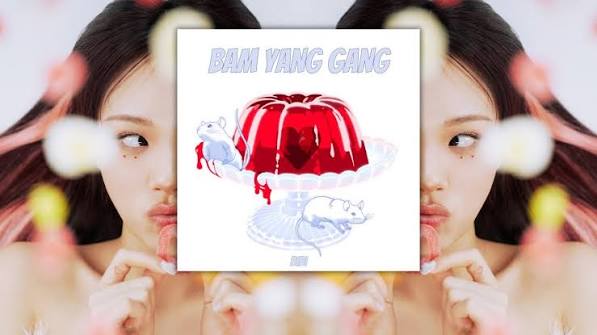
According to currently verifiable records, BIBI's best result to date is "Bam Yang Gang" (2024), which topped the regional "Billboard South Korea" chart and was named to Billboard's 2024 list of the best K-pop songs of the year; however, no confirmed record currently exists of her reaching the Billboard Global 200.
A Deal Type Already Verified to Work: Distribution-Driven Partnerships
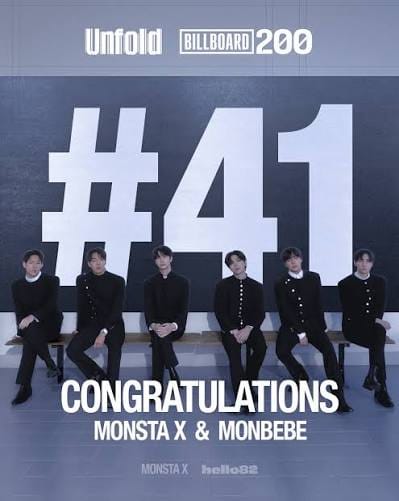
Billboard's own 2025 year-end review of the K-pop industry documented several specific cases where distribution partnerships produced measurable chart results. Independent label hello82, a Los Angeles-based K-pop label specializing in U.S. market distribution support for Korean artists, partnered with American distribution firm ONE HUNDRED LABEL Group, after which EXO member Baekhyun scored his first-ever solo Billboard 200 entry, debuting at No. 121. After hello82 began providing physical single distribution services for ATEEZ, the group made its Billboard Hot 100 debut, with two songs landing at No. 68 and No. 69. Monsta X, meanwhile, achieved its first Billboard 200 entry with a Korean-language album through distribution support from The Orchard (a global distribution company owned by Sony Music) — a milestone the group had previously only reached with English-language albums produced specifically for international markets.
The mechanism behind these results shows that Billboard's chart methodology relies on formally tracked U.S. domestic sales and distribution data. Some Korean artists, despite strong streaming numbers, may not be fully counted toward these charts simply because they lack a formal U.S. distribution channel. However, this mechanism has so far only been verified in deals where distribution was explicitly the core function of the partnership — a structure that doesn't fully align with the emphasis of BIBI's deal. Whether a broader label partnership can overcome distribution constraints and deliver a similar breakthrough is precisely what this deal has yet to demonstrate.
A Comparable Case in the Same Category: A Result Pointing the Other Way
Under the same leadership team — president Jieun Kim, Asia-Pacific president Lo-Ting Fai, and A&R head Oscar Scivier — Warner Music Korea had already signed a similar agreement in March 2026 with MAINSTREAM, the agency representing rapper Lee Young Ji, roughly two and a half months before the BIBI deal. That partnership used the same "co-create and bring to the world" framing and likewise made no mention of a specific distribution mechanism, making it a relatively direct point of reference for testing whether this broader, creation-focused deal type can independently move Billboard outcomes.
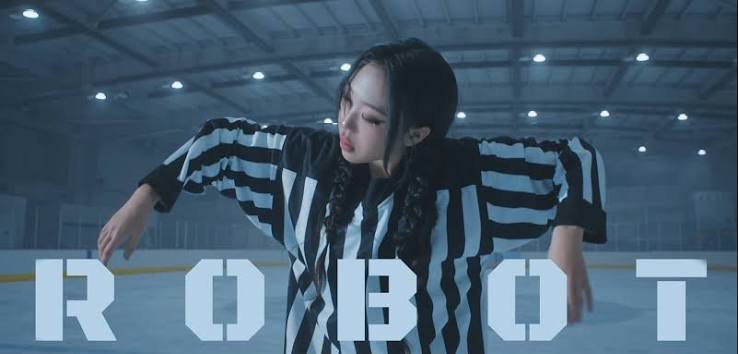
The results so far run counter to the intuitive narrative that "signing a deal necessarily has a positive effect on chart performance." Before the deal, Lee Young Ji's 2024 single "Small Girl," featuring EXO's D.O., reached No. 38 on the Billboard Global 200. After the deal, the partnership's first release, "Robot" (February 2026), failed to chart on the Global 200 or any regional Billboard chart. It's also worth noting that Lee Young Ji had already completed her first solo European tour in January 2025, before signing with Warner — suggesting she already possessed some international market footing independent of this partnership. Taken together, this case currently suggests that creative and promotional support alone, without an explicit distribution component, has not yet demonstrated an independent effect on chart outcomes. That said, the song's own production and competitive context are also factors shaping this result, as the next section explains.
Data Limitations: Small Sample Size and Confounding Variables
While the Lee Young Ji case is currently the most relevant point of reference, its result still allows for multiple interpretations. "Small Girl's" chart entry may owe more to the crossover fan base generated by featuring EXO's D.O. than to any effect of the label partnership itself. "Robot's" absence from the charts could similarly reflect a lack of a comparable guest feature, differences in musical style, or an especially competitive release window — Lee Young Ji's "Robot" landed in the same month as comebacks from BLACKPINK, IVE, ATEEZ, and ZEROBASEONE, among other prominent acts. With a limited sample size, it isn't possible to isolate "signing with a major label" as an independent causal variable, nor is it appropriate to draw the broader conclusion that creation-focused partnerships are generally ineffective.