What Kalshi actually filed
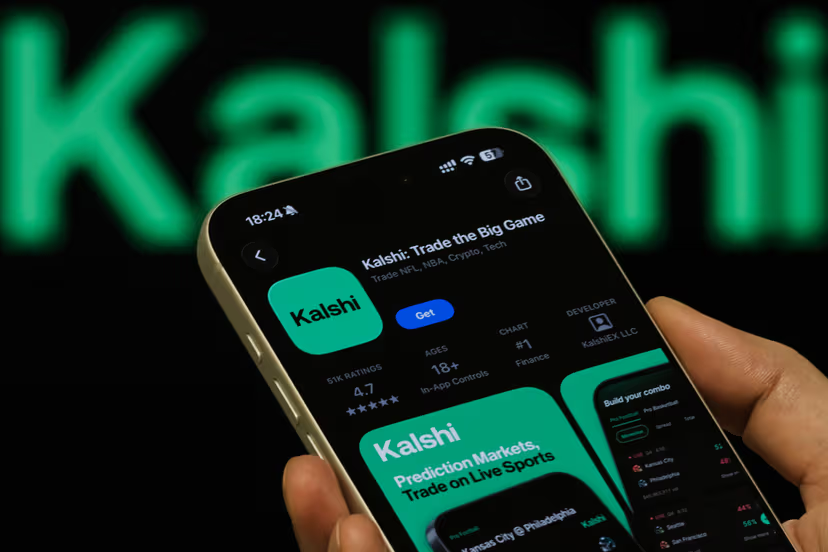
On July 14, 2026, KalshiEX submitted a self-certification for contracts asking whether the percentage of scheduled flights (passenger/cargo or both) at a specified airport would be above/below/between/exactly/at least a stated level during a stated period.
A self-certification permits a designated contract market to list without prior CFTC approval. However, a company spokesperson said the market was not live, and that Kalshi was still evaluating it and has opted not to go forward for now, while describing potential travel-risk hedging as the product's utility.
| Contract Design Element | Filed Rule |
|---|---|
| Underlying | Canceled flights divided by a fixed count of scheduled flights, expressed as a percentage. |
| What Does Not Count | Delays, diversions, gate returns that ultimately depart, reinstated flights that operate, and flights added after the schedule snapshot. |
| Settlement Sources | FlightAware first. BTS On-Time Reporting only if FlightAware is unavailable or does not publish a usable figure for the period. |
A flight cancellation contract is not new. An archived 2022 CFTC weekly notice lists Kalshi tickers for JFK, LAX, and ORD contracts based on daily counts of flights delayed or canceled. The 2026 filing changes the core metric to a cancellation rate, supports more flexible periods and flight categories, and adds much more detailed treatment of the denominator, excluded events, and restricted traders.
Meanwhile, a separate nationwide weekly cancellation-count market remained visible on Kalshi as I am writing this article.
Could the market granularity reach the single-flight level?
Theoretically, a similar contract could be written as "Will a specific flight segment operated by United Airlines, scheduled to depart from EWR to LAX on July 20, 2026 at 08:00 local time, be officially cancelled by the airline?" For a traveler, that is much more intuitive than an airport index. If 6% of flights at JFK are canceled but yours departs, an airport-level YES position may pay even though you suffered no loss. If your flight is the unlucky one in a 1% cancellation day, the market may not pay even though you need a hotel and a new ticket. In insurance language, the gap between the index and the user's actual loss is basis risk. In everyday language, the hedge can be right about the airport and wrong about you.
Would you use flight-level event contracts for hedging if they are available?
But the compliance case gets harder as the hedge gets better. CFTC requires an exchange to list only contracts that are not readily susceptible to manipulation. However, a single flight concentrates decisive influence, which could raise concerns about manipulation and insider information. Maintenance controllers can ground a marginal aircraft. Dispatch and station operations can affect whether the marginal flight is canceled, consolidated, or recovered. Air traffic officials can impose restrictions. Many people in those groups may also learn the likely outcome before passengers do. None of this is inherently manipulative. It is simply a market structure with a high concentration of control and information. Kalshi's own airport-level restricted-person list shows that the exchange sees the issue.
Therefore, airport aggregation is probably why the contract has a plausible regulatory path in the first place. It spreads influence over many flights, and makes deliberate manipulation more costly and visible. Having that said, some social media users worried that malicious individuals might deliberately disrupt airport operations to profit from the resulting payout.
Why cancellation contracts are easier to defend than delay contracts?
Delay and cancellation both look objective on a departure board, but they create different market-design problems. A delay contract built around the scheduled departure/arrival time would turn minute 0 and minute 1 into economically different states, even though the travel experience barely changes. A cancellation is a coarser event and usually requires a more visible operational decision. In other words, cancellation is harder to nudge by a tiny amount or minor disruption than delay contracts.
| Risk Dimension | Delay Contract | Cancellation Contract |
|---|---|---|
| Outcome Shape | Continuous minutes converted into a threshold result. | Discrete status, usually clearer once final. |
| Cliff Effect | High. One minute can flip settlement at the threshold. | Lower, as a one-minute difference usually does not change the outcome. |
| Safety Incentive on the Crew | A position may reward taking off before the benchmark time, or delaying it. | A NO position could still reward avoiding cancellation. |
| Malicious Interference | Brief disruption may be enough to affect a narrow threshold. | Generally requires greater disruption and visibility. |
A single-flight contract vs. travel insurance
Individuals can potentially use event contracts for hedging. At the Bloomberg Market Structure Conference last month, Kalshi co-founder and CEO Tarek Mansour said that some residents of the Florida Keys were using prediction markets as an alternative to hurricane insurance.
In this case, a single-flight cancellation contract would compete most directly with one slice of travel insurance, but the products solve different problems. Travel insurance generally reimburses covered costs when a listed reason disrupts the trip. Coverage depends on the policy and the claimant may need to document the event and the expense.
| Feature | Single-Flight Event Contract | Traditional Travel Insurance |
|---|---|---|
| Trigger | The specified flight is canceled under the contract's data rules. | A covered reason causes a covered loss under the policy. |
| Payout | Fixed $1 per winning contract, independent of the buyer's actual loss. | Reimbursement or benefit according to documented costs, limits, and policy terms. |
| Claims Friction | No receipt-based loss adjustment if settlement data is clean. | Often requires notice, proof of disruption, and expense documentation. |
| Tradability | Can be bought or sold before resolution, subject to liquidity and market rules. | Normally not tradable after purchase. |
| Main Basis Risk | The payout may be too small, too large, or unrelated to the buyer's actual costs. | The loss may arise from an exclusion or exceed a sublimit. |
Advantages of a single flight cancellation event contract include:
- No need to fill out a claim form or keep receipts
- Flexibility to trade the contract before settlement
- Prices may reflect real-time cancellation probabilities, providing informational value
Passengers can purchase any number of event contracts. However, it is still not comprehensive insurance because it does not automatically determine the payout based on the passenger's losses due to flight cancellation. Passengers need to decide in advance how many event contracts they want to purchase. The market is closer to a "tradable parameter product that pays a fixed amount upon event" than indemnity insurance.
On the other hand, the insurance industry already has similar products. For example, Swiss Re's On-time Guarantee automatically pays out after objective thresholds such as delays of 30 minutes, without requiring passengers to actively file a claim. Similar insurance products based on flight cancellation are likely.
Could airlines use Kalshi instead of parametric insurance?
The airline-scale version of the question runs into arithmetic. Delta said the July 2024 CrowdStrike outage caused about 7,000 cancellations over five days, an approximately $380 million direct revenue impact, $170 million in added non-fuel expense, and $50 million in fuel savings. On those disclosed lines, the net impact was roughly $500 million.
Kalshi's airport filing sets a $25,000 position-accountability level per strike and member. That is an accountability threshold rather than a bespoke corporate insurance limit, but the scale mismatch is still obvious.Parametric and non-damage business-interruption coverage is built for that matching exercise. In a Swiss Re case study, airline and airport coverage could trigger after a defined number of airport-closure days or when canceled flights reached a pre-agreed threshold, with details structured around the customer's needs and risk profile.
For corporate risk transfer, Kalshi is best understood as a supplemental index market. Parametric insurance and reinsurance remain better tools for large limits. The exchange can add price discovery and a tactical hedge. It may not replace an airline's risk program in its filed form.
The FlightAware data dispute
Kalshi's filing designates FlightAware as the primary source agency, with BTS as an alternate source only if FlightAware is unavailable or does not publish a usable figure for the period.
FlightAware's terms of use explicitly state that users may not copy, publish, distribute, or use the data for commercial purposes without an express license. General website access licenses are personal, limited, and revocable.
FlightAware's parent company, RTX, told the WSJ:
- FlightAware does not participate in prediction markets.
- No company is authorized or will be authorized to use FlightAware network data for this purpose.
- Customers who violate the terms of service may have their accounts terminated.
However, Kalshi already cites FlightAware in its weekly nationwide flight cancellation contracts. Kalshi's spokesperson said that FlightAware's claim the company could not use its data was unfounded since the information is in the public domain, according to Fortune.

The likely end state
For travelers: a well-defined single-flight contract could complement travel insurance with quick cash, but would require them to determine the number of contracts they need to buy.
For airlines and travel businesses: an airport rate can hedge a short disruption and provide a live signal, but cannot replace tailored parametric insurance or reinsurance.
For the wider travel economy: a liquid disruption price could help travel businesses gauge near-term operational stress, even if they never trade.
Given the current market rules and structure, Kalshi contracts are feasible as a personal hedging tool, but their practicality for enterprises is insufficient. Kalshi also needs to address the issue of using FlightAware data to avoid potential legal disputes.
Will FlightAware terminate Kalshi's use of its flight data?
Disclaimer: The content is for informational purposes only. You should not construe any such information or other material as legal, tax, investment, financial, or other advice. Nothing contained in this article constitutes a solicitation, recommendation, endorsement, or offer by the author(s) or any third party service provider to buy or sell any securities or other financial instruments in your or in any other jurisdiction in which such solicitation or offer would be unlawful under the securities laws of such jurisdiction. The author(s) report(s) no conflict of interest.