Introduction: The Sovereign Capture of the Physical Transition
"A hedge fund asks what trade to make today. A universal owner asks whether this dynamic alters its 30-year planning premise."
As the global economy shifts from an era of frictionless digital expansion to one governed by absolute thermodynamic and geological limits, the foundational premises of long-duration capital allocation are fracturing. Beneath the headline noise of public market volatility, Middle Eastern sovereign capital—led by the "Gulf 7"—is executing a systematic, multi-billion-dollar capture of South America’s critical infrastructure, baseload clean energy, and mineral reserves.
While mainstream institutional capital continues to evaluate Latin America through the narrow, risk-discounted lens of EM Beta, sovereign allocators from Riyadh to Abu Dhabi are bypassing stock exchanges entirely. They are acting as strategic, long-term operators, deploying unlisted direct equity to lock down the physical bottlenecks required to power the next three decades of global electrification and artificial intelligence.
For universal asset owners operating under 30- to 50-year fiduciary mandates, the consolidation of the Gulf-LatAm corridor represents a critical strategic inflection point. When sovereign wealth becomes the off-market price-setter for the region's foundational assets, continuing to treat Latin America as a tactical diversification trade ceases to be a benign oversight—it becomes an active acceptance of long-term portfolio subordination.
I. The Illusion of the Index: Moving Beyond the Emerging Markets Lens
For Western asset allocators, Latin America remains a structural blind spot, accounting for less than 2% of global assets under management. This underweight position stems from siloed management focused on the FX volatility of publicly traded equity indices (MSCI EM LatAm).
However, this stock market contraction obscures a structural rotation of capital. The real economy is absorbing massive amounts of capital: FDI reached $189 billion in 2024, with announced projects surging 40% to $168 billion. The fact that 52% of this stems from reinvested profits is a powerful signal: industrial operators already on the ground are doubling down on physical assets, capturing value that public-market spectators are leaving behind. While the West scrutinizes liquidity, Gulf monarchies are locking down these private assets, establishing the region as a geostrategic extension of their national security for the next 30 years.
II. Anatomy of a Takeover: The Reality of Transactions
The acceleration of direct investments by the “Gulf 7” in Latin America underscores a doctrine of radical disintermediation: replacing volatile stock market trading with the physical acquisition of critical assets through unlisted direct equity agreements.
In July 2023, the Saudi joint venture Manara Minerals bypassed the stock market to inject $2.6 billion in private equity into an isolated carve-out from Vale Base Metals, valued at $26 billion. This 10% stake contractually secures direct access to Brazilian nickel and copper reserves. In Bahia, Mubadala Capital is breaking with the speculative five-year exit strategy typical of Western private equity firms. Through Acelen, Abu Dhabi is committing $3 billion in industrial capital expenditures to convert the fossil-fuel-powered Mataripe refinery into a global hub producing 1 billion liters per year of sustainable aviation fuel (SAF) by 2029.
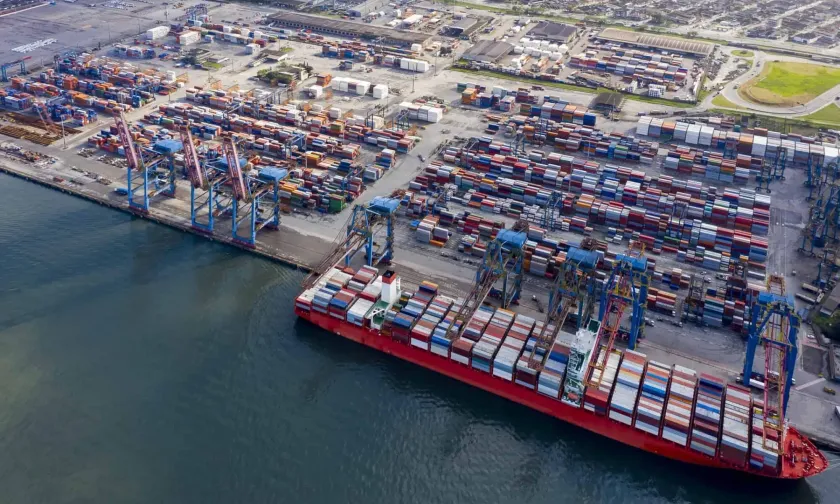
Simultaneously, Dubai is monopolizing logistical bottlenecks. DP World is investing $296 million in capital expenditures at the Port of Santos in Brazil, further solidifying its foothold at the Port of Callao in Peru.
This strategy extends directly to the power grid, the ultimate physical bottleneck of the transition. Moving aggressively to capitalize on a structural mispricing within Latin American utilities, sovereign capital is participating in massive take-private consortiums. A prime example is the Qatar Investment Authority’s (QIA) implication in the consortium—led by Global Infrastructure Partners and EQT—that executed the $10.7 billion equity privatization of AES Corporation at $15.00 per share. By capturing the underlying high-voltage transmission and renewable generation networks across the Americas, this patient, off-market capital secures a multi-decade supply chain duration. It is completely insulated from the short-term FX volatility and EM Beta that paralyze Western portfolio managers.
As a long-term asset owner, what is your primary objective for Latin American infrastructure exposure?
III. The Physical Bottleneck: The Energy and Minerals Equation
The exponential growth of high-density data centers requires a surge in mineral and electrical resources running up against a structural physical deficit. Without secure access to these mining rights, the construction of technological infrastructure is physically and mathematically untenable.
Thermodynamically, the equation is binary: zero-carbon baseload megawatts combined with critical minerals. Brazil’s fully amortized hydroelectric base and high-voltage transmission grid offer this indispensable firm power foundation for mineral refining and AI. Sovereign capital allocators recognize that future power will no longer rest on simply holding liquid fiat instruments, but on physical control of the value chain for silicon and controllable electrons.
IV. The Political Economy of Sovereign WACC: Crowding Out and Pricing
Gulf sovereign wealth funds are establishing themselves as off-market price setters in Latin America thanks to a structural capital asymmetry. Free from short-term actuarial liabilities and fixed-duration mandates, their Sovereign WACC is decoupled from quarterly stock market returns, subsidized by strategic imperatives of national industrial security.
This cross-subsidy allows them to accept seemingly lower financial Internal Rates of Return (IRR) during auctions for long-term concessions, such as port complexes and electric transmission networks. Consequently, traditional 10-year private equity and infrastructure models are becoming uncompetitive and are facing irreversible mathematical obsolescence. While Western investors are hamstrung by the Country Risk Premium (CRP), Gulf sovereign wealth funds completely eliminate this discount in their models. This valuation asymmetry makes them unbeatable in auctions for critical infrastructure. Within this paradigm, continuing to demand a traditional political risk discount according to Wall Street standards is tantamount to signing one’s own definitive exclusion (crowding-out) from top-tier South American infrastructure projects.
Will traditional Western private equity models remain competitive in LatAm infrastructure auctions against Gulf Sovereign Capital?
V. Redefining the 30-Year Hypothesis: Avoiding Subordination
Persisting in underweighting Latin America through the obsolete lens of an emerging-market equity discount is now a fatal strategic error. By allowing Gulf funds to control and monopolize regional physical bottlenecks, universal owners are structurally accepting the subordination of their global portfolios. Reduced to the status of a price-taker, institutional portfolios will suffer severe inflation in commodities that directly determine the profitability of their global technology and industrial holdings through the 2050 horizon. The only realistic strategy to avoid this subordination is to transition to direct partnerships or co-investment in critical physical infrastructure.
References & Institutional Sources
- Global SWF (2025). Annual Report: Sovereign Wealth Fund Data Platform.
- International Monetary Fund (IMF) (2025). Gulf Cooperation Council Diversification.
- ECLAC/CEPAL (2024). Foreign Direct Investment in Latin America.
- International Energy Agency (IEA) (2024). Global Critical Minerals Outlook.
- International Energy Agency (IEA) (2025). Brazil 2025: Energy Policy Review.
- Bain & Company / McKinsey & Company (2024). Global Private Equity / Infrastructure Reports.
- Thinking Ahead Institute (WTW) (2024). Global Pension Assets Study.
- Vale S.A. (2023). Official Investor Relations: Vale Base Metals / Manara Minerals.
- Mubadala Capital (2023). Corporate Dossier: Acelen and Mataripe Biorafinerie.
- DP World (2024). Annual Operational Reports (Callao & Santos).
- SEC Disclosures (2026). Form 8-K: The AES Corporation / Horizon Parent, L.P. Merger Agreement.