U.S. Nonfarm Payrolls rose by just 57,000 in June, far below the 110,000 expected by economists polled by Reuters (July 2). April and May payrolls were also revised down by a combined 74,000, turning the seemingly stable labor market into a softer one. Reuters reported that markets responded by dialing back expectations for a near-term Fed rate hike, with the odds of a September hike falling to about 60% from roughly 75% before the report.
The FRED data will make the miss easier to understand. FRED’s PAYEMS series shows total Nonfarm Payroll employment rising from 158.927 million in May to 158.984 million in June, matching the 57,000 monthly gain reported by Reuters, still positive job growth, but it is far below the kind of payroll strength that would make another rate hike easy to defend.
After June NFP, How Many Times Do You Think US Will Raise Interest Rates in 2026?
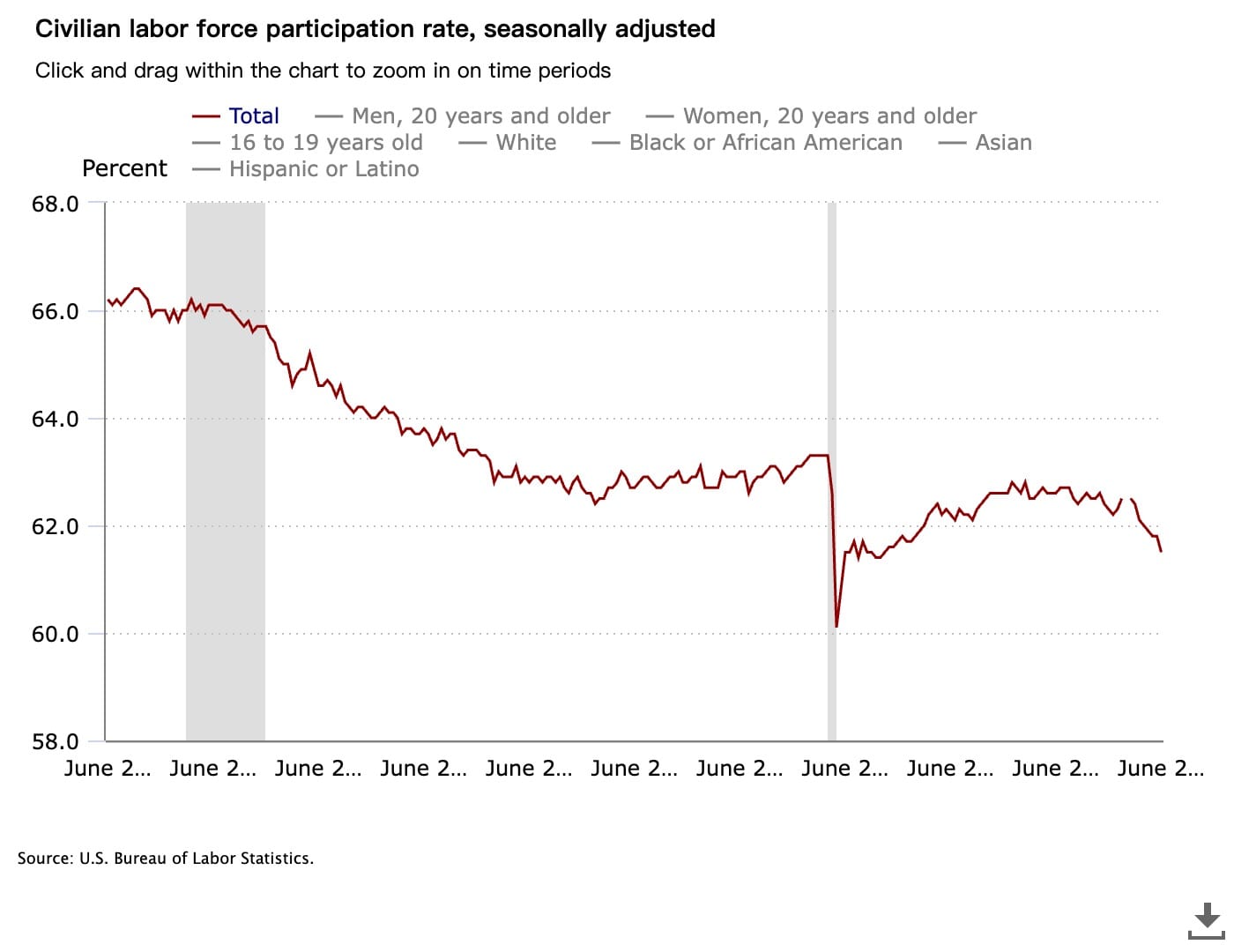
The complication is that unemployment did not rise. FRED’s unemployment rate series shows U-3 falling from 4.3% in May to 4.2% in June. On the surface, that weakens the argument of the labor market has cracked. But the labor force participation rate fell from 61.8% to 61.5%, matching Reuters’ point that the lower unemployment rate partly reflects people leaving the labor force rather than a clean improvement in hiring conditions.
Therefore the interest rate cycle is complicated to read. The June report makes a July hike look harder to justify, but it does not automatically bring rate cuts back into the base case. Inflation is still the Fed’s other problem. FRED’s CPI series shows the all-items CPI index rising from 332.407 in April to 333.979 in May, while the next CPI release is scheduled for July 14. In other words, the next inflation print may matter more for the Fed than the jobs miss alone.
Retailers inventories to sales ratio offers another, more lagged check on demand conditions. FRED’s retailers ratio fell from 1.28 in January to 1.26 in April, meaning retailers were not yet showing a clear inventory overhang relative to sales. That matters because a rising inventory to sales ratio can point to weaker demand and future pressure on production and hiring. But because the latest data only runs through April, it should be treated as a background signal, not direct evidence of the June labor slowdown.
Which data point matters most for the Fed’s next move?
This fits the warning in our June NFP preview: a payroll number below 100,000 would make the slowdown story harder to ignore. That is now exactly what traders have to price. The question is no longer whether June was soft. It was: whether one soft jobs report is enough to interrupt the Fed’s projected rate-hike path for the rest of 2026.
 Ana Frincu
The cleanest setup now is through a comparison of three elements: payroll momentum, participation adjusted labor weakness, and the next CPI report. If inflation cools, June NFP could become the report that pushed the Fed toward a longer pause. If inflation stays hot, the Fed may still treat this as a soft labor print, not a cycle-changing event.
Source:
1. U.S. job growth slows sharply in June; labor force participation rate at more than 5-year low, July 2,2026 https://www.reuters.com/world/us/us-job-growth-misses-expectations-june-unemployment-rate-falls-42-2026-07-02/