P&G's fiscal Q4 2026, reported July 29, broke from the beat-heavy run of prints this earnings season: core EPS edged past estimates on productivity savings, but revenue and organic sales fell short as value-conscious consumers kept trading down, margins compressed for the full year, and next year's guidance came in below Street expectations — all against the backdrop of a CEO now also stepping into the Chairman role as the prior chief executive exits after nearly four decades at the company.
Wil P&G raises FY2027 guidance in upcoming quarters?
TL;DR:
- Revenue missed consensus, and organic sales growth was effectively zero. Analysts surveyed by LSEG had expected revenue of $21.38 billion... organic sales were unchanged for the quarter, with volume having no net impact.
- GAAP earnings fell sharply, a much larger decline than the core EPS number suggests. Net income attributable to the company came in at $3.04 billion, or $1.26 per diluted share, down from $3.62 billion, or $1.48 per diluted share, a year earlier — a 15% EPS decline on a GAAP basis, considerably worse than the -3% core EPS move.
- Volume growth has been essentially absent all year. During P&G's full fiscal 2026, the company has reported volume growth in just one quarter — a structural demand signal, not a one-quarter blip.
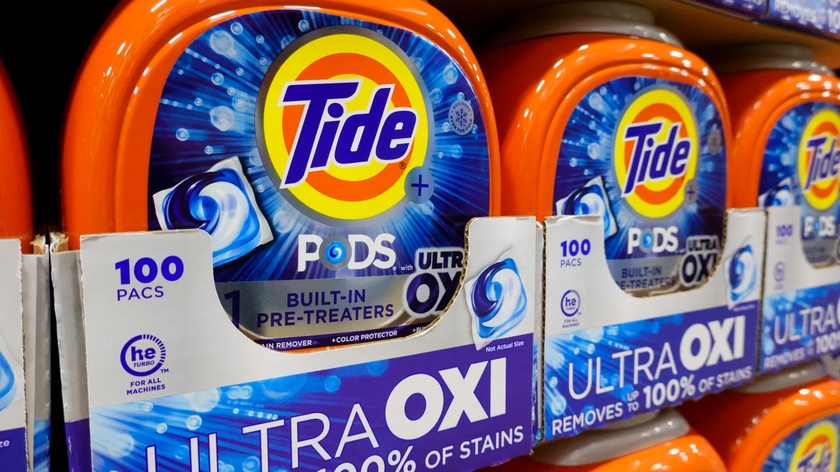
- Consumers are visibly trading down, and management said so directly. Shoppers have become increasingly price-sensitive, turning to store-brand alternatives or making everyday products like shampoo and laundry detergent last longer.
- Margins compressed for the full year despite the productivity program. Gross margin for the year fell 100 bps to 50.2% and operating margin fell 160 bps to 22.7%, and the company cited higher SG&A as a percentage of sales and a lower gross margin, which more than offset sales growth in the quarter specifically.
- FY2027 guidance itself came in below Street expectations, not just this quarter's results. P&G cut its growth outlook for fiscal 2027. The company expects total net sales to grow 1% to 3% — below the analyst consensus estimate of 2.7% growth — and core earnings per share between $6.89 and $7.11, with a midpoint slightly below the consensus estimate of $7.04.
- New cost headwinds are already baked into next year's guide. The company estimates a headwind of approximately $1 billion after-tax driven by higher raw materials, energy and transportation costs, and other charges, equating to a headwind of $0.56 per share.
Key Debates:
- Is this a genuine consumer trade-down problem, or a temporary trade/input-cost timing issue?
- Can the "superiority" premium-pricing strategy survive a value-conscious consumer environment?
- Is the new CEO/Chairman consolidation a governance concern or a natural continuity move?
- Is FY2027 guidance conservative sandbagging, or a realistic read of a genuinely tougher environment?
- Tariff exposure remains a moving, unresolved target.
- Is margin compression here to stay, or does the productivity program eventually catch up?
- Capital return sustainability at a lower earnings-growth rate.
Source: