SpaceX reported a clear Q2 beat in its first earnings release as a public company, with revenue exceeding consensus by ~13%, non-GAAP adjusted EBITDA beating expectations by 75% and the reported net loss narrowing substantially yoy. The results highlighted the growing contribution from Starlink, where profit is expanding faster than revenue. But that operating momentum is being offset by heavy investment in AI infrastructure and Starship, pushing the quarterly free cash flow deficit to roughly $16bn. The tension between stronger earnings and rising cash consumption helped send the shares down nearly 7% after hours, while the first post-IPO lockup expiration added another near-term concern by potentially increasing the amount of tradable stock.
Will SpaceX narrow its free cash flow deficit in Q3 versus $16bn Q2 2026?
Key Takeaways
- Revenue and non-GAAP adjusted EBITDA beat consensus by wide margins.
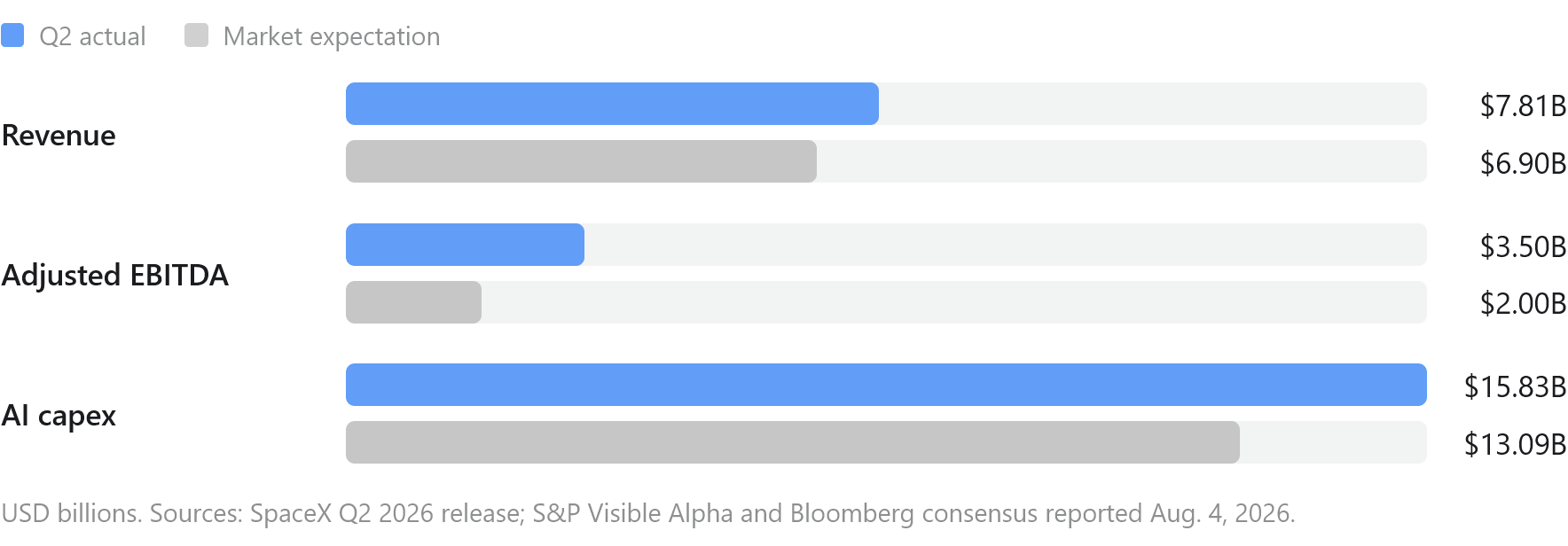
Revenue increased 92% yoy to $7.81bn, versus the $6.9bn Visible Alpha consensus. Non-GAAP adjusted EBITDA rose 191% to $3.5bn, compared with expectations of ~$2bn. The reported net loss narrowed to $541mn from ~$1bn a year earlier. - Growth was broad-based across SpaceX’s three segments.
Connectivity revenue increased 66% yoy to $4.29bn, supported by Starlink subscriber growth and enterprise and government demand. AI revenue rose 247% to $2.56bn, while Space revenue increased 29% to $962mn. Connectivity remained the largest contributor to group revenue. Meanwhile, starlink’s monthly average revenue per user (ARPU), fell from $86 to $66 yoy as more subscribers came from lower-priced international markets. - AI infrastructure spending was the main negative surprise.
AI capex reached ~$15.8bn, above the $13.09bn consensus and more than double the prior quarter’s level. The investment expanded AI compute capacity to 1.4 gigawatts, according to the company, but it also raises questions about utilization, financing requirements and the timing of returns. - The earnings beat did not remove the near-term share-supply overhang.
SpaceX’s IPO documents provide for staggered early lockup releases beginning after Q2 earnings. Eligible shares will not necessarily be sold, but the potential expansion of the public float may contribute to near-term volatility.
Key Debates
- How quickly can SpaceX convert its $14.1bn of cloud-services agreements into recognized revenue?
- Was Q2’s $15.8bn of AI capex a temporary buildout peak or the start of a higher spending run rate?
- How much actual selling will follow the first post-earnings lockup release?
- Can Starlink preserve operating leverage as international expansion and lower-priced plans continue to pressure ARPU?
Source:
- Company press release; https://ir.spacex.com/events/event-details/2026/SpaceX-Q2-2026-Earnings/default.aspx