I. Deal Overview
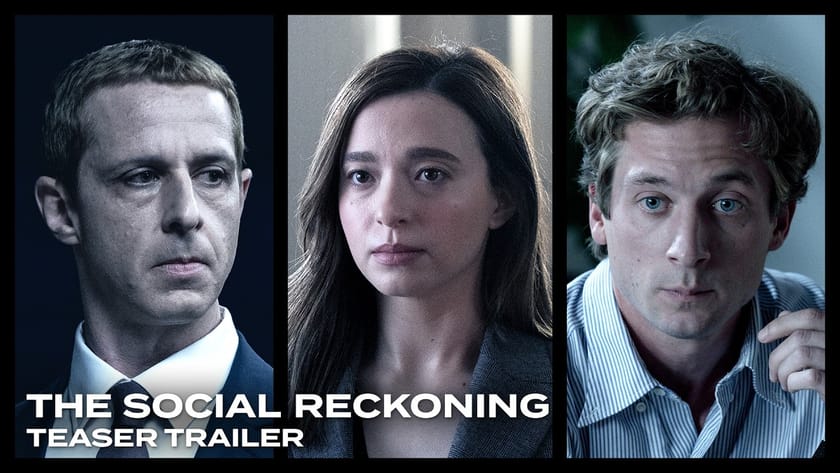
Aaron Sorkin has written and directed The Social Reckoning, described as a spiritual successor to The Social Network, telling the real story of Facebook whistleblower Frances Haugen. Jeremy Strong steps into the role of Mark Zuckerberg, replacing Jesse Eisenberg from the original film. The movie opens in North America on October 9. On Rotten Tomatoes, the page currently reads "Community Watch," with no score posted. The film has confirmed it will skip both the Venice and Toronto film festivals, heading straight to a theatrical release instead.
Where will The Social Reckoning's Tomatometer score land as of October 16?
II. Historical Baseline: A Gap Between Sorkin as Director and Sorkin as Writer
Sorkin has directed three films to date: Molly's Game (82%), The Trial of the Chicago 7 (89%), and Being the Ricardos (68%), averaging roughly 79.7% and never crossing 90%. The original Social Network scored 96% on Rotten Tomatoes' Tomatometer — but that film was directed by David Fincher, with Sorkin serving only as writer. By contrast, the three films Sorkin has directed himself average just 79.7%. With The Social Reckoning, Sorkin takes over as director as well, which introduces real resistance against matching the 96% ceiling set by the original.
III. Genre Factors: A Wide Historical Range for This Type of Film
The film belongs to a subgenre built on true investigative journalism and whistleblower stories. High-scoring precedents include Spotlight (96%, Best Picture winner) and The Post (strong critical reception). Lower and mid-tier precedents include She Said (well-reviewed but criticized for "dragging pacing") and The Whistleblower (mediocre reception, with several reviews landing around 2.5 out of 5). This suggests genre alone offers no guarantee of a high score — execution, specifically whether the narrative avoids feeling preachy and keeps a tight pace, is the deciding variable.
IV. Pre-Release Buzz: Mixed Signals
On the downside, the trailer drew widespread mockery online, compared to an "SNL sketch," with critics faulting its dialogue and overall tone as "deliberately serious" and lacking the lightness of the original. Some commentary has directly questioned whether the film's subject — algorithmic harm — still feels relevant, arguing that real-world chaos has only worsened since the story's 2021 setting, a substantive challenge to the film's timeliness rather than a marketing complaint.
On the media side, one named Gold Derby contributor ranked the film 19th on their personal list — near the bottom — expressing low expectations for the film.
On the upside, Jeremy Strong's performance has been widely praised as "eerily accurate," already generating awards buzz. The broader cast carries a strong track record — Mikey Madison, for instance, won the Best Actress Oscar for Anora. Separately, Variety's Oscar prediction column said the trailer "impressed many," singling out Jeremy Strong and Bill Burr for praise. Gold Derby has already placed the film on its earliest Best Picture prediction list. Kalshi's Best Picture prediction market has also included the film, though its current implied odds remain low.
The studio's own framing offers a cautious signal: officially calling it a "spiritual successor" rather than a "sequel" suggests the studio itself is managing expectations, avoiding a direct comparison to the original's 96%.
V. Other Factors
No confirmed production budget figure has been disclosed. At the same time, skipping Venice and Toronto is not without precedent — last year, Paul Thomas Anderson's One Battle After Another took the same route, bypassing all major festivals for a direct theatrical release, yet still went on to reach the Oscars and win Best Picture. This shows that skipping festivals doesn't necessarily signal weak reception; it's more often a strategic choice around release timing. No directly competing film in the same genre has been identified in the same release window so far, leaving a relatively open competitive landscape that isn't expected to be a major variable.