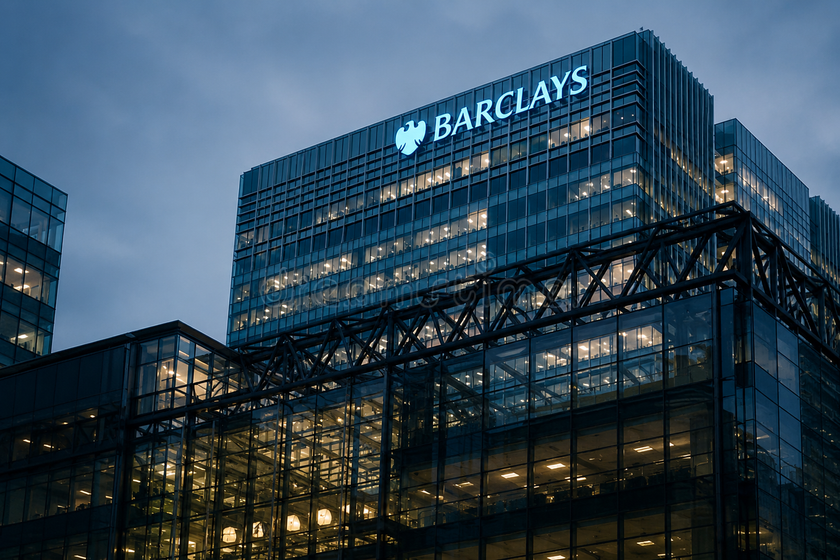
Barclays shares suffered their steepest decline in more than a year after its second-quarter results showed that growth in investment banking and US consumer banking had failed to match the pace set by larger American rivals.
The stock fell as much as 7.1% in London, its biggest one-day decline since April 2025. The fall came after Barclays shares had risen almost 47% in the year through Monday, leaving investors sensitive to any signs that expectations had moved ahead of performance.
Investment banking fees and underwriting revenue rose 32% year on year to £747 million, beating estimates. However, analysts noted that Barclays still lagged Wall Street banks during a strong period for equity issuance, listings and dealmaking.
Equities trading revenue increased 45% to £1.26 billion and exceeded expectations. Fixed-income trading revenue was broadly unchanged at £1.47 billion and came in below forecasts.
The results contrasted with record stock-trading revenue at Morgan Stanley, JPMorgan, Goldman Sachs, Bank of America and Citigroup, which benefited from market volatility and a rebound in US capital-markets activity.
At the same time, Barclays is moving to compensate senior bankers more like Wall Street firms. The bank recorded £1.3 billion of performance-related pay costs in the first half, almost 30% more than a year earlier, while salaries rose by less than 1%.
Chief Financial Officer Anna Cross said costs would increase by a further £100 million to £150 million in the second half as Barclays changes the pay structure for its most senior bankers, increasing variable compensation while reducing the importance of fixed salaries.
However, the latest results highlight the tension behind the strategy. Barclays is moving closer to Wall Street pay levels, but investors remain uncertain whether the bank can also deliver Wall Street-level revenue growth.
Revenue at Barclays’ US consumer bank rose 38% to £1.1 billion following the acquisition of Best Egg, but was about 5% below estimates. The bank nevertheless raised its full-year income guidance to about £31.5 billion from £31 billion.
Barclays also announced a fresh £1 billion share buyback and maintained its targets for 2026 and 2028, including a return on tangible equity of more than 14% and £15 billion of shareholder distributions between 2026 and 2028. The central question is now whether higher performance-linked pay can help close the gap with US rivals without placing additional pressure on costs.