Will election integrity messaging help or hurt Republicans in the 2026 midterms?
Election rules are moving from the background of U.S. politics to the center of the 2026 midterm campaign.
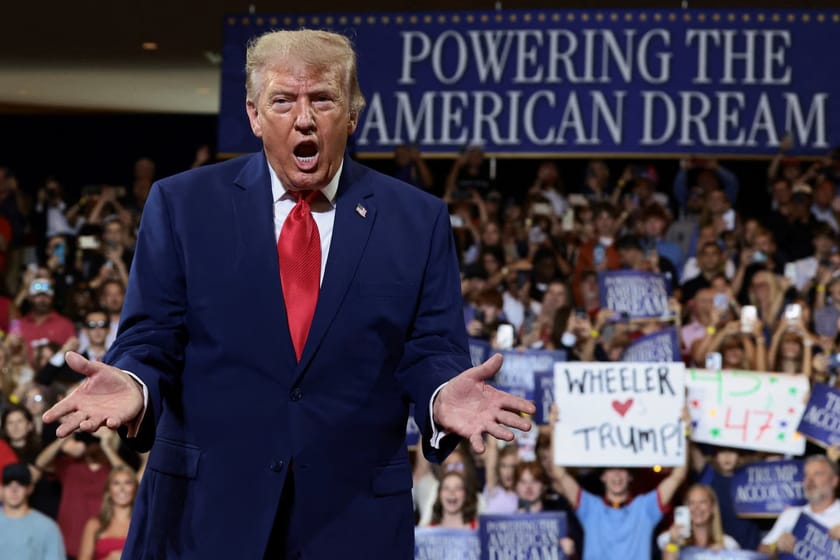
On July 22, House Republicans advanced tighter nationwide voting requirements sought by President Donald Trump. In a separate series of votes, they also approved a budget framework and legislation restricting congressional stock trading, with an election reform provision attached to the stock-trading bill. Republicans can now campaign on election security alongside government ethics and fiscal priorities, even though the bills face uncertain prospects in the Senate.
The same day, Trump used a campaign appearance in Georgia to press for stricter voting rules while continuing to question the state’s election system. Reuters reported that some Georgia Republicans worry this rhetoric could discourage the party’s own supporters from voting in a competitive Senate race.
Together, the two developments reveal a strategic tension: Republicans want election integrity to motivate voters, but repeated claims that elections are corrupt may also convince some supporters that participation is futile.
Election Rules Are Becoming a Campaign Product
The House votes show that election policy is no longer being treated as a narrow administrative issue.
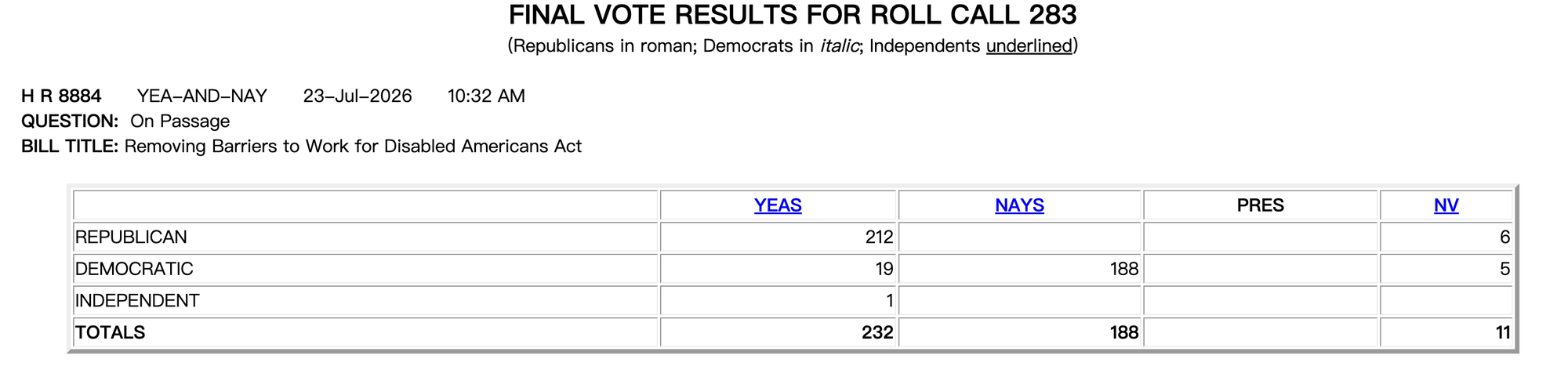
Republicans are connecting stricter voter-identification requirements to a broader midterm message about accountability, government reform, and delivering Trump’s agenda. Attaching an election provision to legislation limiting lawmakers’ stock trading is politically useful because restrictions on congressional trading can be presented as an effort to clean up Washington. The stock trading bill passed the House 232–198, although Reuters reported that attaching the election provision could make Senate passage more difficult.
The partisan disagreement is clear. Republicans argue that tougher identification rules would improve election security and public confidence. Democrats describe the proposed restrictions as voter suppression intended to advantage Republican candidates.
However, for midterm election, the immediate political effect may matter more than whether the legislation becomes law.
That creates a potentially effective sequence: Raise concern about election security, propose stricter rules, and campaign on taking action.
The difficulty begins when the message shifts from “the rules should be stronger” to “the election system itself cannot be trusted.”
Reform and Distrust Are Not the Same Message
Campaigning for changes to election law does not automatically discourage participation. A voter can believe that identification requirements should be stricter while still trusting that their ballot will be counted.
The turnout risk emerges when political messaging implies that fraud is so extensive that voting may not matter.
According to Reuters review that Trump had publicly questioned Georgia’s voting system at least nine times during 2026 by the time of his July 22 appearance. At the rally, some Republican voters expressed continued distrust in the process, while a former Republican leader in the Georgia Senate warned that Trump supporters may be less likely to participate when the president casts doubt on the validity of elections.
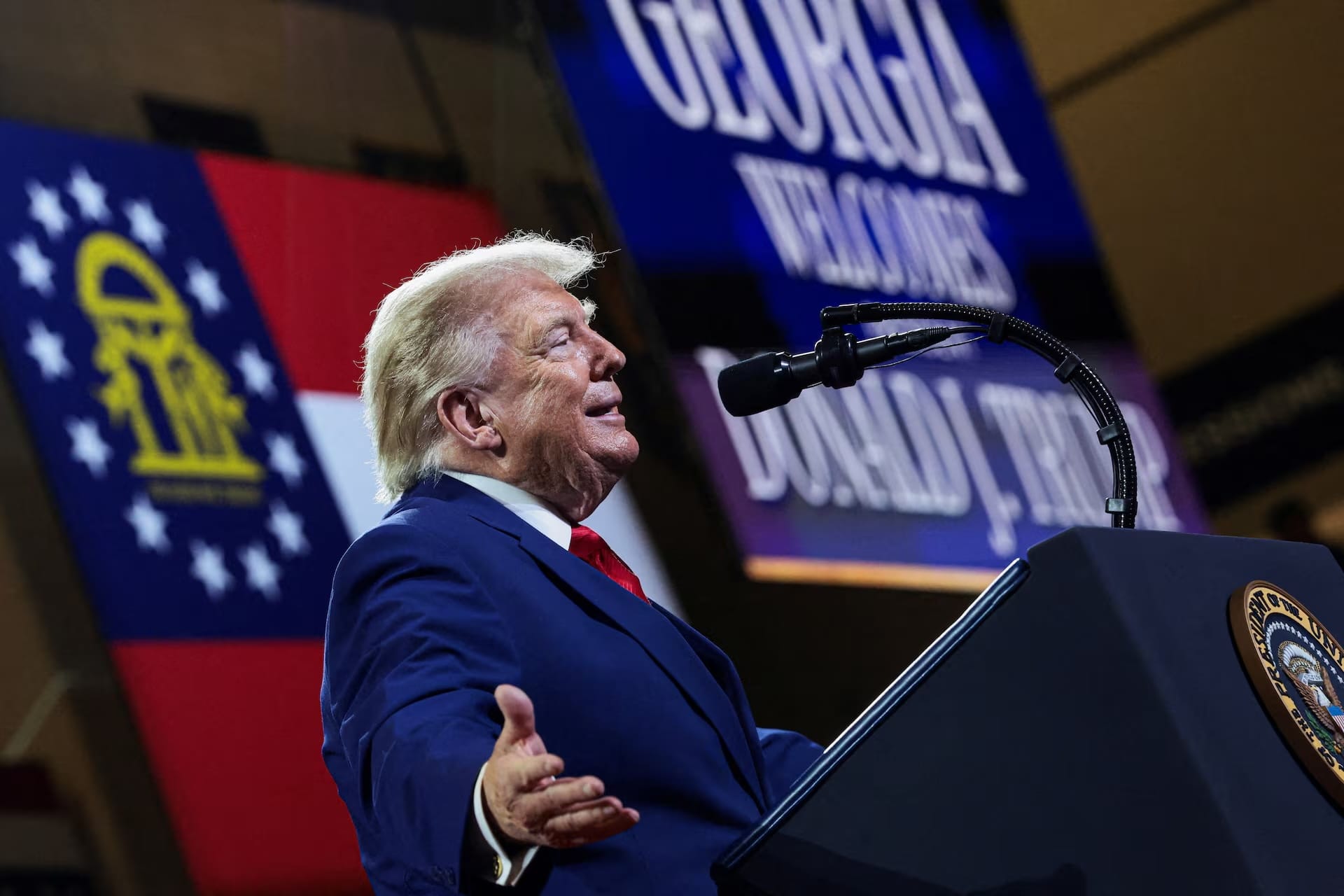
Georgia is a particularly useful test of this tension. The state already requires voter identification and adopted additional restrictions on ballot drop boxes and absentee voting after the 2020 election. Multiple recounts confirmed Joe Biden’s 2020 victory in the state, but distrust among parts of the Republican electorate has persisted.
This suggests that changing election rules may not, by itself, resolve the political problem. The debate is increasingly about confidence in institutions, not only the technical requirements for casting a ballot.
Distrust Can Mobilize— or Demobilize
Election fraud rhetoric does not necessarily produce a single response.
For some voters, warnings about fraud may increase urgency. They may see participation as necessary to overcome what they believe is an unfair system, protect the ballot, or elect candidates who promise stricter rules.
For others, the same message can weaken the basic incentive to vote. If the result is believed to be predetermined or easily manipulated, the perceived value of casting a ballot falls.
Academic evidence supports the first part of this mechanism more clearly than the final turnout conclusion. A nationwide survey experiment published in the Journal of Experimental Political Science found that exposure to unsupported voter-fraud claims reduced confidence in election integrity, with the effects concentrated among Republicans and Trump supporters. The study did not establish that lower confidence automatically produces lower turnout.
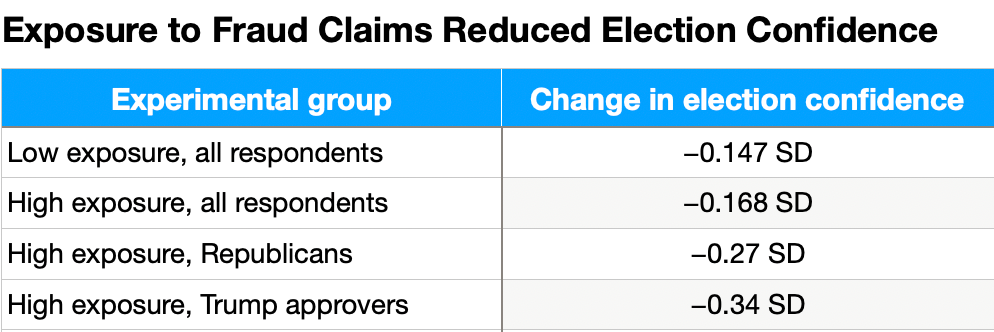
The results come from a nationwide survey experiment conducted after the 2018 midterms. They measure changes in confidence, not observed voter turnout in 2026.
That distinction is important. The available evidence supports describing Republican turnout as a risk to monitor, not a predetermined outcome.
Campaign organization, candidate quality, the economy, presidential approval, and the competitiveness of individual races may ultimately outweigh concerns about election legitimacy. Distrust could also increase turnout among voters who interpret the election as a chance to correct the system.
Georgia Could Reveal Which Effect Dominates
The Georgia Senate race offers an early test because it combines several conditions that make the question measurable:
- a competitive statewide contest;
- sustained attention from Trump;
- an electorate familiar with disputes over the 2020 result;
- and Republican voters who appear divided between distrust and determination to participate.
If Republican turnout in heavily pro-Trump counties falls below expectations while Democratic participation remains stable, concerns about demobilization will gain credibility. If Republican turnout remains strong, it would suggest that election-integrity rhetoric is functioning primarily as a mobilizing issue.
Therefore, early voting participation, absentee ballot use and county-level turnout will be more informative than national polling alone. Election forecasters should distinguish between support for Republican candidates and confidence that Republican voters will actually cast ballots.
The Larger Midterm Question
The Republican strategy currently contains two related but different messages.
- Election rules should be tightened. This message can support legislation, reinforce party identity and motivate voters who prioritize election security.
- The existing system is corrupt or incapable of producing legitimate results. This message carries a different political risk because it can weaken confidence in the very process through which Republican candidates need supporters to act.
Thus, the central question for 2026 is not simply whether election integrity will become a major campaign issue. It already has.
The more consequential question is whether Republicans can turn distrust into demand for reform without allowing that distrust to undermine participation. Georgia may provide one of the clearest answers before the rest of the country votes.
Source:
- US House advances Trump budget outline, election voting restrictions, July 22, 2026 https://www.reuters.com/legal/government/us-house-advances-trump-budget-outline-election-voting-restrictions-2026-07-22/
- Trump returns to Georgia with election claims, worrying some Republicans, July 22, 2026 https://www.reuters.com/world/us/trump-campaign-georgia-republicans-fear-election-claims-could-hurt-turnout-2026-07-22/
- The Effects of Unsubstantiated Claims of Voter Fraud on Confidence in Elections, June 28, 2021 https://www.cambridge.org/core/journals/journal-of-experimental-political-science/article/effects-of-unsubstantiated-claims-of-voter-fraud-on-confidence-in-elections/9B4CE6DF2F573955071948B9F649DF7A