TL;DR
- Hapag-Lloyd is revising its $4.2bn cash acquisition of ZIM to address Israeli national-security concerns.
- The revised structure would cut the foreign ownership threshold requiring government approval from 24% to 10%, while strategic assets would be carved out into a locally controlled ZIM Israel.
- The deal now hinges less on valuation than on whether Israel retains sufficient control over critical shipping capacity and sensitive cargo.
Will Hapag-Lloyd complete its acquisition of ZIM by the end of 2026?
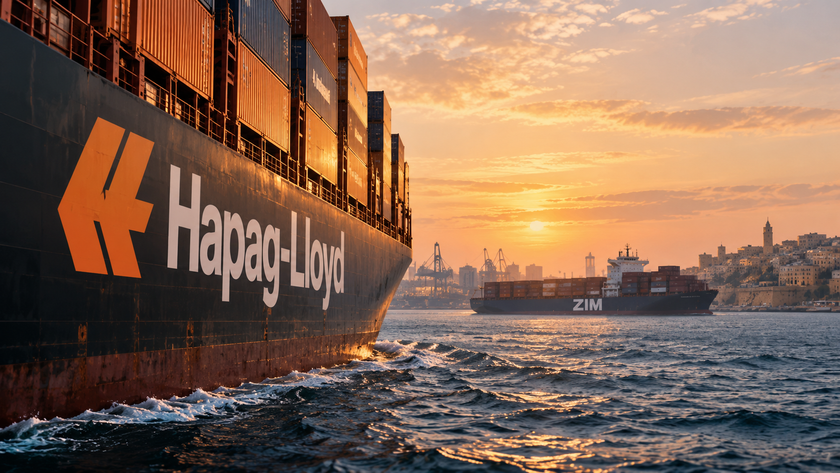
Hapag-Lloyd is revising the structure of its proposed $4.2 billion cash acquisition of ZIM Integrated Shipping Services, as the German carrier seeks to overcome Israeli concerns over national security and control of strategic shipping assets.
Following several rounds of talks with Israeli officials, Hapag-Lloyd and Israeli private equity firm FIMI are preparing an amended proposal designed to preserve Israel’s maritime independence and access to key trade routes, including connections with Asia.
A central concession involves Israel’s “golden share” in ZIM. Under the current arrangement, a foreign investor can hold up to 24% of the carrier without prior government approval. Hapag-Lloyd has proposed reducing that threshold to 10%, giving the Israeli government tighter oversight over future foreign ownership.
The deal would also carve out a strategically important part of ZIM’s operations. FIMI plans to acquire a business containing 16 vessels through a new company, ZIM Israel, which would maintain Israel’s direct maritime links with global markets. FIMI has also committed not to list ZIM Israel outside the Israeli stock market.
The acquisition would further strengthen Hapag-Lloyd’s position in the global container shipping market. According to the latest Alphaliner data, Hapag-Lloyd currently ranks fifth globally, operating 287 containerships with around 2.4mn TEU of capacity, alongside an orderbook of 64 vessels totaling roughly 499,000 TEU.
Hapag-Lloyd still aims to complete the acquisition by the end of 2026, but the decisive question is now whether it can integrate ZIM commercially while leaving Israel with effective control over the shipping assets it considers strategic.
Read more: : Inside Hapag-Lloyd’s latest results
 Jiayi ZHANG
Source: