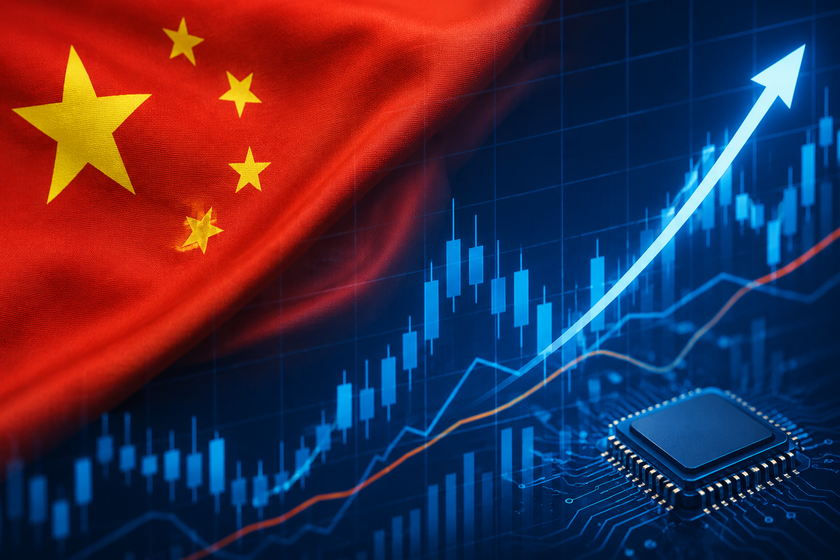
China is stepping up efforts to stabilize its stock market, mobilizing a range of state-linked institutions to stem a tech-driven selloff.
The latest sign of the push came on Monday, when the ChinaAMC STAR 50 ETF — the largest fund tracking the chip-heavy index — attracted a record 13.8 billion yuan ($2 billion) of inflows. While the source of the buying wasn’t immediately clear, the scale of the inflows suggested state-backed support was being directed toward tech shares, where the selloff has been most intense.
This would mark a shift from earlier stabilization efforts that focused on blue chips. While turnover also jumped in other exchange-traded funds favored by China’s so-called national team, the Huatai-PineBridge CSI 300 ETF — a preferred vehicle for state buying — attracted 12.6 billion yuan of inflows on Monday, trailing the STAR 50 ETF.
Support is coming from China’s largest insurers as well, with at least five pledging to boost investments. China Life Insurance Co. said its unit bought more than 10 billion yuan worth of stocks and funds, and vowed to increase holdings of companies in new growth sectors. The People’s Insurance Company (Group) of China and Ping An Insurance Group Co. made similar commitments.
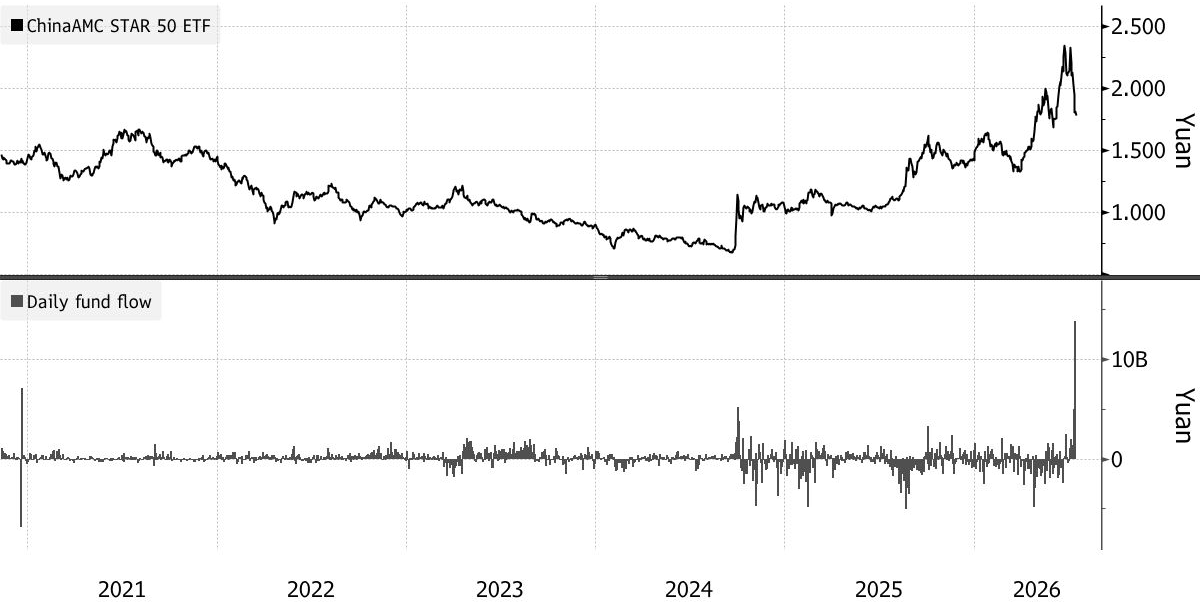
Together, the moves suggest authorities are deploying a broader arsenal to stabilize AI and semiconductor shares. Chinese equities have been swept up in a broad-based selloff as turbulence in memory-chip stocks spilled over into the wider market. Investors are also bracing for the mega listing of CXMT Corp. in the coming days. The STAR 50 Index has slumped 21% from its peak in June.
Will CXMT’s mega listing boost the index or pressure on the index (on China’s chip sector)?
By directing state money toward the STAR 50, policymakers are seeking to prevent the tech selloff from snowballing into a broader market confidence crisis, at a time when the economy is showing signs of stumbling.
Other Backers
State-backed asset managers are also signaling support. Bosera Fund Management said it would invest 50 million yuan of proprietary funds into equity products it manages. Such purchases are typically made during periods of acute market stress.
In a rare move, brokerage GF Securities — which has historical ties to provincial governments — said it would raise its margin financing quota by 90 billion yuan, potentially giving investors greater access to liquidity just as leverage is being unwound. Chinese traders cut leveraged positions at the fastest pace since the 2015-16 market crash on Friday.
Regulators have met with investors in a bid to revive confidence. The China Securities Regulatory Commission gathered their views on promoting the stable and healthy development of capital markets, and vowed efforts to prevent risks, improve investor protection and enhance returns.