Brent crude crossed $100 a barrel on September 9 for the first time in six weeks.
Naturally, attention has turned back to the Strait of Hormuz. How many barrels are missing? When will flows normalize? And will Washington release more oil from the Strategic Petroleum Reserve?
All reasonable questions, but I think they may be focused on the wrong barrel.
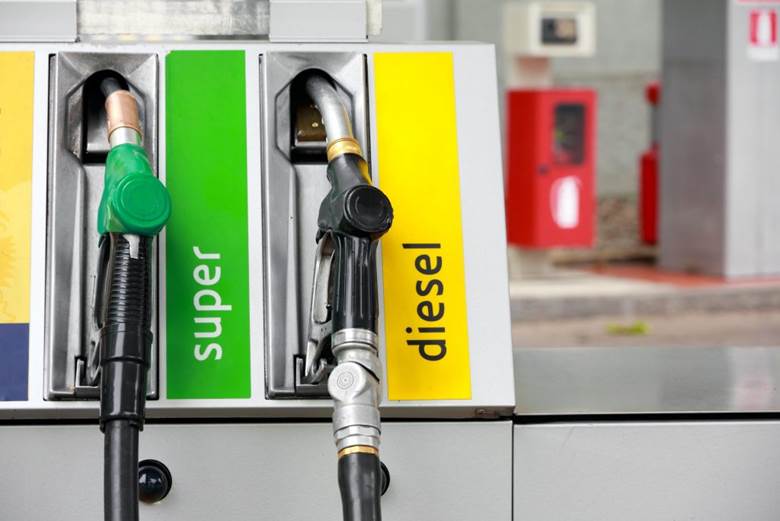
U.S. diesel prices had already hit a record $5.82 a gallon on September 3. Distillate inventories, mostly diesel and heating oil, fell to their lowest August level since 1982. The East Coast held just 19.3 million barrels, the lowest in data going back to 1990.
And refiners were already running close to flat out.
This is what makes the current shock different. America is not merely facing expensive crude oil. Inventories of the finished fuels needed to move goods, harvest crops and heat buildings are exceptionally thin.
The Strategic Petroleum Reserve can add crude to the market, but it cannot magically turn those barrels into diesel.
So, what happens if oil prices come down but the cost of moving everything stays high?
Here, “bigger” does not mean diesel necessarily contributes more directly to consumer inflation than gasoline. The risk is breadth and persistence. Diesel flows through freight, farming, construction, heating and wholesale distribution, so its effects can arrive later and linger after crude and gasoline prices retreat.
Which poses the greater U.S. inflation risk through the end of 2026?
The wrong barrel
The United States built its emergency oil system around the assumption that crude would be the scarce asset. If you lose enough oil supply, then refiners have nothing to process.
But today’s problem sits further down the chain. Releasing oil from the Strategic Petroleum Reserve can lower input costs and reassure the market that more supply is available. But it cannot create spare refining capacity, change product yields overnight or deliver diesel to a market running short.
Put simply, crude and diesel are not interchangeable when the bottleneck sits at the refinery.
The Strategic Petroleum Reserve fell to 285.4 million barrels last week, its lowest level since November 1982. Washington therefore has fewer emergency barrels than it once did. And even if it releases them, they may not directly address the product the economy is missing.
The federal government does have a refined-fuel reserve, but the Northeast Home Heating Oil Reserve was designed to hold just one million barrels of ultra-low-sulfur diesel, and its closure was proposed in the 2026 budget.
Against a national market, one million barrels is hardly a war chest.
A bipartisan bill introduced this week appears to acknowledge the problem. The proposed 21st Century Strategic Petroleum Reserve Act would require a review of whether the reserve should include more refined products and whether its Gulf Coast concentration still makes sense.
The current shock is showing that America can produce record amounts of crude and still find itself short of diesel. It all depends on where the real constraint sits: production, refining, inventories or distribution.
Right now, the weak link is no longer necessarily the oil well.
Inflation can outlive the oil rally
The Energy Information Administration’s September outlook makes this more than a short-term headache. The agency expects U.S. distillate inventories to fall below 100 million barrels this month and remain below their five-year minimum through much of 2027.
Meanwhile, tight global supplies are pulling American diesel overseas. Exports make perfect commercial sense when foreign buyers are willing to pay more, but they also make it harder to rebuild domestic inventories.
To me, the most interesting part of the EIA outlook is not its oil forecast. It’s the growing gap between oil and diesel: the agency expects Brent to average $74 a barrel in 2027 as Middle Eastern production recovers and global crude inventories rebuild. Yet it raised its 2027 diesel-price forecast from $4.07 to $4.40 a gallon.
Oil down. Diesel still expensive.
This is the inflation risk that could easily fly under the radar. A ceasefire or fuller reopening of Hormuz may strip the geopolitical premium out of crude. Gasoline prices could follow and headline energy inflation might then begin to look much better.
 Ana Frincu
But trucking companies, farmers, construction businesses and wholesalers could still be paying a scarcity premium for diesel.
Consumers see gasoline prices in real time. Diesel filters through freight surcharges, food prices, construction costs and supplier contracts, often with a delay.
This means inflation could outlive the rally in crude. Reopening Hormuz would clearly help, but it would not instantly recover barrels that were delayed, rerouted or pulled from already-thin inventories.
Even when those crude flows normalize, they must still be converted into the products the economy is actually missing.
The counter case: Could high prices fix the shortage?
Possibly.
Record refining margins give operators every reason to squeeze out as much diesel as they can. U.S. refineries were running at roughly 98% of capacity at the end of August, so the supply response is already underway.
Seasonal maintenance will eventually pass, and weaker freight activity could take some heat out of demand. Restored Middle Eastern exports and fewer attacks on Russian refineries would also loosen the global market.
The EIA consequently expects the distillate crack spread, or the margin from turning crude into diesel and related fuels, to fall in 2027. If inventories rebuild quickly, today’s diesel premium may prove cyclical rather than structural.
The case is clear, but 98% refinery utilization is not entirely reassuring. It just shows that refiners are responding to high prices. But at the same time, it also shows that they have little room to respond further.
High margins can encourage refiners to favor diesel over other products. They cannot build a new refinery, expand storage or remove distribution bottlenecks overnight.
And diesel is a global market. American buyers are not competing only with one another, they are also bidding against overseas markets that have lost Middle Eastern and Russian supply.
The cure for high prices may still be high prices. But it could take a while to work.
What you should be watching now
Brent above $100 is still important, but it is simply not enough to tell us when the energy shock is over.
The indicators that now matter are distillate inventories, refining margins and the gap between crude and diesel prices.
The last one matters most. If Brent retreats while diesel remains expensive, the market will be telling us that crude supply was only part of the problem.
For now, I think the inflation risk is moving downstream.
America built its emergency system to store crude, but trucks do not run on crude and neither do tractors, construction equipment or heating systems.
Will the EIA’s national average retail diesel price fall below $4.50 per gallon by March 31, 2027?
Sources
EIA: September 2026 Short-Term Energy Outlook
MRT: Bipartisan legislation introduced to modernize SPR
Reuters: Oil pushes past $100 as wave of US-Iran attacks exposes dwindling safety net
Reuters: Oil stocks in US Strategic Petroleum Reserve fall by 1.2 million barrels to lowest level since 1982
Reuters: Trump budget proposes closing Northeast heating oil reserve
Reuters: US diesel prices hit record high as conflicts intensify supply crunch
Reuters: US EIA hikes oil price forecasts as Iran war drains global stockpile