TL; DR
- Q2 beat expectations: Product revenue growth accelerated to 37% yoy, while non-GAAP EPS exceeded consensus.
- The outlook strengthened: Most of the FY27 revenue raise reflects higher H2 consumption expectations, beyond Q2’s beat.
- AI is supporting both new and existing workloads: Adoption is expanding, though its impact on sustained customer spending remains unquantified.
- Margins moved in different directions: Expense discipline supported a higher non-GAAP OM outlook, while a growing AI mix weighed on product GM.
Will Snowflake’s Q3 product revenue exceed $1.6bn?
| Metric | Q2 FY27 | Q1 FY27 | Q2 FY26 | YoY | QoQ |
|---|---|---|---|---|---|
| Revenue ($mn) | 1,546.8 | 1,391.0 | 1,145.0 | +35.1% | +11.2% |
| Product gross margin¹ | 74.7% | 75.1% | 76.4% | −177bps | −47bps |
| Operating income¹ ($mn) | 237.0 | 165.8 | 127.6 | +85.8% | +43.0% |
| Operating margin¹ | 15.3% | 11.9% | 11.1% | +418bps | +340bps |
| Diluted EPS¹ | $0.62 | $0.39 | $0.35 | +77.1% | +59.0% |
| Diluted EPS — GAAP | $(0.55) | $(0.86) | $(0.89) | +$0.34 | +$0.31 |
| Operating cash flow ($mn) | 91.4 | 243.2 | 74.9 | +22.0% | −62.4% |
| Free cash flow¹ ($mn) | 83.8 | 232.8 | 58.2 | +43.9% | −64.0% |
| Adjusted FCF¹ ($mn) | 92.3 | 265.5 | 67.8 | +36.2% | −65.2% |
| Revenue ($mn) | Q2 FY27 | Q1 FY27 | Q2 FY26 | YoY | QoQ |
|---|---|---|---|---|---|
| Product | 1,491.9 | 1,334.3 | 1,090.5 | +36.8% | +11.8% |
| Services and other | 54.9 | 56.6 | 54.5 | +0.8% | −3.0% |
| Total | 1,546.8 | 1,391.0 | 1,145.0 | +35.1% | +11.2% |
Key Takeaways
- The outlook points to a stronger H2
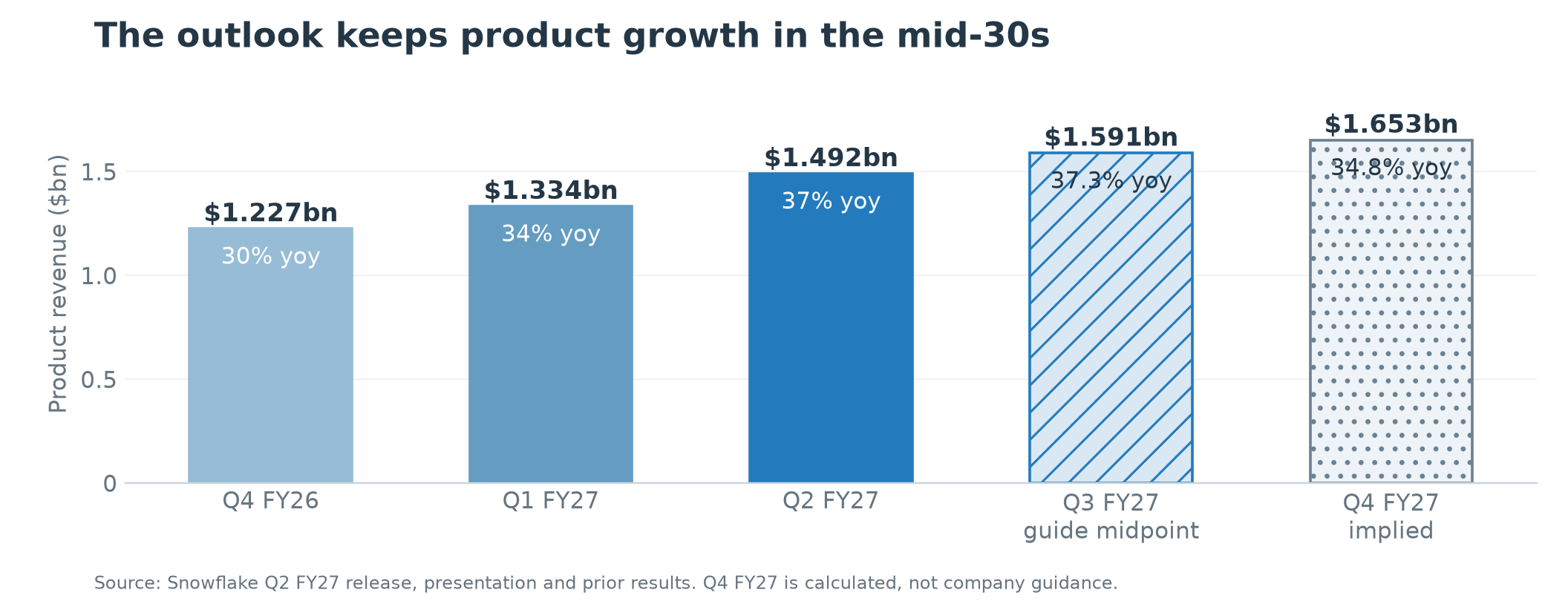
Beyond the Q2 beat. Most of the FY27 revenue increase reflects higher expectations for the remaining two quarters. After accounting for Q2’s outperformance against the prior guide, roughly $156mn of the annual raise remains for H2.
The outlook still implies some growth moderation in Q4. The next earnings report will show whether consumption supports another upward revision.
- AI is bringing in new work and accelerating existing projects
Management attributed roughly half of the growth acceleration to AI products and half to the core platform. There are two routes to revenue:
- New workloads: CoCo and CoWork help customers build and run AI workflows using their enterprise data.
- Faster deployment: Coding and migration tools shorten the time between starting a project and consuming Snowflake resources.
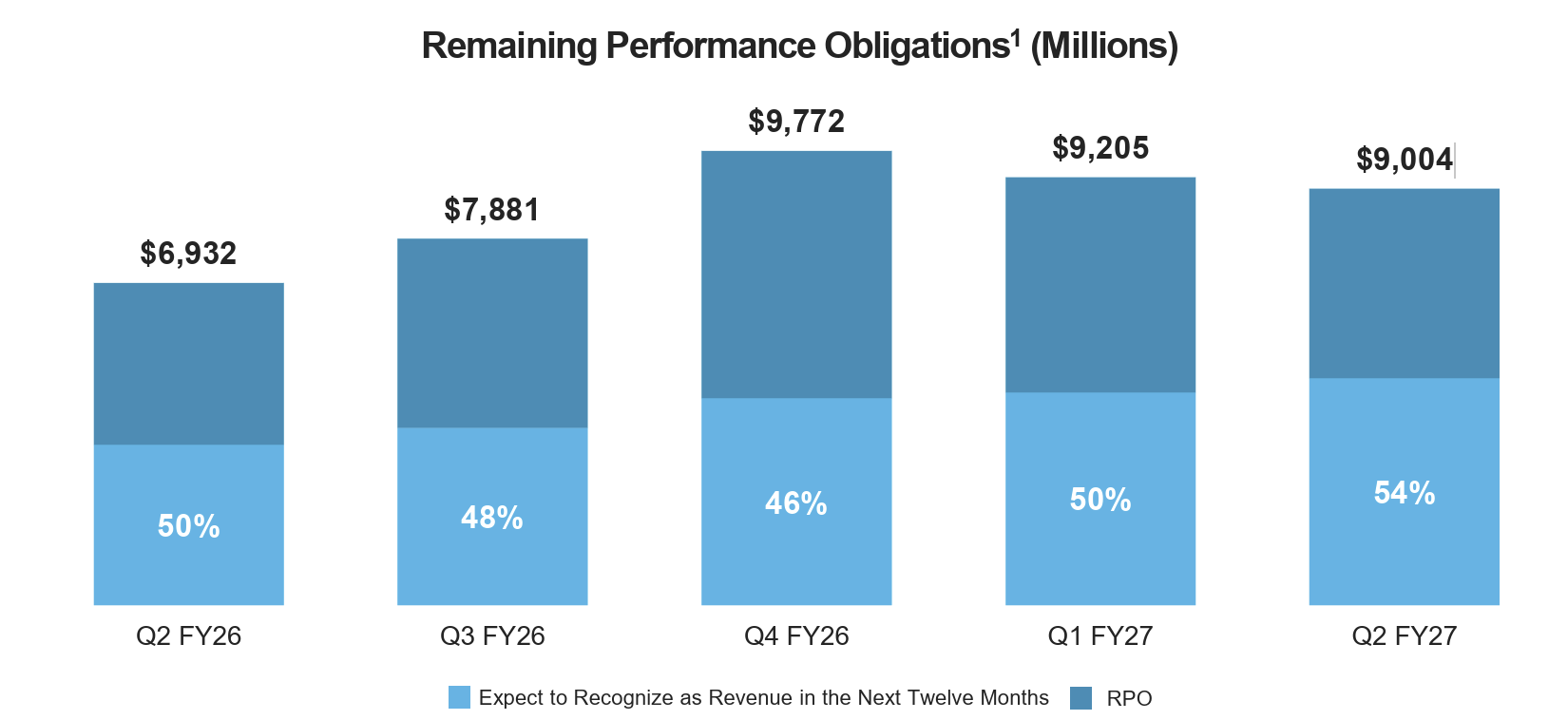
For a consumption-based business, getting projects into production sooner matters. The open question is how much of that spending persists once the initial migration is complete. Snowflake has not disclosed AI revenue separately.
- Adoption is expanding; spending depth is less clear
Customer reach. Growth in new customers and large accounts supports management’s view that demand extends beyond a small group of AI-heavy users.
Usage depth. CoCo and CoWork adoption is rising, but account counts do not show how much customers spend. NRR was unchanged qoq, and management has not quantified the spending uplift from AI adoption against comparable non-users.
The next evidence to watch is whether broader adoption leads to larger, sustained workloads and stronger customer expansion.
- Expense discipline is offsetting AI’s higher costs
Gross margin: A larger AI revenue mix is raising delivery costs, prompting a lower FY27 non-GAAP product GM outlook.
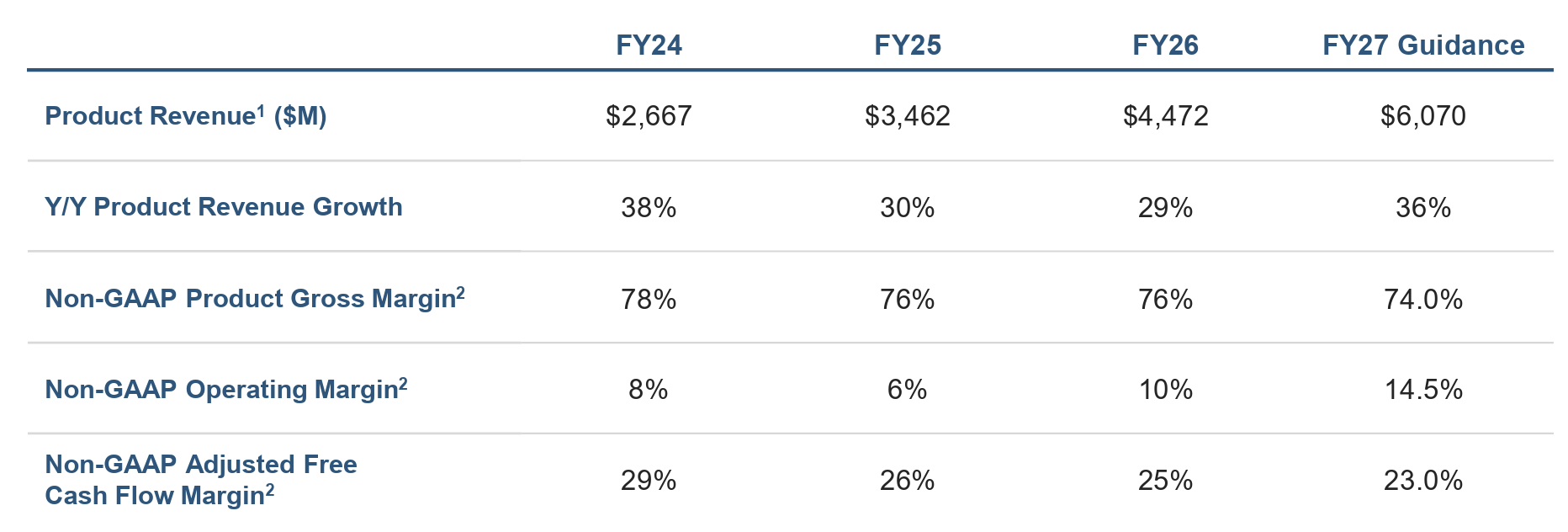
Operating margin. Slower hiring and revenue growth are allowing expenses to fall as a share of sales. Management therefore raised its non-GAAP OM outlook despite the GM pressure.
Profit and cash. GAAP losses remain, with SBC-related charges accounting for most of the adjustment to non-GAAP profit. Adjusted FCF improved yoy but declined qoq. Cash generation was heavily weighted to Q4 last year; achieving the unchanged FY27 FCF margin target again requires a stronger H2.
Key Debates
• Will faster AI-driven consumption persist through Q4, or does it partly reflect migrations completed earlier?
• Can Snowflake sustain operating-margin expansion as lower-margin AI workloads become a larger share of revenue?
• Will Q4 product revenue guidance signal continued growth acceleration or moderation toward the implied ~35% rate?
Source: