Premier info portal for prediction markets. The start point of information market.
Results Deep Dive - The P&L Inversion: What Big Tech Earnings Reveal About the "Inference Tax" and the "CapEx Wall"
Analysis
HyperscalersLLMsAI InfrastructureSilicon BakeryEarnings & OperationsIndustry Pulse Semi Analysis

Results Deep Dive - The P&L Inversion: What Big Tech Earnings Reveal About the "Inference Tax" and the "CapEx Wall"

Economics & FinanceTech

As the dust settles on this week’s major Big Tech earnings releases, the financial media remains predictably fixated on top-line revenue beats and cloud growth percentages. However, for institutional investors and universal asset owners, the most critical data points are no longer found in the revenue headlines, but buried deep within the cash flow statements. Silicon Valley is definitively exiting the high-margin, zero-marginal-cost era of traditional software. Driven by the relentless computational demands of artificial intelligence, Big Tech has rapidly mutated into a capital-intensive heavy industry.

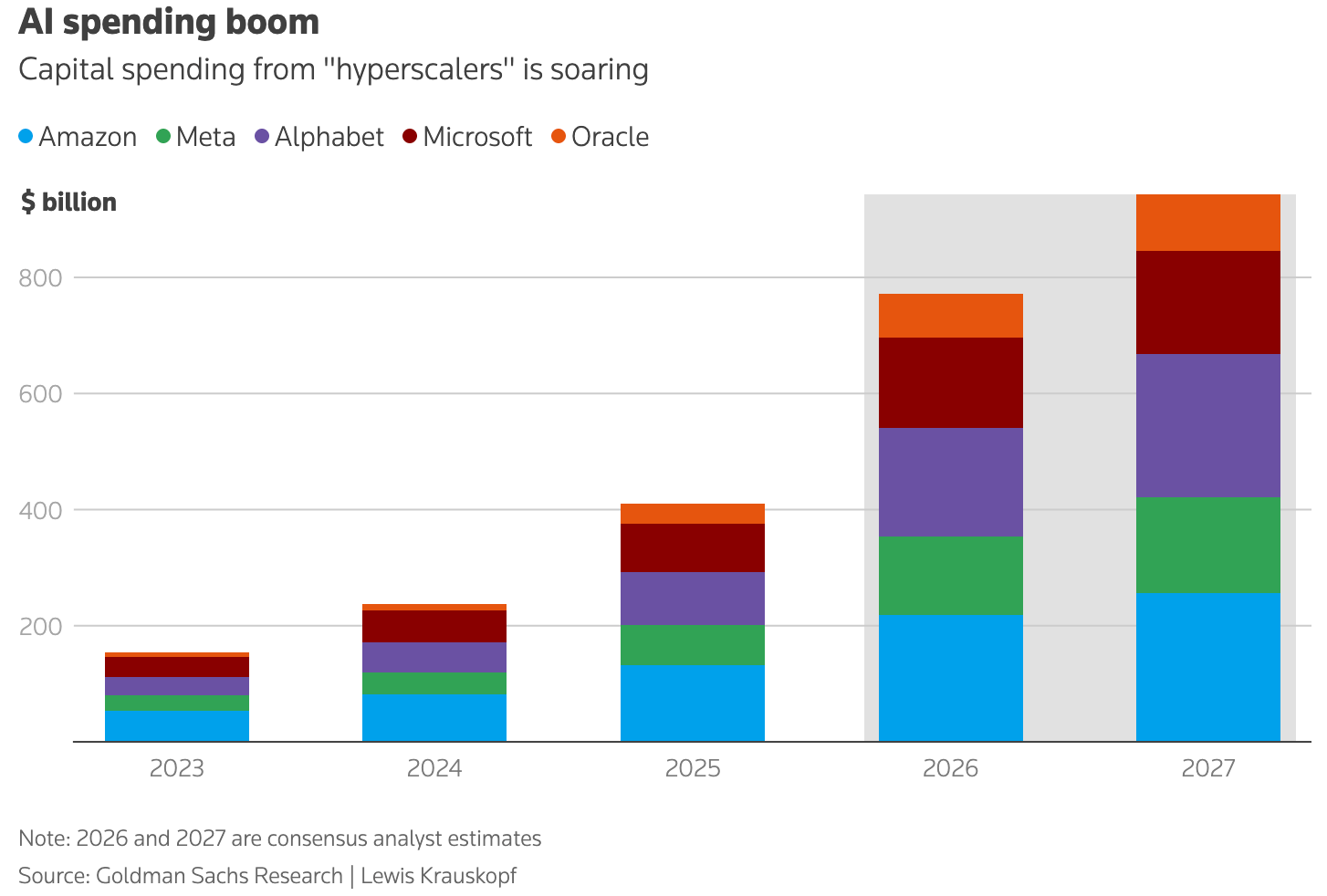
The sheer scale of this transition is historically unprecedented. Over the past 36 months, the global financial system has funneled an estimated $1 trillion into physical AI infrastructure. Yet, as leadership at Norges Bank Investment Management (NBIM) recently highlighted, a profound structural asymmetry persists: while an estimated $1.4 trillion is required for global hardware buildouts, direct and verifiable AI revenues struggle to cross a mere $13 billion threshold. With macroeconomic projections from Morgan Stanley anticipating the combined capital expenditures (CapEx) for the five largest US tech giants to hit $1.16 trillion by 2027, the thematic hype cycle is officially over.

We have entered the era of the "CapEx Wall," where the fundamental measure of corporate survival is no longer algorithmic promise, but strict balance sheet resilience and the ability to defend Free Cash Flow.

The Microsoft & Alphabet Proxies: Quantifying the Capital Burden

The sheer magnitude of this infrastructure burden is already visible in the latest SEC filings. Alphabet’s trajectory—with its CapEx surging 74% (from $52.5 billion to $91.4 billion between 2024 and 2025)—was an early warning. Microsoft’s recent Q4 2026 results confirm this permanent escalation in capital intensity, with quarterly capital expenditures reaching an unprecedented $35.80 billion.

AI, a Capital-Intensive Industry Hit by the Inference Tax

The historical paradigm of the tech industry—distributing software at zero marginal cost—is obsolete. Generative AI now resembles a heavy industry, structurally penalized by an “inference tax.” While Microsoft CFO Amy Hood highlighted “a strong quarter to close out the fiscal year, underscored by $59.3 billion in Microsoft Cloud revenue,” the reality of the balance sheet shows profitability under pressure. The Intelligent Cloud division’s operating margin peaked at 40.6% (Q4), and the company’s regulatory filings confirm a squeeze on gross margin directly attributable to AI infrastructure costs.

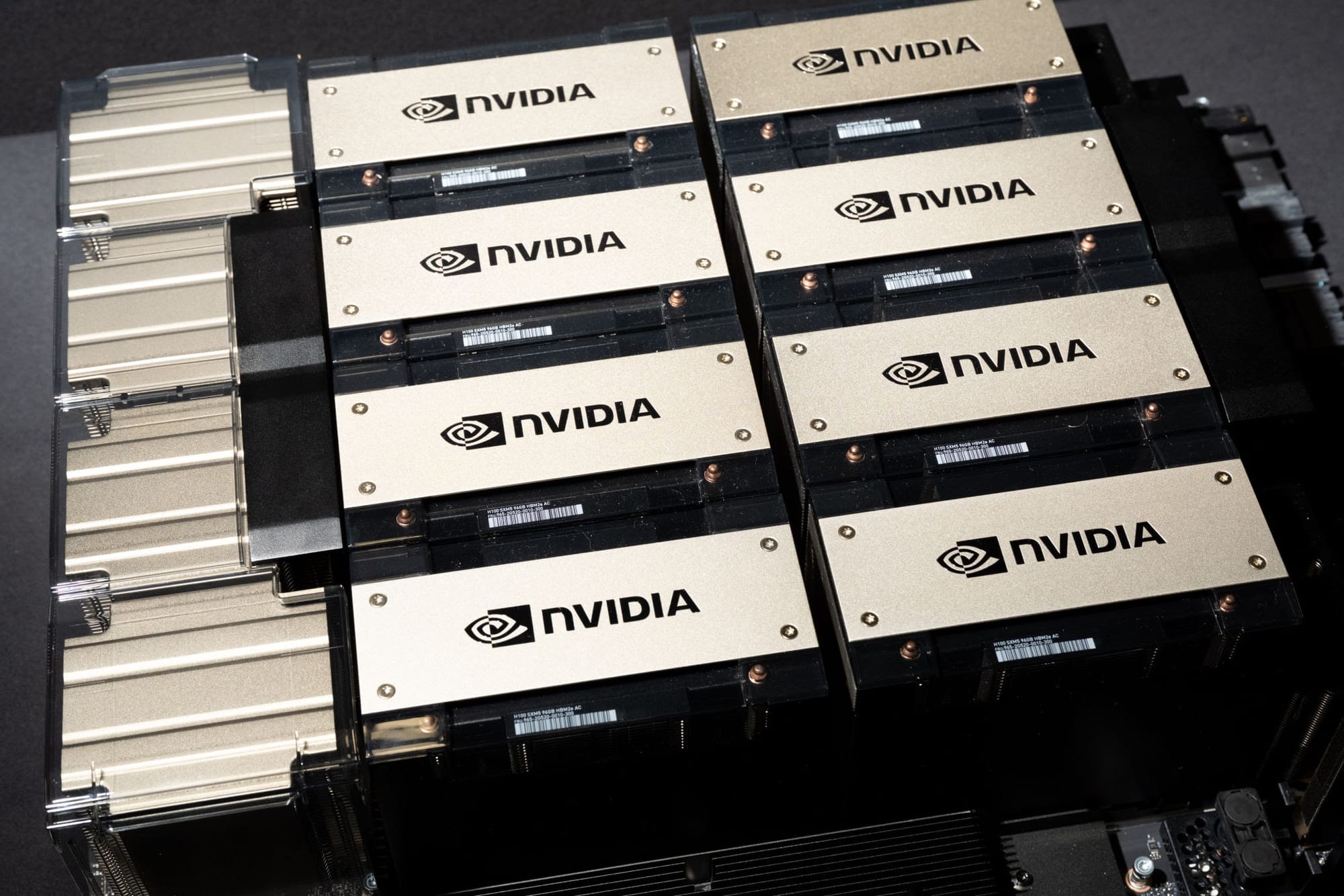
This massive cash burn is exacerbated by a trap of accelerated depreciation. State-of-the-art GPUs (Nvidia H100 or Blackwell architectures) become obsolete within 3 to 4 years. This ultra-short life cycle forces perpetual reinvestment in hardware, which mechanically crushes free cash flow generation, transforming a competitive advantage into a permanent exercise in capital destruction.

The FinOps Pivot and Margin Cannibalization

To finance this unyielding infrastructure burden without defaulting on profitability, tech companies are aggressively cannibalizing their internal operating models. Historical Sales & Marketing (S&M) budgets are being drastically cut from 47% to 41% of revenue (KeyBanc), freeing up capital to prioritize R&D, which now exceeds 22% of revenue. This reallocation automatically extends the CAC payback period to 18 months, while 55% of IT decision-makers admit that their current infrastructure cannot support AI without significantly eroding their margins (Forrester).

Meta Platforms illustrates this dynamic with unprecedented accounting severity. Lacking a B2B cloud division to offset the hardware burden, the company relies exclusively on advertising, leaving it fully exposed to infrastructure risk. The second-quarter 2026 results confirm this “CapEx Wall”: capital expenditures (CapEx) reached $31.08 billion, forcing management to tighten its colossal annual guidance range to between $130 billion and $145 billion. This need to absorb the surge in computing costs led to a 55% year-over-year spike in operating expenses (OpEx), sharply reducing the operating margin from 43% to 31%. The sacrifice of short-term profitability is reflected in a crushing decline in free cash flow, which has been squeezed down to just $784 million. Although Mark Zuckerberg maintains that AI “is accelerating our core business today,” the financial statements reveal a more stark reality: the race toward hyper-infrastructure requires the temporary depletion of available cash.

As the "CapEx Wall" forces a FinOps pivot, what is the most severe P&L risk for enterprise software over the next 18 months?

Aggressive OpEx cannibalization (slashing S&M and headcount to fund compute)
10.58%
Further upward revisions of annual CapEx guidance despite market backlash
40.13%
Passing the "inference tax" directly to enterprise customers via price hikes
19.03%
Scaling back non-core R&D to protect short-term Free Cash Flow
30.26%
2,118 Polls

Macro-Financial Displacement and the Stock Market Divide

The price action observed during after-hours trading on July 29, 2026, confirms a clinical reassessment of the risk associated with artificial intelligence infrastructure. The markets are no longer penalizing revenue stagnation, but rather the destruction of free cash flow (FCF) attributable to the “CapEx Wall.” The -6.41% correction inflicted on Meta Platforms—which fell to $548.09 despite solid revenue—illustrates this perfectly: investors are penalizing the accumulation of capital expenditures that lack immediate profitability.

Conversely, the 8.97% jump in Microsoft’s stock (to $425.56) demonstrates a strict market requirement: depreciation costs must be offset by tangible monetization. Microsoft was rewarded for proving its Operating Alpha—the ability to generate cash despite the hardware drag. As highlighted by the financial press’s narrative illustrating this “great AI divide,” balance sheet resilience now takes precedence over the promise of expansion.

Beyond equity markets, this asymmetry is triggering a severe macro-financial “crowding-out” phenomenon in global credit. According to BIS data, nearly 60% of global FX derivatives are now concentrated among the ten largest banks to finance Big Tech’s data centers, automatically drying up credit conditions for traditional SMEs.

Conclusion: The Valuation Doghouse and the New Institutional Mandate

The cycle of abundant liquidity fueling innovation has come to an end. The markets are conducting a ruthless binary culling: 73% of publicly traded traditional SaaS companies are now relegated to a "Valuation Doghouse," trading at a median multiple of just 3.3x their future revenue (Meritech). Only the elite—those demonstrating true Operating Alpha by mastering the “Rule of 40”—are capturing liquidity.

Ultimately, this week’s Big Tech earnings confirm a definitive regime change: AI is no longer a speculative vector for exponential hyper-growth, but a highly capital-intensive, defensive infrastructure. For institutional allocators, the mandate is clear. Capital allocation must be rigidly anchored to organizations capable of navigating the CapEx wall, enforcing FinOps discipline, and protecting Free Cash Flow generation against the crushing weight of accelerated hardware depreciation.
As the market enforces a ruthless binary culling across the tech sector, what is the ultimate survival criterion for institutional portfolios?

Uncompromised Free Cash Flow (FCF) resilience against the hardware drag
37.22%
Accelerated B2B AI monetization to outrun capital intensity
62.78%
540 Polls
Results Review - SK Hynix, 2Q2026 a miss?
Quick Take
HyperscalersSemiconductorEarnings & OperationsAI Infrastructure Semi Analysis

Results Review - SK Hynix, 2Q2026 a miss?

SK hynix reported record-breaking 2Q26 financial results on July 29, 2026, driven by intense AI memory demand and higher chip prices. Yet, stock price took a huge dip...

Economics & FinanceTech

SK hynix reported record-breaking 2Q26 financial results on July 29, 2026, driven by intense AI memory demand and higher chip prices. Yet, stock price took a huge dip...

What will SK Hynix operating profit margin be for 3Q2026 (vs 2Q2026)?

Higher
63.86%
Lower
36.14%
1,162 Polls

TL;DR:

What's Good: Absolute profit and revenue growth were extraordinary by any historical standard. Operating profit of ₩60.54 trillion was up more than 550% year over year, and revenue and operating profit increased 257% and 557% year-over-year, respectively.

What's Good: Long-term contract book was locked in with key customers. SK hynix has finalized Long-Term Agreements with around 10 customers, including key strategic partners, aiming to secure mid-to-long-term supply stability, improve operational efficiency, and support sustainable growth.

What's Good: HBM4 hit technical milestones and began shipping. SK hynix began mass shipments of HBM4 in Q2 2026 and plans to ramp production in the second half, and HBM4 achieves customer-required operating speeds, industry-leading power efficiency, and cost competitiveness, demonstrating differentiated technological edge.

What's Good: Structural position within the AI memory shortage remains dominant. Goldman Sachs has estimated a 2026 DRAM supply-demand gap of 4.9%, described as the most severe shortage in 15 years, with DRAM spot prices up approximately 52% since January 2026, and industry analysts estimate SK Hynix holds approximately 60 to 70% of Nvidia's HBM4 allocation for the Vera Rubin AI platform, with Samsung capturing roughly 25-30% and Micron supplying the remainder — an allocation confirmed publicly by Nvidia CEO Jensen Huang during a Seoul visit in June.

What's Missed: Operating profit missed consensus by a meaningful margin, despite the YoY headline.

What's Missed: Multi-year HBM supply contracts are structurally capping upside capture. Korea Investment & Securities projected Q2 operating profit roughly 8% below consensus, revealing how the company's multi-year high-bandwidth memory supply contracts prevent it from capturing the full spot-price upside investors were modeling — the company is essentially leaving spot-market pricing gains on the table in exchange for locked-in volume certainty.

What's Missed: HBM4 ramp timing came in later than some analysts had priced. Investors had anticipated that shipments of SK Hynix's next-generation HBM4 [would scale in Q2], [but] that increase had not materialized at scale. Full-scale HBM4 mass production is now expected to begin in the third quarter of 2026 — a shift that also removed a source of upside analysts had priced into Q2 estimates.

Key Debates:

Is the "miss" actually a demand problem, or purely a contract-structure artifact?

How much of the sell-off is stock-specific versus sector-wide noise?

Does the HBM4 delay to Q3 change the growth trajectory, or just shift timing?

Source:

  1. SK Hynix press release; https://news.skhynix.com/en/q2-2026-business-results/
Results Review - Cadence raises annual forecasts as demand booms for AI, 2Q2026
Quick Take
Earnings & OperationsSemiconductorAI Infrastructure Semi Analysis

Results Review - Cadence raises annual forecasts as demand booms for AI, 2Q2026

Cadence registered another strong quarter, according to the financial results and the conference call, driven by Ai demand, customer diversification, and overall supply-constraints.

Economics & Finance

Cadence registered another strong quarter, according to the financial results and the conference call:

The management's tone was Confident, and notably not shy about competitive positioning — Devgan repeatedly said Cadence's competitive position "has never been better," and pushed back directly on the bear case that LLMs could eventually bypass commercial EDA tools entirely, arguing the "three-layer" framework (agents still need to call physically-accurate engines) will hold regardless of how capable frontier LLMs get. He referenced the Kimi open-source-agent chip design news as validating rather than threatening this thesis.

Will Cadence raise outlook again in 3Q2026?

Yes
48.93%
No
51.07%
1,635 Polls

Will Cadence operating margin drop in 2H2026 (vs 1H2026)?

Yes
73.58%
No
26.42%
795 Polls

TL;DR:

Agentic AI as a "demand accelerator." Management's framing (the "three-layer cake": compute/data → physically-accurate simulation engines → AI agents/orchestration) is the core investment thesis. The AuraStack, ChipStack, ViraStack and InnoStack "Super Agent" products are seeing early traction — ChipStack has more than 20 customer engagements already in production, and ViraStack has more than 25 engagements with 2x–10x productivity gains. Devgan was explicit that this is not yet a large revenue line — it's early-stage adoption being sold alongside, not instead of, core EDA seats.

Foundry/customer diversification, especially Intel. Cadence expanded its Intel collaboration through a multi-year engagement on the 14A process, covering EDA, IP and DTCO, alongside deepened Samsung Foundry work on 2nm/3D IC. Management called this incremental revenue, still early in its ramp.

Hardware (Palladium/Protium) still supply-constrained. CFO Wall said hardware remains "supply-constrained by customer demand rather than demand-constrained," i.e., they can't build fast enough to meet backlog — a genuinely strong signal, not a soft one.

Things to Watch:

Margin compression in H2. Management flagged roughly $20–25 million in targeted H2 investment tied to Hexagon integration and the Intel partnership, with second-half operating margins expected to run slightly below first-half levels before improving in 2027. This is framed as deliberate, but it's worth tracking whether "deliberate" investment turns into a pattern.

Export-control assumption baked into guidance. Guidance explicitly assumes export-control regulations remain "substantially similar" for the rest of the year — a real geopolitical tail-risk given active U.S.-China chip-tool tensions (directly relevant given the DUV story we discussed earlier today, see our post).

Global Chip-Equipment Stocks Tumble on China DUV Production Rumor
ASML Holding NV shares slid to the lowest since early June after a report that a Chinese state-backed company has begun mass producing certain chipmaking machines, posing a potential threat to the Dutch firm’s sales.

Monetization timing on agentic AI is still unproven. Multiple analysts pressed on this, and management repeatedly declined to quantify TAM or next-year contribution, saying only that "some of the benefit is already there" but that they remain deliberately conservative on forward-year projections.

Source:

Cadence press release; https://investor.cadence.com/news/news-details/2026/Cadence-Reports-Second-Quarter-2026-Financial-Results/default.aspx

Results Deep Dive - Intel's Big Quarter: Real Comeback, or Just Better Timing?
Analysis
Earnings & OperationsSemiconductorAI Infrastructure Semi Analysis

Results Deep Dive - Intel's Big Quarter: Real Comeback, or Just Better Timing?

Intel’s Q2 numbers support the case that inference and agentic AI are broadening the CPU growth cycle. The harder question is whether Intel is winning it.

Economics & FinanceTech

Intel beat by $1.7 billion, posted its fastest quarterly revenue growth since 2011, and still watched the stock's after-hours pop land short of the 12.52% swing options traders had already priced in for the day.

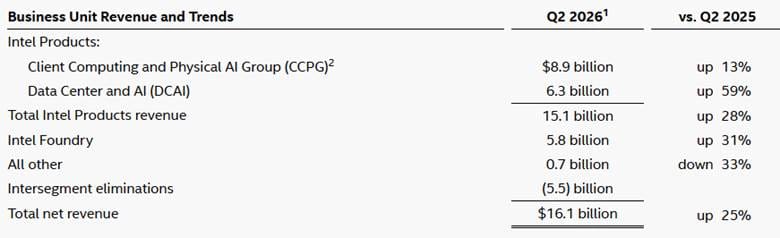
Data Center and AI (DCAI) revenue hit $6.3 billion, up 59% year over year, year-over-year growth accelerated from 22% in Q1 to 59% in Q2.

So does that settle it?

Not quite.

Nobody's arguing anymore about whether AI is pulling CPU demand higher. Agentic workloads add CPU-intensive orchestration, tool execution, data processing and security around the model inference that still runs primarily on GPUs. Intel management said training systems commonly use seven or eight GPUs per CPU, compared with roughly three or four for inference, while agentic and multi agent deployments could move toward parity or even become more CPU-intensive. AMD has described a similar shift from approximately 1:8 or 1:4  toward 1:1, although these remain company estimates rather than independently measured industry-wide ratios.

What the market is still deciding is whether Intel is winning sockets, or just standing in the way of a check written to the whole industry.

My read is that the demand is Intel's to bank, but the share is not yet Intel's to claim. These are two different clocks, and Thursday's call kept them running at two different speeds.

Intel just posted its best quarter in 15 years. Were you expecting a beat this big?

Yes, saw it coming
66.48%
No, this surprised me
33.52%
1,256 Polls

The earnings beat was broader than DCAI

The CPU thesis is that deploying AI creates considerably more computing work around them, and Q2 results are consistent with this.

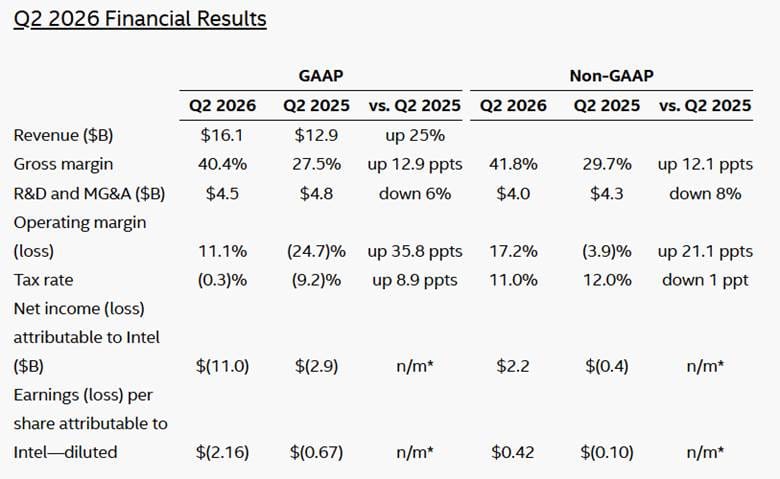
DCAI's operating margin hit roughly 40% of revenue, up from 31% just one quarter ago. Intel attributed the improvement to higher revenue, better product margins and lower operating expenses. At the company level, better yields, average selling prices and product mix lifted gross margin, while shorter factory cycle times created additional volume.

Together, these signals suggest AI-related CPU demand is extending beyond a narrow training buildout. This makes this a higher-quality beat than another quarter driven mainly by price.

Source: Intel

This is exactly what the bull case ordered, but it's also a concentration risk. If DCAI cools from here, there isn't much elsewhere in the business to pick up the slack.

One number needs unpacking before it spooks anyone reading the release cold: GAAP EPS was a loss of $2.16, compared with a loss of $0.67 a year earlier, despite much stronger operating performance.

The headline $11.0 billion GAAP net loss did not represent an equivalent operating cash loss. Intel generated $1.8 billion of GAAP operating income and $7.0 billion in operating cash flow, but recorded a $12.5 billion non-cash mark-to-market charge on escrowed shares tied to its agreement with the U.S. government. Because the liability is linked to Intel shares, a higher stock price can increase the accounting charge, all else equal.

Non-GAAP net income of $2.2 billion therefore provides a clearer view of underlying operations, although it also excludes stock-based compensation, restructuring charges and several other items.

Source: Intel

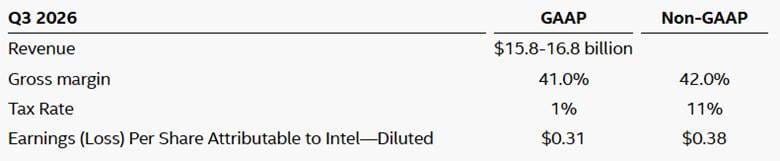
Q3 revenue guidance of $15.8-16.8 billion came in well above the roughly $15.1 billion consensus, and Intel raised its 2026 capex outlook from about $18 billion to more than $20 billion, with 2027 spending expected to run significantly higher still.

Source: Intel

The increase is a meaningful signal of management’s demand confidence, particularly because Intel cited long-term customer agreements and stronger purchase commitments. It is not proof, however, that every dollar of additional capacity is covered by firm orders. Intel is now committing multi-year capital to capacity that only pays off if the demand it's currently rationing is still there in 2027 and 2028.

But there’s a gap: AI CPU demand vs. Intel share gain

Asked point-blank about server share against AMD and Arm, Tan said Intel is still behind on some performance metrics and pointed to Clearwater Forest, Diamond Rapids and Coral Rapids roadmap as the way to close that gap eventually; a project, not a result already on the books.

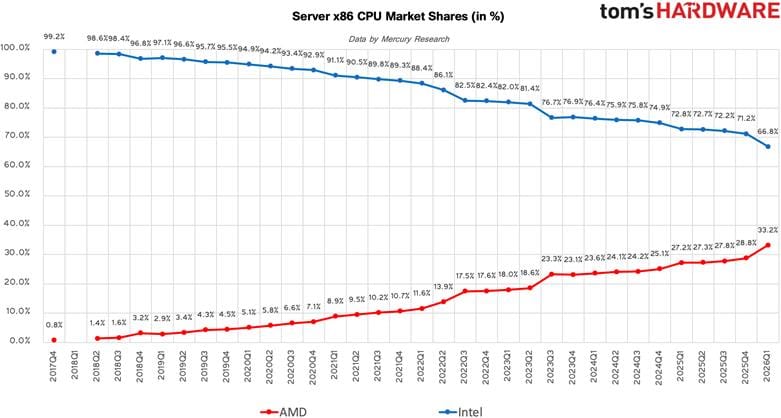
Mercury Research put AMD at 33.2% of x86 server units and 46.2% of x86 server revenue in Q1. This left Intel with 66.8% of units, but only 53.8% of revenue. Put simply, Intel still ships twice as many x86 server processors, yet AMD is close to matching it in sales because it captures more revenue per unit.

Mercury Research

Source: Tom’s Hardware using data by Mercury Research

On Arm, his tone softened into something closer to a business partner than a rival, useful for foundry work and IP, not a threat to Xeon.

Pressed to quantify the CPU-to-GPU ratio shift underpinning the whole demand thesis, Zinsner declined to give a number, pointing instead to the long-term agreements Intel is now signing with server customers, some with locked-in pricing, others structured around volume. It’s real evidence of demand visibility, but it is not direct evidence that agentic AI is causing the growth. Nor is it evidence of Intel share gain, although management did not claim that it was.

Intel guided PC volumes sub-seasonal for the second half, pointing to memory costs and supply constraints. I made this same case last week: the physical shortage still has room to run, but the stocks trading on it have gotten pickier about rewarding good news. Intel just handed this same argument a second data point, from a different aisle of the same supply chain.

What to watch next

To confirm a broader CPU cycle, demand needs to stay strong after today’s supply constraints ease and as more inference and agentic systems enter production. Intel’s separate challenge is turning that demand into market share and better margins.

My earlier capex analysis made the same distinction: suppliers benefit while spending occurs; buyers must justify it later through revenue and productivity.

Mercury’s Q2 figures, once released, will be the cleanest test of whether Intel’s record DCAI growth stabilized its x86 share. They will not capture Arm-based servers, so they are an important test, not a complete one.

Third-quarter guidance hints that conversion may become harder. The $16.3 billion revenue midpoint is only slightly above the second quarter’s $16.1, while the 42% adjusted gross-margin forecast is just 0.2 percentage points higher.

Holding or beating these numbers would show the company can sustain the higher run-rate after the Q2 supply release. A miss would suggest the quarter pulled forward demand or exhausted the easiest manufacturing gains.

Chances are, we’re looking at a plateau next quarter, not an immediate second leg. This would not invalidate the broader CPU cycle, but it would show that Intel’s ability to capture it is still constrained by supply, product mix, and competitive share.

Where does INTC trade three months from now?

Above $115
34.11%
$90 to $115
40.46%
Below $90
25.43%
519 Polls

Relevant Reading:

Intel announces $5.7 billion AI-driven capital investment in Ireland
According to Intel’s official announcement: LEIXLIP, Ireland, July 13, 2026 —Intel today announced a €5 billion ($5.7 billion) capital investment at its Leixlip campus in Ireland, marking the next phase in the site’s capacity expansion.
Results Review - Intel 2Q2026 significantly beat expectations
Intel’s stock jumps as chipmaker rides AI boom to fastest revenue growth in almost 15 years.

Sources

CNBC: Intel’s stock jumps as chipmaker rides AI boom to fastest revenue growth in almost 15 years

Intel: Intel Reports Second-Quarter 2026 Financial Results

Yahoo Finance: Intel Q2 Earnings Call Highlights

Results Review - Intel 2Q2026 significantly beat expectations
Quick Take
SemiconductorEarnings & OperationsMust ReadAI Infrastructure Semi Analysis

Results Review - Intel 2Q2026 significantly beat expectations

Intel’s stock jumps as chipmaker rides AI boom to fastest revenue growth in almost 15 years.

Economics & FinanceTech

Intel’s stock jumps as chipmaker rides AI boom to fastest revenue growth in almost 15 years (July 23, 2026, after trading hours, local time).

In what price range will Intel's stock price close on July 24, 2026?

below 105
50.00%
105 to 110
0.00%
above 110
50.00%
2 Polls
Ended

TL;DR:

AI/DCAI acceleration is real and broadening. AI-driven businesses collectively grew over 70% YoY and now contribute roughly 70% of total revenue, and Intel said its data center operations cannot keep up with orders, leaving the company unable to fully meet customer demand — a supply-constrained, not demand-constrained, problem.

18A yields are genuinely improving. Yields on 18A reportedly climbed to about 85%, up from roughly 65% the prior quarter, and Intel was the first company to deliver high-volume logic chips using High-NA EUV, per ASML, with 85% yields now comparable to TSMC N2's ~90%.

Credible external validation of foundry. Apple and Microsoft have both confirmed as 18A design partners, and Panther Lake shipped on 18A across 200+ OEM designs. External foundry revenue nearly doubled QoQ ($174M → $293M), the first real proof point that IFS isn't purely an internal cost center.

Beat quality was broad, not just a one-line surprise — CFO Dave Zinsner said the quarter exceeded guidance on higher factory yields and faster production cycles, and management is "meaningfully increasing investments in equipment, clean room space, and substrates" to chase demand rather than defend margin.

Key Debates:

Is 18A actually solving the yield problem, or is the market front-running a headline number?

What's the expectation on IFS going foward?

Intel vs AMD in AI/data center - how's the competition?

Does the CapEx ramp ($20B→more in 2027) get rewarded or penalized?

According to the company:

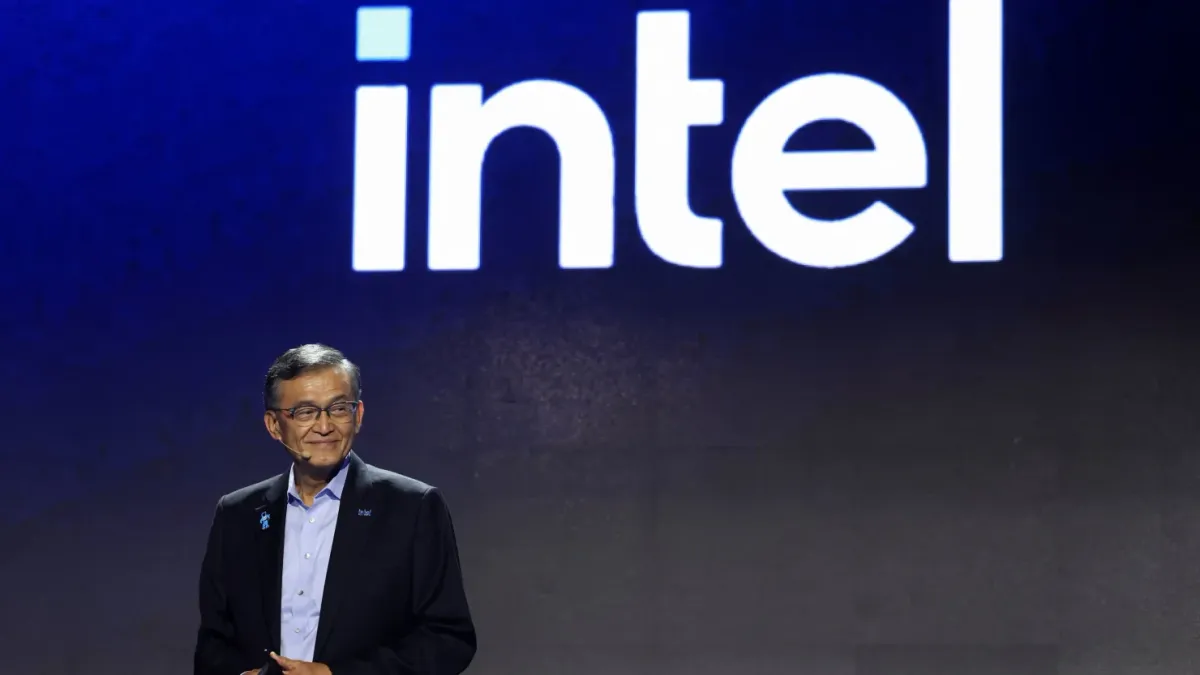
“AI is driving unprecedented demand for compute, and as we continue to execute, Intel is well-positioned to capture sustainable growth across our CPU franchise, ASICs, advanced packaging and vast wafer foundry network,” said Lip-Bu Tan, Intel CEO. “Our Q2 results represent our strongest revenue growth in more than fifteen years, enabled by greater speed, accountability, and customer focus.”

Intel also said it’s starting to craft long-term agreements with customers for its server CPUs, some with pricing locked in and others focused on chip volume.

It’s a move that’s becoming common, particularly in memory, as vendors try to preserve current high pricing and market power in case the AI market turns. Intel said it had reached 10 long-term agreements, and CFO David Zinsner said the company is supply constrained, with data center customers demanding more than it can produce. 

“Customers continue to signal a strong and sustainable spending environment,” Zinsner said on an earnings call with analysts.

Revenue in the company’s client computing group, which makes chips for PCs, rose 13% to $8.9 billion. It’s still Intel’s biggest unit, but the robust growth is coming from its data center business, where revenue rose 59% to $6.3 billion. Intel said it expects flat PC sales in the third quarter because of the memory shortage. 

Intel is boosting its capital expenditures, targeting a “meaningful increase” next year, as it aggressively tries to morph into a manufacturer of chips for other companies. Zinsner told CNBC’s Kristina Partsinevelos that the company’s latest manufacturing process, called 14A, is ahead of where older technologies were at the same point in the cycle. Intel said its foundry reported $5.8 billion in sales, up 31% on an annual basis. 

(check out our prior post on Intel's Capex plan)

Intel announces $5.7 billion AI-driven capital investment in Ireland
According to Intel’s official announcement: LEIXLIP, Ireland, July 13, 2026 —Intel today announced a €5 billion ($5.7 billion) capital investment at its Leixlip campus in Ireland, marking the next phase in the site’s capacity expansion.

Source:

  1. CNBC; https://www.cnbc.com/2026/07/23/intel-intc-earnings-report-q2-2026.html
  2. Reuters; https://www.reuters.com/business/intel-forecasts-upbeat-quarterly-revenue-profit-strong-ai-driven-server-chip-2026-07-23/
  3. Intel official announcement; https://www.businesswire.com/news/home/20260723707213/en/Intel-Reports-Second-Quarter-2026-Financial-Results
Silicon Bakery - Memory Chips: Peak Cycle, or Just Peak Acceleration?
Analysis
SemiconductorMemory ChipAI InfrastructureIndustry PulseSilicon Bakery Semi Analysis

Silicon Bakery - Memory Chips: Peak Cycle, or Just Peak Acceleration?

AI demand is keeping memory chips scarce and prices high. But with expectations already sky-high, the next leg of the trade may be much harder.

Economics & FinanceTech

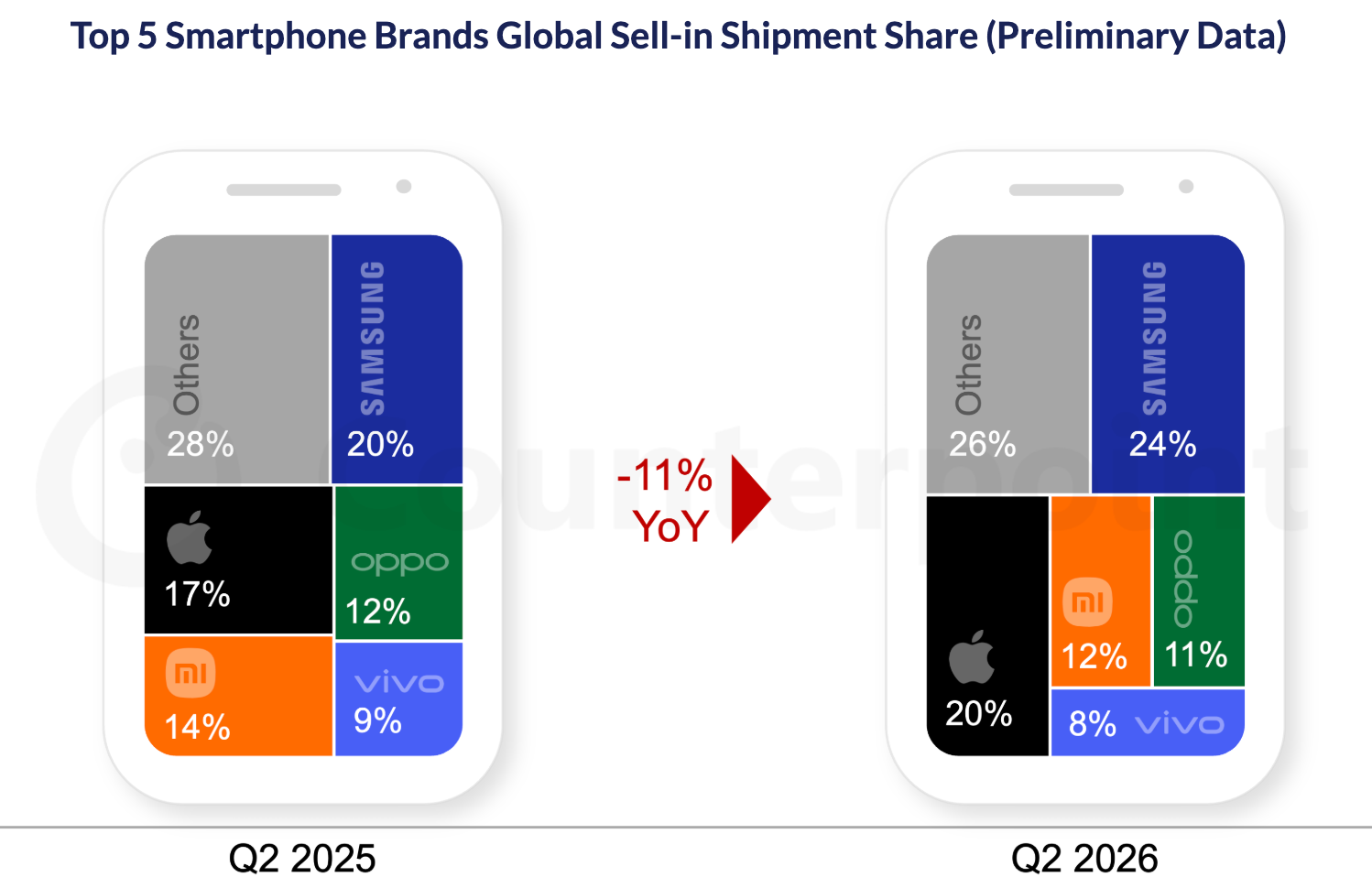
Global smartphone shipments fell 11% YoY in Q2 2026, reaching the lowest second-quarter level since 2013, as memory shortages pushed up component costs and handset prices, worsening already fragile consumer demand. SK Hynix CEO warns of an even worse crunch in 2027, and Micron’s latest quarterly revenue was more than four times its year-earlier level.

From here, being right about the shortage is not enough. The shortage has to keep getting better for suppliers, and worse for everyone else, faster than the market expects.

Peak acceleration does not mean the shortage is over. It means prices, earnings revisions, or stock gains may stop improving at the same pace.

But the peak question is harder than it looks. In fact, Samsung recently forecast a 19-fold increase in quarterly operating profit and still watched its stock fall 6.9%, as investors worried that the results were already priced in and AI infrastructure spending could slow.

My read is that the fundamental cycle still has room to run. The stock-market cycle is much further along.

Where do you think the memory-chip cycle is right now?

Still early in the boom
61.62%
Near peak acceleration, but not peak earnings
21.66%
Close to the fundamental peak
10.09%
Stocks have already peaked
6.63%
1,011 Polls

So, is this the peak?

There are really three peaks to think about: the physical shortage, memory-company earnings and the stocks themselves. Supply can remain tight while earnings growth decelerates, and earnings can keep rising after the shares have pumped.

My take is that memory pricing probably has further to run. Earnings may, too. But the stock-market cycle has entered a much less forgiving phase because the boom is increasingly being driven by price rather than by companies shipping dramatically more chips.

AI has turned memory into the bottleneck

GPUs do the heavy lifting, but memory keeps those processors fed with data. Without enough bandwidth and capacity, a state-of-the-art accelerator becomes a very expensive piece of hardware waiting around for information. This makes high-bandwidth memory, or HBM, one of the key choke points in the AI supply chain.

AI inference, which is the everyday work of answering prompts, running agents and generating content, requires large amounts of memory to store context and keep data close to processors. TrendForce now expects the global memory market to exceed $1.28 trillion in 2027, up about 44% year over year, with DRAM and NAND also projected to keep expanding rapidly.

Additionally, HBM uses more manufacturing resources than ordinary DRAM. When suppliers dedicate more capacity to the high-margin AI market, less is left for PCs, smartphones and traditional servers. The AI boom is squeezing the rest of the memory aisle at the same time.

Because of this, the cycle may have more legs than a typical gadget upgrade. Suppliers are reportedly meeting only around 75% to 80% of current DRAM demand; fulfilment is expected to deteriorate further in 2027.

New fab ≠ new factory tomorrow

Micron expects first wafer output from its initial Idaho fab in mid-2027 and from the second in late 2028. Additional HBM packaging capacity in Singapore is expected to begin contributing meaningfully during the first half of 2027. The industry is responding, but dollars turn into cleanrooms long before cleanrooms turn into sellable bits.

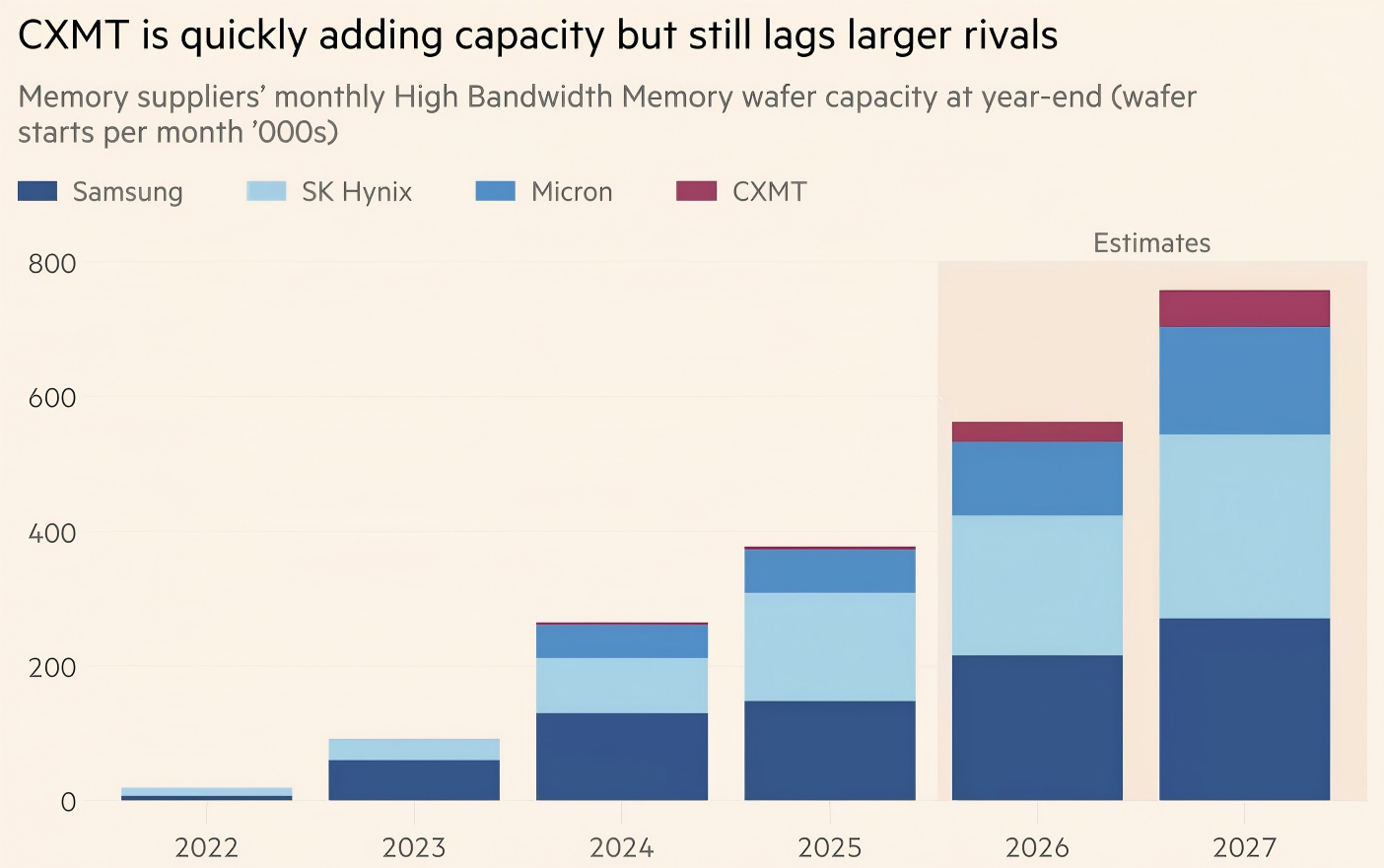
There is, however, a less obvious supply threat: China. CXMT was already the world’s fourth-largest DRAM producer in 2025, with roughly 7.7% market share, and its first-quarter 2026 revenue rose 719% from a year earlier. That makes CXMT more of a conventional DRAM pressure valve than an immediate HBM-cycle breaker.

The shortage is starting to eat its own tail

A shortage is wonderful for suppliers until their customers start cutting purchases, downgrading products or delaying launches.

We are already seeing this in consumer hardware. Global smartphone shipments fell 11% in the second quarter, reaching their lowest second-quarter level since 2013, as higher memory costs pushed up handset prices and hurt demand. PC and smartphone buyers are reaching their affordability limits, while some server customers are switching from 96GB and 128GB memory modules toward cheaper 32GB and 64GB configurations.

Source: Counterpoint Research’s preliminary Market Monitor report (based on sell-in)

This is the bill coming due.

The market is beginning to ration memory through price. The weakest buyers get pushed out first, freeing supply for customers with deeper pockets. This can prolong the shortage, but it also narrows the growth engine.

Eventually, suppliers become more dependent on a relatively small group of hyperscalers continuing to spend at an extraordinary pace.

JPMorgan estimates memory could represent more than 70% of cloud providers’ AI capital spending next year. If AI services generate enough revenue to justify that bill, the boom keeps rolling. If monetization lags, memory orders will be one of the first places investors look for excess.

A second risk is efficiency: if inference software, model architecture or memory-pooling systems reduce memory intensity faster than expected, today’s shortage could ease without a major supply wave.

The stock cycle is less forgiving

The bigger near-term risk may simply be that the numbers are becoming impossible to beat. Samsung recently delivered eye-watering results and was still met with a selloff. This is often what late-stage momentum looks like: a company can report record revenue, record margins and a bullish outlook, and still disappoint if investors had penciled in something even better.

But the evidence says the fundamental peak is probably still ahead. Supply remains tight, AI is increasing memory intensity, contract prices are still rising and major new capacity will not arrive quickly.

Still, the upside from here is likely to be harder won.

The next leg depends less on proving that AI needs memory and more on proving that suppliers can keep raising prices without killing demand, that cloud spending can absorb the costs, and that margins can remain extraordinary while new capacity is built.

What is the biggest risk to the memory-chip rally?

AI spending slows
26.24%
High prices destroy demand
51.97%
New supply arrives faster than expected
16.30%
Expectations are simply too high
5.49%
583 Polls

Sources

Counterpoint: Q2 2026 Global Smartphone Shipments Slump to Lowest Q2 Level in 13 Years as Memory Crisis Deepens

GuruFocus: Micron Revenue More Than Quadrupled. The Forecast Was Even Better

Micron: Financial results

Reuters: Explainer: What is CXMT and how did it become China's DRAM champion?

Reuters: Samsung flags 19-fold jump in profit, but shares slump on jitters AI boom may stall

Reuters: SK Hynix CEO sees worst memory shortage in 2027, demand to outstrip supply beyond 2030

TechTimes: AI Memory Crunch Locks In SK Hynix Lead as $713B Plan Weathers Historic Swing

TrendForce: Agentic AI Drives Structural Expansion in Memory Demand, Global Memory Market Projected to Reach US$1.28 Trillion by 2027, Says TrendForce

Results Review - TSMC 2Q2026 Profit Jumps as AI Boom Funds Costly Shift to N2
News
SemiconductorEarnings & OperationsAI Infrastructure Semi Analysis

Results Review - TSMC 2Q2026 Profit Jumps as AI Boom Funds Costly Shift to N2

TSMC delivered a notably strong second quarter in 2026, combining rapid revenue growth, record-level profitability and the first meaningful contribution from its 2-nanometer, or N2, technology.

Economics & Finance

Taiwan Semiconductor Manufacturing Co.(TSMC) delivered a notably strong second quarter in 2026, combining rapid revenue growth, record-level profitability and the first meaningful contribution from its 2-nanometer, or N2, technology.

TSMC reported second-quarter revenue of NT$1.27 trillion, equivalent to US$40.2 billion. Revenue increased 36.0% from a year earlier and 12.0% from the first quarter. Net income attributable to shareholders reached NT$706.6 billion, rising 77.4% year on year and 23.4% sequentially. Diluted earnings per share increased to NT$27.25 from NT$15.36 a year earlier.

TSMC reported second-quarter revenue of NT$1.27 trillion (US$40.2 billion), up 36.0% year on year and 12.0% sequentially. Net income rose 77.4% to NT$706.6 billion, while diluted EPS increased to NT$27.25.

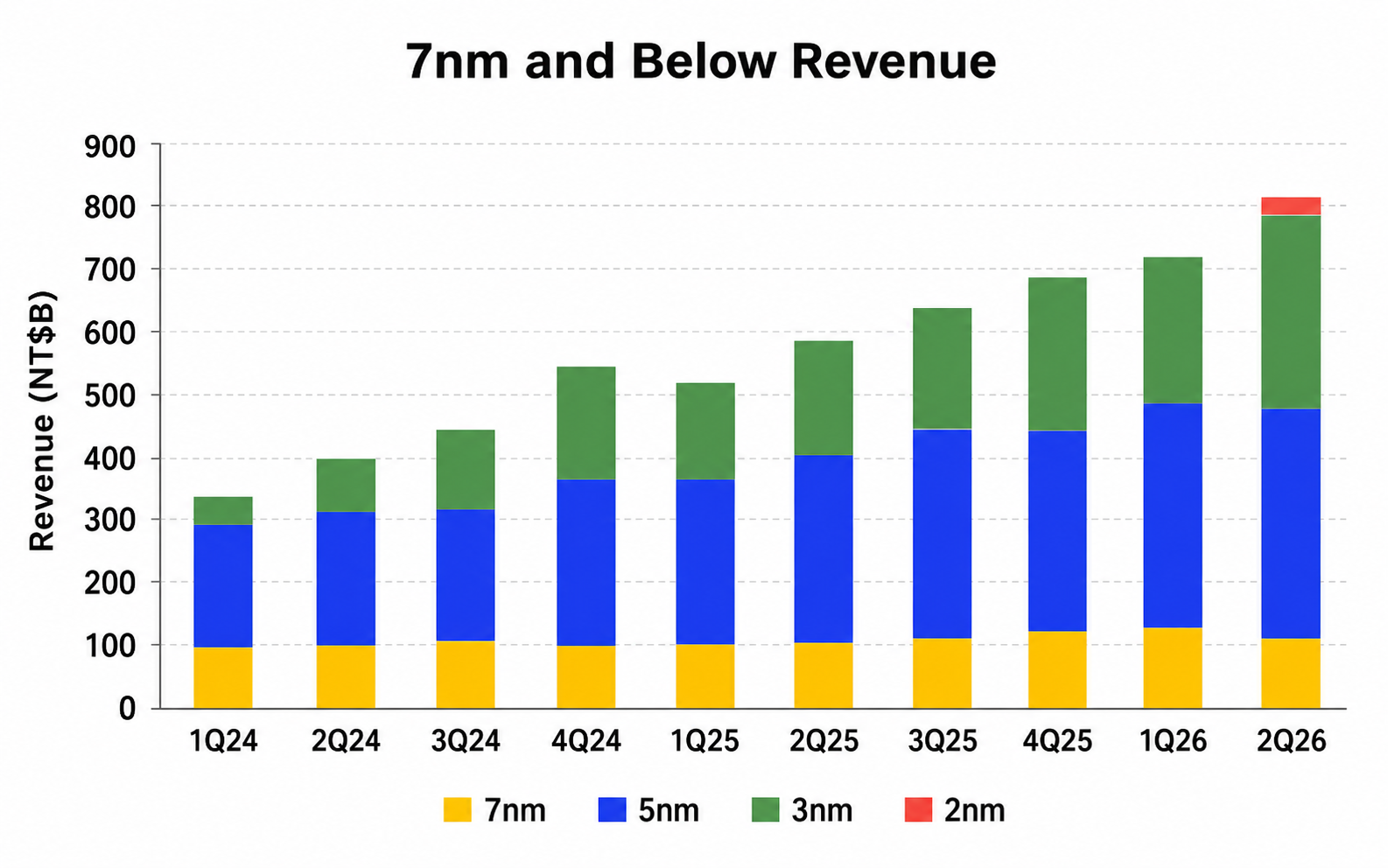
Revenue reached the top of guidance, and margins exceeded forecasts, with gross margin at 67.7% and operating margin at 60.3%. The quarter also marked the first revenue contribution from TSMC’s N2 process, which accounted for 3% of wafer sales, alongside higher inventories and capital expenditure.

Profit Grew Faster Than Revenue

The earnings increase was not simply the result of selling more wafers. TSMC’s cost structure and product mix also improved significantly.

Gross margin rose to 67.7% from 58.6% a year earlier, allowing gross profit to increase 57%, well ahead of the 36% rise in revenue. Operating margin climbed to 60.3% from 49.6% yoy, and operating income increased 65%.

Management attributed the margin improvement to cost-reduction efforts and higher capacity utilization, partly offset by the lower profitability of overseas fabs. The figures suggest that strong orders allowed TSMC to spread the high fixed costs of its factories across a larger revenue base.

The sales mix also moved further toward high-value products. High-performance computing, or HPC, represented 66% of revenue, up from 60% a year earlier. HPC revenue increased 20% from the first quarter, while smartphone revenue declined 4%, indicating that AI-related demand was a major contributor to profitability.

Operating leverage provided another benefit. Operating expenses increased 17% year on year, but fell to 7.8% of revenue from 9.1%. In other words, expenses grew considerably more slowly than sales.

Not all of the 77% net-income increase came from manufacturing operations. TSMC recorded NT$63.2 billion of disposal and mark-to-market gains related to its holdings in Vanguard International Semiconductor. The gain helped lift non-operating income to NT$95.8 billion from NT$29.6 billion a year earlier.

The distinction matters: the underlying business was exceptionally strong, but the headline net-profit growth was further amplified by an investment gain that may not recur.

N2 Debuts as Inventories Rise

N2 accounted for 3% of wafer revenue in the second quarter, its first reported contribution. TSMC says the technology entered volume production in the fourth quarter of 2025, with a rapid ramp expected in 2026. Its enhanced N2P process is scheduled for volume production in the second half of this year, according to the company’s technology roadmap.

N2’s 3% contribution is relatively small, but it provides measurable evidence that the process has moved beyond development and customer testing into commercial production. Together, processes at 7 nanometers and below accounted for 77% of wafer revenue.

TSMC is not the only chipmaker operating at this generation. Samsung has begun mass production of its 2-nanometer process, while Intel has ramped its comparable 18A technology. Node names are not standardized measures, however, and do not by themselves establish which process is more advanced. TSMC stands out for explicitly disclosing N2’s share of company-wide wafer revenue.

The ramp is already visible elsewhere in the accounts. Inventories increased 23.8% from the previous quarter to NT$385.5 billion, while Inventory days rose to 87 from 80, with management attributing the seven-day increase primarily to the N2 ramp.

Free Cash Flow Falls as Capex Accelerates

TSMC’s cash generated from operations increased to NT$783.4 billion from NT$699.0 billion in the first quarter, while free cash flow fell, because capital expenditure rose much faster. Quarterly capital spending increased 41% to NT$496.0 billion, or $15.7 billion. As a result, free cash flow declined 17% to NT$287.4 billion.

The company has said that the capital required to build a given amount of N2 capacity is substantially higher than for N3 because equipment costs and process complexity continue to rise.

The spending supports N2, future N2P and A16 capacity, advanced packaging and overseas manufacturing. It also reflects customer demand: capacity for leading-edge AI chips remains tight, giving TSMC an incentive to install equipment before the next wave of orders arrives.

Will TSMC keep increasing its CapEx again in 3Q2026?

Yes
52.35%
No
47.65%
831 Polls

Investment And Concentration Create Risks

TSMC is converting today’s AI demand into fixed investment on an exceptional scale, accepting weaker near-term free cash flow in order to secure future advanced-node capacity.

Revenue concentration adds another risk. North American customers generated 78% of second-quarter revenue, whose growth is increasingly tied to North American technology companies and the AI investment cycle.

The concentration makes TSMC particularly sensitive to changes in data-center capital expenditure, export controls, geopolitical policy and the spending decisions of a relatively small group of major chip designers and cloud companies.

The second quarter therefore offered two related signals about TSMC’s future. AI demand is producing exceptional current profits, and management is using those profits to finance N2 and the capacity that will determine whether the growth can continue.

Results Deep Dive - ASML Raises Full-Year Outlook as AI spending grows, 2Q2026
News
SemiconductorEarnings & OperationsAI Infrastructure Semi Analysis

Results Deep Dive - ASML Raises Full-Year Outlook as AI spending grows, 2Q2026

ASML delivered a strong set of results for the second quarter of 2026, showing that the AI investment cycle is creating demand across several parts of the semiconductor industry.

Economics & Finance

ASML delivered a strong set of results for the second quarter of 2026, showing that the AI investment cycle is creating demand across several parts of the semiconductor industry.

The Dutch semiconductor equipment company reported €9.3 billion in quarterly net sales, a gross margin of 54.0%, and net income of €2.9 billion. All three figures point to a business growing while maintaining high profitability.

Revenue Growth Accelerated

ASML’s Q2 net sales increased from €7.7 billion in 2025 to €9.3 billion in 2026, representing year-on-year growth of approximately 21.3%.

The company generates revenue from two main sources: systems sales and installed base management, which includes services and upgrades for equipment already operating in customers’ factories. System sales remained the company’s largest source of revenue. However, service and field option sales grew much faster.

During Q2, customers were particularly interested in upgrades that could increase the productivity of machines already installed in their factories. Many of these improvements are software-led and require relatively little machine downtime. They can therefore “give customers an almost immediate increase in production capacity,” Chief Financial Officer Roger Dassen said in a video transcript accompanying the results.

Profitability Improved Faster Than Revenue

ASML’ operating income rose by approximately 29.7%, from €2.7 billion to €3.5 billion, outpacing revenue grwoth. Two factors may explain most of the difference.

Operating expenses increased much more slowly than revenue. ASML’s factories and engineering teams carry substantial fixed costs, which do not rise in proportion to sales. R&D spending increased 9% to €1.3 billion, while selling and administrative expenses were broadly unchanged. As a result, a larger share of additional revenue flowed through to operating profit, lifting the operating margin to 37.1% from 34.6%.

Gross margin also improved modestly, supported by stronger Installed Base Management sales. Service and field-option sales increased 32%, compared with approximately 17% growth in system sales. Customers require maintenance, replacement parts, software updates and equipment upgrades throughout the operating lives of their machines. These upgrades can improve production with limited downtime and contributed positively to ASML’s gross margin.

Basic earnings per share rose even faster, increasing from €5.90 to €7.59. The increase was driven primarily by higher profits, with share repurchases providing an additional benefit by reducing the weighted-average number of shares outstanding. ASML repurchased approximately €1.1 billion of shares during the second quarter under its 2026–2028 share buyback program.

China Remains Important but Risky

Management expects China to account for approximately 20% of ASML’s 2026 sales. Based on the midpoint of the company’s full-year guidance, that would represent roughly €8.8 billion in revenue.

However, demand should not be confused with ASML’s ability to supply every product. US lawmakers have proposed legislation aimed at tightening and aligning allied export controls on semiconductor manufacturing equipment. Any additional restrictions would ultimately depend on measures adopted by the Netherlands and other relevant governments. The company cannot export its most advanced EUV systems to China, while some advanced DUV systems and transactions with particular entities require government licences.

China can remain an important market for permitted DUV systems, but tighter restrictions could affect future sales.

A Stronger Outlook Extends Beyond 2026

ASML expects Q3 sales of between €11 billion and €12 billion, with a gross margin between 55% and 57%. For the full year, it projects revenue of €43 billion to €45 billion and a gross margin of 54% to 56%.

Demand visibility also extends beyond the current year. Management said ASML was close to receiving all the EUV orders needed for 2027, even as it prepares to increase Low-NA EUV production capacity by approximately 30% in 2027 relative to 2026.

The company has already received a substantial number of EUV orders for 2028 and is investigating another major capacity increase. These plans are not guaranteed outcomes, but they suggest customers are making unusually long-term investment commitments.

The main risks include weaker-than-expected AI spending, order delays, export restrictions, supply-chain limitations and slower adoption of new technologies such as High-NA EUV.

AI investment cycle is no longer influcing only a narrow group of advanced processor manufacturers. It is creating demand across a much wider semiconductor ecosystem—and ASML is converting that demand into highly profitable growth.

When do you expect the AI-driven semiconductor investment cycle to peak?

Before 2027
33.22%
In 2027-2028
16.74%
In 2028-2029
26.45%
After 2029
23.59%
1,153 Polls
Results Review - IBM, what does the 25% stock price drop tell?
Quick Take
HyperscalersTechnologyEarnings & OperationsMemory ChipAI Infrastructure Semi Analysis

Results Review - IBM, what does the 25% stock price drop tell?

On May 14, 2026, IBM (International Business Machines) shares plummeted 25% on Tuesday after the hardware, software and consulting provider released preliminary second-quarter results that fell short of expectations.

Economics & Finance

On May 14, 2026, IBM (International Business Machines) shares plummeted 25% on Tuesday after the hardware, software and consulting provider released preliminary second-quarter results that fell short of expectations.

Subjective Q: are you buying IBM's dip?

Yes
32.43%
No
67.57%
845 Polls

CEO Arvind Krishna blamed the shortfall on weakness in the software and infrastructure business, as clients shifted spending toward hardware purchases such as memory chips:

In the last few weeks of June, we saw clients shift their quarterly capex spend toward servers, storage, and memory purchases to secure supply-constrained infrastructure ahead of expected price increases. This dynamic impacted client buying patterns. While we anticipated some supply chain related impact in our expectations, we did not anticipate the magnitude of the capex reprioritization. In addition, clients were distracted with rapidly-evolving, industry-wide cybersecurity concerns in the quarter.

IBM's industry observation could open up some interesting discussions:

*Is Ai chips & services squeezing out subscription-based products? Before Ai boom, upgrading softwares or maintaining the existing infrastructure seemed to be the only option to spend for budget. Now, amid Ai boom, investing into the theme sounds way more "sexy-ier".

*Is Ai capex build-up over yet? Capital continues to flow into servers, storage, and memory chips – against recent stock price drops in that sector. The shift in business model requires heavier hardware investments. Supply-demand dynamics remains tight amid constrained manufacturing capacity.


Will you buy the dip?

Source:

  1. IBM press room; July 14, 2026; https://newsroom.ibm.com/2026-07-14-Arvind-Krishnas-Letter-to-IBM-Investors
Stock price tumbled: Is SK Hynix rally over after Nasdaq debut?
Quick Take
SemiconductorSignalsMust ReadCentral Banks Semi Analysis

Stock price tumbled: Is SK Hynix rally over after Nasdaq debut?

The Korean memory chip-maker's stock price tumbled more than 10% (as of morning July 13, 2026) after its stunning Nasdaq debut last Friday (up 12.8%). Is the rally over, or is this a buying oppotuntiy?

Economics & Finance

The Korean memory chip-maker's stock price tumbled more than 10% (as of morning July 13, 2026) after its stunning Nasdaq debut last Friday (up 12.8%). Is the rally over, or is this a buying oppotuntiy?

SK Hynix: A record-making Nasdaq debut

Priced at $149 per share, the chipmaker's American Depository Receipts (ADR) raised about $26.5 billion upon the opening bell ringed on July 10, 2026. The stock price closed slight above $168 (+12.8%). The $26.5 billion US listing ranks as the largest ever by a foreign company.

The share sale comes as the company leverages its ‌position as the leading supplier of high-bandwidth memory chips, a critical component for the advanced processors powering global artificial intelligence systems.

Will SK Hynix ADRs drop below $170 or be above $170 by the end of July 2026?

Up
100.00%
Below
0.00%
1 Polls
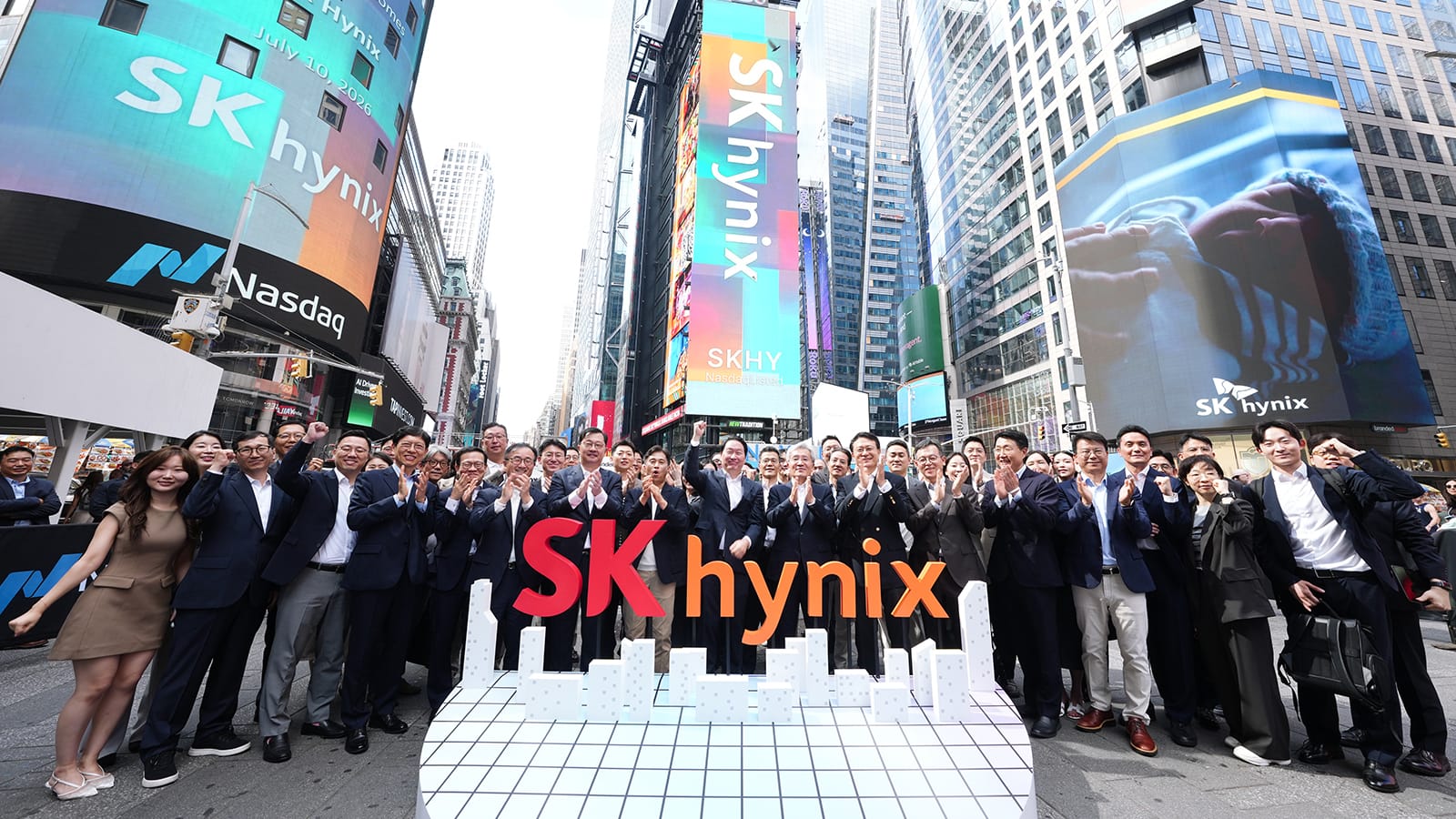
Source: SK’s key executives and employees, including SK Group Chairman Chey Tae-won and SK hynix CEO Kwak Noh-Jung, taking a photo in front of the Nasdaq MarketSite. (Seventh from the left SK Square Executive Vice Chairman Chey Jae-won, SK hynix CEO Kwak Noh-Jung , SK Group Chairman Chey Tae-won, SK hynix Chair of the Board and Independent Director Ko Seung-beom and SK Inc Vice Chairman & SK Americas CEO Yu Jeong-Joon)

Korean stock price plunge - could it be driven by technicality?

On Monday (July 13, 2026), however, the stock has slided more than 10% in Korean market. Some analysts indicate this could be driven by a mix of profit-taking and uncertainty over how the Korean stock shall be valued against its ADR.

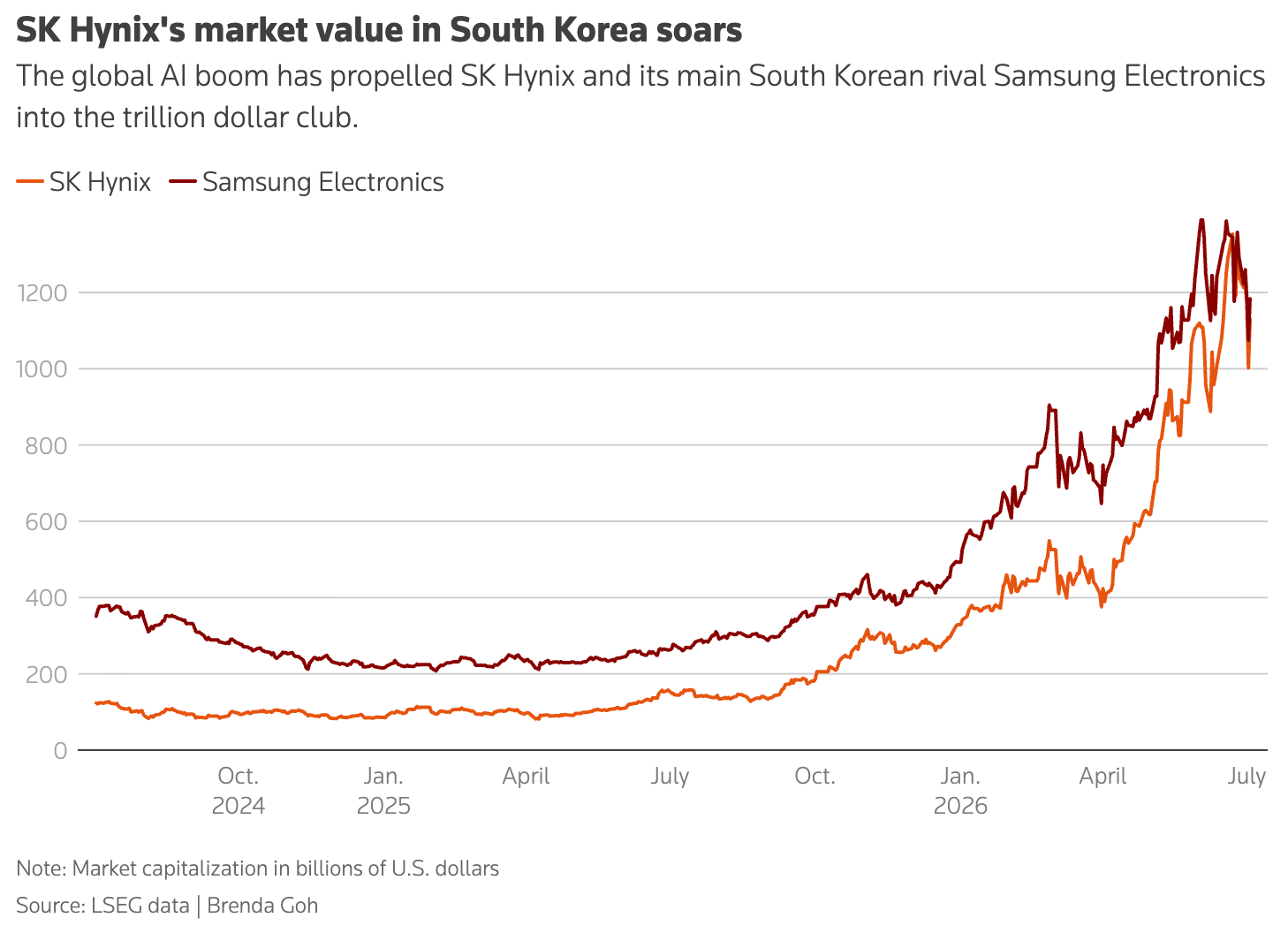
As a recap, the stock price has more than tripped year-to-date, despite recent sell-off since June 2026.

Regarding pricing discount/premium, as a benchmark, the ADRs of Taiwan Semiconductor Manufacturing ("TSMC", ADR ticker: TSM) trade at a roughly 13-14% premium to its domestic share.

What will be the premium/discount range of SK Hynix ADRs vs domestic shares (on average, in 2026)?

<10%
0.00%
10% to 20%
100.00%
>20%
0.00%
1 Polls

Or, is there any fundamental hiccups in the flawless AI boom story?

According to sources that trace to the research of Korea Investment & Securities (July 13, 2026): SK hynix(000660)'s estimates for operating profit for this year and 2027 will be revised down, and 2Q2026 operating profits will fall short of current consensus (the market's average forecast).

The rationales are , according to the analysts: "Because the share of high bandwidth memory (HBM) in sales is higher than competitors, the average selling price (ASP) increase is lower than the market average," and added, "From the third quarter, when HBM4 begins full-scale mass production and sales, the ASP increase will be in line with the market average."

Will SK Hynix 2Q2026 operating profits fall short of concensus?

Yes
0.00%
No
100.00%
1 Polls

Could macro events have contributed? (e.g. BOK's policy rates & Middle East conflicts)

According to Korea Economic Daily (July 13, 2026), Bank of Korea seen raising rates in July, with another move in October – A survey of 20 economists shows most expect the policy rate to reach 3% by year-end, with the won gradually strengthening in the second half. To put in context: The Bank of Korea (BOK) is widely expected to raise its policy rate by 0.25 percentage point to 2.75% on Thursday (July 16, 2026).

Meanwhile, oil prices jump as US and Iran trade attacks over Strait of Hormuz. US Central Command (CENTCOM) said on Sunday that it had carried out dozens of strikes on Iran to degrade its ability to attack vessels in the strait, hours after striking hundreds of targets in the country. Iran’s Persian Gulf Strait Authority, which claims the right to control traffic through the Strait of Hormuz, earlier reiterated that vessels attempting to cross the waterway without using its preferred route would “not be covered by safe passage guarantees”.

Will Bank of Korea raise its policy rate to 2.75% in July 2026?

Yes
0.00%
No
100.00%
1 Polls

Will Bank of Korea raise its policy rate to 3% by the end of 2026?

Yes
0.00%
No
100.00%
1 Polls

The overall AI boom seems intact?

Nvidia CEO Jensen Huang said last month SK Hynix would continue to be the U.S. AI chipmaker's largest partner, adding that the current memory chip shortage would persist for a few years due to strong demand.

"AI demand keeps inflecting, currently driven mostly by strong datacenter CPU demand. HBM demand also remains strong: we expect the market to grow from about $65 ​billion this year to $120 billion next year and about $290 ​billion by 2030," said Rolf Bulk, Head of ⁠Semiconductors and Infrastructure, Futurum Equities.

Sources:

  1. Reuters; "SK Hynix raises $26.5 billion in US offering after pricing ADRs at $149"; July 9, 2026 (local time). https://www.reuters.com/world/asia-pacific/sk-hynix-us-listing-more-than-seven-times-oversubscribed-source-says-2026-07-09/
  2. SK Hynix official press newsroom; "SK hynix Lists ADRs on NASDAQ, Elevating Global Status at the Heart of Capital Markets"; July 10, 2026 (local time). https://news.skhynix.com/skhynix-lists-adrs-on-nasdaq/
  3. CNBC; "SK Hynix shares slide 10% in Seoul after stellar Nasdaq debut"; July 12 2026 (local time). https://www.cnbc.com/2026/07/13/sk-hynix-shares-fall-after-stellar-nasdaq-debut.html
  4. Seoul Economic Daily; "Korea Investment Sees SK hynix Q2 Profit Missing Market Estimate"; July 13, 2026 (local time). https://en.sedaily.com/finance/2026/07/13/korea-investment-sees-sk-hynix-q2-profit-missing-market
  5. The Korea Economic Daily; ""; Bank of Korea seen raising rates in July, with another move in October: survey. July 13, 2026 (local time). https://www.kedglobal.com/bok/newsView/ked202607130001
  6. Al Jazeera; "Oil prices jump as US and Iran trade attacks over Strait of Hormuz"; July 13, 2026 (local time). https://www.aljazeera.com/economy/2026/7/13/oil-prices-jump-as-us-and-iran-trade-attacks-over-strait-of-hormuz
Silicon Bakery - Apple Expands Broadcom Partnership with $30 Billion U.S. Supply Chain Commitment
News
SemiconductorSupply ChainMag 7Consumer SpendingSilicon BakeryIndustry Pulse Semi Analysis

Silicon Bakery - Apple Expands Broadcom Partnership with $30 Billion U.S. Supply Chain Commitment

Apple announced it will expand its partnership with Broadcom through a more than US$30 billion commitment focused on strengthening its U.S. supply chain. As part of the initiative, Apple will also invest US$1.5 billion in Broadcom's manufacturing facility in Fort Collins, Colorado.

Economics & Finance

Apple announced it will expand its partnership with Broadcom through a more than US$30 billion commitment focused on strengthening its U.S. supply chain. As part of the initiative, Apple will also invest US$1.5 billion in Broadcom's manufacturing facility in Fort Collins, Colorado.

The investment forms part of Apple's previously announced US$600 billion U.S. investment plan, a commitment highlighted by CEO Tim Cook during a White House announcement. The move is expected to align with the Trump administration's push to expand domestic semiconductor manufacturing.

Source: Bloombergap

Broadcom will continue supplying Apple with key wireless technologies, including Bluetooth, Wi-Fi, and RF (radio frequency) filter components manufactured in the United States.

These components will support Apple's expanding lineup of products, including iPhone, iPad, Mac, HomePod mini, Apple TV, and future smart home devices. Broadcom's RF filters will also work alongside Apple's in-house C1, C2, and future C3 cellular modem chips, which Apple is gradually deploying across its product portfolio as it reduces reliance on third-party modem suppliers.

Will Apple expand its commercial partnership with Broadcom again before the end of 2026?

Yes
50.00%
No
50.00%
4 Polls

Broadcom rose 4.8% to $388.69 in New York trading on Wednesday, notching the biggest single-day gain since May 14. Apple increased less than 1% to $313.39.

Source: https://www.bloomberg.com/news/videos/2026-07-08/how-apple-will-use-broadcom-chips-video

Silicon Bakery - Apple interest thrusts China’s CXMT into memory chip spotlight
Analysis
SemiconductorConsumer SpendingMust ReadAI InfrastructureMag 7Memory ChipSilicon BakeryIndustry Pulse Semi Analysis

Silicon Bakery - Apple interest thrusts China’s CXMT into memory chip spotlight

CXMT has been thrust into the global spotlight by the race for memory chips. Apple has begun testing the company’s DRam chips for devices sold in China, according to two people familiar with the matter

Economics & FinanceTech

Sharp turnaround for state-backed company central to Beijing’s AI supply chain efforts.

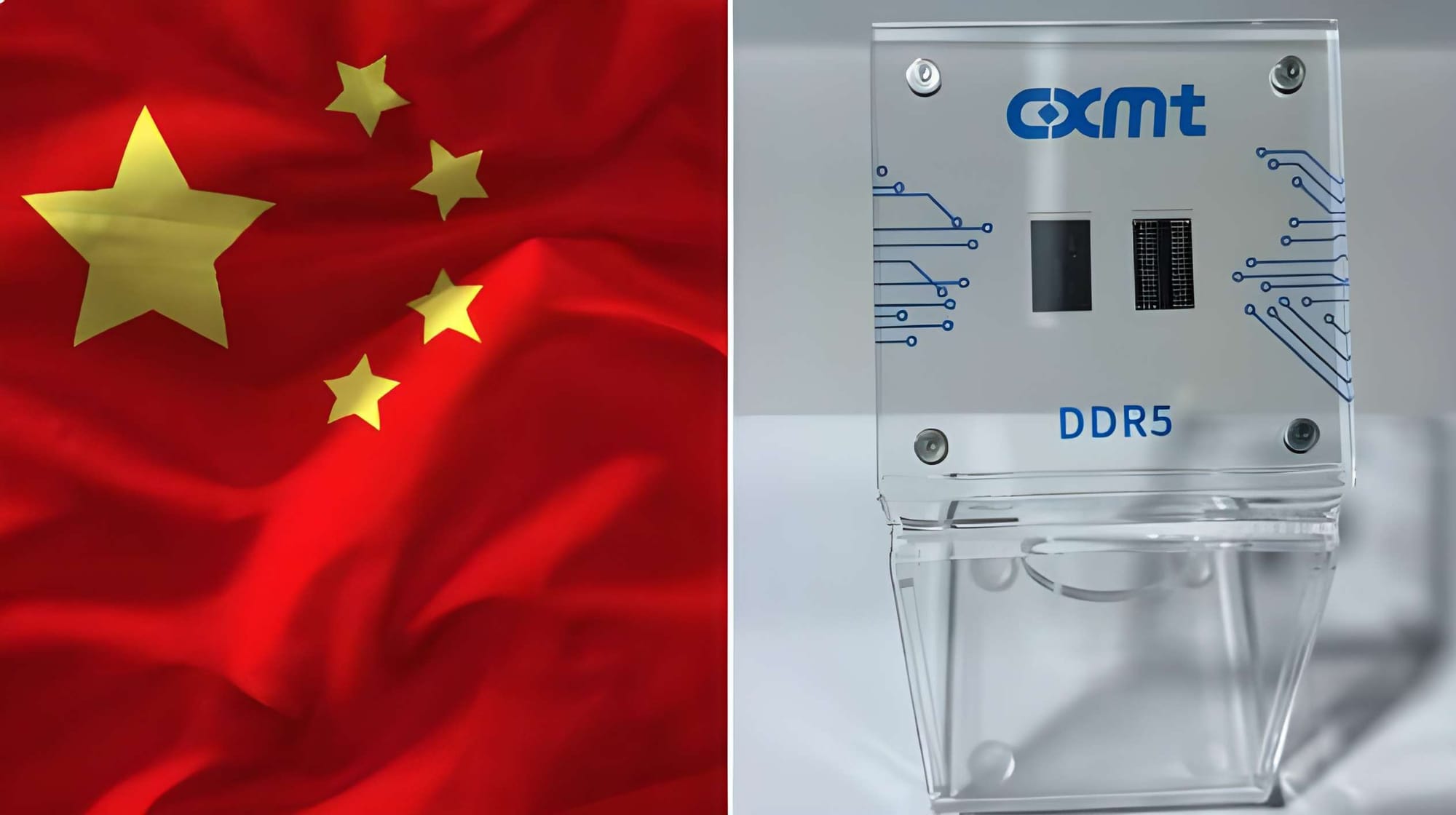
Follow last week's market rumor (see our post), CXMT has been thrust into the global spotlight by the race for memory chips. Apple has begun testing the company’s DRam chips for devices sold in China, according to two people familiar with the matter, as the iPhone maker leads a lobbying effort among US tech companies to get the US government to allow broader use of the company’s products (the Financial Times).

Will Apple use CXMT's chips for devices sold in China?

Yes
60.00%
No
40.00%
10 Polls

The interest in CXMT marks a sharp turnaround for a company that spent nearly a decade burning through billions of dollars but has now become central to Beijing’s efforts to build a domestic AI supply chain — and is poised to become one of the most profitable technology companies to be listed on China’s domestic stock market.

The memory shortage has transformed CXMT’s finances. Its net profit soared to Rmb33bn ($4.8bn) in the first quarter of this year, according to its IPO prospectus — a striking reversal from the Rmb37bn ($5.4bn) in losses it has accumulated over the past decade.

Source: SemiAnalysis Memory Model

CXMT is now the world’s fourth-largest producer of DRam — the chips used in everything from smartphones to servers — behind SK Hynix, Samsung Electronics and Micron.

For US tech groups competing over a finite global supply of DRam wafers, the prospect of a fourth global supplier in China is appealing but politically sensitive. Apple has previously faced public pushback from US policymakers when it last explored using Chinese memory suppliers, including then Republican senator Marco Rubio, who flagged security risks in 2022.

Source: wccftech

Despite CXMT’s rapid growth and plans to increase production, analysts say additional Chinese supply is unlikely to ease memory chip prices soon, as virtually all of its output is already committed and demand continues to grow.

“There’s a misconception that Chinese memory is dramatically cheaper and will flood the market,” said Ray Wang, memory analyst at SemiAnalysis. “Capacity is extremely constrained. Even as CXMT expands, it will remain supply constrained for at least the next two years.”

Over the longer term, however, competitors fear a repeat of the pattern seen in Chinese industries from solar panels to electric vehicles: years of state-backed investment followed by rapid capacity expansion and falling prices that squeeze foreign rivals.

Source: https://wccftech.com/cxmt-developing-high-density-dram-without-euv-might-make-apple-interested/;

https://www.ft.com/content/f4ac5c92-03be-4499-b16a-017a7e9ee228?syn-25a6b1a6=1