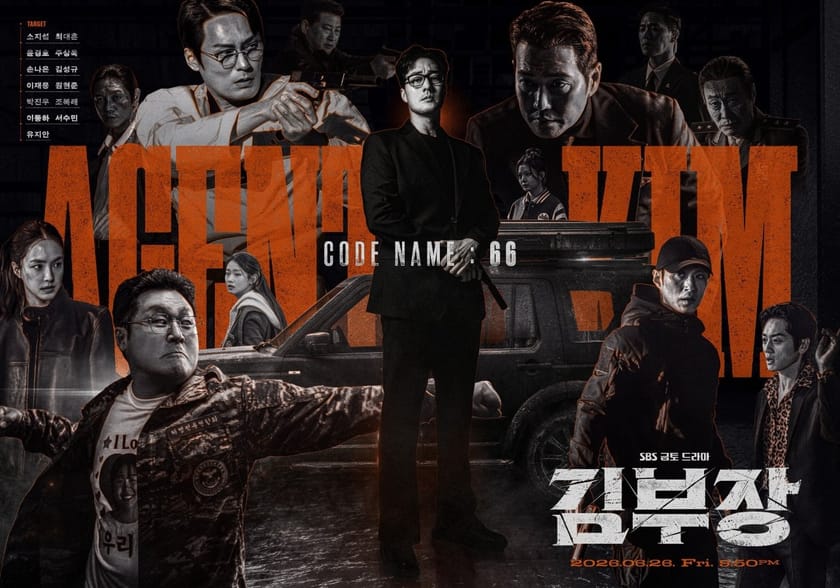
SBS's Friday-Saturday drama "Agent Kim Reactivated" is on an unstoppable ratings tear. After just four episodes, its nationwide rating has already topped 21.6%, and it has climbed to No. 1 on Netflix's global non-English TV chart. Lead actor So Ji-sub's action scenes, driven by a father's desperate love, have left audiences stunned — but right now, both insiders and outsiders are buzzing about a single three-minute scene. It marks the first time in the history of Korean commercial television that a scene was shot without a single camera, produced entirely by generative AI as a "fully AI-generated sequence."
A Breakthrough in Technology
Before each episode begins, a line of small text flashes briefly across the black screen — easy to miss, but its final line reads: "Some of this production uses AI-based technology."
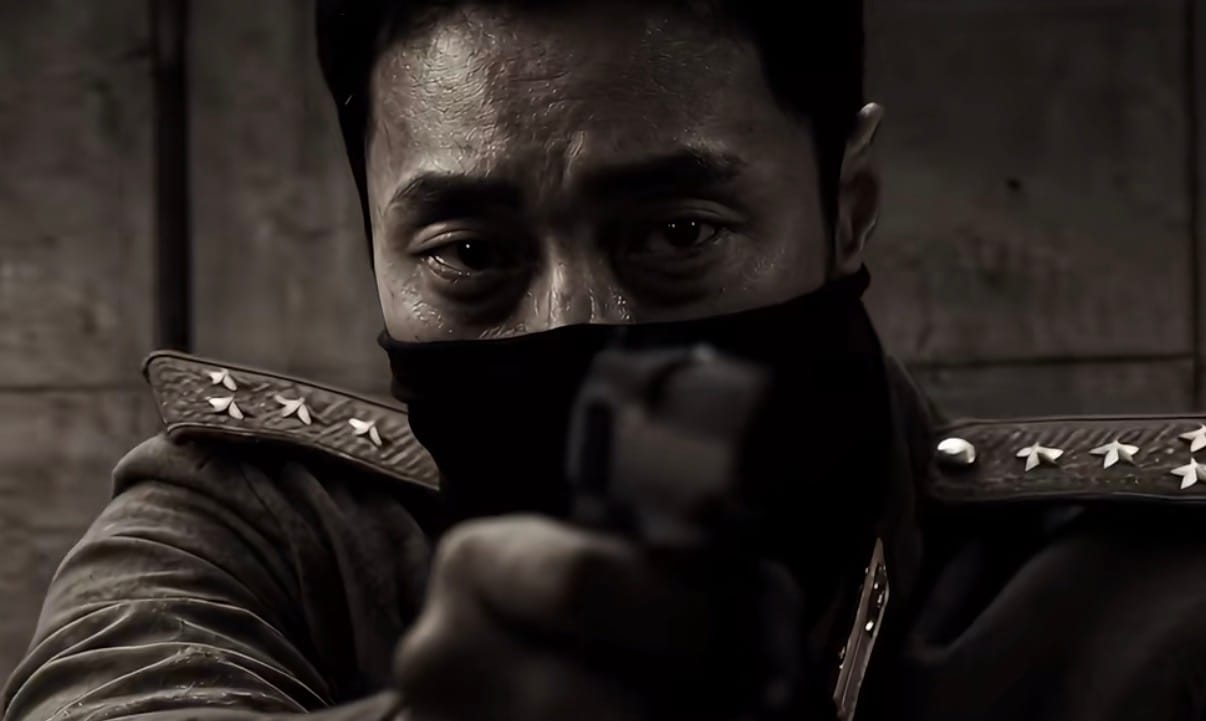
The drama's three-minute "Ghost Operation" flashback, depicting Agent Kim (played by So Ji-sub) during his days as an agent working against North Korea, is breathtaking. An entire building blown apart in an explosion, a car chase racing through a snowy mountain tunnel, a vehicle flipping and plunging into a pitch-black river — shooting these scenes for real would have required either that the actors risk their lives or that production spend an astronomical sum. By any measure, they were extremely difficult scenes to pull off.
Yet none of these stunning action sequences involved So Ji-sub himself or a stunt double on set. Instead, they were built as virtual stand-ins — so-called "digital doubles" — created at indoor monitors by AICRON, a homegrown Korean AI platform, together with the VFX team Morpheus Studio.
Generative AI video has long struggled to keep a character's appearance consistent, but the technical level on display in "Agent Kim Reactivated" was convincing enough to fool the audience's eyes. Not only was So Ji-sub's signature heavyset build and powerful fighting style faithfully recreated, but even his emotionally charged facial close-ups were rendered with such precision that they were nearly indistinguishable from live-action footage. This shows AI is no longer confined to minor background compositing or prop effects — it has proven it can carry an entire sequence at the emotional core of a story on its own.
A Double-Edged Impact
The full maturation of digital-double technology is, for actors, something close to a godsend. First, it serves as a perfect shield protecting actors' lives on dangerous sets. Even with stunt doubles, explosion and fall scenes always carry some risk of injury — AI eliminates that physical risk at the root.
It also dramatically extends actors' performing careers. So Ji-sub, marking his 30th debut anniversary this year and now nearing fifty, spent months training in special-forces martial arts to pull off the drama's intense action scenes — but the limits of the body remain an unavoidable reality. AI can free older actors from those physical constraints, letting them perform action sequences that push far beyond human limits.
Still, this technological leap is no free pass. As "Agent Kim Reactivated" director Lee Seung-young has admitted, AI-generated footage, however flawless, still has clear limits when it comes to capturing the raw, on-set "realness" — the grit of sweat and dust, the trembling urgency of a character's breath. Human artists still have to step in for fine-grained corrections in the final stage to fill in that subtle human texture. And when a director gives a note to change one detail, unrelated background elements sometimes shift along with it — a communication gap that remains an unresolved challenge.
The most thought-provoking question is this: will human actors even be needed in the future? If the technology advances far enough to fully replace actors, a production might only need to purchase the likeness rights and voice data of the corresponding look. As databases grow richer, AI could even blend and extract features to generate faces and voices that fit a character even better than a real actor could.
Against this backdrop, a string of deeper questions follows. From a market standpoint: once audience expectations keep rising, will AI-generated performances remain acceptable in the long run? From a legal standpoint: where should the line be drawn between the use of AI technology and the protection of human rights? And philosophically: what, exactly, is the value unique to the human soul that only a human actor can express?