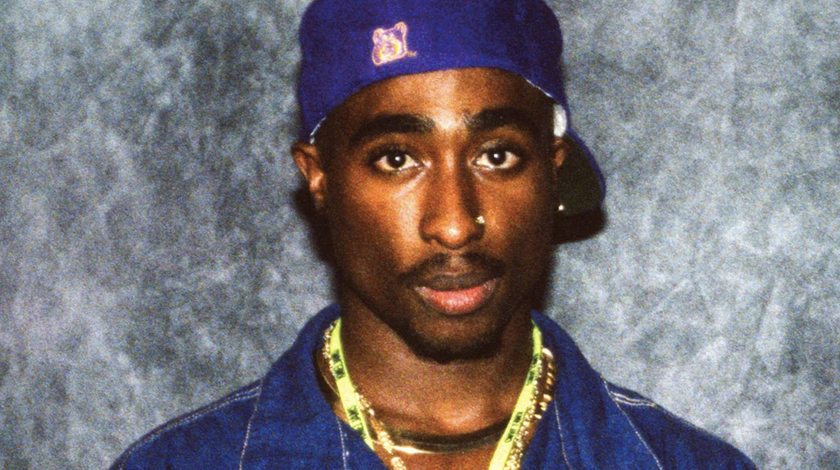
For all the mythic stature of Tupac Shakur, you’d have expected his murder trial to have been held somewhere with a little more grandeur. Maybe the Las Vegas Motor Speedway or the Thomas & Mack Center, a basketball and concert arena whose gala opening starred Frank Sinatra and Diana Ross. But for the last two weeks, jurors, bailiffs, members of the press, fans, and the families of Shakur and the defendant, Duane “Keffe D” Davis, packed tightly into a cramped windowless courtroom that felt barely bigger than the box of Cuban cigars that Death Row CEO Suge Knight loved to smoke.
By the end of October, will prosecutors or police formally charge or pursue other alleged co-conspirators in this case?
For 30 years, the killing of 2Pac has occupied the same American conspiratorial headspace as the Malcolm X assassination, Elvis sightings, and Roswell — a mystery that bred its own industrial complex, complete with fake death theories and amateur numerologists. Then, in September 2023, a Clark County grand jury indicted Davis, a reputed shot caller for the South Side Compton Crips, for murder with a deadly weapon.
The state alleged that Davis obtained and handed off a .40-caliber Glock to his nephew, Orlando Anderson, who prosecutors say fired the fatal shots that killed the 25-year-old rapper just off the Las Vegas Strip on Sept. 7, 1996. Their theory of the case was Occam’s Razor simple: a revenge slaying that occurred roughly two and a half hours after Shakur, Knight, and some of their Death Row henchmen stomped out Anderson following a Mike Tyson fight at the MGM Grand.
Most of the evidence heard by the jury came from Davis himself — including a secretly recorded 2008 proffer agreement given to a federal task force, a subsequent interview with a Las Vegas Metro homicide detective, appearances on pay-to-play podcasts and BET’s Death Row Chronicles docuseries, and his own book, Compton Street Legend.
The defense denied the allegations, claiming that Davis was a serial fabulist seeking to entertain and profit off long-standing rumors connecting him to the case. The state was unable to produce the murder weapon, the identity of whoever rented the white Cadillac that witnesses say fired on Shakur, or any tangible documentation that Davis was in Las Vegas the night of the murder. During opening statements, defense attorney Michael Sanft summed up his case on a single PowerPoint slide: my client is just a “bullshitter.”
During the trial, the easily understood cause-and-effect theory of the killing became entangled in the labyrinth that has characterized the last 30 years of whodunit theories: there were allegations of a role played by Bad Boy CEO Sean “Diddy” Combs in the murder, accusations of law enforcement corruption, the interconnectedness with the 1997 homicide of Christopher “The Notorious B.I.G.” Wallace, and enough far-fetched speculation to give even Candace Owens pause.
The trial was far more than a series of witnesses assembled to prove who killed 2Pac. It doubled as a history of Compton gang life and the story of the Death Row and Bad Boy beef. It was an indictment of hip-hop’s warped, symbiotic relationship with the media and an explanation of why it took law enforcement nearly three decades to make an arrest. This was no gangsta rap Nuremberg, but rather something closer to the trial of Adolf Eichmann — a case tried decades later in which the aging defendant wasn’t the actual killer but a banal middleman, a functionary and a lethal node of transport.
It all leads to this moment in courtroom 12B. After barely two hours of deliberation, the jury reaches a verdict, causing the defendant and Shakur’s families to rush back to the twelfth floor. A bailiff politely instructs the 2Pac acolytes who have flocked from across the country in search of long-deferred justice:
“We have to treat this as a really reverent thing. Be calm, quiet, and respectful,” says the burly marshal wearing a baseball cap and pointed gray goatee. “This is a big day, we know.”
The defendant and his attorney, Michael Sanft, wrap arms around one another, whispering a few final thoughts before the moment of judgment. The prosecutors, Marc DiGiacomo and Binu Palal, seem loose, confident that the speed of the jury’s decision is evidence in their favor. A couple of audience members nervously crack jokes to break the tension, but no one laughs. And when the creaky door opens to allow in the jury members, everyone snaps back in their seats.
The room grows as silent as this whirling slot machine of a city can get. A jury foreman passes the verdict to Judge Carli Kierny.
Most of Shakur’s surviving family stare intensely ahead — including his sister Sekyiwa, his stepbrother and collaborator, Mopreme Shakur, and his extended clan. The judge tells Davis, 63 years old, to stand up to receive the verdict. Facing life imprisonment, he flashes a somber glower toward the judge, his hangdog facial features drooping even heavier.
Kierny informs him of his fate:
“We the jury find the defendant Duane Keith Davis as follows — Count One. Murder with the use of a deadly weapon. Guilty.”
Shakur’s sister fights back tears. A relative next to her offers a box of tissues and she dries her eyes. In the first row, his family holds each other’s hands tightly, remaining silent but visibly filled with gratitude.
On the other side of the bench, Davis’ son remains stoic, but closes his eyes, leaning against the uncomfortable cloth seats, devastated at the prospect of losing his father to the penitentiary system.
For a few seconds, the courtroom grows completely quiet. No visible joy, no exaltation, no loud weeping. Then Davis is escorted out, raising his fist to his son and the rest of the gallery. The prosecutors hug Shakur’s family, who can finally exhale. His sister continues to weep. One of his cousins raises a fist in triumph as everyone files out, completely stunned that this day actually arrived. There is nothing to celebrate, merely a tremendous sigh of relief.
The questions were the same for three decades. What really happened to Shakur on that snake-eyed night in Las Vegas? And how was it possible that law enforcement never charged anyone for the crime despite decades of credible-seeming rumors and outright admissions?
No one stated the paradox more succinctly than Chris Rock: “2Pac was gunned down on the Las Vegas Strip after a Mike Tyson fight. How many witnesses do you need to see some shit before you arrest somebody? More people saw 2Pac get shot than the last episode of Seinfeld.”
The trial played out like a crash course in the Bad Boy and Death Row feud that preceded the violence in Las Vegas, as well as the retaliatory Compton gang war that followed Shakur’s death. The state’s final witness, former Compton gang unit detective Robert Ladd, described the carnage as “ten days of hell,” where three were killed and ten more wounded.
Some of the next-to-last moments of Shakur’s life were exhibited to the jury inside this 19-story, pink sandstone and glass fortress downtown — its walls etched with quotes from Margaret Thatcher and St. Augustine about the importance of personal responsibility and hearing the other side. In these clips, Shakur celebrates in the backstage arteries of the MGM’s Grand Garden arena directly after Tyson’s victory over Bruce Seldon. He throws mini-uppercuts. His shirt is almost fully unbuttoned, chain dangling, looking for a target to direct his adrenaline rush. It’s Sept. 7, 1996. He’s 25 years old. Out on bail. For all the morbid premonitions of his music, he appears untouchable.
We next spot the multi-platinum superstar as a jumbled blur on surveillance cameras: Shakur punches and tackles Anderson, better known as “Baby Lane” within his faction of the Crips. Joined by his crew, Shakur stomps him out before the stunned gamblers and boxing fans. Then, a horde of onlookers zombie-stagger after Shakur and Knight, out of the casino, toward Las Vegas Boulevard. In open court, everyone watches this grainy security footage like the Zapruder film.
The MGM fight was said to be the result of one of Shakur and Knight’s entourage members pointing out Anderson, a Crip rival, who’d allegedly stolen a Death Row chain from him in a fight in Lakewood a few months earlier. The inciting incident behind the murder of one of the greatest rappers of all time very well might have been triggered by an ostensibly insignificant brawl at a mall Foot Locker. But no police reports were written at the time. No employees offered testimony. The only living witness to that day who took the stand, an ex-South Side Compton Crip named Devonta “Dirt Rock” Lee, was subpoenaed and forced to testify upon threat of being held in contempt of court.
Wearing a gray designer t-shirt and a pair of dangling gold Jesus pieces, Lee looked like a colonoscopy would’ve been less invasive. Nonetheless, he corroborated the basic details of the mayhem: the disrespect the chain snatching meant to Death Row, the fight that got so out of hand that the Foot Locker had to be remodeled, and the looming violence fulfilled in Las Vegas.
About a year before Shakur’s murder, Knight declared war from the podium of the 1995 Source Awards, mocking an unnamed executive producer (obviously Combs) for being “all in the videos, all on the records…dancing.” In his own speech at the New York awards show, Combs attempted to make peace, but in September 1995, one of Knight’s close Compton friends and bodyguards, Jake Robles, was shot and killed at an Atlanta nightclub.
According to the testimony of Reggie Wright Jr., the ex-head of Death Row security and a fixture in three decades of competing theories about Shakur’s death, “the story that was told to us” was that someone in Bad Boy was associated with his murder. A few weeks later, Knight bailed Shakur out of a New York State prison, pending his appeal on a first-degree sexual abuse conviction. Suspicious that the Notorious B.I.G. and Combs had set him up to be shot in 1994, Shakur began eviscerating Bad Boy, too. This was around the same time that Combs put a bounty on Knight and Shakur’s heads, according to Keffe D’s original statements to detectives.
“He said that he’d give anything for these guys’ heads,” Davis said in a recording that was played for the jury in its entirety.
Combs allegedly declared this in an Anaheim hotel suite after a Bad Boy concert, in front of then-CEO of Motown, Andre Harrell, and about 40 members of the South Side Compton Crips. Keffe D claimed that Combs was “scared to death” of the “Big CEO” (Knight), and had enlisted the Crips to protect him on his West Coast trips.
By the spring of 1996, tensions between the two labels and their gang member praetorian guards escalated to the point where a Crip tasked to protect Combs allegedly pulled out a gun on Death Row after the 1996 Soul Train Awards. Wright Jr. corroborated it. Then about three months before his murder, Shakur dropped “Hit ‘Em Up,” a scorched earth diss song that opens with him bragging about sleeping with Biggie’s wife.
Shortly thereafter, Keffe D said that Combs summoned him to a late night rendezvous at Greenblatt’s Deli on the Sunset Strip, where the hot-headed impresario reaffirmed his desire to eliminate Knight and Pac.
“I took him downstairs and he’s like, ‘Man, I got to get rid of them dudes, man. They going to be a problem,” Keffe D said in a recording played in court.
“After that “Hit ‘Em Up” came out,” he continued. “Yeah, that pissed them off.”
The investigators attempted to have Davis clarify:
“So he’s like, ‘kill both them?”
“Yeah.”
According to Davis, Combs offered a million-dollar reward. He accepted and joked in his statement to investigators that he would’ve happily had them whacked for $50,000. Over the years, Combs has repeatedly denied these accusations.
The jury heard Davis tell the story over and over, across three decades, and none of the versions entirely aligned.
The first came in 1998, after a federal drug arrest that sent him to prison for five and a half years. Interviewed by authorities, Davis denied any knowledge or connection to Shakur’s killing. The statement wasn’t recorded but reached the jury through testimony from former federal agent Wade Lee. In this version of events, Davis, Anderson, and their girlfriends returned to the Excalibur after the fight at the MGM; he theorized that the culprits may have been Compton police officers working for Death Row.
The second came a decade later. In 2008, a federal task force working the Notorious B.I.G. murder ensnared Davis in a narcotics case. Facing the prospect of dying in prison, he told investigators he had something that would “blow their fucking mind.”
In his statement to a Las Vegas homicide detective, Davis described meeting up in the MGM parking lot with Eric “Von Zip” Martin, the main conduit between him and Combs. The late narcotics kingpin and Harlem entrepreneur was so close to Bad Boy that Biggie Smalls named Martin his son’s “godfather” and Combs frequently referred to him as “uncle.” And in Vegas, Davis claimed that Martin told him that now was the “perfect time” to “handle business,” right before handing him the Glock that supposedly killed Shakur.
In this retelling, Davis sat shotgun in a white Cadillac alongside three other associates from the South Side Crips, including his nephew, Anderson. After lying in wait at Knight’s club, where Shakur was supposed to perform, Davis says that they got frustrated and decided to leave. But right as they left, they spotted Shakur and Knight stalled at the intersection of East Flamingo Road and Koval Lane, their presence announced by a carful of girls screaming “2Pac!!” (one of the women refuted this characterization in court).
It was then that Davis claimed that he pulled out the .40-caliber Glock and passed it to the backseat for someone to take aim. In some interviews, Davis was cagey and refused to name the shooter. In others, he stated that Anderson delivered the four fatal shots into Knight’s 750-series BMW. In one statement, Davis admitted that he would’ve been willing to shoot had the Cadillac approached from a different angle. Then he diagrammed their getaway. The gun was never found. He claimed they parked the rental car at a nearby hotel and hid it atop one of the tires. When they returned the next morning it was gone.
The money was never delivered. According to Keffe D’s proffer and subsequent retellings, Martin accepted a half-million from Combs—half the work completed—but never passed it along.
Back in Compton, about three weeks after Shakur’s murder, more than 300 officers drawn from 11 agencies raided 38 residences, seizing a fantastic quantity of rifles, handguns, and machine pistols, $17,000 in cash, and two pounds each of coke, meth, and weed. Twenty-three arrests were made, including Anderson. But no one was willing to talk about the crime that most interested them. Anderson was set free. About 18 months later, he was murdered in Compton over a money dispute, unrelated to Shakur’s murder. He was 23 years old.
After returning home from his penitentiary sentence in the mid-00s, Davis says that he made multiple attempts to reach out to Combs. None of the phone calls were returned.
“I hate the day I met Puff. He destroyed my life,” Davis said in his BET interview played before the jury. “Now he’s super rich. That motherfucker ain’t even send me a pair of Sean John drawers.”
By any standard, it was a surreal trial. The murder happened when technology was a quirky novelty, not a permanent shadow. There were no cell phone records to place Davis in Las Vegas. Neither DNA nor fingerprints nor hotel or credit card receipts. No iPhone footage of the attack to replay in gruesome slow motion. Except for Davis, everyone who rode in that white Cadillac is dead—the next-to-last survivor, driver Terrence “Bubble Up” Brown, was shot in 2015 at a Compton marijuana dispensary. The only other witness who could identify the shooter is Knight, and you would’ve had a better chance of Shakur walking into the courthouse than Knight swearing to tell the whole truth. There were corroborating witnesses and a little bit of circumstantial evidence, but the verdict hinged upon one man’s repeated admissions of guilt.
The trial was a trail of the dead — a roll call of minor players, long deceased, mentioned in an offhand fragment of testimony. Men whose colorful nicknames once carried weight, lost in practically forgotten street wars only to briefly materialize and quickly vanish: Buntry, Bubble Up, Hen Dog, Big Jake, Heron, Monk.
What the streets couldn’t accomplish, the ravages of age, disease, and stress finished off. In 2012, cancer took Zip Martin. The following year, “Big Frank” Alexander, the bodyguard tasked to protect Shakur in Las Vegas, committed suicide. Russell Poole, the LAPD detective, the first cop to openly link the two murders, is gone. So is Tim “Blondie” Brennan, the Compton gang unit detective, whose old investigative partner, Robert Ladd, openly mourned his friend on the witness stand. Even the original coroner is dead.
It was as much about what and who didn’t appear in court as what did. Despite the best efforts of prosecutors Marc DiGiacomo and Binu Palal, several potential witnesses vanished without a trace. Everyone from former mayor Oscar Goodman to members of the Shakur family, Knight to the current governor of Nevada, Joe Lombardo, popped up on the potential witness list, but nearly all the prominent names weren’t called. None of the truly creative conspiracy theories were litigated for a jury to decide. There were no revelations about FBI surveillance or any proof that Shakur actually absconded to Cuba.
The closest it came was when Leonard Jefferson, the photographer who took Shakur’s famous last photo, described the shooting and the chaos after.
...
Even some of the most heavily invested in the case don’t seem to entirely believe the conclusion. Last week, Knight called in to TMZ from the RJ Donovan Correctional Facility in San Diego, where he’s less than halfway through a 28-year sentence for voluntary manslaughter. According to the former CEO of Death Row, defense lawyers offered him a million dollars to take the stand and say that Davis wasn’t in the white Cadillac that night. Sanft denied it, and told reporters that he had taken the case pro bono.
“I feel sort of sad for him. I’m not saying he’s guilty or innocent. That man is on trial fighting for his life. And it’s sad that the police who was involved did what they was supposed to do, for the other people,” Knight said, adding that “crooked cops” and off-duty officers are “1,000 percent” behind 2Pac’s murder. “There was definitely more than one person involved. The people who got their hands in it is trying to muddy the waters.”
If you can untangle what Suge is saying, it sounds like he’s trying to make the case that Keffe D is just a patsy à la Lee Harvey Oswald, an easy decoy to absorb the blame, and deflect from a nefarious plot that would ensnare people at the highest levels of power, should it ever be exposed.
Even 2Pac’s own biological father rejected the court’s decision. On his Facebook page, William Garland wrote that the “prosecutor presented questionable policemen, some corrupt some not…questionable individuals who made money off of the miss representation [sic] of the truth with documentary’s [sic] and books of lies…snitches and gang bangers and that’s all….WHERE’S THE TRUTH WHERE’S JUSTICE? Some say in [sic] died it the hospital that Friday September 13, 1996 and all we have left is theater, speculation, lies, and bullshit welcome to the cover up of a trial that creates more questions than answers Tupac deserves better, his followers and his family deserve better.”