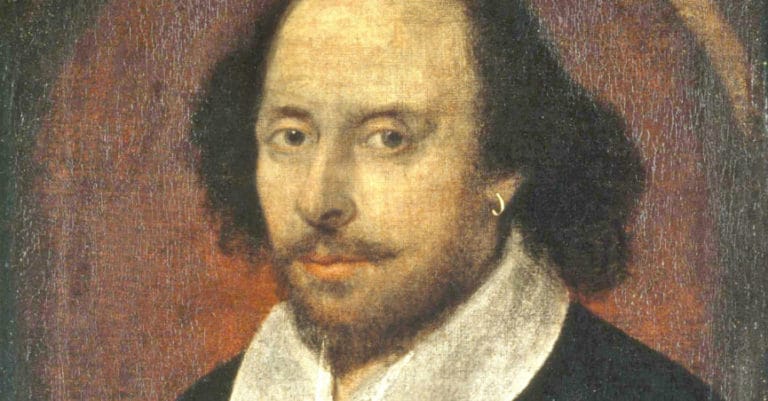
Shakespeare never wrote a philosophy book. Yet hundreds of years later, his plays still seem to ask philosophical questions that feel strangely personal.
What if reality is not quite what we think it is?
Not because the world isn't real. The world is obviously real. People leave, opportunities disappear, relationships change, and things happen whether we are prepared for them or not.
But between what happens and what we experience, there is something else: interpretation.
And Shakespeare seemed deeply fascinated by that gap.
In The Tempest, Prospero says:
“We are such stuff
As dreams are made on; and our little life
Is rounded with a sleep.”
In Macbeth, life becomes:
“a walking shadow, a poor player”
And in As You Like It:
“All the world’s a stage,
And all the men and women merely players.”
Taken together, these lines suggest something more interesting than the simple idea that “life is a dream.”
How much of our reality is shaped by the way we see it?
We don't experience the world like a camera.
We interpret it.
Someone doesn't reply to your message.
The fact: they didn't reply.
The interpretation: They must be angry with me.
A friend succeeds where you failed.
The fact: they succeeded.
The interpretation: I'm falling behind.
A relationship ends.
The fact: it ended.
The interpretation: I'll never find anyone like them again.
The first part is what happened.
The second is the story we attach to it.
And sometimes, the story becomes more powerful than the event itself.
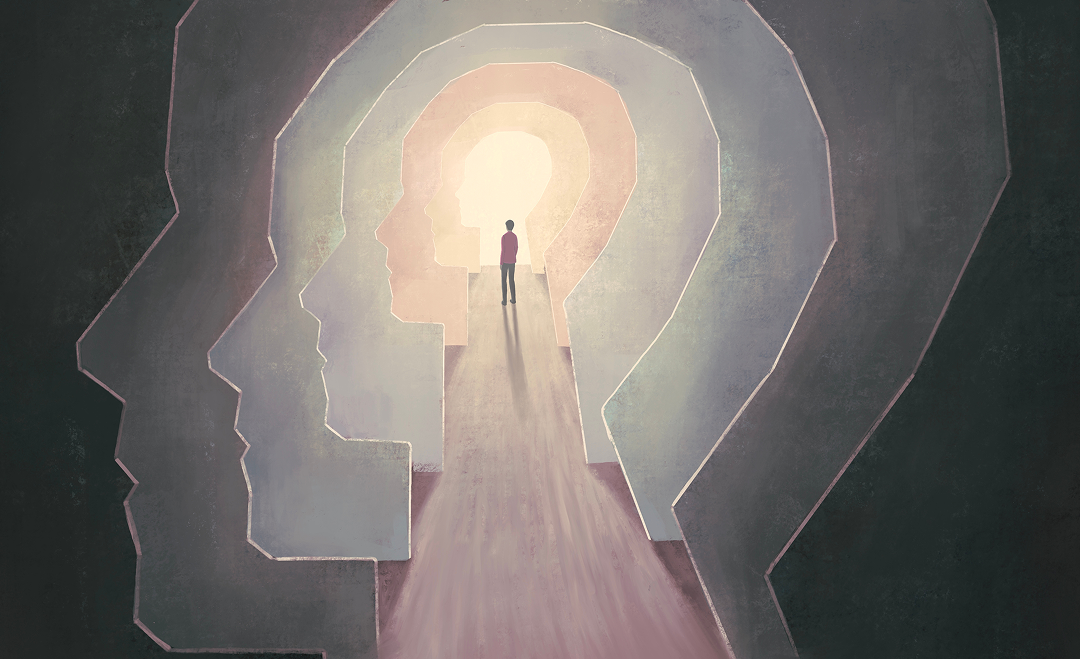
Shakespeare's characters are constantly caught in this gap. They misread intentions, mistake appearances for truth, and act on assumptions they never stop to question.
We do the same.
We judge people we barely know. We decide what someone thinks of us without asking. We interpret silence. We turn one bad experience into a prediction about the future.
We take a temporary feeling and turn it into an identity:
I'm failing.
I'm not good enough.
People don't respect me.
Things never work out for me...
Repeat a thought often enough, and it stops sounding like an interpretation.
It starts sounding like a fact.
That makes Shakespeare's idea of the stage especially interesting. If all the world is a stage, we're not just watching the performance. We're playing a role in it.
The successful person.
The difficult child.
The reliable friend.
The failure.
The person who always has everything together...
We perform these identities for other people, and eventually, for ourselves.
But what happens when the role no longer fits?
This is where skepticism becomes useful. Not the belief that nothing is true, but the willingness to admit that we might be wrong about what we think we know.
Before deciding what something means, we can ask:
What if I'm seeing this through a story rather than seeing it clearly?
This is also where fiction earns its strange power.
A fictional character never existed, yet we recognize our fears in them. We understand grief through imaginary lives. We see our own relationships more clearly by watching someone else's fall apart.
Fiction creates enough distance for us to notice things we might miss in our own lives.
That may be part of Shakespeare's lasting power. He doesn't tell us exactly what reality is. He shows us how easily we can confuse our interpretation of reality with reality itself.
When something happens, there are two questions worth separating:
What actually happened?
And:
What did I decide it meant?
The space between those two answers can tell us a lot about how we experience our lives.
Maybe the world really is a stage. But the more interesting question isn't whether we're actors.
It's whether we know when we're performing.