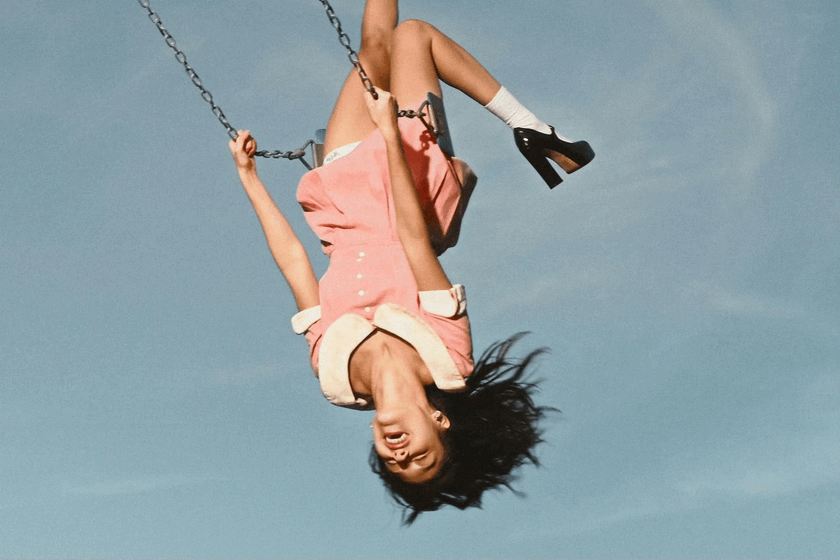
Olivia Rodrigo’s third studio album, "you seem pretty sad for a girl so in love," shattered records on its release day, raking in over 80 million streams. It also earned a stellar 8.3 rating from Pitchfork, alongside their coveted "Best New Music" red badge.
Between these massive commercial numbers and glowing critical acclaim, she has officially cemented her status as the undisputed number one female artist of the Gen Z generation.
This frenzy has even spilled over into prediction markets; on Kalshi and Polymarket, trading volume for betting contracts regarding her third album's sales has surpassed $185,000.
Why has Olivia exploded into such a phenomenon among Gen Z?
Her music seamlessly blends a youthful, girlhood romanticism with '90s revival rock, speaking directly to the collective anxiety and sense of lack that defines Gen Z. Her lyrics are disarmingly blunt and deeply introspective, capturing the exact quality that gives Gen Z artists their ultimate leverage: Authenticity.
Olivia is incredibly intentional with her musical storytelling. Back in SOUR, she was just a teenager trapped in the bitter aftertaste of a first heartbreak. But in this new album, she navigates her first real "Big Girl Relationship." The dizzying highs and lows of her highly publicized romance with Louis Partridge are laid bare in meticulous detail. For instance, in "drop dead," she captures a love so dizzying it makes her head spin, leaving her in disbelief: "I'm paranoid I made you up." The title track, "stupid song," dissects the dread, the scrutiny, the feelings of inadequacy, and the intense possessiveness of love. Then, in "the cure," creeping suspicions and body image insecurities begin to warp the relationship's "correct narrative," leading all the way to the album's closing declaration: "I resent you."
This trajectory heavily mirrors Taylor Swift’s early rise—fueled by an endless well of girlhood angst and romance. Yet, an implicit bias still lingers across the music industry and broader cultural circles: the idea that singing about politics or societal issues represents a "higher," more profound form of grand narrative art, while the "sad girl pop" of Taylor and Olivia—built on love and teenage heartbreak—is somehow trivial.But Olivia’s brilliance lies in how she strips away the celebrity glare.
While she might be writing about Louis, she is ultimately reflecting the emotional tug-of-war, mental exhaustion, and self-examination that every ordinary Gen Z experiences in modern relationships. Because she transforms a private diary into a collective resonance, she elevates these "girlhood matters" into something with immense cultural weight that transcends social class and gender. It is the ultimate payoff when personal growth and a razor-sharp artistic persona align in perfect harmony.
The Road Ahead for Olivia
Olivia's commercial dominance was already a given the moment she announced a massive, multi-night tour right alongside the album drop. Having fully locked down "arena-level" venues this time around, her next tour will undoubtedly make the leap to full-scale stadiums.Furthermore, her collaboration with the legendary Robert Smith on this album signals that she is actively shedding the "teen pop" label. Backed by Pitchfork's high praise, she is poised to sweep major, authoritative industry awards later this year.
Olivia is fast becoming a visual and aesthetic icon in her own right. Her signature brand of vintage romanticism is elevating her from just a "singer" or "songwriter" into a definitive artist of the Gen Z era. By her next record, she will almost certainly move past the topic of romance to tackle more complex, adult themes, completing yet another evolution of her artistic identity.So, coming back to the present moment: what do you think Olivia’s first-week album sales will look like?