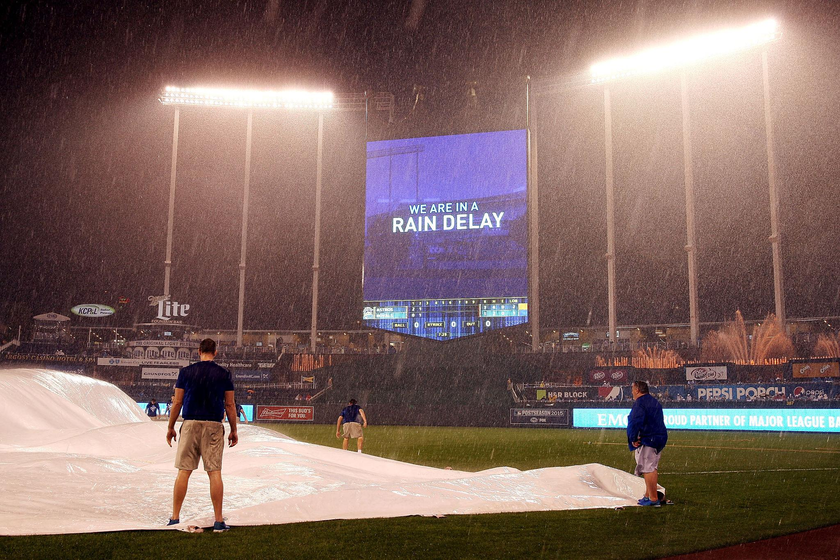
On Kalshi, there is a family of contracts that pay out when a sports match has any delay due to weather.
At first, this sounds like one of the least controversial event contracts. Ordinary humans cannot create a thunderstorm. Weather forecasts are public. Delays impose real costs on ticket holders. This contract may offer a hedging opportunity for stakeholders who bear losses if the match cannot start on time.
But the contract is not settled by rainfall, lightning or wind speed.
Under Kalshi's rules, a qualifying delay must be formally announced by the governing body of the sports event. Officials must also identify weather, atmospheric conditions or weather-related safety as the primary reason.
In addition to predicting the weather, traders are also predicting how a small group of people will interpret the weather, apply safety rules and describe their decision publicly. This distinction places weather-delay markets in a grey area between weather-related derivatives and contracts on decisions made by a small group of officials.
They are not pure "weather/climate contracts"
Kalshi classified its weather-delay product as “Weather/Climate” in its filings with the CFTC. The templates can cover sports matches as well as other events. Qualifying weather can include rain, snow, lightning, extreme temperatures, strong winds, poor visibility and any atmospheric condition that officials consider unsafe.
The actual settlement chain is therefore: Weather conditions → safety assessment → official decision → public announcement → settlement.
A conventional weather contract has a shorter chain: Measured weather conditions → settlement.
Each extra step introduces additional uncertainty and another potential point of manipulation.
Suppose heavy rain falls before a baseball game. The field is wet, but the organizing body believes it can be prepared in time. The contract resolves No.
Suppose the game starts late because rain affected transport, staffing and stadium entry. The announcement describes the cause as an operational problem. The contract may still resolve No.
The price is therefore not a clean forecast of atmospheric conditions, but partly a forecast of institutional behaviour and official language.
Some weather decisions are close to automatic (e.g., a lightning strike occurs within a defined distance). Other decisions require more (subjective) judgment (e.g., whether a wet field remains playable when the rain has stopped).
League rules illustrate this mixture of protocol and discretion. Under the NFL rulebook, severe weather, lightning and flooding are treated as emergencies. Authority to determine whether an emergency exists is vested in the Commissioner, designated League-office representatives and the game referee. If neither the Commissioner nor a designated representative is present, the referee has sole authority, although the referee must try to consult the league and may seek information from the weather bureau and police.
This is not identical to a referee deciding whether a pass interference penalty occurred. Weather is an external event, and safety procedures constrain the decision. But the settlement still depends on identifiable people exercising authority and discretion.
Should a weather-delay contract be treated as a weather product or a sports betting product?
The CFTC's emerging dividing line
In June 2026, the CFTC proposed a new framework for determining when specific contracts involving "gaming" or other listed activities are contrary to the public interest. The proposal is not yet a final rule and is seeking public comment.
The CFTC takes a relatively favourable view of markets based on broad sporting outcomes, such as final scores, winners, point differences and statistics produced over a meaningful period of play. These results reflect the combined actions of many participants. No single person normally controls the entire settlement result, and suspicious attempts to influence it may create patterns that surveillance systems can detect.
The Commission is much more sceptical of contracts that settle solely on a referee's judgment, a disciplinary ruling or another discrete action controlled by a small number of identifiable people. Its proposal points to several concerns including:
- inappropriate contact between traders and officials
- selective or manipulated decision-making
- limited accountability under time pressure
- weak informational value
- damage to confidence in the integrity of the game
The CFTC preliminarily concluded that contracts settled solely by such officiating outcomes would likely be contrary to the public interest.
However, a weather-delay market sits between the two categories. It does not settle on the final outcome of a long contest. But it also does not settle solely on an arbitrary whistle or penalty. The weather is external, while the official response is internal.
The CFTC has not expressly classified weather-delay contracts as prohibited officiating markets. It would therefore be inaccurate to claim that the agency has already ruled them unlawful. Still, the final payout may depend on a limited number of people who know about the decision before the public does and may influence the decision-making process, its timing, and how it is communicated.
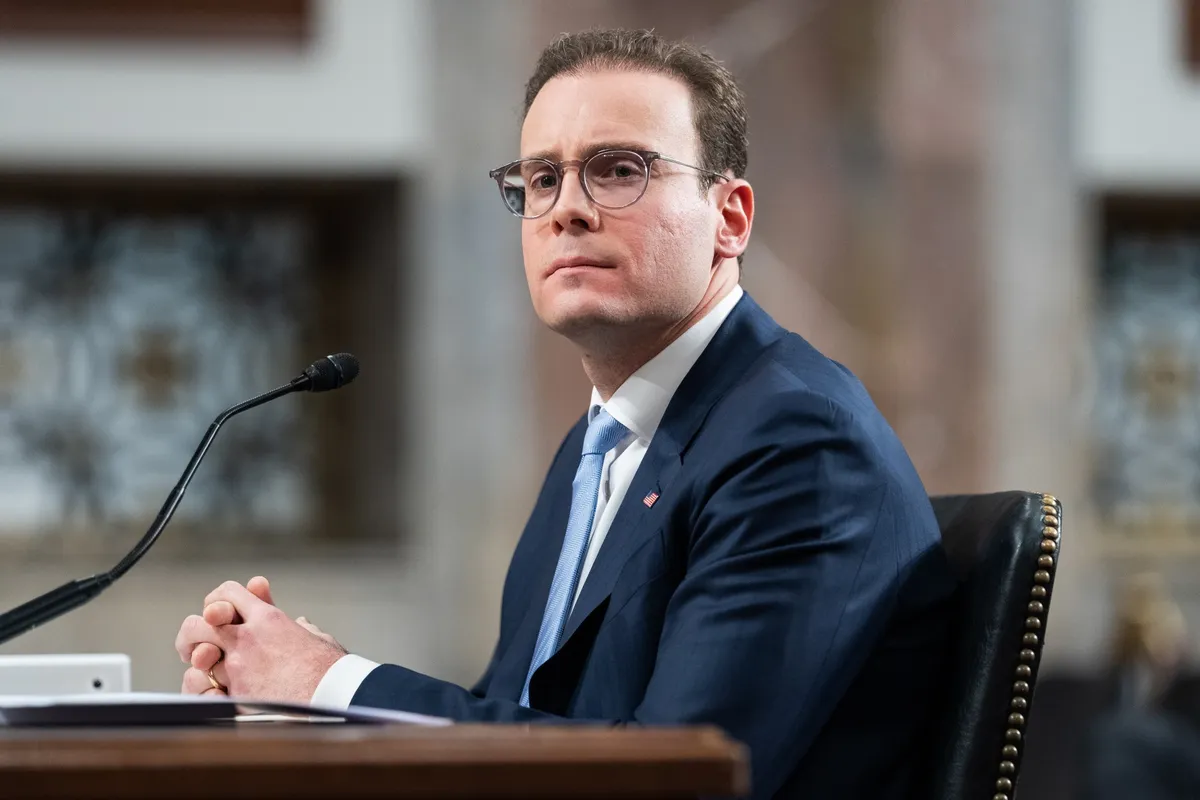
Markets create valuable information, and incentives to obtain it
The usual defence of prediction markets is that they reward people for finding and contributing useful information. But that is also their risk. Once an outcome can be traded, information that previously had little private monetary value can become valuable. And traders may begin searching for people close to the decision.
Sportico reported that gamblers contacted a doctor who had previously treated NFL quarterback Joe Burrow, seeking information after Burrow suffered a wrist injury. The pressure was not limited to physicians. Nurses, assistants and office workers could also become targets because they might have access to non-public medical information.
A 2026 Reuters legal analysis similarly described injury reports and lineup decisions as financially valuable information that can create integrity and employment-law risks when it circulates internally before public release.
Weather delays do not involve the same medical privacy concerns. But the information structure is similar. Potential sources from whom traders can get non-public information include:
- referees and league personnel
- venue managers, security and operations staff
- people preparing official announcements
Some of these individuals have some influence over how and when the event delay decision is communicated.
However, to the best of my knowledge, there is no public evidence that Kalshi's weather-delay contracts have already caused bribery, harassment or altered safety decisions. The comparison with injury information is just evidence of a possible mechanism. But regulators normally do not (and should not) wait for the first successful manipulation before considering whether a market creates the wrong incentives.
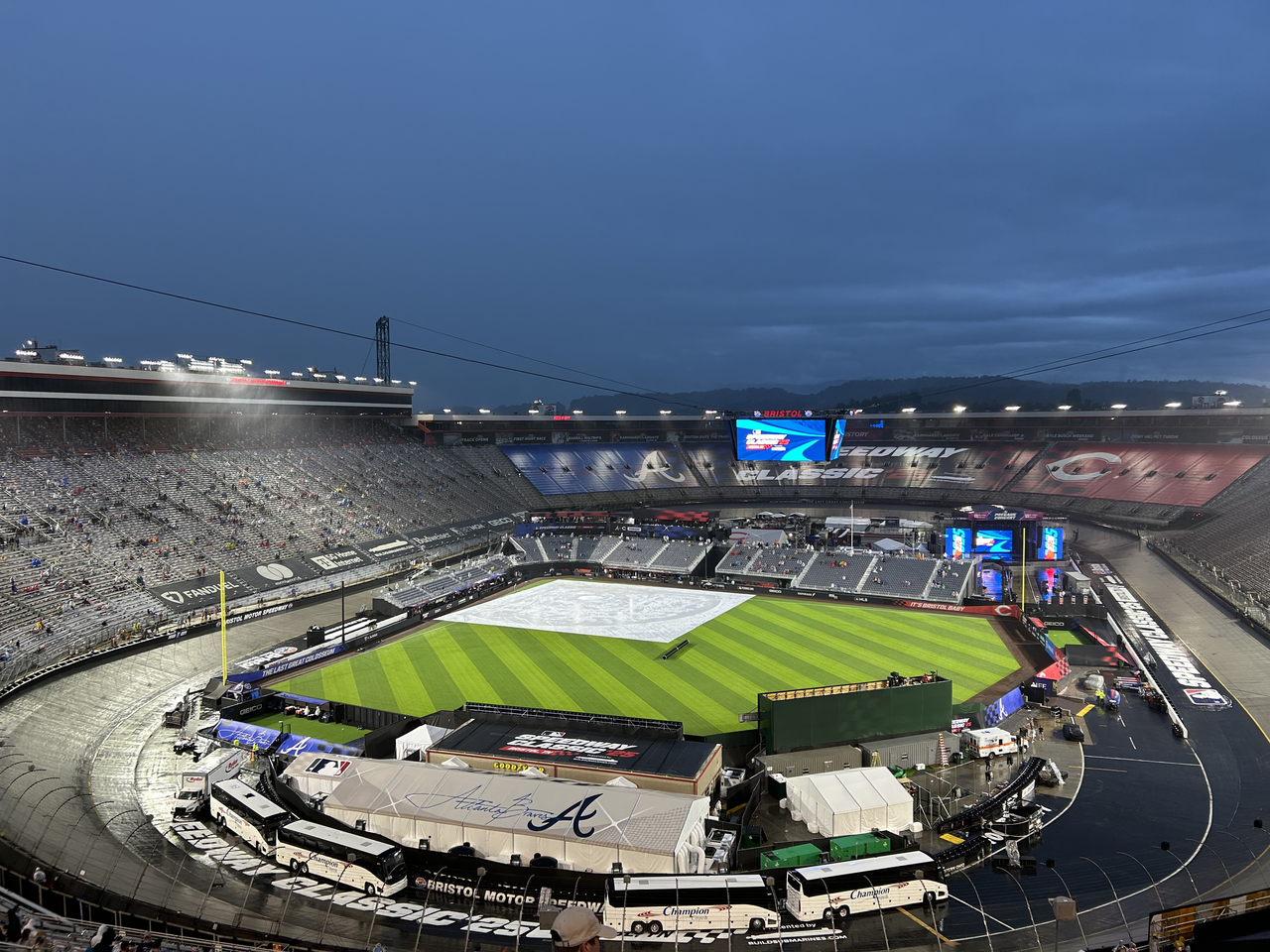
The costs can fall on people who never trade
A trader who loses money may blame the referee who stopped the game, the venue official who delayed entry, the grounds crew that declared the field unsafe or the league employee who wrote the announcement, when a delay is not that necessary from their perspective.
The larger issue is the distribution of benefits and costs. The exchange earns fees. Traders gain a new product. Some businesses may receive a useful probability signal. But venue workers, officials and contractors may bear the additional cost of suspicious approaches, investigations, and public accusations. These external costs are relevant even when nobody successfully manipulates the result.
An NCAA study published in November 2025 found that more than one-third of surveyed Division I men's basketball players had experienced harassment from bettors. Earlier NCAA research also found betting-related harassment across several college sports.
The strongest case for allowing the markets
Weather delays are economically meaningful. They affect ticket holders, television schedules, staffing, transport, and nearby businesses. A market could help stakeholders hedge.
It may also answer a more useful question than a standard weather forecast. A forecast tells a restaurant owner that rain is likely. A delay market estimates whether the rain will be serious enough, under the relevant sporting rules and local conditions, to disrupt the event.
These are real benefits. Calling the product meaningless gambling would ignore the economic consequences of event disruption and the potential value of aggregated forecasts.
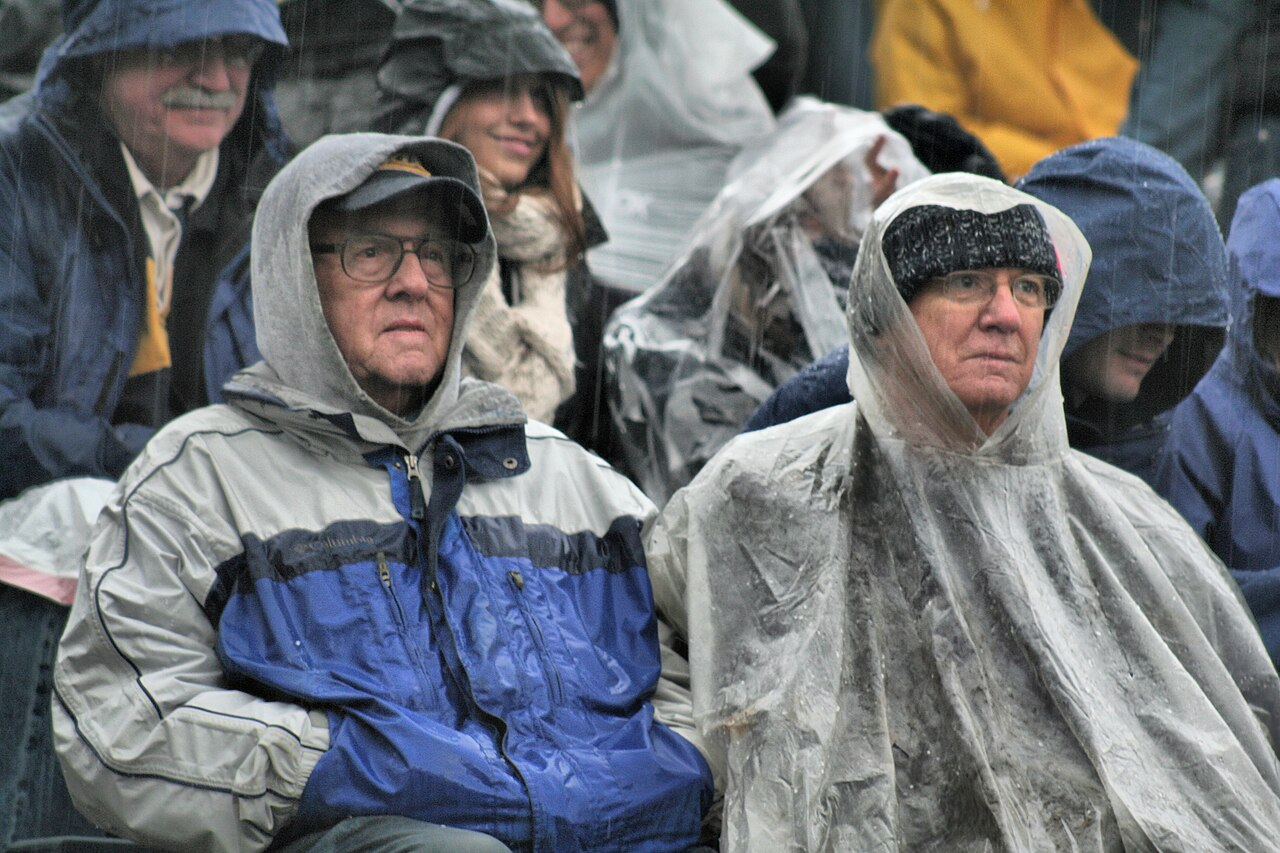
So, should these markets exist?
Sports weather markets should not be rejected simply because they are connected to betting. Weather disruption is real, costly and forecastable.
The harder question is whether a contract that, in some cases, depends partly on the discretionary decisions of a small group creates public-interest concerns.
While the CFTC has not pushed back and its 2026 proposal remains unfinished, these markets are testing how far the CFTC is willing to tolerate such markets.
The NFL would not be comfortable with Kalshi allowing weather delay wagers on its games, according to Sportico.
Overall, the current design raises more public-interest concerns than its "Weather/Climate" label might initially suggest. Its settlement can depend on judgment, timing and official wording, which deserve much greater scepticism. It creates incentives to seek non-public information or manipulate the market itself. Its social costs may fall on officials and workers who did not choose to participate in the market.
Disclaimer: The content is for informational purposes only. You should not construe any such information or other material as legal, tax, investment, financial, or other advice. Nothing contained in this article constitutes a solicitation, recommendation, endorsement, or offer by the author(s) or any third party service provider to buy or sell any securities or other financial instruments in your or in any other jurisdiction in which such solicitation or offer would be unlawful under the securities laws of such jurisdiction. The author(s) report(s) no conflict of interest.