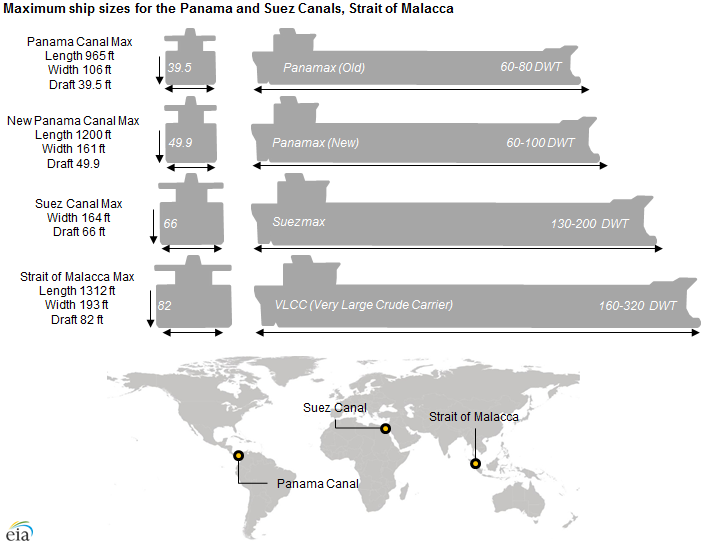
On August 5, 2026, the Panama Canal Authority announced another tightening of draft restrictions for large vessels. Starting August 26, the maximum allowable draft for Neopanamax vessels will be reduced to 48 feet. From September 3, it will be lowered further to 47.5 feet and remain at that level until further notice.
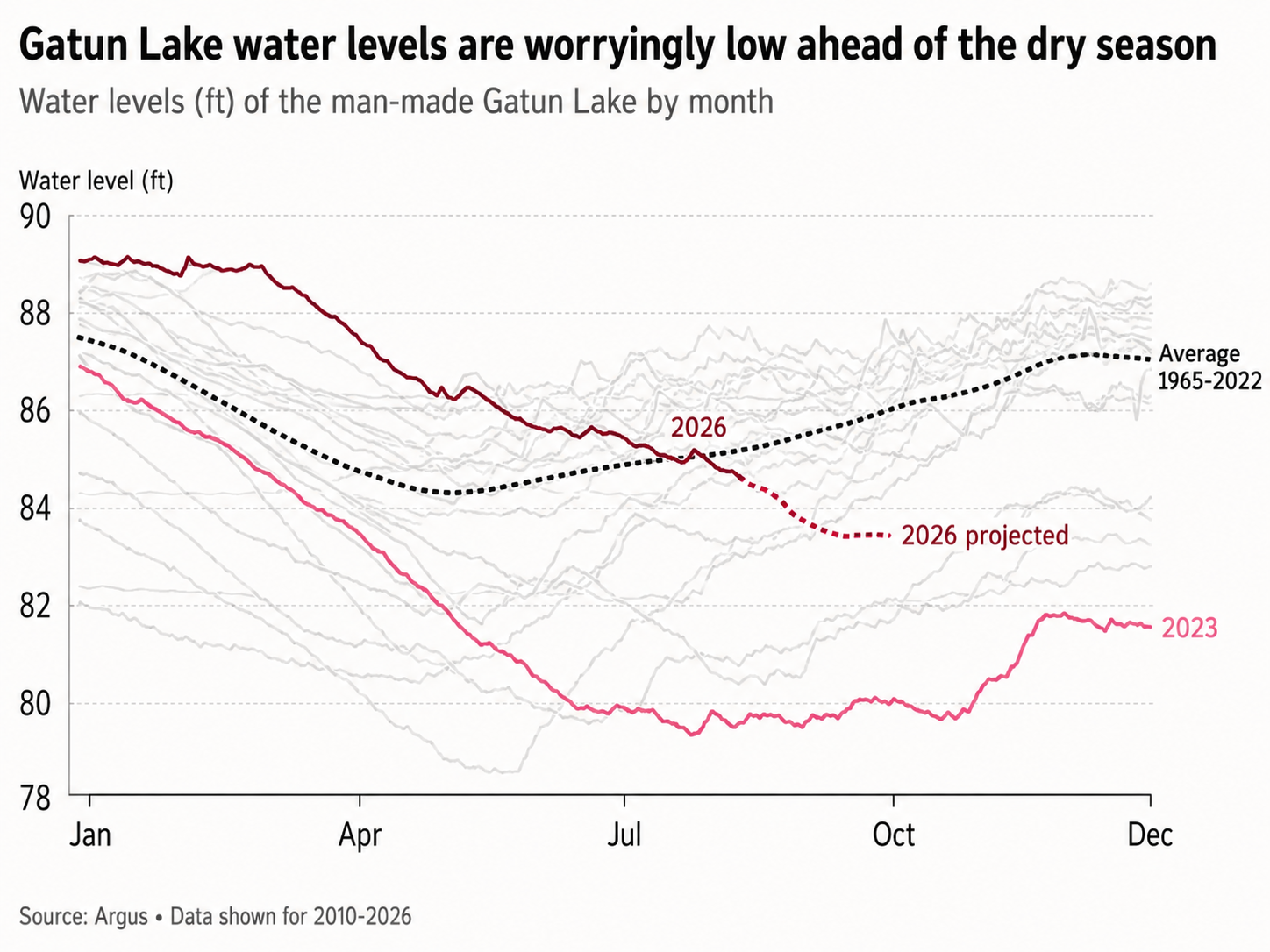
Under normal conditions, when the water level of Gatún Lake reaches 85 feet, Neopanamax vessels can operate at a maximum draft of 50 feet. In other words, the fundamental problem is that there is simply not enough water in the lake. More interestingly, the Authority has not, for now, reduced the number of vessels allowed to transit the canal each day.
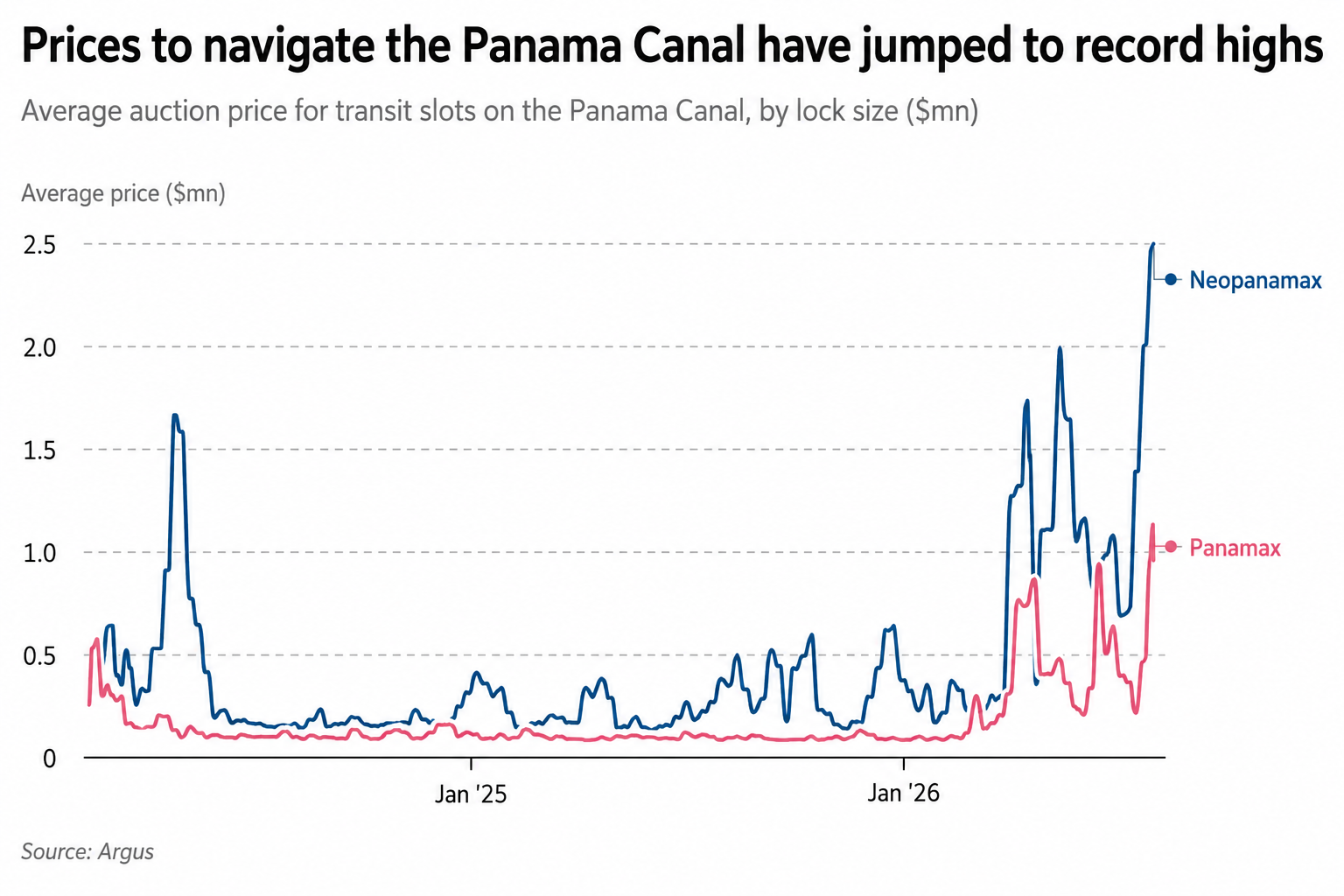
Meanwhile, another price at the canal is surging. According to the Financial Times, the average winning bid for the Panama Canal’s daily auctioned transit slots has reached about $1.1 million so far in August 2026, more than 16 times the level recorded during the same period last year. Slots for the larger locks have averaged about $2.5 million, with individual bids reaching as high as $3.78 million. On August 3, around 113 vessels were waiting to transit the canal, compared with just 40 on January 2.
These two seemingly different developments are actually pointing to the same underlying issue: the Panama Canal is not merely selling access to a waterway. What it is really selling is interoceanic transportation capacity created by freshwater. Once you understand this, the economics of the Panama Canal look completely different.
The Panama Canal Is Essentially a Giant "Freshwater Elevator"
Many people picture the Panama Canal as a waterway dug through the land to connect the Atlantic and Pacific Oceans. If that were really the case, water shortages should not be a major problem. The Suez Canal, for example, is a sea-level canal, where ships travel through at roughly the same elevation.
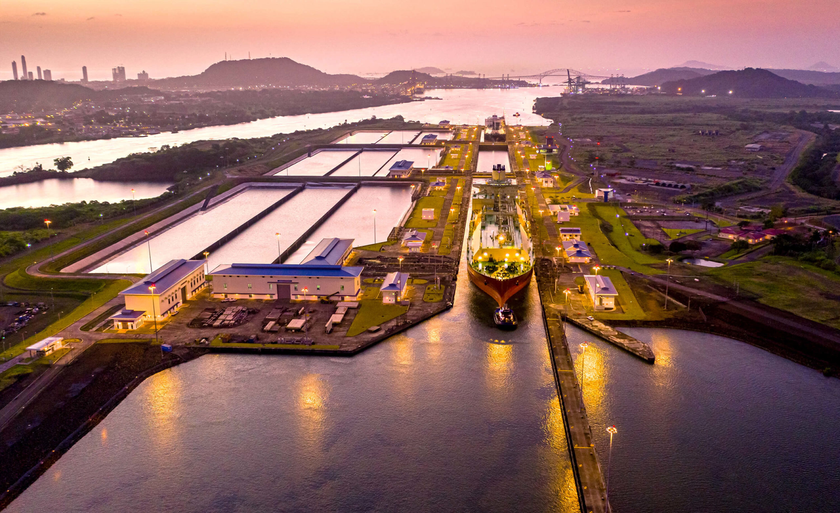
But the Panama Canal is different. After entering the canal from sea level, ships must be lifted step by step through a series of locks until they reach Gatún Lake, about 85 feet above sea level. They then sail across the isthmus before descending through another set of locks back to sea level on the other side. The process is powered not by giant pumps, but primarily by gravity and freshwater. In other words, every time a ship crosses the Isthmus of Panama, some of the freshwater stored in the lakes must be released.
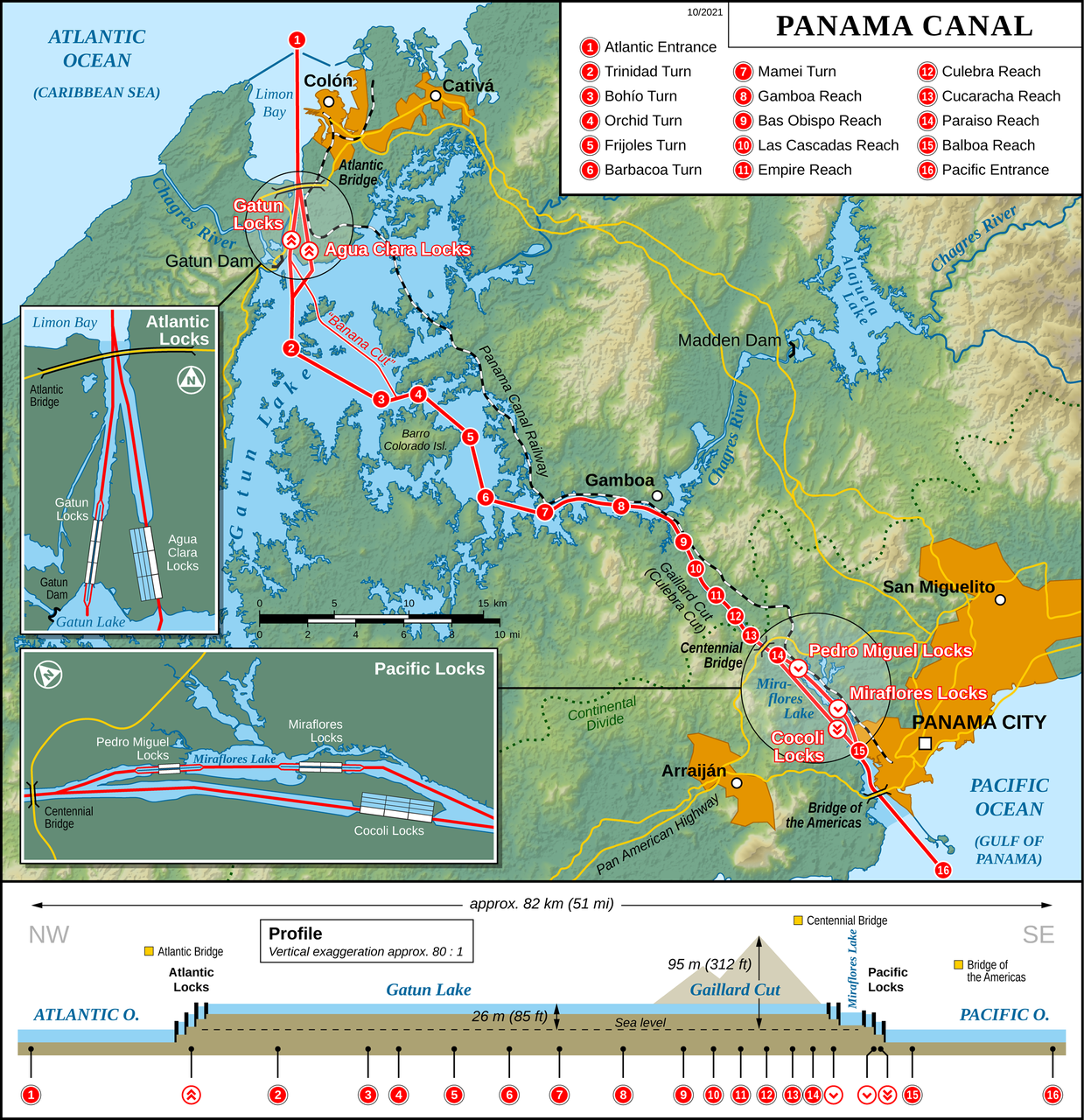
World Weather Attribution estimates that operating the Panama Canal’s locks requires about 7 billion liters of water per day from the rain-fed Gatún Lake.
Operational data from the Panama Canal’s 2025 fiscal year show that the average volume of water involved in each Panamax transit was about 0.194 hm³, while a Neopanamax transit involved about 0.4368 hm³, equivalent to 436,800 cubic meters. It is important to note that this official metric refers to average operational water use. It does not mean that all of this water is permanently "consumed", because the newer locks incorporate water-recycling systems.
The Panama Canal’s actual usable transportation capacity therefore depends on reservoir storage + rainfall replenishment + water-use efficiency per transit + lock operating capacity.
This is very different from an ordinary port. Expanding a conventional port usually means adding terminals, cranes, berths, and deeper navigation channels. The expansion of the Panama Canal, however, produced a much more unusual result: the physical capacity created by steel and concrete can exceed the capacity that the natural water cycle can sustainably support. The 2016 expansion solved the problem of ships being "too large", but it did not fundamentally solve the question of whether there would be enough water. That is why the marginal resource determining the Panama Canal’s effective transportation capacity today is not concrete, but rain.
Limiting Weight Before Limiting Ship Numbers
This time, the Panama Canal Authority has specifically emphasized that it is not currently reducing the number of vessels allowed to transit the Panamax or Neopanamax locks each day. That point is extremely important. If you look only at the headline figure for "how many ships transit each day", you might conclude that the canal is still operating normally and that the problem is not particularly serious.
But when measuring transportation capacity, the unit that really matters is cargo per day, not ships per day.
Draft is the depth to which a ship’s hull sits below the waterline. The heavier the ship is loaded, the more water it displaces and the deeper its draft becomes. When the water level in Gatún Lake falls, the navigation channel can safely accommodate less draft, meaning that a vessel that would normally transit at a 50-foot draft may have to reduce fuel, ballast water, or cargo.
In practice, the Authority therefore has two separate control valves: how many ships are allowed to transit each day + how heavily each ship is allowed to load. During the extreme drought of 2023, both valves were used. At the time, the maximum draft for Neopanamax vessels fell from the normal 50 feet to 44 feet, while daily transit capacity was also reduced from normal levels.
The approach in August 2026 is more subtle: keep the number of ships broadly unchanged at first, while lowering the maximum load each vessel can carry. This means that when assessing risks to the Panama Canal, focusing only on the number of daily transits is misleading. Even if 35 or 38 ships are still passing through each day, the canal’s actual daily cargo throughput can still decline if more vessels are forced to sail with reduced loads.
Moreover, because a ship’s own weight, equipment, fuel, and other fixed components do not change much, a draft restriction reduces the vessel’s total allowable displacement, while cargo capacity is only what remains after subtracting those fixed weights. For a vessel that would otherwise be fully loaded, even a reduction of only a few percentage points in allowable draft can therefore translate into a disproportionately large loss in the revenue-generating cargo payload. However, the exact relationship between the change in displacement and a given reduction in draft is not linear. It depends on factors such as the vessel’s hull form, dimensions, and actual loading condition.
How Does a Drop of Freshwater Turn Into a $1 Million Transit Right?
If water is scarce, the natural question is: who gets access to the limited supply?
The Panama Canal has developed a highly market-oriented answer. It does not simply charge tolls. It also operates reservation systems, long-term slot allocation, and auctions. Official 2026 tariff documents show that a standard Neopanamax reservation slot carries a booking fee of $100,000. These regular slots are requested ahead of arrival during designated booking periods. By contrast, an auction price applies when a vessel competes for one of the slots specifically released through the Canal’s auction mechanism, often because regular capacity is already allocated or the vessel operator needs a slot closer to the transit date. The auction starts from a minimum price set by the Canal, but the slot goes to the highest bidder. In 2026, the Canal said it typically makes three to five slots per day available through auction.
Even water itself has entered the pricing system. The Panama Canal currently imposes a Fresh Water Surcharge. Fixed portion of the surcharge is either $4,000 (for vessels > 125 feet and ≤ 300 feet) or $10,000 (for vessels > 300 feet). For vessels longer than 125 feet, an additional variable component is determined directly by the official water level of Gatún Lake on the day before transit, and can range from 0% to 10% of the vessel’s total canal toll. The scarcer the lake water becomes, the higher the price of water.
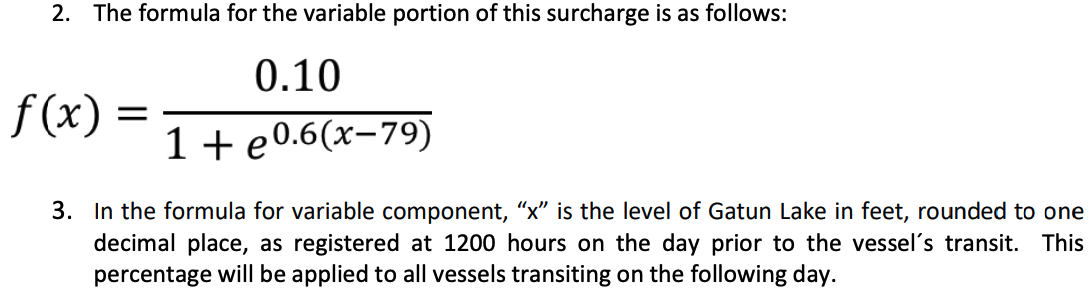
This is actually a remarkably clean economics case. Panama does not have a tradable "Gatún Lake freshwater futures" contract comparable to crude oil futures. But the scarcity value of water is already being expressed through at least three different prices:
- Fresh Water Surcharge: directly maps the water level of Gatún Lake into the cost of transit.
- Transit slot auction prices: as available capacity becomes scarcer relative to demand, shipowners bid up the price of securing timely passage.
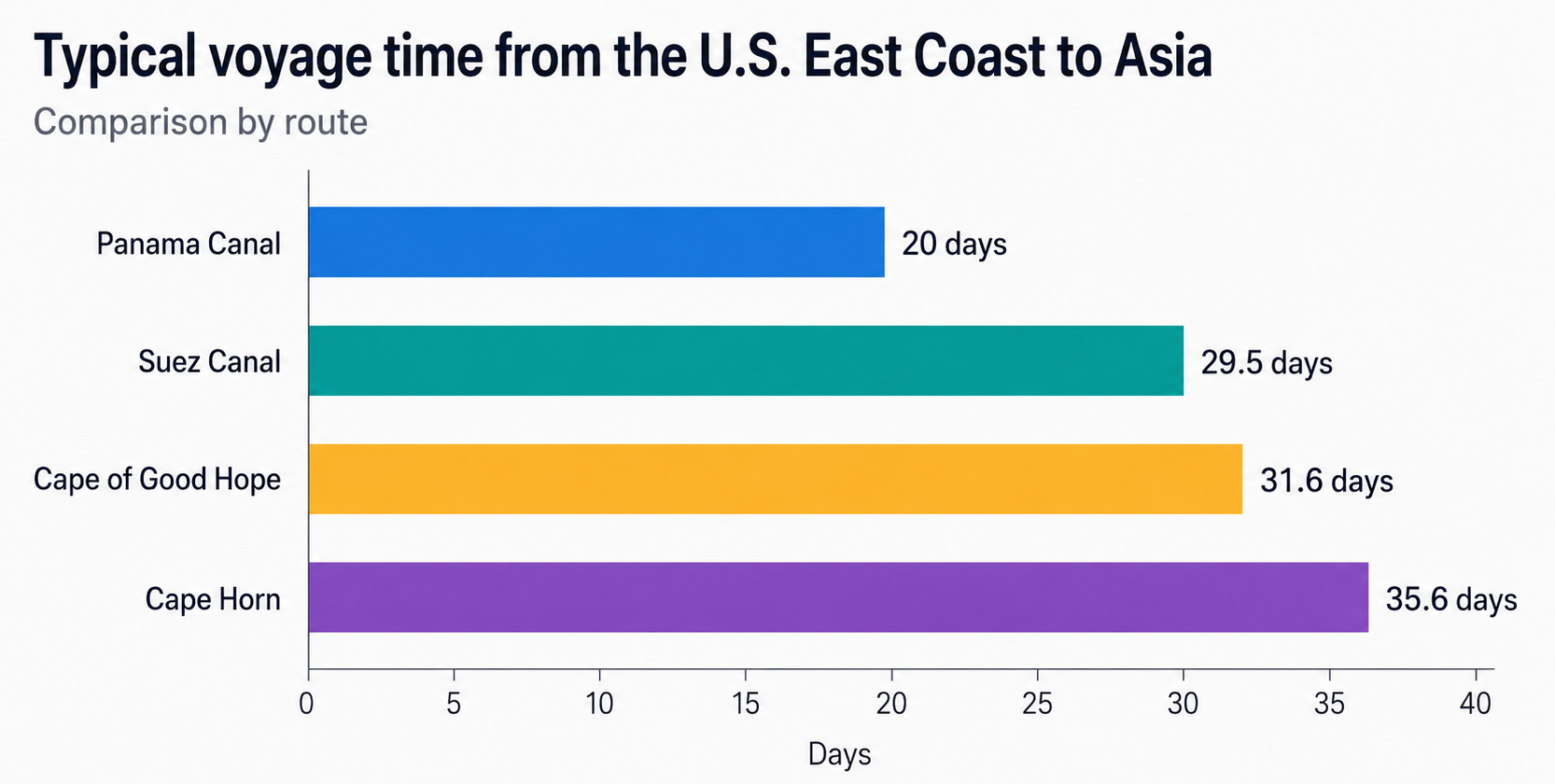
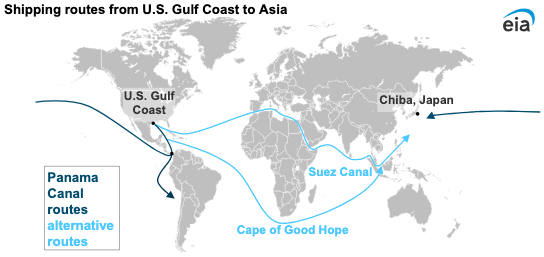
- Global shipping prices: if vessels cannot transit on time, they must wait, reduce their loads, or reroute through longer alternatives such as the Suez Canal or the Cape of Good Hope. The scarcity then feeds into fuel costs, vessel charter rates, inventory carrying costs, and ultimately the prices of goods.
This is why a transit right worth more than $1 million is economically meaningful. It can be understood as the market-implied shadow price of the service of "crossing the Isthmus of Panama immediately".
The maximum price a shipping company is willing to pay depends roughly on:
- additional fuel costs from rerouting
- additional sailing days × daily vessel cost
- financing and carrying costs of the cargo
- costs of delayed delivery and supply-chain disruption
- expected cost of continuing to wait
So $1 million is not some absurd "queue-jumping fee". It is telling us that, for certain cargoes, the economic cost of not using the Panama Canal has already exceeded $1 million.
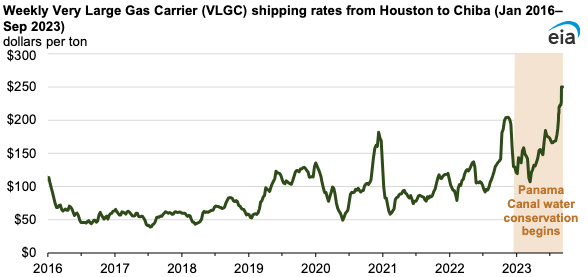
At the same time, ships themselves are a finite stock of transportation capacity. Suppose a given volume of LPG originally requires one vessel to complete a round trip in 40 days. If rerouting extends that journey to 50 days, the world’s "effective shipping capacity" available to transport LPG declines. This is why the EIA observed that delays at the Panama Canal during the drought in 2023 pushed up vessel freight rates even in other regions. The ships did not disappear. They were simply "locked up" for longer periods by longer voyages and waiting times. The economic impact of a chokepoint therefore extends beyond the cargo that directly passes through it. It can also propagate to other trade routes by reducing the effective supply of the global fleet and pushing up freight rates.
The Severe 2023-2024 Drought and Canal Revenue
World Weather Attribution’s attribution study of the 2023 event found that El Niño played a clear role. Under the current climate, rainfall in El Niño years is expected to be about 8% lower than in ENSO-neutral years. An exceptionally dry year like 2023 has about a 5% chance of occurring in an El Niño year under today’s climate conditions. Taking into account how frequently El Niño itself occurs, the researchers estimated that an event of this kind has a return period of roughly once every 40 years.
In fiscal year 2024, deep-draft vessel transits through the Panama Canal fell to 9,944, down 21% year over year. Average daily vessel transits at one point declined from around 36 to 27.3. Yet the canal’s revenue did not collapse. Instead, fiscal year 2024 revenue reached about 4.99 billion balboas, around 18 million more than the previous fiscal year. Net income rose to about 3.45 billion. The Panama Canal Authority explicitly stated that improvements to the reservation system, auctions, the Fresh Water Surcharge, and new pricing strategies helped support revenue.
The drought reduced physical throughput, but at the same time made transit rights more scarce. Through auctions and pricing mechanisms, the Canal Authority was able to capture part of that scarcity in the form of additional revenue. This is a classic example of scarcity rent. If the Panama Canal is understood simply as "a highway that charges tolls", this outcome looks strange. But if it is understood as a transportation capacity marketplace with a limited number of slots and the ability to price them dynamically, the result makes much more sense.
But Today’s $1 Million Price Cannot Be Attributed Entirely to Drought
Part of the surge in transit slot prices in 2026 is also being driven by changes on the demand side.
Conflict in the Middle East and other disruptions to global shipping routes have increased demand for the Panama route for some trade flows between the U.S. Gulf Coast and Asia. In April, the Panama Canal Authority explained that after the conflict began, average auction prices had already risen from around $135,000-$140,000 to about $385,000, with some bids exceeding $1 million. The Authority emphasized that these prices reflected the urgency faced by particular vessels at particular moments, as well as broader shipping-market conditions and supply and demand. They did not mean that the canal had suddenly raised its official toll to $1 million. By August, this dynamic had intensified further. According to the Financial Times, the average auction price had reached about $1.1 million.
 Bennet Caldwell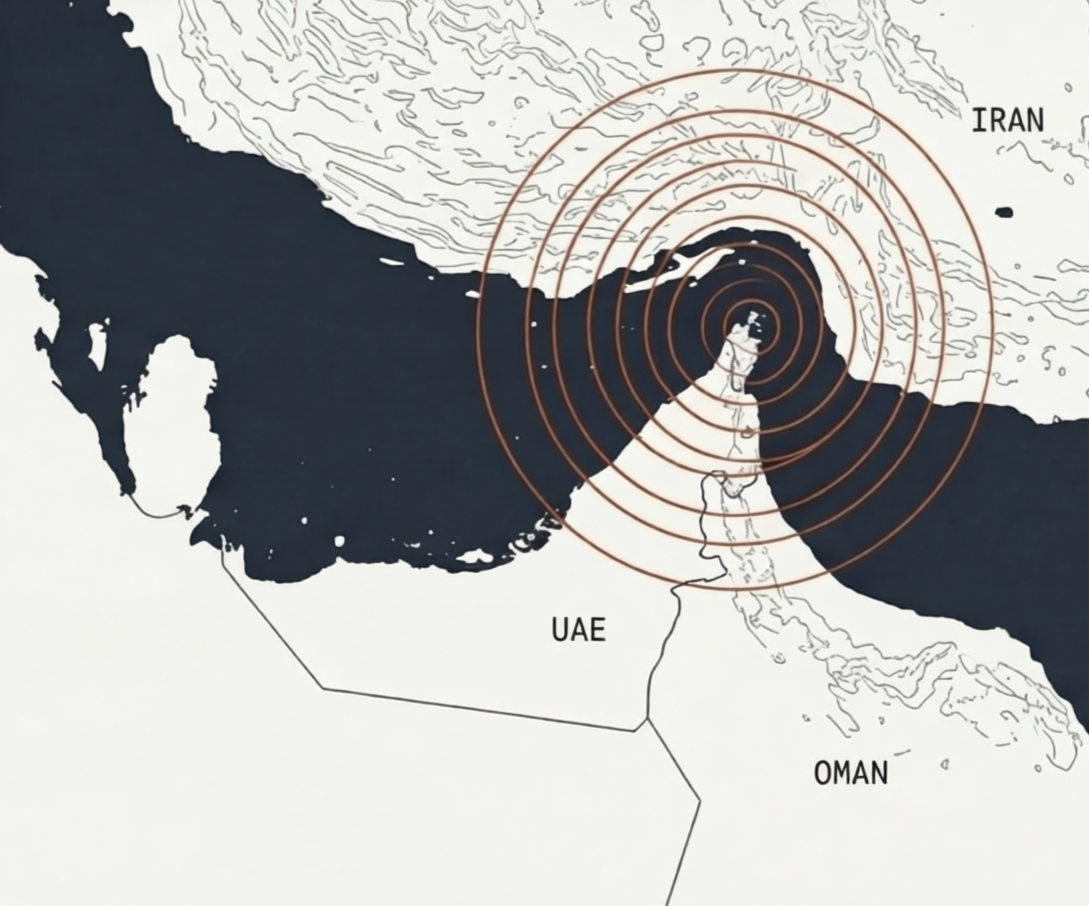
This points to a particularly important situation now confronting the Panama Canal: disruptions at other major nodes in the global shipping network are pushing more vessels toward the Panama route. At the same time, weather conditions are reducing the amount of transportation capacity the canal can reliably provide. The global shipping system can usually absorb the failure of a single chokepoint because cargo flows can be redirected to alternative routes. But when multiple chokepoints come under pressure at the same time, those so-called "alternative routes" themselves become congested and expensive.
Spend Millions of Dollars, or Take the Long Way Around?
Water shortages do not affect all commodities equally. Scarce transit capacity will be allocated through prices to the cargoes that can best afford to pay for it. Consider three types of cargo.
Containers
Container ships may carry electronics, auto parts, clothing, machinery, and retail goods.
The value of these goods per unit of weight is usually relatively high, spreading the transit cost across the value of the cargo is more justifiable. As a result, some container operators have a very high willingness to pay for timely transit. There was even a recent case in which a container ship reportedly paid about $4 million to secure an earlier passage. That figure should not be interpreted as a standard transit fee for ordinary vessels, but it shows that the value of time can become extremely high under certain circumstances.
Grain
In fiscal year 2025, about 25.1 million metric tons of grain passed through the Panama Canal. Grain, however, has a very different economic profile from containerized cargo. The value per unit of weight is much lower. Once the price of an auctioned transit slot rises above $1 million, spreading that cost across the value of the cargo may be much harder to justify than it would be for high-value containerized goods. Vessels carrying grain may therefore be more willing to wait or reroute and accept a longer voyage.
Liquefied Petroleum Gas (LPG)
The United States is an important supplier of propane to Asia, and the U.S. Gulf Coast to East Asia is a major export route.
The U.S. Energy Information Administration (EIA), notes that a voyage from Houston to Chiba, Japan via the Panama Canal typically takes close to half the time required to sail across the Atlantic and then through the Suez Canal. At the height of the Panama Canal drought in 2023, waiting times for Neopanamax vessels at one point reached at least 17 days, while VLGC freight rates from Houston to Chiba rose to $250 per metric ton in late September, the highest level since the data series began in 2016. By 2025, the Panama Canal was once again carrying more than 95% of U.S. LPG exports to Asia, up from around 80% during the 2023-2024 drought period. This means that water shortages in Panama can feed into the Asian petrochemical supply chain through freight costs, because propane is not only a fuel, but also a petrochemical feedstock.
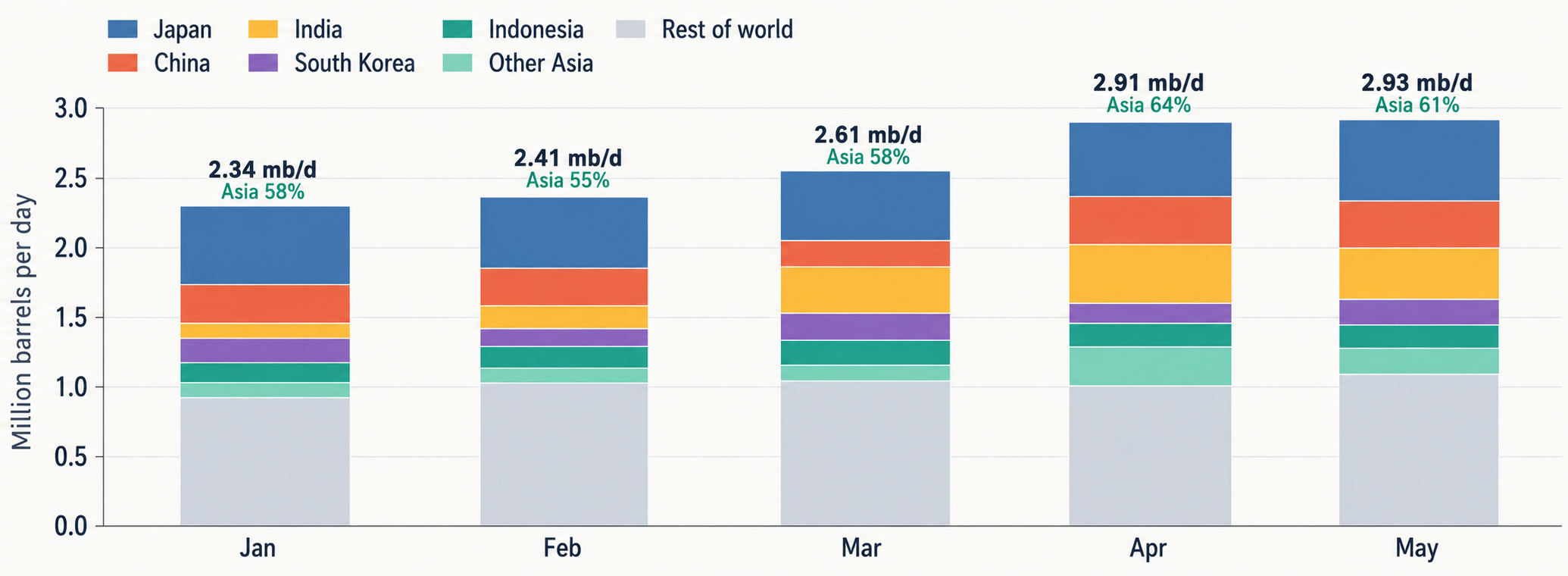
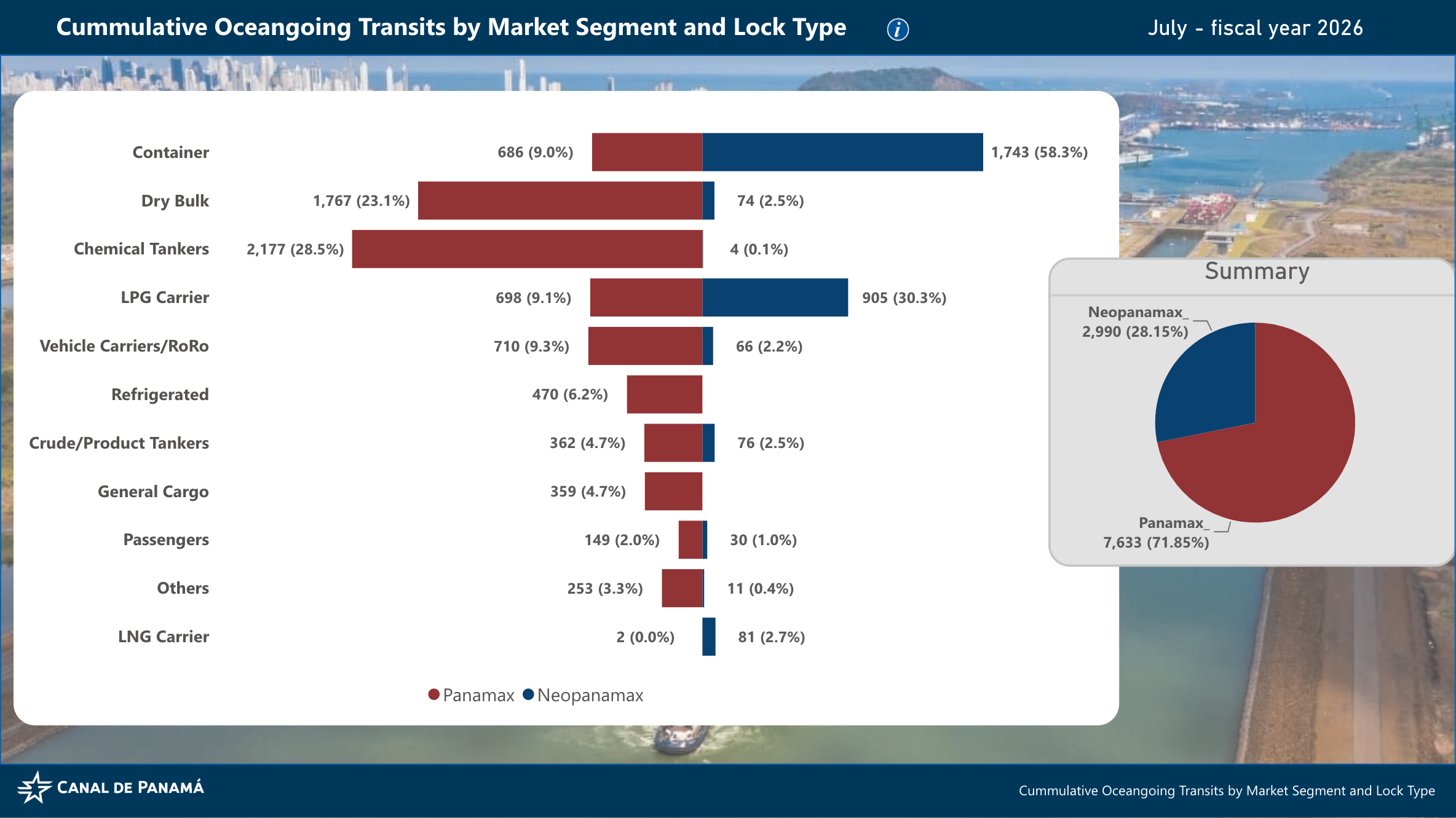
These three examples show that drought does not simply make "all goods a little more expensive". It can also change the composition of cargo moving through the canal. High-time-value, high-unit-value cargoes can bid low-value, less time-sensitive cargoes out of scarce transit capacity. In economic terms, this is a form of capacity rationing by willingness to pay. So if severe water shortages return in the future, the first thing to watch may not be a collapse in the total number of ships transiting the canal, but which types of cargo are still willing to stay.
Should the Water Go to Ships, or to People?
If the Panama Canal used seawater, the issue would be primarily a commercial one. But it uses freshwater. Gatún and Alhajuela Lakes are also important sources of drinking water for Panama’s residents. The Panama Canal Authority states that more than 50% of Panama’s population depends on this lake system for water supply.
Every severe drought therefore forces the government to confront a fundamental resource-allocation question: what is the best use of one cubic meter of freshwater? Should it be used to let a ship carrying tens of millions of dollars’ worth of cargo pass through the canal, or should it be stored for residents to drink?
This is one of the most fundamental differences between the Panama Canal and the Suez Canal. In Panama, the marginal water resource that supports transportation capacity is drawn from the same natural resource pool that supplies water for local residents.
As the population of Panama City grows, along with industrial and household water demand, the issue is no longer simply about whether rainfall is high or low. World Weather Attribution specifically notes that population growth, urban expansion, and aging water infrastructure with significant leakage are all adding pressure to the country’s water resources.
So, more precisely, the Panama Canal is not facing simply a drought problem. It is also facing a water balance problem.
Panama’s Solution Is a $1.6 Billion Reservoir
If water is the binding constraint, the most intuitive solution is to increase the amount of water that can be stored.
That is the idea behind Panama’s Río Indio reservoir project. In 2024, the Panama Canal Authority estimated that the core project would cost about $1.2 billion, with another roughly $400 million allocated to surrounding communities, bringing the total investment to about $1.6 billion. The Authority hopes the new reservoir will improve water-supply reliability and give the canal greater confidence in maintaining around 36 transits per day. In 2025, the Panama Canal Board formally designated the Río Indio Lake Project as one of the country’s top priorities for national water security. Its objective is not only to support canal operations, but also to secure water supply for more than half of Panama’s population.
But this raises another economically important point: there is no free resilience. A new reservoir means flooded land, community displacement, and changes to the local ecosystem. In 2025, affected communities filed a lawsuit with Panama’s Supreme Court challenging the project’s constitutionality. Reuters, citing Panama Canal Authority data, reported that around 2,500 people could be affected by the project.
So "solving the Panama Canal’s water shortage" is not simply a matter of spending $1.6 billion on an infrastructure project. The "resilience" demanded by global supply chains may ultimately require a farmer living in a Panamanian river valley to give up his land. That is a very real externality, but one that is often hidden from view when we talk about globalization.
Disclaimer: The content is for informational purposes only. You should not construe any such information or other material as legal, tax, investment, financial, or other advice. Nothing contained in this article constitutes a solicitation, recommendation, endorsement, or offer by the author(s) or any third party service provider to buy or sell any securities or other financial instruments in your or in any other jurisdiction in which such solicitation or offer would be unlawful under the securities laws of such jurisdiction. The author(s) report(s) no conflict of interest.