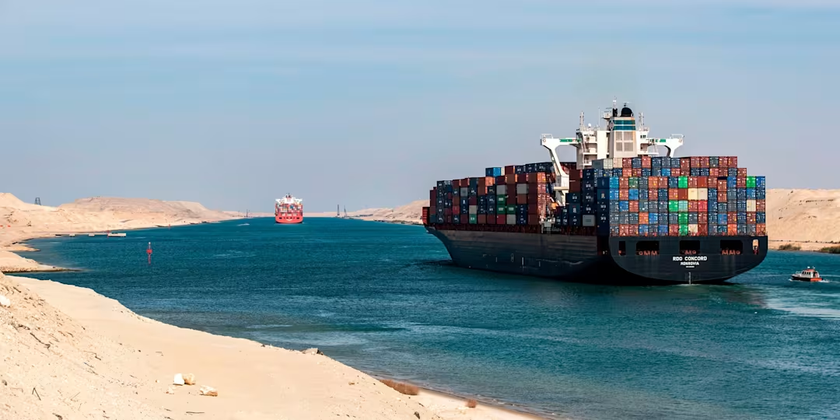
On August 10, 2026, Maersk and Hapag-Lloyd announced that another container service in the Gemini shipping network would resume transiting the Red Sea and the Suez Canal. The two companies had already begun restoring Suez transits on some Asia-Europe services in July. This suggests that global shipping companies are once again testing a route that they had largely abandoned over the previous two years.
 Bloomberg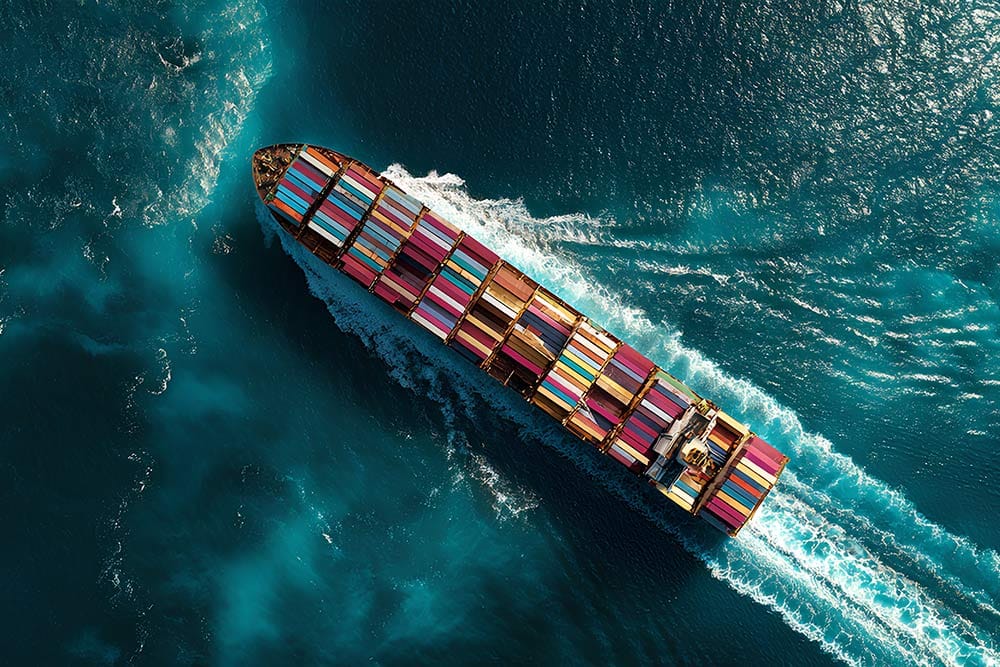
But this is still far from a full return. As of August 13, Maersk had restored only about one-third of its normal Red Sea and Suez traffic, with just 4 of the 13 relevant services returning to the route. The company believes that conditions in 2026 are now sufficient for a full resumption, but it has nevertheless chosen to adjust its network gradually.
Unlike the Panama Canal, the Suez Canal did not impose draft restrictions because of water shortages, nor did infrastructure damage cause a prolonged reduction in transit capacity. The Suez Canal is a sea-level canal with no locks. Ships entering from the Mediterranean do not need to be raised to an artificial lake and then lowered back to sea level, as they do in the Panama Canal. The Suez Canal Authority explicitly describes it as the longest canal in the world without locks.
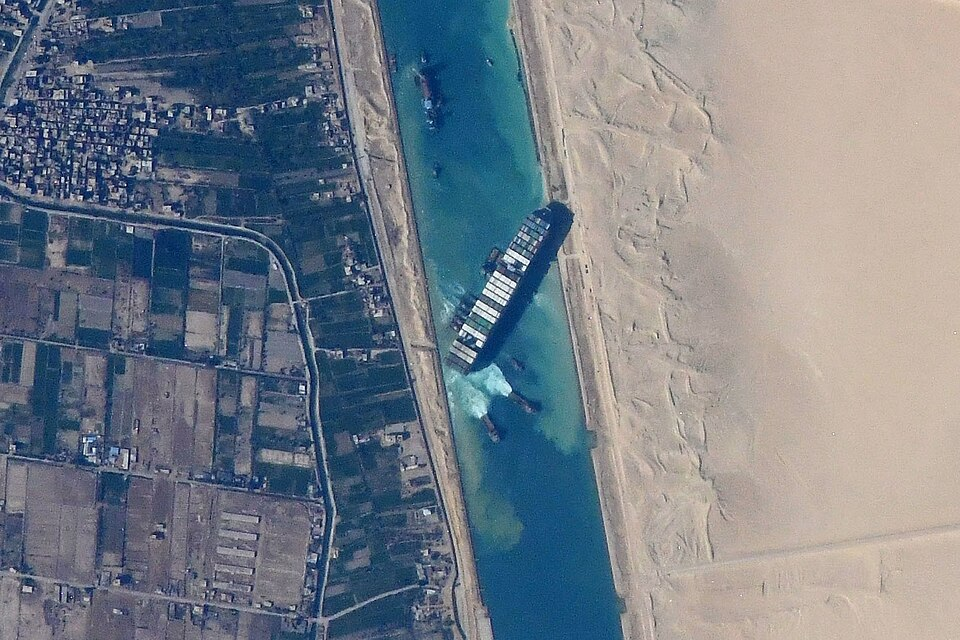
Of course, the Suez Canal is still subject to physical constraints such as channel depth, dredging requirements, windblown sand, accidents, and vessel size. The grounding of the Ever Given in 2021 demonstrated that an accident can temporarily shut down the entire waterway.
Yet traffic still largely disappeared. In 2023, 26,434 vessels transited the Suez Canal, representing 1.568 billion net tons. In 2024, that fell to just 13,213 vessels and 525 million net tons. In 2025, traffic remained at only 12,758 vessels and 522 million net tons. In other words, the number of vessels transiting the canal in 2025 was still less than half the 2023 level.
The Suez Canal's problem is primarily one of route substitution. The physical capacity is still there, but security risk determines whether shipowners are willing to use it. And to understand why, we need to look about 1,500 miles south, to the Bab el-Mandeb Strait between Yemen and Djibouti.
 Bennet Caldwell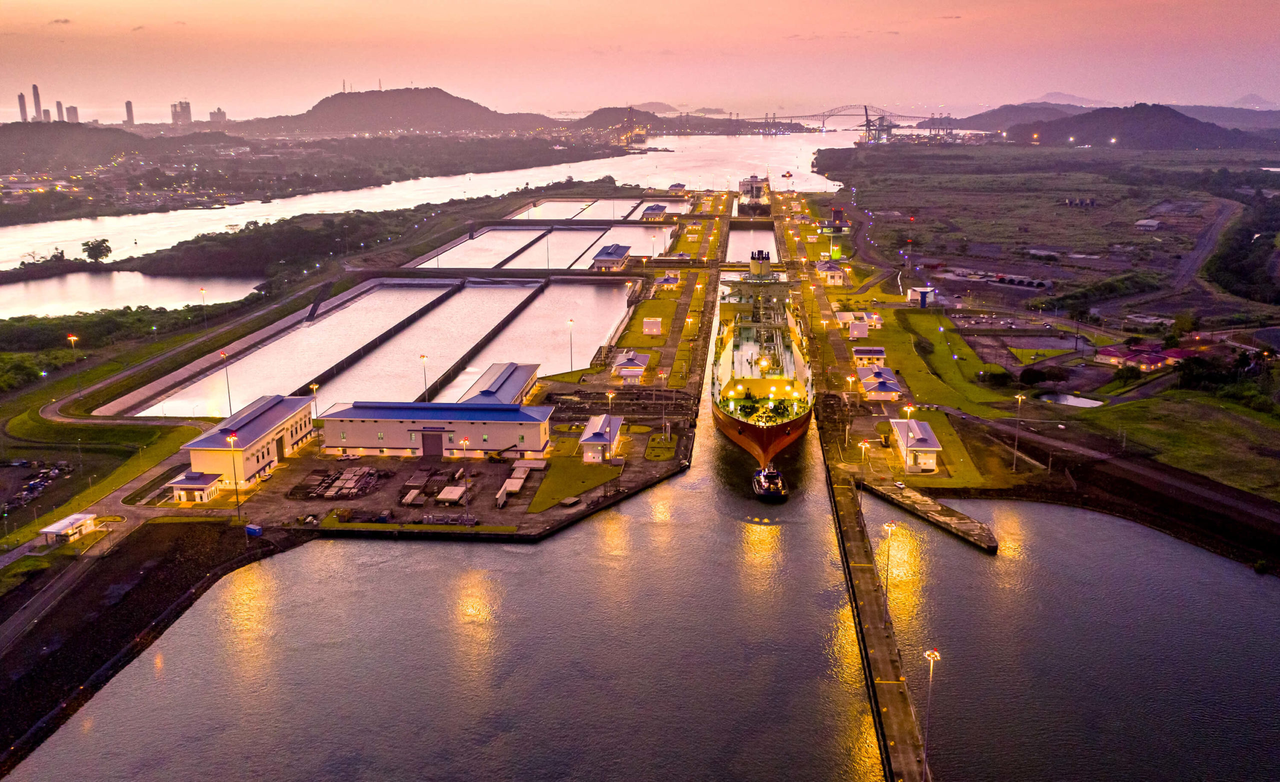
Suez and Bab el-Mandeb Are Effectively One Piece of Infrastructure
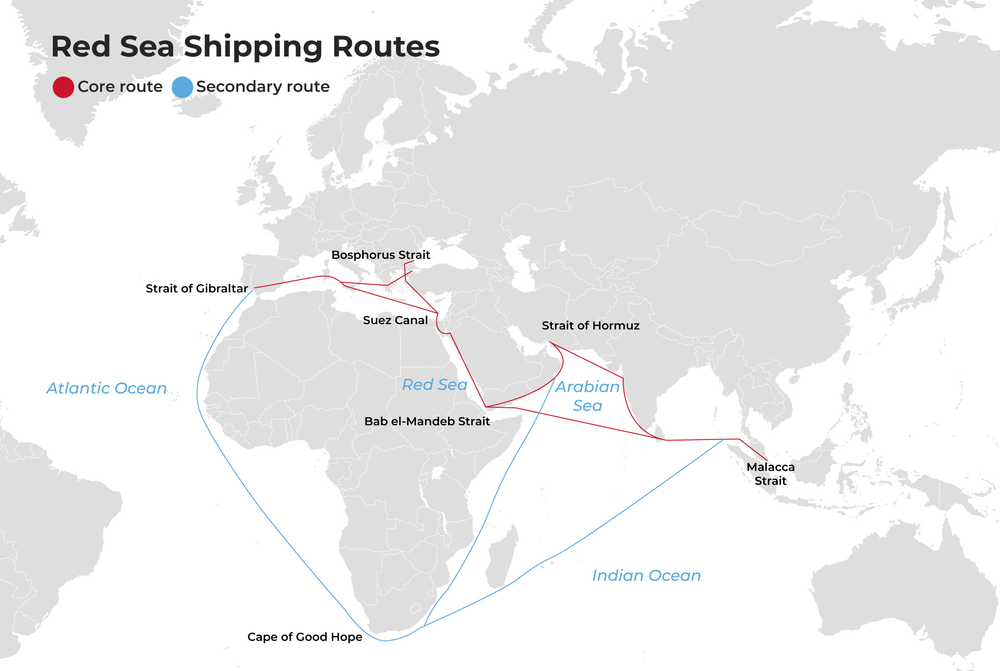
For a container ship sailing from Singapore to Rotterdam, the full route for “going through Suez” is: Indian Ocean -> Bab el-Mandeb -> Red Sea -> Suez Canal -> Mediterranean -> Europe.
Economically, this means Bab el-Mandeb and the Suez Canal function as two nodes in series. If the Suez Canal is closed, the Asia-Europe shortcut cannot be used. If Bab el-Mandeb becomes dangerous enough that shipowners are unwilling to transit it, the outcome is effectively the same.
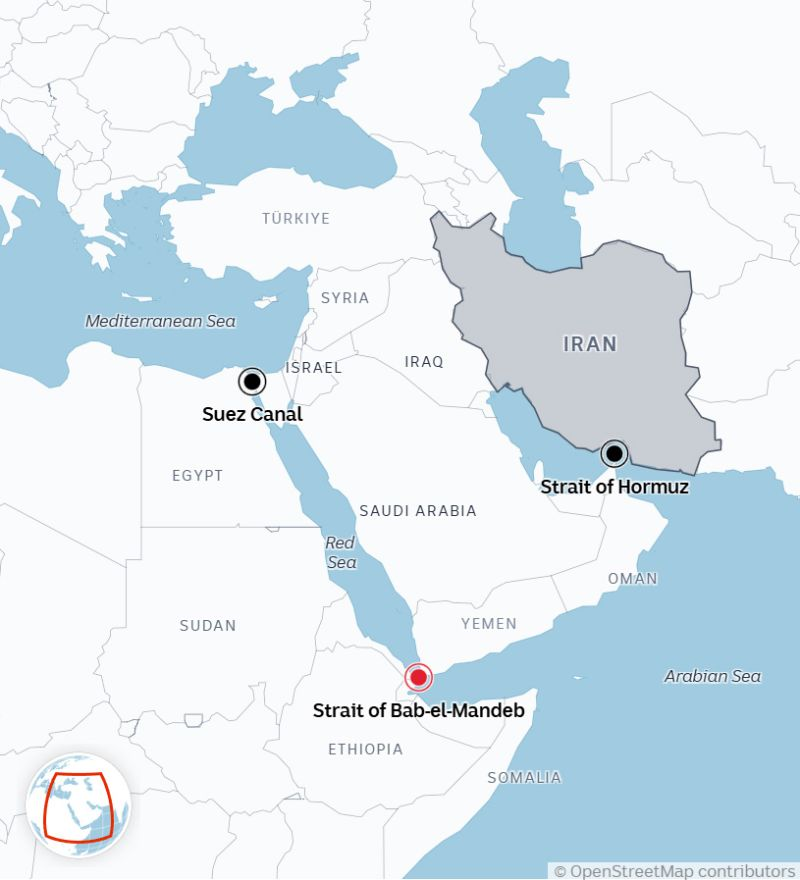
That is what has happened since 2023. Houthi attacks from Yemen have been concentrated mainly in the southern Red Sea and around the Bab el-Mandeb Strait, yet Egypt, some 1,500 miles away, has suffered enormous economic losses. Before the crisis, UNCTAD estimated that the Suez Canal carried around 12% to 15% of global trade in 2023. After the Red Sea conflict began, Suez Canal transits had fallen by about 42% from their previous peak by early 2024, while weekly container ship transits at one point dropped by 67%.
This illustrates an important feature of chokepoints: they do not need to be physically blocked to lose their economic function. They only need to become sufficiently costly or sufficiently dangerous to use.
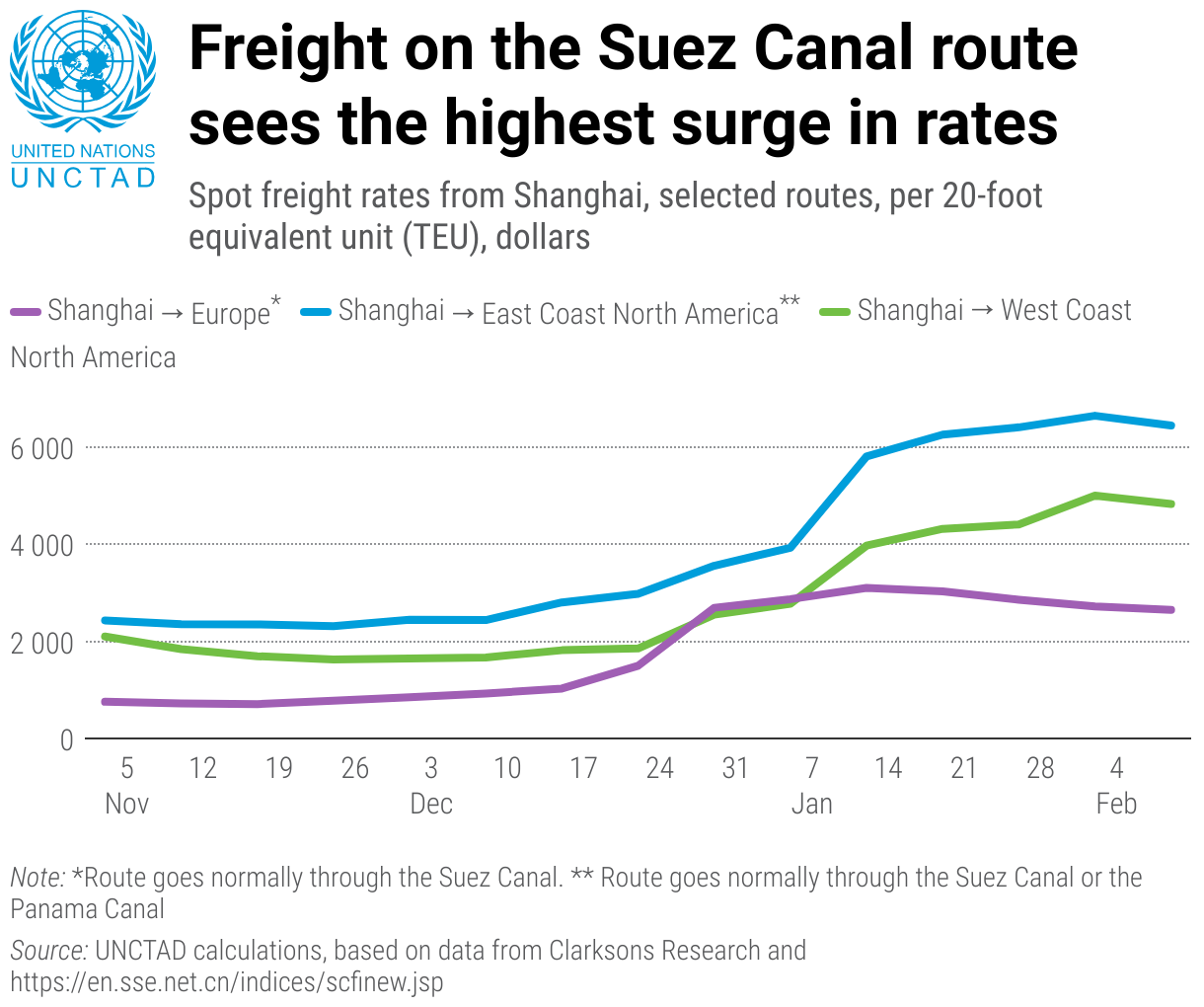
What Suez Really Sells Is “Not Having to Sail Around Half of Africa”
The economics of the Suez Canal do not require a complicated model. What it really sells is the convenience of not having to sail around Africa.
The official voyage-distance data from the Suez Canal Authority make this very clear. From Singapore to Rotterdam:
- Via the Suez Canal: 8,288 nautical miles
- Via the Cape of Good Hope: 11,755 nautical miles
- Distance saved: 3,467 nautical miles (-29%)
At an average speed of 16 knots, 3,467 nautical miles translates into roughly nine additional days of pure sailing time. Actual commercial voyage times depend on factors such as slow steaming, weather, port schedules, and vessel speed, but freight companies typically estimate that rerouting Asia-Europe voyages around the Cape of Good Hope adds about 10 days.
As long as the cost of transiting Suez is lower than the cost of rerouting around the Cape of Good Hope, the canal remains attractive. If Red Sea security risks push the first option above the second, ships will sail around Africa instead.
The economic value of the Suez Canal can therefore be understood, in simplified form, as Avoided Cape Cost - Canal Toll - Red Sea Risk.
When it comes to canal tolls, the Suez Canal Authority does not charge a simple flat rate such as “$500,000 per ship.” Base transit dues are calculated according to Suez Canal Net Tonnage, vessel type, whether the vessel is laden or in ballast, and other conditions. Different vessel categories are subject to different rates, with various surcharges, rebates, and special-route discounts layered on top.
Economically, this makes sense. A large crude oil tanker, a 20,000 TEU container ship, and a small bulk carrier face very different costs if they have to reroute around the Cape of Good Hope, so their willingness to pay for the Suez shortcut naturally differs as well.
The SCA also actively adjusts prices in response to shipping-market conditions. At the height of the Red Sea crisis, Egypt needed to attract ships back.
In May 2025, the SCA offered a 15% rebate on transit dues to large container ships with a Suez Canal Net Tonnage of 130,000 tons or more. One of the direct objectives was to help shipping companies offset the higher insurance costs associated with operating through the high-risk Red Sea. But as shipping conditions changed, the SCA suspended the 15% rebate from April 7, 2026.
Then, from July 15, 2026, temporary surcharges for several vessel categories were raised again. Kuehne+Nagel summarized these adjustments. Laden crude oil tankers were required to pay a 37% surcharge on top of normal transit dues, compared with 27% for ballast tankers, 22% for dry bulk carriers, 19% for LNG carriers, and 12% for container ships.
This sequence of offering a rebate, withdrawing it, and then raising surcharges reveals the essence of Suez pricing quite clearly: the SCA is pricing the economic value created by allowing ships to avoid sailing several thousand extra nautical miles. But it cannot raise prices without limit. The Cape of Good Hope remains an open-access competing route outside the Suez Canal, placing a natural ceiling on the SCA’s pricing power. So although the Cape of Good Hope lies thousands of kilometers from Egypt, it effectively participates in the price discovery of Suez Canal transit fees.
The 2026 Hormuz Crisis Put the Entire System Through an Even Greater Stress Test
If Suez and Bab el-Mandeb were already complicated enough, the 2026 Hormuz crisis added another layer.
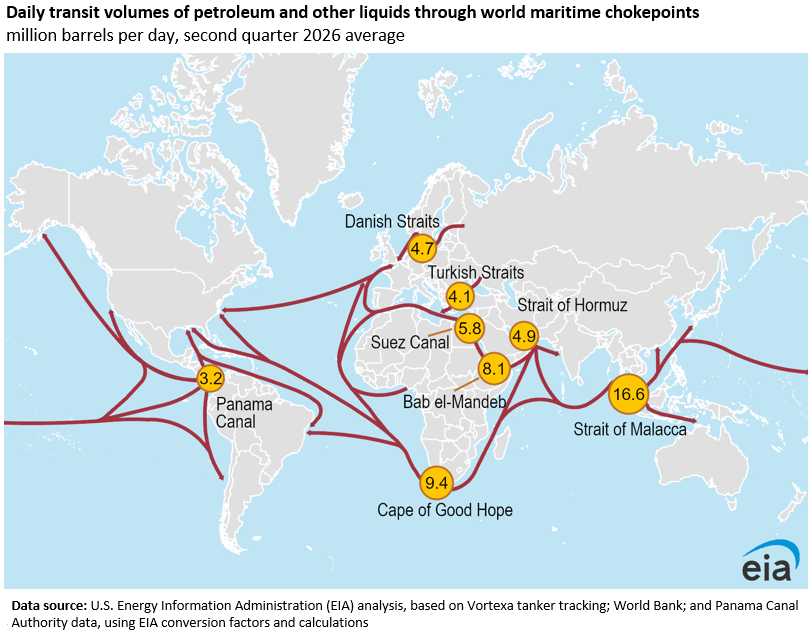
EIA data show that crude oil and petroleum products flow through the Strait of Hormuz averaged about 21.6 million barrels per day in the fourth quarter of 2025. By the second quarter of 2026, that had fallen to just 4.9 million bpd. At the same time, oil flows through Bab el-Mandeb increased from 5.4 million bpd in the fourth quarter of 2025 to 8.1 million bpd in the second quarter of 2026.
This is because Saudi Arabia has the East-West Pipeline, also known as Petroline, a strategic asset that many other Gulf oil producers do not have. The pipeline is about 1,200 kilometers long and connects Saudi Arabia's eastern oil fields with the Red Sea port of Yanbu. Its current maximum crude capacity is about 7 million barrels per day, of which roughly 2 million bpd supplies west coast refineries and about 5 million bpd can be used for exports. After Hormuz was severely disrupted, the pipeline quickly became one of Saudi Arabia's most important alternative export routes. Saudi Arabia could therefore send a barrel of crude that would otherwise have been exported from the Persian Gulf directly to the Red Sea. At that point, Hormuz had been successfully bypassed.
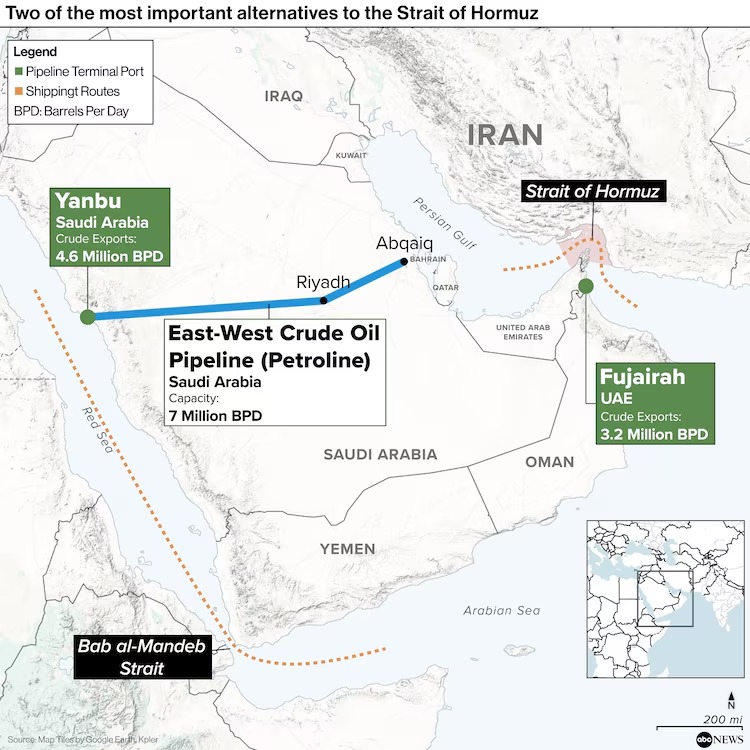
From Yanbu, Saudi crude then faces two directions.
- To Europe, it can head north: Yanbu → Red Sea → Suez/SUMED → Mediterranean → Europe
- To Asia, it can head south: Yanbu → Bab el-Mandeb → Indian Ocean → Asia
This gives the East-West Pipeline enormous strategic value.
But in July 2026, risks around Bab el-Mandeb also rose rapidly. This produced an extremely counterintuitive route. A barrel of Saudi crude sold to Asia began by sailing in the direction of Europe. The tanker first headed north into the Mediterranean, then sailed west through the Strait of Gibraltar, around the entire African continent, and finally re-entered the Indian Ocean. The voyage increased from 19 days to 48 days, while fuel costs rose from about $1.26 million to around $2.87 million. On top of that, transiting Suez itself also requires paying canal tolls.
SUMED Means the “Suez” Corridor Is Not Actually a Single Route
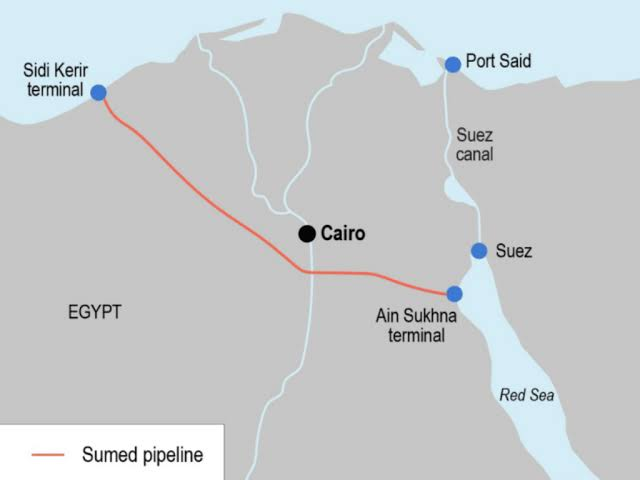
For oil, the Suez corridor consists not only of the Suez Canal, but also the SUMED Pipeline. SUMED connects Ain Sokhna on the Red Sea side with Sidi Kerir on the Mediterranean side and has a transport capacity of about 2.5 million barrels per day. When large VLCCs cannot transit the Suez Canal fully laden because of draft restrictions, they can discharge part of their crude into SUMED and have it handled or reloaded on the Mediterranean side.
In the second quarter of 2026, the Suez Canal and SUMED together transported about 5.8 million barrels per day of crude oil and petroleum products, including around 3.6 million bpd of crude and condensate. As risks around Bab el-Mandeb worsened, this northbound export route became even more important. In one week in early August, crude and condensate loadings at Sidi Kerir reached a record 2.17 million bpd, up about 50% from the previous week, with Saudi crude accounting for roughly 90%.
Saudi Arabia is now even considering expanding the East-West Pipeline by another 1 million to 2 million barrels per day. Reuters reported that such an expansion would require several years and billions of dollars in investment, and that Saudi Arabia has also discussed with some neighboring countries the possibility of using this export network in the future.
Meanwhile, average daily vessel traffic through Bab el-Mandeb has fallen from about 50 ships before the Houthis announced a new round of blockades to around 32. Large VLCCs have also begun sailing more frequently toward the northern and northwestern Red Sea rather than continuing south through Bab el-Mandeb.
At the End of Every Escape Route May Lie the Next Chokepoint
If you look only at a map, Hormuz, Bab el-Mandeb, and Suez appear as three separate red dots. In reality, they are part of an interconnected transport network. When one node is disrupted, the cargo does not simply disappear. Some production may be forced to shut down, and some cargo may go into storage, but large volumes will still seek alternative routes. As a result, disruption at one chokepoint becomes additional traffic, congestion, risk, and price pressure at other chokepoints.
The Panama Canal shows us that a global shipping route can be constrained by something as seemingly local as freshwater. Suez and Bab el-Mandeb show us that a canal that remains completely open and has ample physical capacity can still lose more than half of its customers because of security risks 1,500 miles away. The 2026 Hormuz crisis goes one step further: even building a hugely valuable alternative oil pipeline and successfully moving oil away from one chokepoint does not mean escaping geography. Saudi Arabia's East-West Pipeline does bypass Hormuz. But once it delivers the oil to Yanbu, there are still only two choices: head north through Suez, or head south through Bab el-Mandeb. When the southern route also becomes dangerous, a barrel of Saudi crude that would normally take just 19 days to reach Asia may instead have to travel north through Suez, pay about $1 million in canal tolls, sail around the entire African continent, and take 48 days to reach Asia.
The real economics of global chokepoints is never just about how many ships a particular canal can handle. It is also about how much more the second route costs when the first route fails, how much more time it consumes, how much additional shipping capacity it ties up, and which chokepoint it must ultimately pass through. In the global shipping network, every escape route may end at the next bottleneck.
Disclaimer: The content is for informational purposes only. You should not construe any such information or other material as legal, tax, investment, financial, or other advice. Nothing contained in this article constitutes a solicitation, recommendation, endorsement, or offer by the author(s) or any third party service provider to buy or sell any securities or other financial instruments in your or in any other jurisdiction in which such solicitation or offer would be unlawful under the securities laws of such jurisdiction. The author(s) report(s) no conflict of interest.