
The Kansas City Fed's Jackson Hole symposium has a habit of turning dry policy papers into market-moving events. This year, it might not even need Warsh's help to do it.
The theme is "Financial Innovation: Implications for Payments and Policy." Quite a mouthful for a 49-year-old gathering that runs August 27 to 29 at Jackson Lake Lodge.
At first look, the conference will cover all sorts of plumbing, including instant payments, tokenized deposits, stablecoins, who settles what and how fast.
But this is Kevin Warsh's first Jackson Hole as Fed Chair, and his Friday keynote lands 19 days before a September 16 FOMC decision markets can’t call with any confidence.
There is quite a big question: what happens when digital tokens begin to compete with bank deposits, settlement systems and central-bank money?
Let's follow the dollar.
Do stablecoins matter outside crypto yet?
Stablecoins are crawling into the funding stack, and it’s bigger than just crypto
Stablecoins are the obvious front-end trade.
Stablecoin.com shows the stablecoin sector sits at $289.5 billion as of August 25, with USDT alone accounting for $183.2 billion, or 63.3% of the market. Together with USDC's $73.6 billion, these two issuers control 88.7% of the market, while the GENIUS Act shoved US payment stablecoins straight into a formal regulatory wrapper.
The first market question is simple: what happens if that number gets another zero?
At ten times the size, the money has to come from somewhere. Some of it will come out of bank deposits, leaving banks to replace cheap retail funding while issuers pile into Treasury bills, repo or bank claims.
Track the tape for discussion of deposit competition, bank funding costs, liquidity rules and redemption rights.
The T-Bill sink: The next macro trade?
Money leaving deposits does not disappear. Stablecoin issuers need somewhere to park reserves, and short-dated government paper is the natural home.
They are already measurable participants in the bill market. The BIS estimates that their combined assets exceeded $270 billion by December 2025 and that they bought nearly $35 billion of Treasury bills during 2025, a flow comparable with purchases by the largest U.S. government money-market funds. Its research finds that a $3.5 billion stablecoin inflow lowered three-month T-bill yields by 0.71 basis points immediately and by around four basis points within ten days, with larger effects when Treasury-market intermediation was strained.
The marginal flow, not the stock, could be the next trade. A burst of Treasury issuance could absorb new demand without much fuss, but if stablecoin buying picks up when the bill market is already strained, it is different, and the effect on yields can become more pronounced.
So stablecoins can pull cheap funding out of banks and recycle it into the front end. The size of the move depends on what Treasury supplies, how quickly issuers buy and how much capacity dealers have to stand in the middle.
But the mechanism can reverse during stress: large redemptions could force issuers to sell reserve assets quickly, transmitting volatility into money markets just when the liquidity is already thin.
Keep an eye on Jackson Hole language around reserve composition, redemption risk and who, if anyone, provides the backstop when the selling starts.
Tokenization turns settlement into a policy question
Tokenization promises to put cash, deposits, securities and collateral onto programmable networks where trade and settlement can happen almost simultaneously.
This seems operational, but it is deeply monetary: if tokenized markets scale, what asset sits at the center of settlement?
Project Agorá has demonstrated atomic cross-border settlement using tokenized deposits and central-bank reserves. Europe is moving further: the ECB's Pontes system is due to begin settling DLT-based transactions in central-bank money in September, with Appia aimed at a wider tokenized ecosystem.
Atomic settlement cuts the risk that one side of a trade goes through while the other does not. But if every trade settles immediately, firms have less room to net positions before cash changes hands. Faster settlement can be safer while also demanding more cash and collateral during the day.
The signal to watch is who policymakers think should own the settlement layer. Europe has explicitly placed central-bank money at the center of wholesale tokenized settlement. The US has so far concentrated more heavily on regulating privately issued payment stablecoins, but that does not yet amount to a settled choice over the architecture of wholesale tokenized markets.
Watch whether policymakers articulate a stronger view on which model they want to encourage, and how they plan to manage the trade-off between faster settlement and greater liquidity needs.
Warsh's speech is doing two jobs at once
Officially, Warsh speaks on payments and financial innovation on Friday, August 28, at 10 a.m. ET. Unofficially, every word gets parsed for rate guidance, because the backdrop he's speaking into is a mess.
The Fed has held rates at 3.50%-3.75% for five straight meetings, with three FOMC members dissenting in July in favor of a quarter-point hike.
As our analysis of the July minutes showed, the three formal dissents understated the committee’s broader conditional hawkishness. Warsh’s keynote is the first major opportunity to clarify what would convert those conditional hawks into votes for a September increase.
 Ana Frincu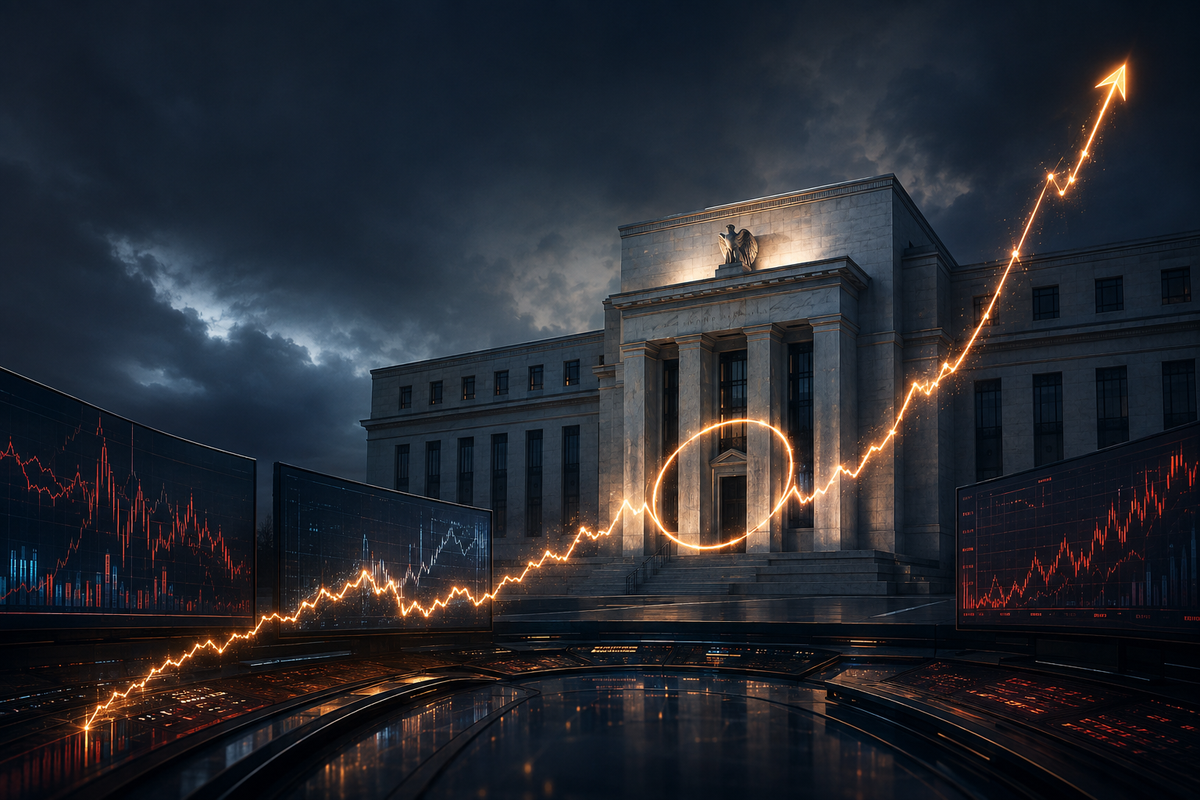
The latest data pull in opposite directions. Consumer prices rose 3.4% in the 12 months to July, while payrolls fell by 23,000 against a forecast of +85,000, the third-largest monthly drop since the pandemic and unemployment held at 4.1%. Inflation remains elevated, but the jobs market has lost momentum.
Warsh, confirmed by the Senate 54-45 in May, is difficult to place on a conventional hawk–dove spectrum.
He was regarded as an inflation hawk during his earlier Fed tenure, but has more recently argued that AI-driven productivity could reduce inflationary pressure and leave room for lower rates. Jackson Hole may therefore provide the clearest evidence yet of how he weighs persistent inflation against weakening employment.
Deposit competition can change how banks respond to policy rates. Stablecoin reserves can feed into bill yields. Tokenized settlement can change how much liquidity markets need and where they get it.
Warsh's speech is therefore doing two jobs at once: signaling where rates may go next and setting out how the dollar's changing infrastructure could transmit those rates through the financial system.
What to watch next
Markets will still parse Fed Chair Kevin Warsh's Friday keynote for the usual rate signal. But the more durable tell may come from how policymakers define the boundary between innovation and money.
Three questions matter:
1. Do stablecoins become large enough to alter bank funding?
2. Do issuer reserve flows become large enough to move T-bill yields in normal markets or amplify stress when redemptions hit?
3. And what asset anchors tokenized settlement and does faster settlement change liquidity needs and the transmission of policy rates?
If Jackson Hole starts answering those questions, this year's symposium will be about far more than faster payments. It will be about who controls the financial system’s next operating layer and which assets become the new plumbing of global liquidity.
Which Jackson Hole signals will matter most to markets?
Sources
Bank for International Settlements: On the future of securities settlement
Bank for International Settlements: Project Agorá: exploring tokenisation of wholesale cross-border payments
Bank for International Settlements: Stablecoins and safe asset prices
Bureau of Labor Statistics: Consumer Price Index Summary – July 2026
Bureau of Labor Statistics: Employment Situation Summary – July 2026
Circle: USDC: reserve structure and management
CME Group: CME FedWatch
European Central Bank: Eurosystem unveils Appia roadmap for Europe’s tokenised finance
Federal Reserve Bank of Kansas City: Kansas City Fed to host annual Jackson Hole Economic Policy Symposium, August 27–29
Federal Reserve Board: Calendar: August 2026
Federal Reserve Board: FOMC meeting calendars and information
Federal Reserve Board: FOMC statement, July 29, 2026
U.S. Department of the Treasury: Report to the Secretary of the Treasury from the Treasury Borrowing Advisory Committee