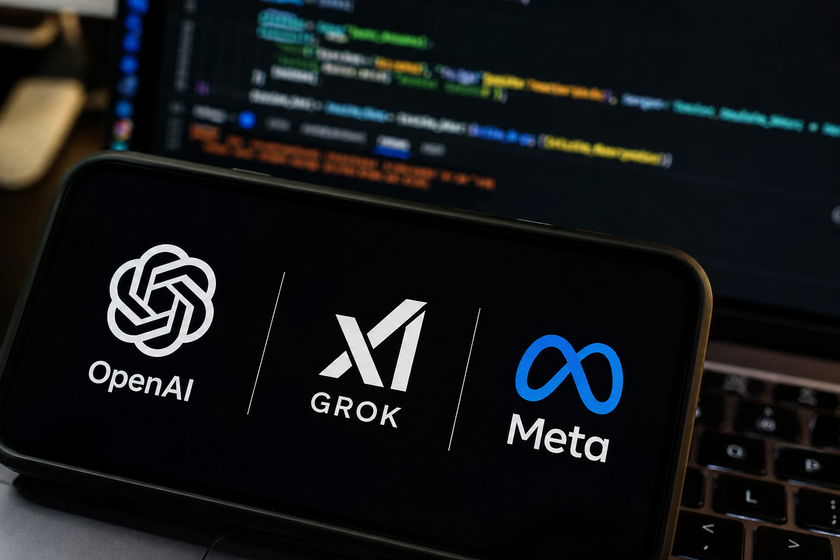
Three prominent artificial intelligence developers released new models over the past week. They all promise to be more advanced, but their biggest immediate selling point may not be what they can do but how little they charge to do it.
OpenAI said its most advanced offering, GPT-5.6, is designed to complete more work while using significantly fewer tokens. This will make the software far more cost efficient for customers.
Grok 4.5, from Elon Musk’s SpaceXAI, is claimed as having twice the token efficiency as the latest leading models at the same tasks.
Meta Platforms Inc. is positioning Muse Spark 1.1 as one of the most competitively priced AI models on the market, according to Chief Executive Officer Mark Zuckerberg.
The renewed emphasis on cost coincides with business customers scrutinizing AI spending. Earlier this year, firms encouraged employees to outdo one another by using AI as much as possible, a practice known as tokenmaxxing. But in recent months, some companies have imposed tighter limits after being hit by sticker shock, in part due to developers like Anthropic PBC switching to usage-based pricing rather than simply charging a flat subscription fee.
Gautier Cloix, CEO of Paris-based AI startup H Company, said he’s spoken with a number of executives whose businesses have racked up significant bills after using models from OpenAI and Anthropic. One CEO showed him an invoice indicating a month of AI model usage cost millions of dollars, Cloix said.
“Companies are spending a lot more than they used to,” said Gil Luria, head of technology research at DA Davidson & Co. “As they see these costs get out of control, they’re starting to ask questions about efficiency.”
As a result, some users are also turning to model routing services, which allow them to seamlessly select from hundreds of AI models for various tasks to ensure better prices. One such service, OpenRouter, raised more than $100 million in funding in May to meet demand.
Meanwhile, AI developers may also be able to put more pressure on Anthropic, whose Opus and Fable models rank among the most expensive on a cost-per-task basis, according to Artificial Analysis.