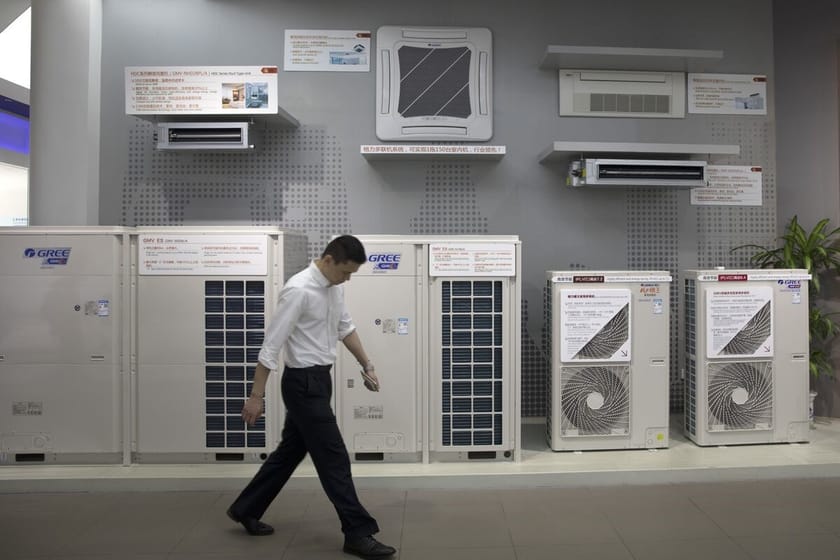
Europe's worst heatwave on record has turned into a genuine earnings boom for Chinese appliance makers. Midea, Haier, and Gree are all reporting strong 2026 growth into a market that's suddenly desperate to cool down.
Chinese AC exports to the EU hit $3.76 billion in the first half of 2026, up 43.2% year-over-year. Midea's PortaSplit line has shipped more than 200,000 units this year alone, doubling sales every year since launch. Gree's installation backlog in France now runs into late August.
None of this growth accounts for what happens to the product itself in two and half years.
Most of the units driving this boom run on R32 refrigerant, with a global warming potential of 675. The EU's F-Gas Regulation bans split air-conditioning systems under 12 kilowatts (basically all standard home AC units fall under this line) from using any refrigerant above a GWP of 150, starting January 1, 2029. R32 at 675 is more than 4x over this line.
So, is this year's export boom built on a product line that has a legislated shutoff date?
Where do you land on China's AC export boom to Europe?
The demand case: Nobody can bet against a heatwave
The demand case is real and well-documented. Samsung told Reuters it expects "sustained demand through the peak cooling season."
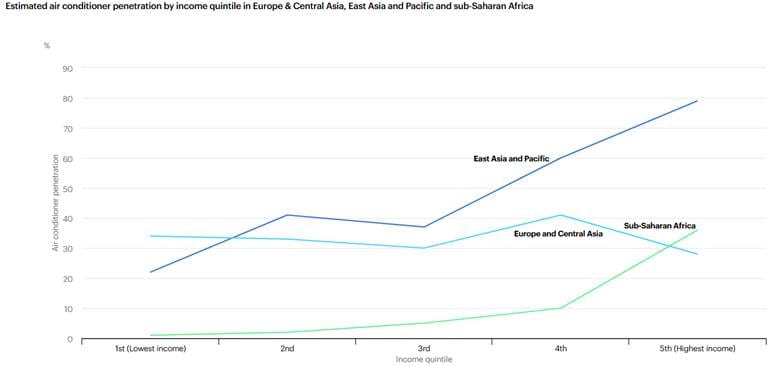
Only about one-fifth of European households currently own air conditioning, against a continent the World Meteorological Organization says is warming at more than twice the global average.
Source: IEA
Morningstar is forecasting a "meaningful" boost to Chinese manufacturers' second- and third-quarter revenue specifically from this trade.
There's a political layer too, and it's arguably bullish, not bearish. Brussels wants to narrow its trade deficit with China by October, but can't act aggressively against a product category that's currently keeping European households from heat stroke.
European Trade Commissioner Maros Sefcovic has said "the status quo is not an option" on the broader trade imbalance, yet no formal anti-dumping case has been opened against AC imports specifically, even as some EU lawmakers have floated tariffs of 15-25%.
For now, Europe needs the units too badly to restrict them.
But there’s a blind spot: The refrigerant deadline
R32 isn't a minor technical detail, it's the refrigerant charge inside the exact split units currently selling at record volume. Once the EU's GWP 150 threshold takes effect for split systems in 2029, existing installed systems can continue operating, but manufacturers cannot place newly produced non-compliant split systems on the EU market after the deadline.
The fix exists, but it isn't free. R290 (propane) has a GWP of 3, comfortably under the threshold, and Chinese manufacturers aren't starting from zero either because Midea has been developing R290 compressor technology since 2004 and has sold Blue Angel-certified R290 split units in Germany since 2021.
But R290 is flammable, requiring explosion-proof design work that industry estimates put at a 20%-30% cost increase per unit.
And per Danfoss's own read of the regulation, a Danish refrigeration manufacturer with no obvious stake in flattering China's position, the split-system replacement is a "serious problem," one "raised by many industry associations." To reiterate, it's not a Chinese outlet arguing its own manufacturers have an edge, it's a European supplier to the same industry admitting nobody has a clean, cost-competitive answer yet.
This leaves a real question sitting underneath a growth trade everyone's already pricing as durable: how much of today's export volume is riding a refrigerant line that has two and a half years left, and how cleanly does that volume convert to the compliant product once the deadline actually bites.
What actually tells you which way this breaks
1. Manufacturer roadmap disclosures. As of this writing, Midea, Haier, and Gree all already sell R290 units in Europe, but what none of them have disclosed is what share of this year's export surge, the actual R32 volume driving current earnings, is converting.
2. R290 unit pricing versus R32. If the 20%-30% cost premium narrows meaningfully as volume scales, the transition risk shrinks. If it holds or widens, expect margin pressure to show up in future guidance before it shows up in headlines.
3. The EU-China October trade deadline. A tariff or import-restriction outcome here could compress the runway to 2029 significantly, layering political risk on top of the regulatory one.
4. Manufacturer or third-party disclosure of finished-unit refrigerant mix. Chinese export codes track bulk refrigerant chemicals (R32, R290, etc.) separately from finished air conditioners, with no code that says what's charged inside the units actually shipped. The only way this number surfaces is if a manufacturer, industry body, or market research firm discloses it directly. Right now, that data isn't public, so its absence is itself worth noting.
The bottom line
The heatwave is real, and so is the demand, but what isn't being priced is that the product generating those beats has a shelf life set by EU law, not by weather.
Chinese manufacturers may be better positioned than anyone to make this switch. Midea's decade-plus head start on R290 is a genuine advantage, and history suggests EU trade barriers alone haven't been enough to dislodge a scaled Chinese cost advantage once it's established.
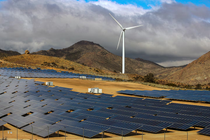
In fact, the EU's 2013 anti-dumping tariffs on Chinese solar panels are the clearest precedent: the European Commission's own 2018 review found domestic manufacturers never recovered the market share the tariffs were meant to protect, while a leading German producer went bankrupt anyway.
But "well positioned to eventually comply" and "already compliant at the volume being sold today" are different claims, and current earnings expectations appear to assume a relatively smooth transition, even though manufacturers have not disclosed enough evidence to verify that assumption.
Which signal will you actually be watching?
Sources:
- Business Standard: Europe's heatwave lifts demand for China's portable air conditioners
- China Daily: Chinese cooling appliances ride Europe's heat wave with smart, installation-free designs
- CNBC: Europe wants to rebalance trade with Beijing, but can’t quit Chinese air conditioners
- Danfoss: Refrigerant policies and regulations
- European Central Station: Chinese air conditioners are selling like hotcakes in Europe, and European air-conditioner merchants have issued a warning: if they cannot beat Chinese manufacturing, they will change the rules.
- European Commission: Air conditioning
- European Commission: Press remarks by Commissioner Šefčovič on the EU-China Trade and Investment Consultations
- IEA: Staying cool without overheating the energy system
- Reuters: As Europe roasts in a heat wave, Asia's air-con makers grab some cool cash
- ScienceDirect: Protectionism's adverse impact on renewable energy deployment: evidence from the European Union's import duties on China-made photovoltaic panels
- United Nations: Energy efficient and climate-friendly split air conditioners now on sale in Europe
- World Meteorological Organization: Temperatures in Europe increase more than twice global average