The macroeconomic paradigm within the eurozone has structurally inverted. While the traditional Franco-German core faces industrial stagnation—with 2026 GDP growth forecasts capped at 0.8% and 0.9% respectively—Southern Europe is now driving regional expansion. Spain (2.1%), Portugal (2.0%), and Greece (1.8%) are demonstrating genuine volume expansion, net of price effects. This "Mediterranean Pivot" is forcing institutional investors to aggressively reassess their continental asset allocation.
The NGEU Liquidity Shield and Zero-Cost CapEx
This structural decoupling is insulated by the NextGenerationEU (NGEU) framework, which acts as a sovereign equity injection. In a restrictive monetary environment where European Central Bank (ECB) tightening typically triggers a crowding-out effect, NGEU grants bypass bond markets entirely. Spain’s €79.85 billion in non-repayable subsidies and Greece’s massive €35.95 billion allocation (15.96% of GDP) absorb initial CapEx risks for green and digital infrastructure, allowing private capital to co-invest at a zero-cost public financing basis. Italy’s €194.38 billion PNRR, while experiencing execution friction, remains the continent's largest modernization deployment, specifically targeting Industry 4.0.
Energy Arbitrage and Margin Expansion
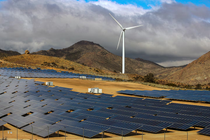
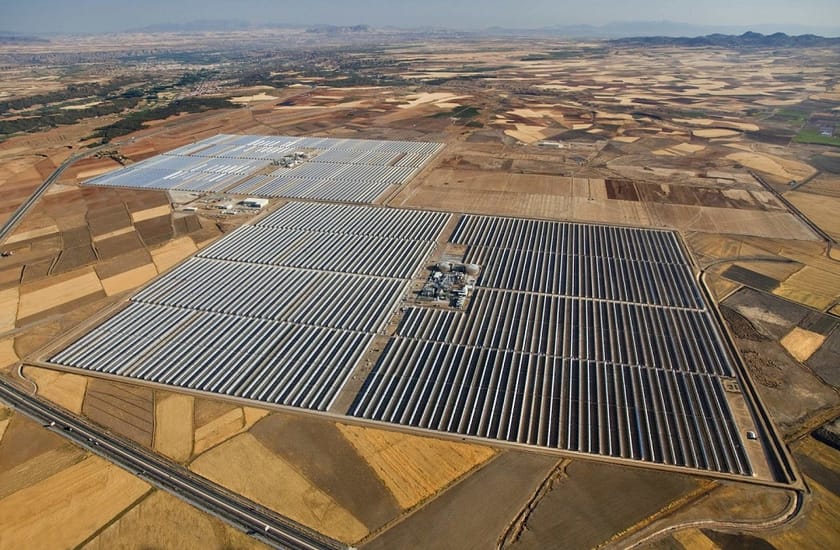
The primary driver of inbound Foreign Direct Investment (FDI) into the Iberian Peninsula is now structural OPEX predictability, driven by an aggressive energy transition. Spain has crossed the threshold of 57.5% renewable electricity generation, with zero-marginal-cost wind and solar constituting over 41% of the mix. This translates to severe wholesale price deflation: the Iberian OMIE market cleared between €40 and €55/MWh in 2024–2025, compared to Germany’s €75–€90/MWh, which remains burdened by a fossil-heavy grid. This energy competitiveness spread justifies the strategic relocation of heavy industry. Capital flows reflect this arbitrage, with entities like Cepsa deploying €7 billion into green hydrogen in Andalusia, and Asian OEMs (CATL/Stellantis) executing €4.1 billion greenfield battery projects in Zaragoza. Energy sovereignty has fundamentally evolved from an ESG metric into a core catalyst for EBITDA margin expansion.
Labor Cost Decoupling and Transatlantic Capital Capture
This energy dividend is compounded by sustained wage competitiveness and optimized fiscal engineering. Eurostat’s 2025 estimates highlight a stark labor cost spread: Germany approaches €45.00 per hour, while Spain (€26.40), Italy (€32.00), and Portugal (€19.40) offer highly attractive cost-to-skill ratios for engineering and R&D talent. Concurrently, competitive corporate tax frameworks—Greece at 22%, Spain at 25%, and Portugal leveraging deep SIFIDE innovation tax credits—are driving robust capital inflows. In 2023, Spain captured $35.9 billion in FDI, establishing itself as the premier European holding hub for Latin American capital. LatAm FDI into Spain surged by 138% year-over-year to €2.83 billion, pushing the accumulated stock (including ETVE holding structures) to €66.88 billion. Madrid now functions as a highly capitalized, transatlantic corporate gateway, effectively bypassing Northern European financial centers.
Beyond NGEU public subsidies, what is the primary structural driver forcing Northern European industry to aggressively relocate operations to the Mediterranean basin?
Nearshoring and Digital Infrastructure
Geopolitical fragmentation and supply chain regionalization are physically reshaping the Mediterranean basin. As industrial players shift from just-in-time to buffer inventory models, Southern ports are absorbing the reallocated trade flows. While Rotterdam contracted by 0.7% in 2024, Valencia surged by 14.15% (5.47 million TEUs), and Piraeus expanded transshipment activity by 17.6%.
Simultaneously, the region is capturing massive digital infrastructure allocations. Driven by hyperscalers seeking available grid capacity and land, Milan is targeting 500 MW of data center capacity by 2026 (Knight Frank), with Microsoft separately committing €4.3 billion to AI and cloud infrastructure in the Milan/Turin area. Greece is following suit, anchoring the undersea cables connecting Europe to Africa and Asia.
Systemic Constraints and Risk Pricing
Despite this alpha-generating environment, institutional allocation requires rigorous risk pricing. The region’s structural headwinds remain severe. Elevated debt-to-GDP ratios—Greece at 149.7%, Italy at 137.8%, and Spain at 103.2%—create persistent vulnerability to sovereign spread widening under the ECB’s monetary normalization. Investors must price in a long-term fiscal risk premium, as heavily leveraged balance sheets limit future public co-investment capacity. Furthermore, a demographic contraction presents an acute supply-side labor shock. With fertility rates critically low (Spain at 1.10, Italy at 1.18) and old-age dependency ratios approaching 40 in Italy (39.0), Portugal (38.6), and Greece (37.4) - (Spain, 31.2), domestic consumption bases are shrinking while scarcity-driven wage inflation looms.
Conclusion: The Selective Institutional Mandate
Southern Europe is no longer a peripheral risk to be hedged, but the continent's primary engine for alpha generation. However, capturing this "Southern Premium" requires a surgical approach. For asset managers, the strategic mandate is strict and binary: overweight export-oriented automation, decarbonized heavy industry, and logistics real estate, while ruthlessly avoiding domestic retail exposure and sovereign debt vulnerability. In 2026, the smart money does not buy the Mediterranean broadly—it buys its infrastructure.
Given the tension between booming industrial growth and elevated debt-to-GDP ratios, what is the correct institutional playbook for the "Mediterranean Pivot"?
Abridged Data Sources & Bibliography:
- Macroeconomics & Fiscal Policy: International Monetary Fund (WEO 2026 Projections); European Commission (Recovery and Resilience Scoreboard, Q1 2026).
- Energy & Industrial CAPEX: Red Eléctrica de España (2024–2025 data); Ember (European Electricity Review 2024); OMIE / EPEX SPOT.
- Labor, Demographics & Sovereign Debt: Eurostat (2025 Estimates on Hourly Labour Costs, Debt/GDP, and Fertility Rates).
- Capital Flows (FDI): UNCTAD (World Investment Report 2024); ICEX-Invest in Spain & SEGIB (VI Global LATAM 2024 Report).
- Logistics & Digital Infrastructure: Port Authorities (Valencia, Piraeus, Rotterdam 2024 Reports); Knight Frank (Data Centres EMEA Report).