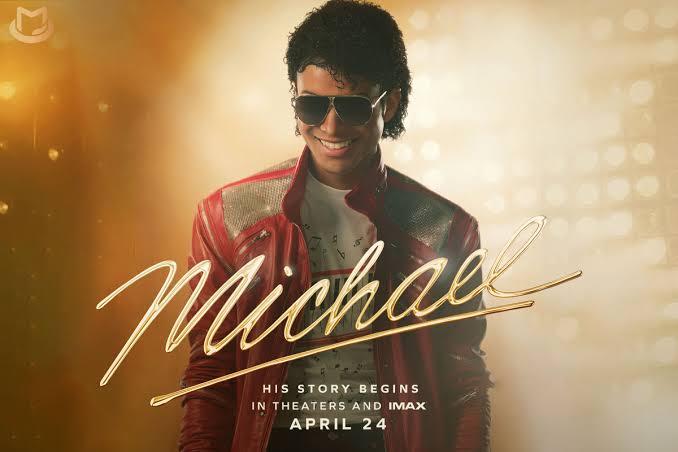
“Michael” has surpassed $1 billion in global ticket sales, becoming the first biopic to achieve the coveted box office milestone.
The crowd-pleasing film about Michael Jackson has generated $629.8 million overseas and $371.8 million domestically, bringing its global tally to $1.001 billion.
Despite noisy behind-the-scenes drama and a critical pile-on, “Michael” has been breaking records and shattering expectations since landing on the big screen in April. The movie opened to $97 million domestically and $217 million globally, shattering the opening weekend benchmark for musical biopics set by 2015’s “Straight Outta Compton” ($60 million). With positive word-of-mouth and audiences who returned a number of times, “Michael” remained a global box office powerhouse through the height of summer movie season.
Related Stories
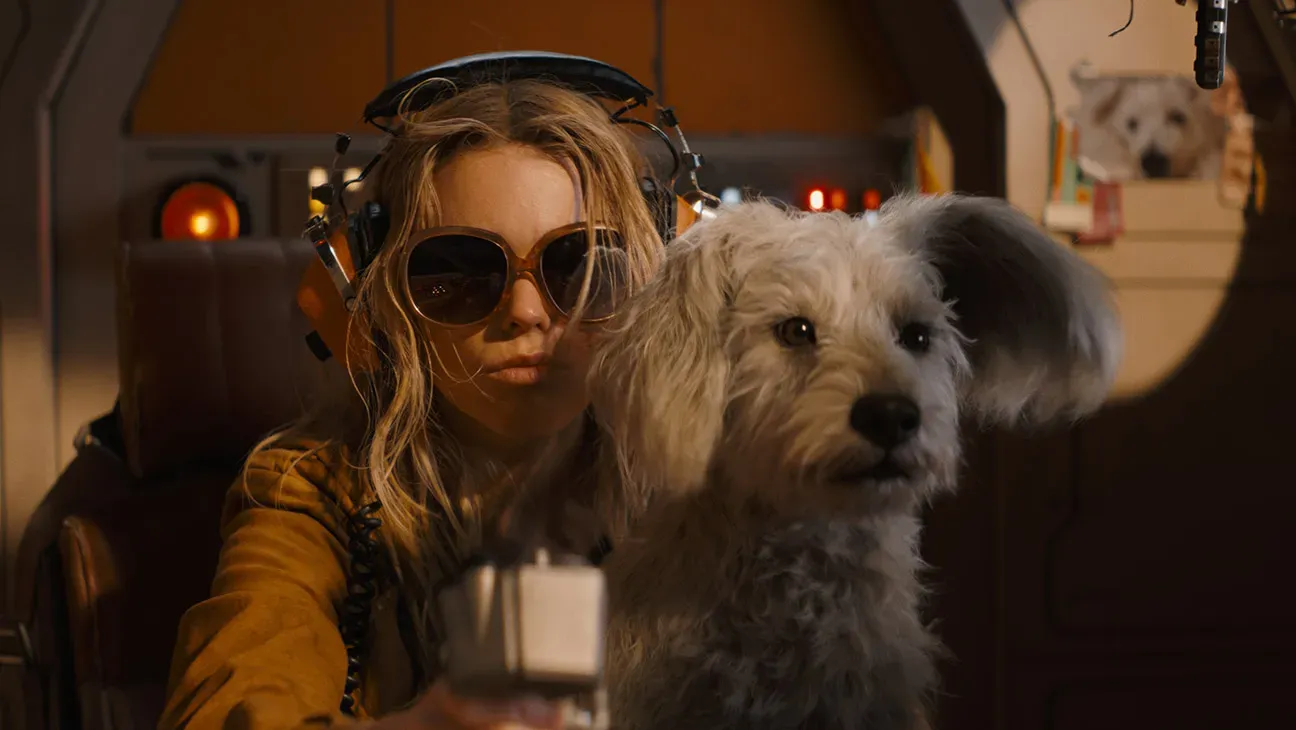
Millie Bobby Brown, David Harbour Reunite After 'Stranger Things' as Father-Daughter Spies in Netflix Series From 'Enola Holmes' Writer Jack Thorne
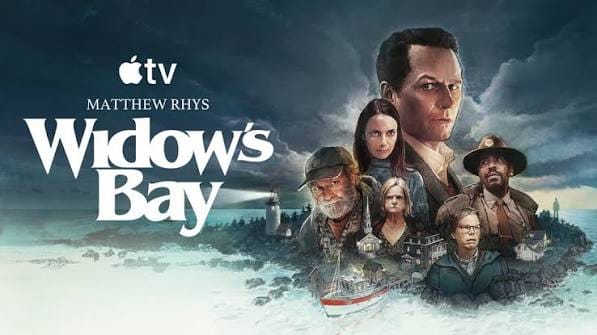
Emmy Snubs and Surprises: 'Stranger Things' Shut Out of Major Races, Sydney Sweeney Misses and 'Widow's Bay' Shocks With 19 Nods
Among its accolades, “Michael” stands as the highest-grossing musical biopic, surpassing 2018’s Queen sensation “Bohemian Rhapsody” with $911 million worldwide, as well as the biggest film based on a real person, overtaking 2023’s “Oppenheimer” with $975 million. It’s also the largest film of all time for Lionsgate, as well as the studio’s first movie to ever reach $1 billion. Prior to “Michael,” Lionsgate’s highest-grossing releases were 2013’s “The Hunger Games: Catching Fire” with $865 million and 2012’s “The Twilight Saga: Breaking Dawn — Part 2″ with $850 million. Lionsgate produced “Michael” and handled the rollout in North America, while Universal distributed the movie at the international box office.
Popular on Variety
“Audiences have embraced the film from the beginning, turning it into a unique cultural phenomenon in theaters around the world,” said Lionsgate Motion Picture Group chair Adam Fogelson. “Their passion speaks to the enduring appeal of one of the greatest recording artists of all time, and it underscores the continued strength and vitality of the theatrical moviegoing experience.”
Only one other film, Universal’s animated “The Super Mario Galaxy Movie” with $1.008 billion, has hit the billion-dollar mark in 2026 so far. Disney’s “Toy Story 5” has earned $879.1 million to date and should soon be the third of the year.
Antoine Fuqua directed “Michael,” which chronicles the performer’s journey from the Jackson 5 to his status as the King of Pop. Jaafar Jackson, the singer’s real-life nephew, portrays Michael Jackson in his acting debut, with Colman Domingo and Nia Long as his parents, Joe and Katherine. Lionsgate is expected to greenlight at least one more film about Jackson’s life.
“Reaching this extraordinary $1 billion milestone with ‘Michael’ is a deeply humbling moment that celebrates the tireless dedication of our incredible producers, cast, crew, and partners,” Fuqua said in a statement. “This achievement belongs to everyone who came together with a shared vision to honor one of the greatest artists the world has ever known. I am profoundly grateful to the audiences around the globe who embraced this film, showed up in theaters, and connected with this story across generations and cultures. This historic milestone is a testament to the enduring power of cinema to bring us together, and it is a chapter in movie history I will never forget.”
Usually, test scores go up, up, and away. But this March, the scores for Supergirl actually went down when DC Studios held a bakeoff, testing competing cuts from filmmaker Craig Gillespie and from the studio, run by James Gunn and Peter Safran. It was a moment of extreme disappointment for those involved, as the stakes were high, particularly for DC. Supergirl would be a key test for the Warner Bros. division as its first feature not written and directed by Gunn, following last year’s inaugural outing, Superman. It needed to work to prove the studio could expand beyond projects directed by Gunn, the A-list filmmaker behind the Guardians of the Galaxy movies, Peacemaker and The Suicide Squad — and the very public face of the brand. Months later, the Supergirl outcome is now well known. The movie, starring Milly Alcock as the title character and budgeted in the $170 million to $180 million range, crashed and burned on its opening weekend, grossing just $37.1 million, even lower than the reviled, DC-centric bomb, 2024’s Joker: Folie a Deux, which opened to $37.6 million and was not made by Gunn and Safran. And while one failure need not be an indictment of a slate, and there have been all sort of think pieces as to why the movie failed – was Alcock right for the role? Was Gillespie right for the take? Are audiences tired of superheroes? Was opening the movie in late June a mistake? Was the budget too high? — the fate of Supergirl may have been seeded early on. Gunn and Gillespie had creative differences over the direction of the movie, numerous sources tell The Hollywood Reporter, and the film never found its footing in the post-production process. The test scores, which are counted on a scale out of 100 points, never escaped the 60s, according to multiple insiders. Another insider said the movie’s top score was 70.
“’They were not creatively aligned’ is the polite way of describing things,” said one insider.
Other insiders dispute this characterization, saying Gunn, Safran and Gillespie had the normal amount of healthy friction any filmmaker and studio have as part of the process of making a movie better. And multiple sources say the duo respect the filmmaking chops of Gillespie, known for guiding Margot Robbie to an Oscar nomination for I, Tonya.
Filming wrapped in May 2025, and as early as the fall of that year, the studio and Gillespie knew the movie wasn’t working. After a December test screening proved to be just okay, the studio decided to take matters into its own hands and took charge of the post-production to make its own cut. The studio also enlisted writer Jeremy Slater, a Gunn favorite who previously wrote an unmade feature based on DC superhero team The Authority, to help with the post-production process.
The extent of Slater’s involvement is unclear, although it seems he helped write scenes for a nine-day shoot of additional photography. Original screenwriter Ana Nogueira remained involved in the post-production process as well. One issue at play was the climactic fight, which was reconfigured. Other issues with the movie are unclear, but it is known that music was a key friction point. From his first Guardians of the Galaxy movie on, Gunn established himself as the master of the movie soundtrack and the all-important needle drop, earning praise for finding the right song and dropping it at the right time. Gillespie also has a reputation for melding music to movies, as seen in Cruella, his 2021 movie that cast Disney villainess Cruella de Vil as a punk rock rebel in London’s fashion scene.
The movie had a least four test screenings, according to sources, with screenings held in December 2025 as well as February and March of this year. And while social media users and critics are dunking on the movie’s use of a cover of the Jimmy Eat World song “The Middle,” the big needle drop in the final set piece at the February screening was a cover version of Cyndi Lauper’s “Girls Just Want to Have Fun.” That song choice came from Gunn, but it ultimately was abandoned for the Jimmy Eat World cover.
The movie employed two editors. There was Tatiana S. Riegel, Gillespie’s longtime post partner who edited his Lars and the Real Girl, I, Tonya, and Cruella. And there was Fred Raskin, Gunn’s longtime cutter who worked on all the Guardians of the Galaxy movies and Gunn’s DC series Peacemaker. (Raskin is also Quentin Tarantino’s go-to editor.) He was brought on later in the process and proved a key instrument in the studio’s slowly heavying hand.
There were signs that things were getting better. Deep into winter, test scores improved and hit the low 70s. However, rather than continue to tinker away on that cut, the studio decided to force a bakeoff by creating two cuts, one by Gillespie and one by the studio.
It is unclear what major differences emerged, but one source says Gillespie’s version was 11 minutes longer and featured more of the villain, Krem, played by Matthias Schoenaerts. When the two competing versions tested, the scores surprisingly dropped significantly, although the studio’s inched out ahead of Gillespie’s…but by only two points, according to sources. Gillespie’s version scored strongly on song choices, pacing and villain. Eking out a win, even a middling one, the studio chose its cut as the one to go into theaters. A studio insider says the differences were not particularly pronounced.
Studio insiders paint the back-and-forth process as routine, but others, including one franchise filmmaker who spoke anonymously for this story but was not involved in Supergirl, held the opposite view.
“It happens more than you think, but it’s not normal,” said the filmmaker of the bakeoff. “If a studio is going to put money into the test process, it means they feel strongly about certain things.”
The movie was never tested again. (As a point of comparison, the canceled Batgirl tested in the 60s and the box office disappointment Shazam! Fury of the Gods began its tests in the 60s, like most of Supergirl’s tests, before moving up.). And from that point on, if Gillespie believed strongly that something should be in the movie, he had to advocate for it, said one source.
Will Gunn and Safran's DC Studios contracts be renewed or officially confirmed to continue before the end of 2026?
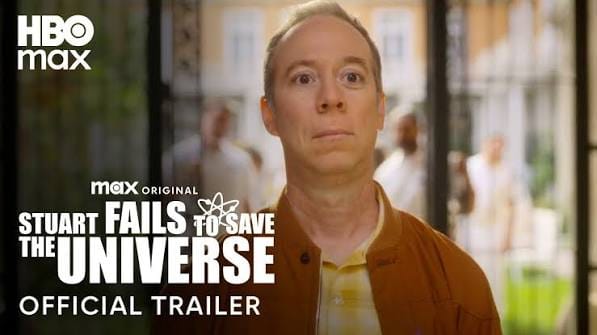
The Big Bang Theory ran for twelve seasons on CBS between 2007 and 2019, becoming the highest-rated American sitcom of that decade. It has since spawned Young Sheldon and Georgie & Mandy's First Marriage, both centered on the Cooper family. Now, the fourth entry in the franchise has chosen a far less expected protagonist: Stuart Bloom, the comic book store owner who appeared in over 80 episodes of the original series without ever becoming its focus.
Stuart Fails to Save the Universe premieres on HBO Max on July 23, and debate about what kind of show it actually is — and who it's for — is already well underway.
The format signals a deliberate break from the original. Where The Big Bang Theory was a traditional multi-camera sitcom with a laugh track and brightly lit apartment sets, the spinoff is a single-camera sci-fi comedy with a multiverse premise, an apocalyptic backdrop, and a noticeably darker, stranger tone. The creative team reflects this shift: original co-creators Chuck Lorre and Bill Prady are joined by Zak Penn, whose previous credits include The Avengers and The Incredible Hulk, which goes some way toward explaining the show's genre ambitions.
That ambition is also the show's central risk. The core audience that made The Big Bang Theory a ratings phenomenon — broadly mainstream, older-skewing, drawn to comfort television — may not follow the show into multiverse territory. Meanwhile, viewers who actively seek out that kind of storytelling may be put off by the franchise association. Every bold spinoff faces this tension. Whether Stuart Fails to Save the Universe can find an audience in that gap is the real question July 23 will begin to answer.
Will Stuart Fails to Save the Universe earn a Rotten Tomatoes critic score above 70%, demonstrating that this ambitious creative departure holds up with reviewers?
SBS's Friday-Saturday drama "Agent Kim Reactivated" is on an unstoppable ratings tear. After just four episodes, its nationwide rating has already topped 21.6%, and it has climbed to No. 1 on Netflix's global non-English TV chart. Lead actor So Ji-sub's action scenes, driven by a father's desperate love, have left audiences stunned — but right now, both insiders and outsiders are buzzing about a single three-minute scene. It marks the first time in the history of Korean commercial television that a scene was shot without a single camera, produced entirely by generative AI as a "fully AI-generated sequence."
A Breakthrough in Technology
Before each episode begins, a line of small text flashes briefly across the black screen — easy to miss, but its final line reads: "Some of this production uses AI-based technology."
The drama's three-minute "Ghost Operation" flashback, depicting Agent Kim (played by So Ji-sub) during his days as an agent working against North Korea, is breathtaking. An entire building blown apart in an explosion, a car chase racing through a snowy mountain tunnel, a vehicle flipping and plunging into a pitch-black river — shooting these scenes for real would have required either that the actors risk their lives or that production spend an astronomical sum. By any measure, they were extremely difficult scenes to pull off.
Yet none of these stunning action sequences involved So Ji-sub himself or a stunt double on set. Instead, they were built as virtual stand-ins — so-called "digital doubles" — created at indoor monitors by AICRON, a homegrown Korean AI platform, together with the VFX team Morpheus Studio.
Generative AI video has long struggled to keep a character's appearance consistent, but the technical level on display in "Agent Kim Reactivated" was convincing enough to fool the audience's eyes. Not only was So Ji-sub's signature heavyset build and powerful fighting style faithfully recreated, but even his emotionally charged facial close-ups were rendered with such precision that they were nearly indistinguishable from live-action footage. This shows AI is no longer confined to minor background compositing or prop effects — it has proven it can carry an entire sequence at the emotional core of a story on its own.
A Double-Edged Impact
The full maturation of digital-double technology is, for actors, something close to a godsend. First, it serves as a perfect shield protecting actors' lives on dangerous sets. Even with stunt doubles, explosion and fall scenes always carry some risk of injury — AI eliminates that physical risk at the root.
It also dramatically extends actors' performing careers. So Ji-sub, marking his 30th debut anniversary this year and now nearing fifty, spent months training in special-forces martial arts to pull off the drama's intense action scenes — but the limits of the body remain an unavoidable reality. AI can free older actors from those physical constraints, letting them perform action sequences that push far beyond human limits.
Still, this technological leap is no free pass. As "Agent Kim Reactivated" director Lee Seung-young has admitted, AI-generated footage, however flawless, still has clear limits when it comes to capturing the raw, on-set "realness" — the grit of sweat and dust, the trembling urgency of a character's breath. Human artists still have to step in for fine-grained corrections in the final stage to fill in that subtle human texture. And when a director gives a note to change one detail, unrelated background elements sometimes shift along with it — a communication gap that remains an unresolved challenge.
The most thought-provoking question is this: will human actors even be needed in the future? If the technology advances far enough to fully replace actors, a production might only need to purchase the likeness rights and voice data of the corresponding look. As databases grow richer, AI could even blend and extract features to generate faces and voices that fit a character even better than a real actor could.
Against this backdrop, a string of deeper questions follows. From a market standpoint: once audience expectations keep rising, will AI-generated performances remain acceptable in the long run? From a legal standpoint: where should the line be drawn between the use of AI technology and the protection of human rights? And philosophically: what, exactly, is the value unique to the human soul that only a human actor can express?
Two hours before the British Grand Prix got underway at Silverstone on July 5, twenty-two of the world's highest-paid professional racing drivers took to the track in miniature go-karts built entirely from LEGO bricks. Fernando Alonso crossed the line first, claiming victory in a race that offered no championship points and no prize money. Days earlier, Lewis Hamilton and Max Verstappen had both expressed varying degrees of skepticism about the whole affair. Hamilton's remark — that it made the drivers look "like clowns and children" — became one of the most-shared quotes of the race weekend. The parade he dismissed as undignified ended up being the most widely circulated piece of content from the entire British Grand Prix. That is not an accident. It is the latest result of a strategy LEGO has been building for two years.
Based on what 2026 has produced, will LEGO expand the scale of its F1 collaboration in 2027?
Significant expansionResult
65.96%
Maintained at current scaleResult
26.72%
Reduced in scope or restructuredResult
7.32%
1,886 Polls
EndedTBD
How LEGO Got Into F1, and Why
The partnership has expanded steadily since its debut. At the 2025 Miami Grand Prix, ten large driveable brick cars made their first appearance and generated a wave of viral imagery. Later that year came a LEGO trophy at the British Grand Prix and a brick-built version of the cooldown car at Las Vegas. In 2026, the collaboration moved into new territory: at Monaco, LEGO released limited-edition helmet sets celebrating McLaren's 1,000th race, with Lando Norris and Oscar Piastri appearing as LEGO minifigures for the first time. The actual race helmets both drivers wore that weekend were modeled on the brick versions — a reversal of the usual logic in which merchandise follows reality.
The commercial rationale behind all of this comes directly from LEGO's own data. Chief Marketing Officer Julia Goldin has described F1 as playing "a very important role" in LEGO's product portfolio, calling it an IP that cuts across generations and genders. The detail that surprised the industry most: F1-themed products have entered the top ten in purchasing rankings among teenage girls and female consumers. That single data point reframed what the partnership was actually for.
Three Content Lines, Three Different Audiences
The Silverstone parade illustrates the first of three distinct strategies LEGO has been running in parallel. Hamilton's reluctance and Verstappen's skepticism did not undermine the event — they powered it. The more visibly uncomfortable the drivers appeared, the more entertaining the content became. Alonso's competitive instincts, fully intact even in a go-kart race that meant nothing, produced exactly the kind of genuine, unscripted reaction that no advertising budget can manufacture. What this proves to other sports sponsors is a transferable principle: placing serious athletes in deliberately unserious situations can generate pop culture reach that traditional sponsorship formats simply cannot replicate. If NFL, NBA, or Olympic sponsors draw the same conclusion, LEGO and F1 will have created not just a memorable activation but a replicable strategic template.
The second line runs through the Speed Champions product range. The 77252 APXGP Team Race Car — based on the fictional racing team from Brad Pitt's film F1 — is the first Speed Champions set ever built around a completely invented car from a movie. This matters beyond the product itself. It demonstrates that LEGO is now treating F1 as a platform that spans both real-world racing and cinematic storytelling simultaneously. If the sales data on that set holds up, the logic of Speed Champions changes: from a range that only documents real teams to one that can absorb fictional IP as well. The downstream possibility is that releasing a LEGO set in advance of a racing film's premiere becomes a standard part of how those films market themselves — turning LEGO from a merchandise partner into a piece of the content infrastructure.
The third line is the one with the longest potential impact. LEGO's multi-year partnership with F1 Academy has placed 20-year-old Dutch driver Esmee Kosterman on the grid under the LEGO Racing banner. The accompanying data is striking: 42% of F1 fans are women, and 87% of girls surveyed said they wanted to see more female racing drivers. F1 has spent a decade building a female audience through Drive to Survive and has never had a product dataset to quantify what that audience is actually willing to spend. If LEGO's next quarterly figures confirm that female consumers are buying F1-themed sets at scale, that number becomes the first concrete commercial evidence of female purchasing power within the F1 ecosystem — with consequences that extend well beyond LEGO's own product line into how the entire sport prices and packages its sponsorship inventory.
What the Data Shows So Far
The Silverstone parade became the most-shared content of the British Grand Prix weekend, outperforming qualifying and the race itself in social media circulation — and it did so on a budget that was a fraction of what a conventional sponsorship activation would cost. Goldin has characterized the F1 partnership as having exceeded expectations and described it as one of the brand's most important strategic bets in sports. F1-themed products entering the top ten among female consumers is a result the industry did not predict. The full sales figures that would confirm or complicate these signals are still pending from LEGO's next financial reporting period.
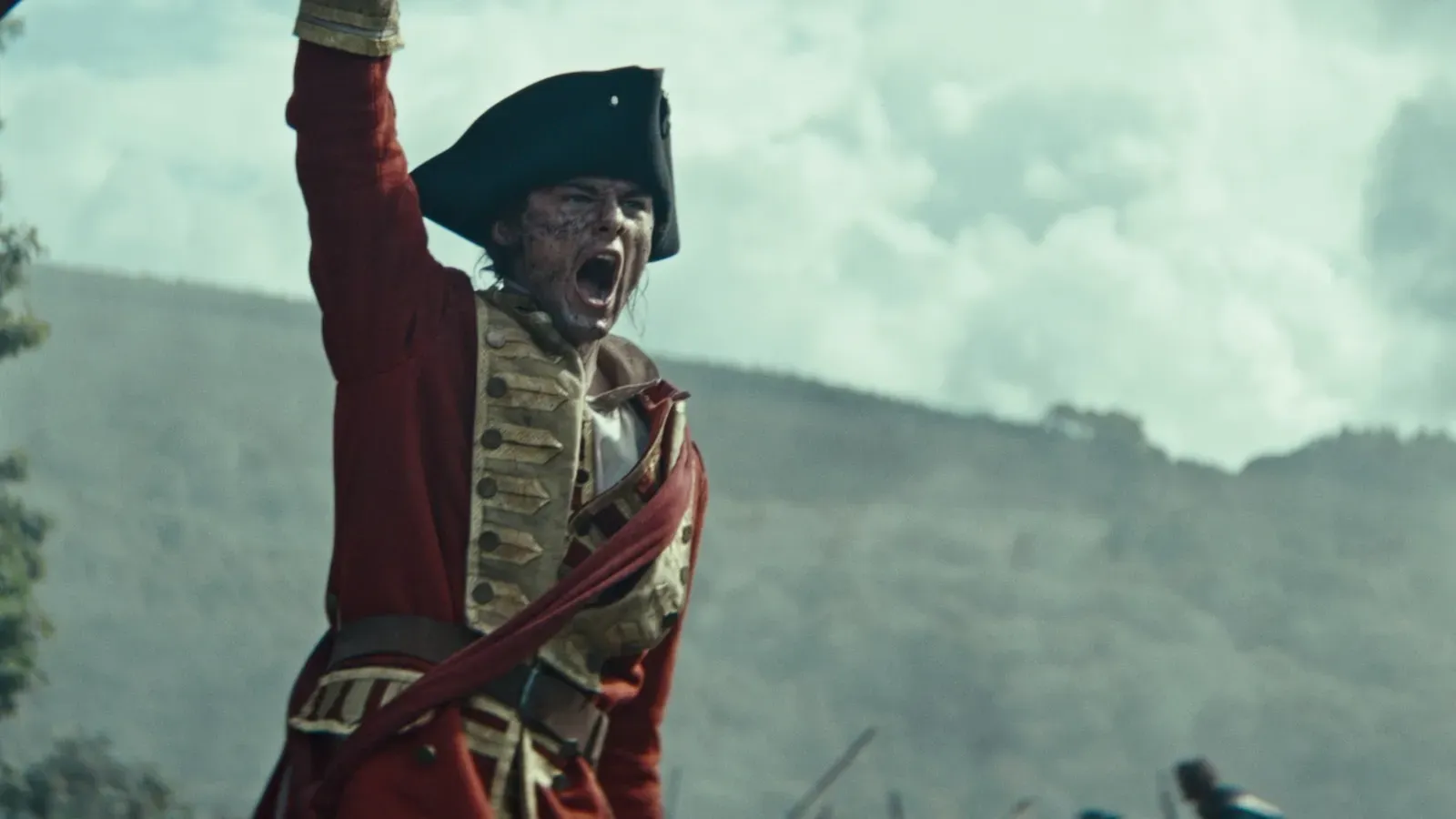
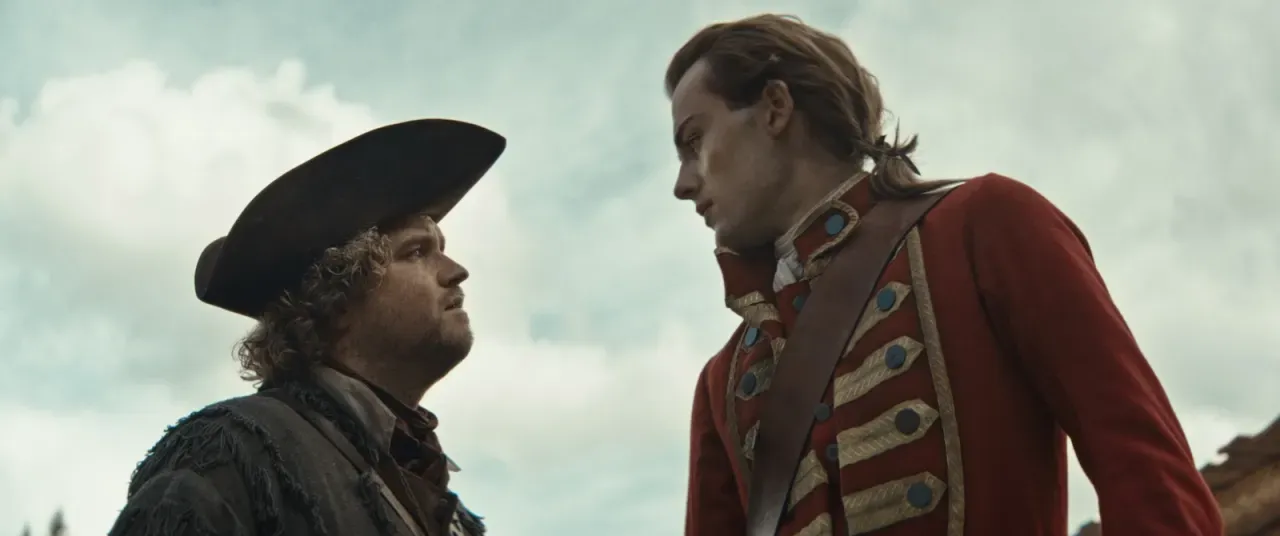
A controversy was brewing around“Young Washington.”Twitter users were sharing screenshots of the credits, which confirmed that the Jon Erwin-directed film included visual effects that utilized artificial intelligence. Others offered up freeze frames of shots they suspected were artificially generated. Then came the exclusive report in Variety:“Young Washington”contains about 100 shots augmented with generative AI, including some costumes and cannon fire.
So, how would Erwin respond to these accusations?
Mostly, with surprise, as Erwin (“I Can Only Imagine,” “I Still Believe,” “House of David“) is as vocal about using AI as any director currently working in Hollywood.
Before“Young Washington,”Erwin squeezed some AI into“House of David,”and this year’s“The Old Stories: Moses”had VFX that were largely AI. The filmmaker spoke openly about both projects at the recent AI on the Lot convention. His new studio, Innovative Dreams, has a massive volume stage on the same Manhattan Beach lot that also houses James Cameron, and they’re using AI to get something closer to real-time visual effects.
“I think we can function at a level of cost that’s inexpensive enough and fast enough to create no-brainer decisions for studios. Within that context, a lot of things can be preserved,”Erwin told IndieWire from his studio space.“There are other people in this space that are almost celebrating how much they can replace. Why? Why would you create a race to the bottom to create inferior work? That makes no sense to me. Why is that a business practice at all? Why not say, how do we preserve? Why not have the same attitude that Steven Spielberg had when he looked at CG dinosaurs as opposed to stop motion and said,‘Let’s do it that way, that’s so cool.’That helps the industry move forward.”
Erwin feels strongly that AI can actually save jobs and bring production back to the United States, not replace it. With“Young Washington”and“Moses,”he now has actual test cases to prove it.“Moses”was made with the idea that they could film an entire series on a soundstage, while“Young Washington”was made almost entirely on location in Ireland.
Technology was applied to both in different ways, Erwin explained, with the volume stage backdrop on“Moses”allowing the project to transport its actors to locations they would otherwise not be able to go to, and with AI touch-ups allowing“Young Washington”to capture shots it would not have safely been able to otherwise.
Each production employed hundreds of crew and an ensemble of real actors, and each has the level of craft audiences have come to expect from Erwin. Each was also made copyrightable, ethically, and collaboratively between Erwin and his team. Each still required original, on-location photography that could be fed into the AI generative inputs, as well as with the AI tools built on top of traditional VFX software like Unreal Engine and Nuke.
Erwin is well-aware of the fear, skepticism, and vitriol that surrounds AI. Even if AI can do something, it doesn’t mean it should. Like any tech, there should be rules around it, and Erwin with his polite, Southern charm and light sense of humor might be as poised as anyone to guide where this conversation goes next.
“The reason why I really think these tools are going to last is because it creates a moment where creativity can happen as it should be,”Erwin said.“It creates a place for intuitive creation and collaboration. The filmmaking process, if you really think about the process, you really start to ask some questions of why in the hell have we done it this way for so long?”
Synthesizing—Not Generating—AI
It’s useful to understand just what on“Young Washington”used AI and how Innovative Dreams incorporates it into their workflow. Because as Erwin explained, they’re not really“generating”anything from scratch. Erwin generally uses the phrase“synthesizing,”in which the AI augments assets that they can prove they own and that have already been shot in camera, be it a piece of wardrobe, a location, or the actors themselves.
In some instances, AI was used on“Young Washington”to make it look like a cannon was actually firing during a battle scene, actively lurching back from the force, rather than just showing the gunfire burst. More crucially, it was used during a sequence set along an icy river while George Washington is traversing the uncharted Ohio Territory wilderness. They couldn’t put the actors into actual frigid water, so instead they filmed the real icy river and then separately filmed the actors inside a 50-foot hole or trench.
“You actually get to a much higher level of photorealism if you take real things that you can prove you own, the same way you own them like a chain of title to a script, like here’s my location agreement, here’s my actor’s consent, here’s my wardrobe. And when you use real things and you use these tools to synthesize those real things, you get to far superior results,”Erwin said.
The key difference on“Young Washington”is Erwin is using AI to create the visual effects in the moment, in real-time alongside that water pit with his actors, not months after the fact in post-production. Seeing the visual effects on his monitors can inform what he actually films. It’s a process they’re able to recreate on a sound stage in Manhattan Beach or out in the open air in Ireland.
Erwin sees this as a way to get his VFX department heads involved in the production process, not just isolated during post, and ensure the visuals being created match what’s being shot and how it’s being lit.
But even on“Moses,”teams are actually filming in Greece and Spain to capture the real locations that can then be projected onto the volume stage during filming. His crew took volumetric scanning cameras, a process with the unusual name“gaussian splatting,”to create the 3-D renders that could be seen, mapped, and projected onto the massive screen behind the actors.
But unlike on“The Mandalorian”that also uses volume stages, Erwin’s team can generate a new image in moments and do so for far less than hundreds of thousands of dollars. Erwin says it’s strangely“very relational,”and far different from his early career work as a 3-D animator and the tools he used then.
“One of the reasons I stopped is they were so difficult to control. They were so difficult to interface with. When you talk about keyframe animation in 3-D, you’re doing this by clicking a mouse and you’re trying to grab the hand of a character, and it’s so hard,”Erwin said.“The fact that you can actually interface with these programs, through language, talking the way you would talk to any department head on set, is magical.”
Innovative Dreams places its prompting computers on wheels to move from set to the editing bay and bring his AI artists generating right alongside the crew on set. But it also all works because Erwin is combining these AI tools on top of other more traditional software. A singular model like Sora alone might not have the right resolution or be able to create a whole movie, but using a combination of foundational models and other prosumer tools has for Erwin changed the game.
“People were only trying to use one tool. We realized we could stack them together in creative ways, and the stack was where the quality was,”he said.“We actually realized that this didn’t replace anything, it augmented what we were already doing.”
Empowering Professionals, Not Prompters
Erwin said something that’s rarely talked about in the context of AI and filmmaking is the cycle time between iterations.“How quickly can you get to the next version of the idea visually?”The longer it takes, you lose connection to the idea, and so much time is wasted trying to bridge the gap between a filmmaker’s vision and the visual manifestation of that idea.
Innovative Dreams’hope is to take what Erwin describes as the bifurcated, slow, and linear style of filmmaking and turn that process on its head. Instead of going through prep, principal photography, and editorial and realizing you don’t have what you need, Erwin said AI makes“non-linear filmmaking”possible, allowing you to film, generate, and edit, all in the same day and time, and not necessarily in that order, something he believes is“creativity as it should be.”
“It doesn’t matter that it’s cheaper and faster. You can’t force a great creative to use a tool just because it’s cheaper and faster. The tool has to be better,”Erwin said.“Digital cameras had to at least get at a certain equivalent level of film. It didn’t matter if it was just cheaper than film. Now digital cameras do things that film will not do.”
Innovative Dreams’vision of AI is for now only a dream because it requires the buy-in of the whole industry. Erwin supports a mandate from both the studios and unions to help re-train professionals on AI tools, and doing so he feels may be one of the best and only ways to bring jobs back to Los Angeles. He’s found through his own experience that training veteran film professionals on how to use AI tools is far more effective than teaching solo hobbyists making AI videos on their phones how to collaborate on a film set. He wants to further empower the people who have been working with him forever.
It also requires a conversation about the ethical application of AI tools, such as curbing things that would modify a performance or infringe on copyright. For instance, he draws the line at synthetic performers, not just for ethical reasons, but for practical ones.
He first believes the arms race has created a“false economy”within the AI community today, and the cost of doing an individual prompt will escalate over time. So while it might be way more cost effective to do explosions, chase sequences, or wide shots with AI, prompting an entire actor’s performance for a feature film is a different story. He also knows how special it is to see a real person perform words that he’s written, and that’s one thing that can’t be replaced.
Will the box office success of Young Washington and Erwin's public stance encourage other major Hollywood directors to openly acknowledge their use of generative AI in new films before the end of 2026?
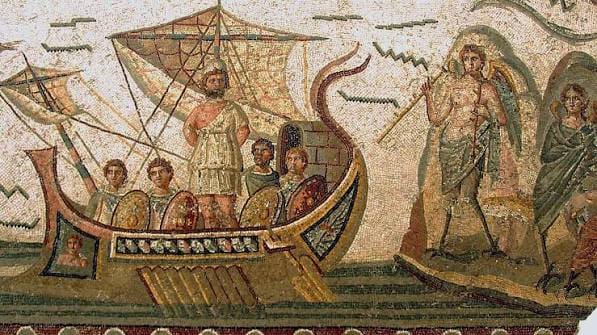
When UC Berkeley launched a seven-session online book club around Homer's Odyssey ahead of Christopher Nolan's film adaptation, organizers expected a modest turnout. Instead, more than 1,300 people from around the world signed up — most of them with no background in classical studies. In April, 55 students and staff held a "Homerathon" on campus, reading the entire epic aloud over twelve hours. None of this happened after the film came out. All of it happened before a single ticket was sold.
The Odyssey opens July 17, with a $250 million budget — Nolan's most expensive film to date. Matt Damon plays Odysseus, Anne Hathaway plays Penelope, and Zendaya takes on Athena, with Tom Holland, Robert Pattinson, and Lupita Nyong'o rounding out the cast. The script is described as faithful to Homer's text, though Nolan has adapted it in his characteristically non-linear fashion. The connection between Nolan and this material runs deeper than most realize: he was once in line to direct Troy (2004), adapted from Homer's other epic, the Iliad. Wolfgang Petersen took the job instead, and Nolan went on to make Batman Begins. He has said he wasn't ready then. Twenty years later, he is.
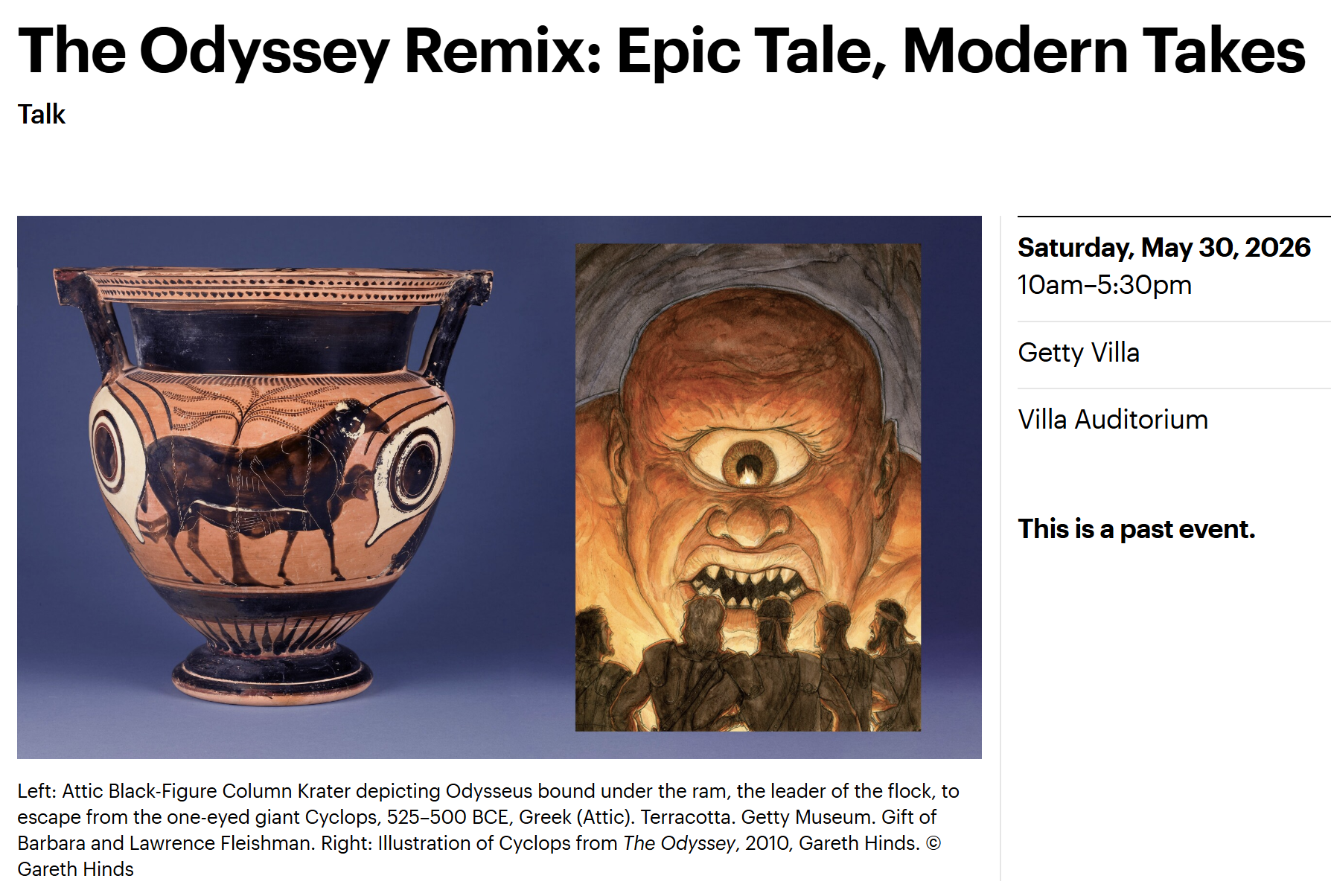
The response from the academic world has been concrete. The Getty Museum in Los Angeles staged a full day of Odyssey-themed events in late May. An Australian bookseller organized a month of lectures timed to culminate in a Melbourne screening. The Classical Association in the UK refocused its regional book clubs around Homer. Cambridge University Press timed the publication of a new scholarly edition of Book XI — the underworld descent — to coincide with the film's release. Cambridge Professor Richard Hunter hopes the film will be "teeming with women" and do justice to the underworld scene; his colleague Rebecca Laemmle has welcomed Zendaya's casting as Athena, hoping Nolan won't shy away from the gods and mythological elements that recent Homer adaptations have avoided.
Yet the Christian Science Monitor has noted the paradox: the same week The Odyssey is generating unprecedented public interest in Homer, universities across the country are cutting classical studies courses. And unlike Oppenheimer, which had a ready-made biography for audiences to pick up on the way out of the theater, the Odyssey is a 3,000-year-old epic poem with a significantly higher entry barrier. Whether cinematic excitement translates into actual reading is genuinely uncertain.
Within two weeks of The Odyssey's release, will Homer's Odyssey — in the Penguin Classics or Fagles translation — re-enter Amazon's Top 100 bestsellers list?
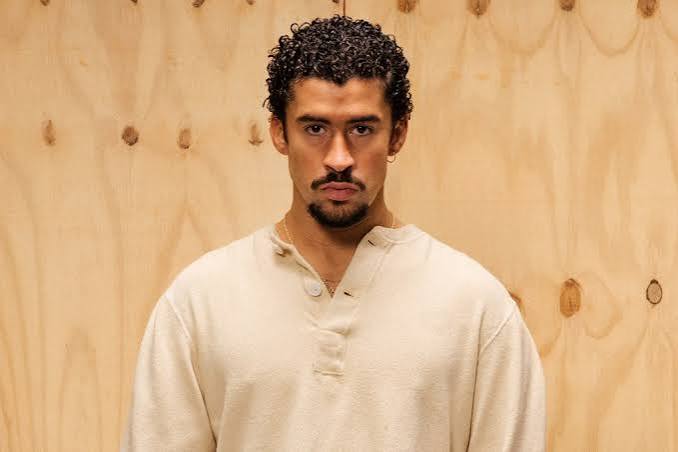
On Polymarket, a contract predicting Spotify's most-streamed global artist of 2026 has drawn $1.38 million in trading volume. The current odds paint a picture that would have seemed unlikely just a few years ago: Bad Bunny leads at 77%, Drake sits at 8.9%, Taylor Swift at 3.9%, and Bruno Mars registers below 1%. These numbers reflect three competing visions of how popular music actually moves around the world — and which of them is winning.
To understand why the odds are distributed the way they are, it helps to distinguish between two separate things Spotify measures. In April 2026, the platform published its all-time most-streamed artists list to mark its 20th anniversary: Taylor Swift ranked first by cumulative streams, Bad Bunny second, Drake third. But that historical tally operates on a completely different logic from Spotify Wrapped, the annual year-end ranking released each November. It is Wrapped — not the all-time chart — that functions as the real-time barometer of pop culture power. On that list, Bad Bunny has an exceptional record: four titles, claimed in 2020, 2021, 2022, and 2025. Drake has won it three times, but all before 2019. Taylor Swift claimed it in 2023 and 2024. Together, the three have dominated the category for nearly every year of the past decade.
Why Bad Bunny Is the Heavy Favorite
Looking at where Spotify's global listener base actually lives, Latin America is one of the platform's fastest-growing regions, and Spanish-language music now reaches audiences that English-language pop has historically struggled to penetrate. Bad Bunny's listener base has achieved a kind of genuine global reach that neither Drake nor Swift can easily replicate — spread across Mexico, Colombia, Argentina, Spain, the United States' Spanish-speaking communities, and a growing audience across Europe and Southeast Asia.
That foundation has been reinforced further in 2026. His headline performance at the World Cup opening ceremony in Los Angeles reached hundreds of millions of television viewers. His prominent placement in Adidas's main World Cup advertising campaign kept him continuously visible throughout the tournament's six-week run. Historically, this kind of top-tier global cultural event tends to translate directly into measurable streaming gains. And there is one more variable that could settle the contest early: if he releases a new album before the year ends, the race may reach its conclusion before it is officially announced. His 2022 album Un Verano Sin Ti swept through nearly every competing release that year at an overwhelming pace of global streaming accumulation, and it was that album that directly powered his return to the top of the global Wrapped chart in 2025.
Where Drake, Taylor Swift, and the Others Stand
Drake's three albums released simultaneously in May 2026 were built primarily around English-speaking audiences, targeting hip-hop, R&B, and dance listeners respectively. That strategy worked within North America and the English-speaking world: Drake subsequently crossed 100 million monthly listeners on Spotify, becoming the sixth artist ever to reach that milestone. But global streaming dominance requires a different capability entirely — reaching listeners who have no pre-existing affinity for your genre or language. That is where Drake's structural ceiling becomes apparent.
Taylor Swift holds the all-time global cumulative streaming record on Spotify, and she topped the annual Wrapped chart for two consecutive years before Bad Bunny reclaimed it in 2025. Her streaming activity in 2026 has been driven primarily by the original song she contributed to Toy Story 5 — which reached number one on the Billboard Hot 100 — and by the cultural moment surrounding her July wedding. Both generated significant short-term attention, but neither can substitute for a full album release cycle, which has historically been the engine behind her biggest streaming years. Without a new record, sustaining the kind of year-long volume needed to challenge for the global top spot is very difficult.
What This Competition Is Actually Measuring
Beneath the individual artist storylines, this race is a collision of three distinct commercial logics. Bad Bunny's strategy is one of cultural penetration — Spanish-language music crossing linguistic borders and expanding its listener base with every release. Drake's strategy is one of volume — maximizing content output to saturate the playlists of an already enormous existing audience. Taylor Swift's strategy is one of emotional depth — cultivating fan loyalty so intense that listeners return to the same catalog year after year. All three approaches have worked at different moments. In the context of a global streaming competition, Bad Bunny's model currently holds the structural advantage.Spotify Wrapped typically drops in late November, at which point 2026's streaming data will be locked.
Who will be Spotify's most-streamed global artist of 2026?
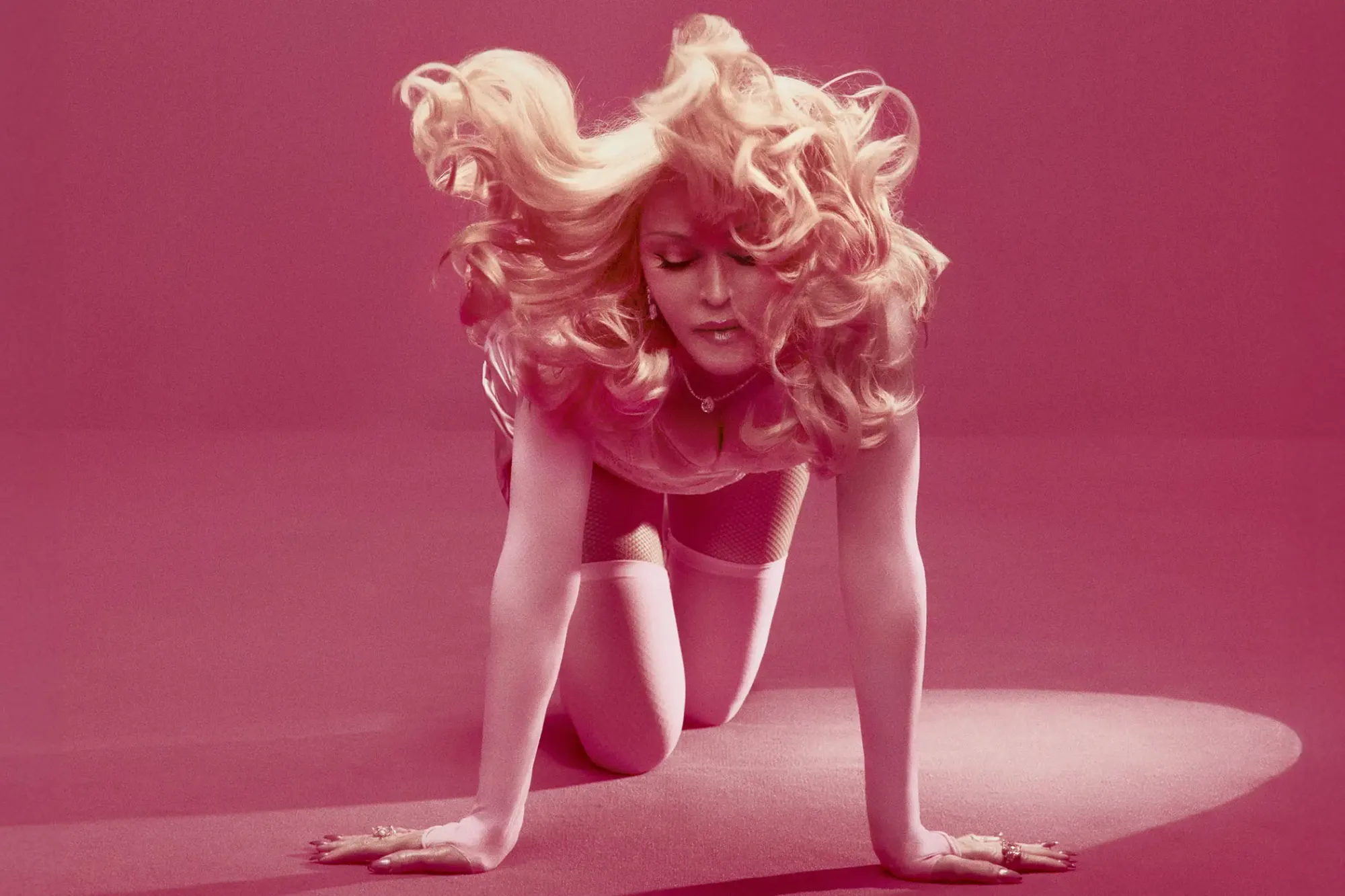
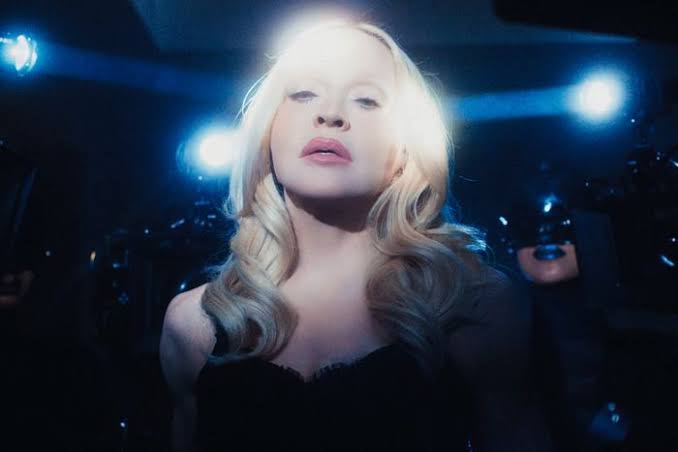
“The dancefloor is not just a place,” Madonna intones in a breathy voiceover near the start of One Step Away, a new track that strongly recalls her 2000s electronic heyday. “It’s a threshold. / A ritualistic space where movement replaces language.” Good for the Soul doubles down on the message, while another half-dozen tunes concur: dancing, as Madonna has it, is Love Without Words.
Celebrating the dancefloor is hardly a novel idea. Many artists have made the point that dancing is so much more than a superficial pastime but a means of escape, connection and reinvention. Also, it’s an excuse to get messy – not least Madonna herself, on tracks such as Into the Groove (1985) and Vogue (1990).
Recently, it’s been hard to move for all the body-jacking music that has been pumped out since the pandemic by a slew of mononymous, or near-mononymous, stars: Dua, Kylie, Beyoncé, Gaga, Charli and Twigs, for starters.
Madonna’s 15th album, Confessions II throws another 12in disc on to this teetering pile, seeking to reconnect to her core audience in the fifth decade of her career. It nods overtly to her 2005 album, Confessions on a Dancefloor – produced then, as now, by Stuart Price – while offering up a standalone set of up-to-date club pop tunes, roping in siren of the moment Sabrina Carpenter and Colombian artist Feid.
Nostalgia – for discos past, for old Madonna songs – looms large, but recent events are also very present in these 16 tracks, which are presented as a continuous mix. The first Confessions sampled Abba; this one finds room for the house standard French Kiss by Lil Louis and Inner City’s Good Life. Madonna apparently played rough mixes during workouts and canned the tracks that did not bring the rush.The idea of dancefloor-as-succour is no less true for repetition. But a fresher spin on the old floor-filling message – “Just let the music set you free” – might well have elevated this very good record and made it a truly great one.
Confessions II underlines the singer’s “I was there” clubland credentials, and signals her longstanding queer allyship. Moreover, it may well be supplying healing for an artist who has been through an eventful few years. Madonna’s next big project was supposed to have been a sumptuous Universal Pictures biopic, scripted by the artist herself. It ran into budgeting disagreements in early 2023. Netflix later swooped in proposing a series, which was thwarted by rights issues, among other things.
In June 2023, on the eve of her career-retrospective Celebration world tour, Madonna was hospitalised with a bacterial infection, contracted sepsis, and was placed in an induced coma. When she recovered, she made amends with her estranged brother Christopher, who then died of cancer in late 2024. Their brother Anthony had died in early 2023. Another significant bereavement followed: the siblings’ stepmother, Joan Ciccone.
Confessions II often feels like the product of all that stymied autobiographical effort and all that loss; a displacement activity – a proxy in which to work through a lot of stuff. She dedicates a song each to Christopher (Fragile, with breakbeats to the fore) and her stepmother (the very conflicted Betrayal, with ghostly piano and horns). The Test features her daughter Lourdes Leon.
These autobiographical impulses recur. Danceteria is named after the celebrated New York nightclub where Madonna rubbed shoulders with Keith Haring, Nile Rodgers and Jean-Michel Basquiat, all named in the lyrics. The closing LES Girl is an abbreviation for New York’s Lower East Side, where Madonna used to live. It’s a paean to a long-ago boyfriend, but also to Polaroids and last night’s eyeliner.
An extended music video scratches her visual itch and provides a six-track taster for the album; on Danceteria, a cadre of disparate celebrities (Benedict Cumberbatch, Kate Moss, Cole Palmer, Honey Dijon) hold a rave in a men’s toilet while Madonna interpolates the base riff from Lou Reed’s Walk on the Wild Side.
At the album’s apex is Everything, one of the hardest-slapping beats on the record, on which you can virtually smell the poppers. Madonna’s lyrics range far and wide, but at one point she appears to boggle at people not going out any more. Because however much another record about partying may appear surplus to requirements, the art of losing yourself on the dancefloor could well be in peril, with major nightclub closures mirroring those of small grassroots venues.
People, it seems, are staying at home, perhaps to save money, or to doomscroll. “No one wants to go outside, it’s not OK, it blows my mind,” Madonna sings on Everything. “It’s not OK! I don’t fuck with it!”
Will Confessions II debut at number one on the Billboard 200 in its first week, repeating the original album's achievement 21 years later?
Widow's Bay premiered on Apple TV+ on April 29 to a perfect 100% on Rotten Tomatoes — a score that has since settled at 97% as more reviews came in. The show has earned five TCA Award nominations, been renewed for a second season, and remained one of Apple TV+'s most-streamed originals throughout its run. And yet, for most of the Emmy season, it barely registered in the conversation. Nobody expected a horror-comedy about a cursed New England island to show up as a legitimate awards contender.
The series stars Matthew Rhys as the beleaguered mayor of a town plagued by an inexplicable curse, created by Katie Dippold (Parks and Recreation) and directed by Hiro Murai, whose previous credits include Atlanta and The Bear. The ensemble — which includes Kate O'Flynn, Stephen Root, Jeff Hiller, and Dale Dickey — has drawn consistent praise, even from critics who found the show's genre blend difficult to categorize.
Two things happened in its favor. The season finale aired on June 17, right in the middle of Emmy voting, keeping it top of mind as members narrowed their ballots. And with last year's dominant comedy The Studio ineligible this cycle, Apple TV+ made the strategic decision to submit Widow's Bay as a comedy — opening a lane the show might not have found otherwise. Gold Derby's current odds give Matthew Rhys a 79% chance of a lead actor nomination, Kate O'Flynn a 37% shot at supporting actress after jumping 24 points this week, and Stephen Root sitting at 24%. Variety projects ten nominations in total, down from earlier estimates as high as eighteen.
How many Emmy nominations will Widow's Bay receive when nominations are announced today?
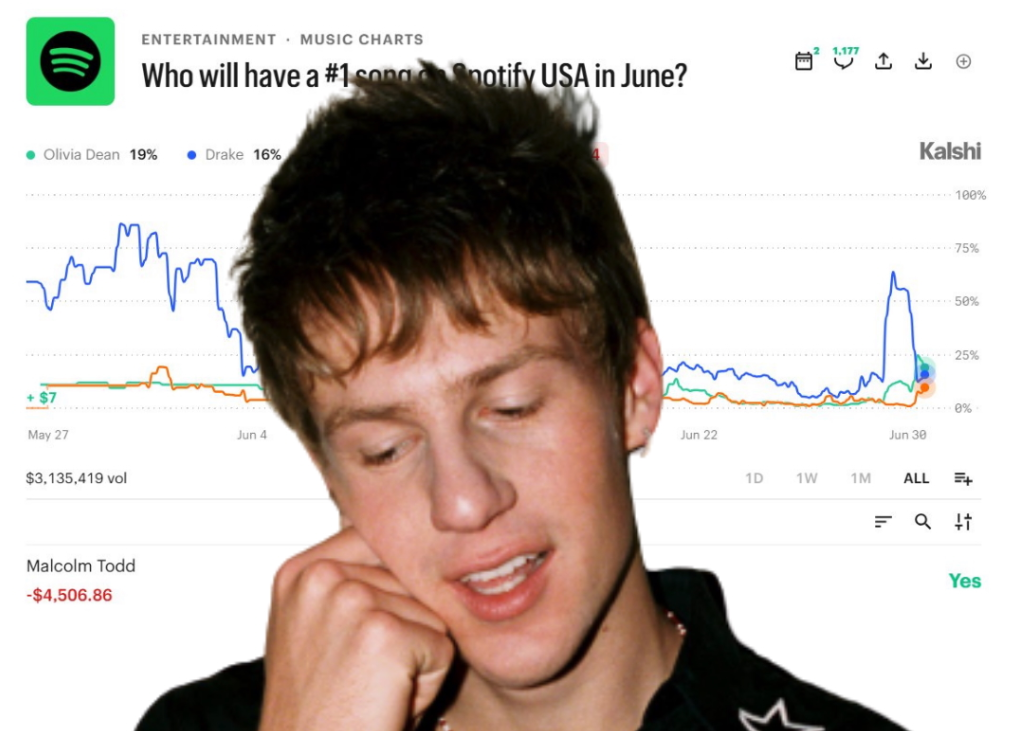
A song called “Earrings” by Malcolm Todd suddenly reached No. 1 on Spotify’s U.S. daily chart on June 30. That would usually be a music story. Maybe the song went viral. Maybe TikTok pushed it. Maybe listeners just found it at the same time.
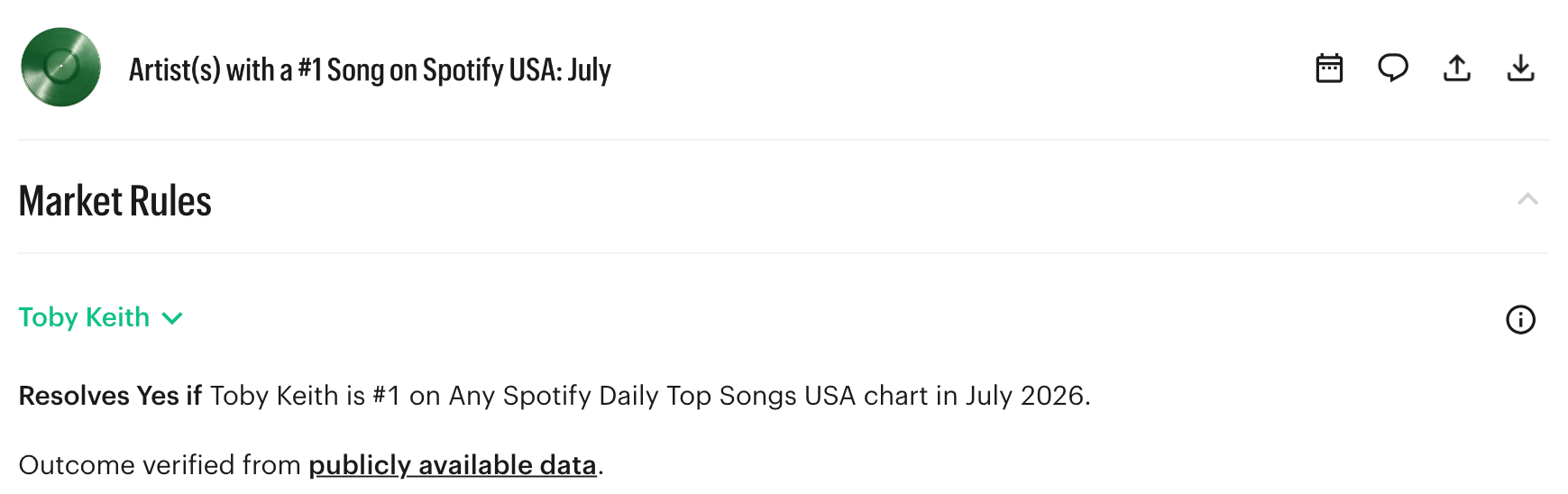
But the song was also tied to a prediction market on Kalshi. The market resolves Yes if the named artist is No. 1 on “Any Spotify Daily Top Songs USA chart in June 2026”, with the outcome verified from Spotify. The market was “Paid out 30 minutes after closing” according to the market page.
Malcolm Todd had been a long shot. Kalshi traders had priced his chance at roughly 2.5% before the dramatic move. Then Kalshi paid out, and Spotify later removed more than 500,000 artificial streams, pushing the track from 1st to 4th after review.
The problem was not simply that Spotify had fake streams. Spotify already has systems for artificial streaming. The problem was that the market paid out before Spotify’s correction arrived.
In other words, the prediction market settled on the first version of the data, not the corrected version.
That turns this from a music-industry story into a market-design story.
The incident
The trader who pushed the issue into public view was Caleb Davies, known as Gaeten Dugas on X (@GaetenD). WIRED described him as a major Kalshi culture-market trader who closely tracks Spotify data, and reported that he contacted Spotify, Kalshi, and Polymarket with concerns about what he believed was bot-driven manipulation.
Davies posted that the “Earrings” move was wildly abnormal. In one X post, he said the Sunday-to-Monday surge was an 11.24 sigma event, or roughly a 1 in 77 octillion chance of happening randomly.
As we await the final June Spotify update, one last look at how unlikely yesterday's Earrings surge was to have occurred by chance. Looking at the dataset of Sunday to Monday changes, it was a 11.24 sigma event, or a roughly 1 in 77 octillion chance of happening randomly. pic.twitter.com/Mklz784UDo
After Kalshi paid out, Davies also wrote on X that he had asked Kalshi not to pay the Spotify market until it investigated. Instead, he said, Kalshi “rushed to pay it out” and Spotify later removed the streams that gave “Earrings” the win. He lost about $4,500 on that.
Yesterday I requested that Kalshi not pay out the Spotify market until they investigated it. Instead, they rushed to pay it out mere hours later. Today, Spotify removed the streams that gave Earrings the win yesterday. It should have been in 4th place, not 1st. pic.twitter.com/YTcc6TQrZL
There are two important caveats. First, Spotify confirmed artificial streaming, but it did not confirm that the motive was prediction-market manipulation. Second, there is no public evidence that Malcolm Todd or his team were involved. Todd might simply have been an innocent bystander.
The race: manipulation, detection, payout
Spotify is not blind to artificial streaming. Its own guidance says artificial streams include streams that do not reflect genuine listening intent, including attempts to manipulate Spotify using bots or scripts. Spotify also says artificial streams do not earn royalties, do not count toward public stream numbers or charts, and do not positively influence recommendation algorithms once detected.
So Spotify has a cleaning process. The problem is timing.
Kalshi’s broader streaming-rank rules state that the underlying is the ranking published by the platform as of a given date, and that revisions made after expiration are not counted in determining the expiration value.
If Spotify catches the fake streams and removes them before the market settles, the manipulation fails. If Spotify catches them after the market settles, the exchange may already have paid the wrong side.
That means the key race is not simply between honest traders and dishonest traders. It is a race between three clocks:
The manipulator’s ability to move the metric before the market deadline
Spotify’s ability to detect and remove artificial streams
Kalshi’s payout clock
In this case, Kalshi’s payout clock appears to have been faster than Spotify’s correction clock.
But the deeper issue is not just that settlement was fast. It is that the contract used a third-party benchmark whose first reading could later be corrected, and then treated that provisional reading as final. The loophole exists when an event contract finalizes before the benchmark source has finished deciding whether the benchmark itself was real.
This is why Spotify’s anti-fraud system does not fully solve the prediction-market problem. Spotify can still clean the chart later, remove fake streams, and withhold royalties. But if the exchange has already paid out, the financial damage inside the prediction market has already happened.
For Spotify, a delayed correction may be acceptable. For a prediction market, it may be too late.
Kalshi API data shows that in the Spotify market that was manipulated, traders who put money on the wrong side of Malcolm Todd collectively lost a total of $145,000 unwittingly betting against bot streams pic.twitter.com/FykNPZBklr
No-side buyers of the Malcolm Todd contract lost roughly $145,000 in total before fees.
BTC 5 mins settlement manipulation
This case also rhymes with the issue in short-duration crypto prediction markets.
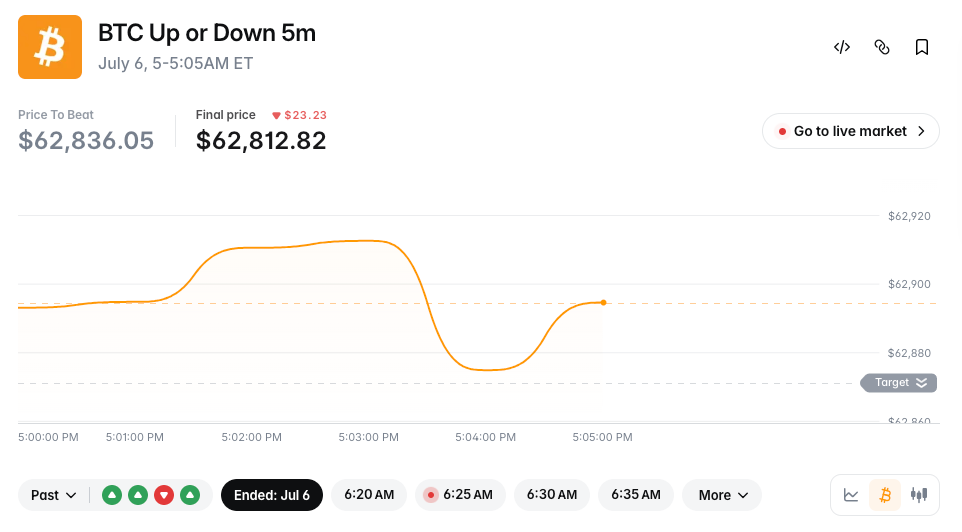
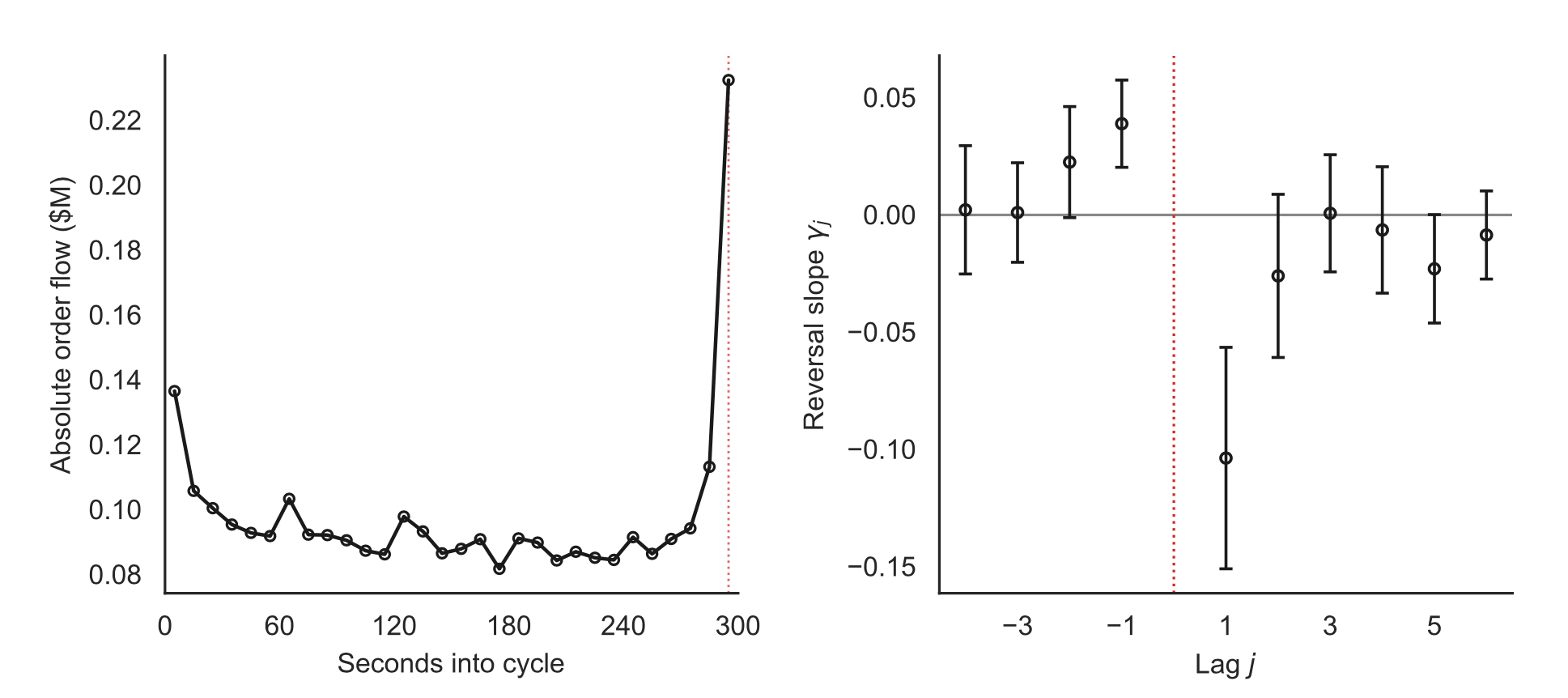
A recent paper on settlement manipulation in prediction markets studied Polymarket’s 5 mins Bitcoin contracts. The authors found that after those contracts launched, order flow spiked on the BTC spot market around when the event contract settles, and prices often reversed after settlement of the event contract.
Their interpretation is that, if a contract pays based on the BTC price at a very specific moment, traders can profit from the event contract by briefly pushing the underlying BTC spot price across the settlement threshold.
In the BTC case, the trader tries to move the price at the settlement moment. In the Spotify case, the trader tries to move the chart before the market deadline and Spotify's correction.
The exact tools are different. One uses trading in the underlying asset. The other may involve artificial streams. But the logic is similar: If a market pays on a temporary value, someone may try to manufacture that temporary value.
There is one important difference, though. A BTC price at a specific timestamp is still a real traded price, even if it was pushed around. It usually will not be “revised away”. Spotify streams are different. Spotify can later correct the stream numbers.
So BTC five-minute markets are mainly about settlement-price manipulation. The Spotify case is about settlement-source contamination.
Order flow in Binance BTC spot markets spikes right before the five-minute prediction market settles (left), and the price impact reverses shortly afterward (right) (from Dai, Jia, & Yu, 2026). This is the same basic logic as the Spotify case. The manipulator does not need to change the long-run truth, only the value used at settlement.
The third-party source problem
Spotify did not design its charts to be financial settlement infrastructure. But once exchanges create markets based on Spotify charts, those charts become settlement benchmarks.
That changes the incentives around the charts.
Before prediction markets, artificial streaming was mainly about royalties, playlist placement, social proof, or artist promotion. With prediction markets, there is a new possibility: someone can profit from the artificial streams without being the artist, the label, or the distributor. They do not need Spotify royalties. They just need the chart to hit the right number before the market pays.
That creates a weird externality. The exchange creates the financial incentives, but Spotify has to deal with the mess. It has to detect the manipulation, clean the data, protect the chart, and answer questions about a market it did not necessarily ask to be part of.
Bloomberg reported that Spotify asked Kalshi and Polymarket to remove its logo and clarify that neither company had a partnership with the streaming service. WIRED also reported that Kalshi removed Spotify’s logo from related markets and changed language that had suggested Spotify verified chart results.
Kalshi has removed Spotify's logo from this related market. However, the link embedded in the text "publicly available data" directs users to Spotify's website.
That reaction makes sense. If your data is being used to settle millions of dollars in contracts, you are no longer just a data publisher. You are being pulled into the role of an unwilling settlement agency.
The fundamental issue is not that prediction markets use outside data. They have to. The issue arises when the exchange relies on a third-party metric that can be influenced before settlement, audited after publication, and revised outside the exchange’s control. In that setting, the market is not simply importing clean information from the real world. It is importing a provisional benchmark whose validity may only be decided after traders have already been paid, subject to the source's discretion.
How should exchanges settle markets based on platform metrics like Spotify charts?
Settle immediately based on the first published resultResult
0.00%
Use the latest result as of the end of a defined windowResult
66.67%
Void the market and return all funds if the source confirms manipulation within a defined window (during which funds are withheld))Result
0.00%
It depends on the scenario (e.g., how manipulable the metric is)Result
33.33%
3 Polls
EndedTBD
If an exchange settles on the latest result available at the end of a defined review window, how long should that window be after the first result is published?
30 minutes: keep settlement fastResult
50.00%
24 hours: allow basic source checksResult
25.00%
48-72 hours: balance speed and correction possibilityResult
25.00%
7 days: prioritize accuracy over payout speedResult
0.00%
It should depend on the type of underlying metric and its manipulation riskResult
Disclaimer: The content is for informational purposes only. You should not construe any such information or other material as legal, tax, investment, financial, or other advice. Nothing contained in this article constitutes a solicitation, recommendation, endorsement, or offer by the author(s) or any third party service provider to buy or sell any securities or other financial instruments in your or in any other jurisdiction in which such solicitation or offer would be unlawful under the securities laws of such jurisdiction. The author(s) report(s) no conflict of interest.
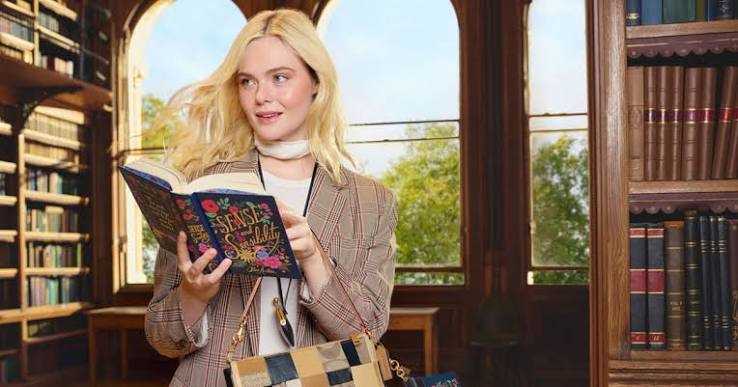
In February 2026, during New York Fashion Week, Elle Fanning sat in the front row of Coach's runway show with a Tabby bag on her lap and a miniature leather-bound edition of Sense and Sensibility dangling from its handle. The image ran on the cover of Vogue, WWD, and Harper's Bazaar within hours, and quickly spread across BookTok to an audience with no connection to fashion week whatsoever. The book charm retailed at $120. When it went on sale globally on March 7, several styles sold out within hours.
Where This Comes From
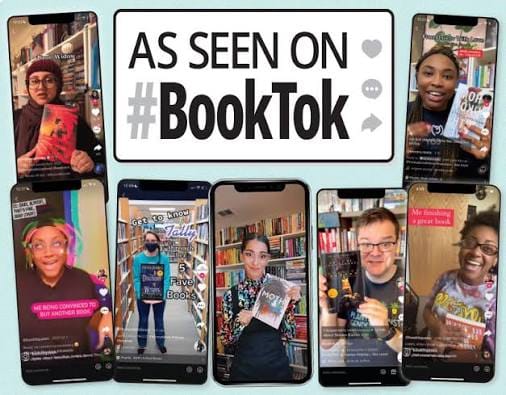
The conditions for this moment have been building for years. The #BookTok hashtag has accumulated over 200 billion views on TikTok. Forty-five percent of TikTok users say they have purchased a book after seeing it recommended on the platform, and titles that enter the BookTok ecosystem see average sales increases of 600%. Physical book revenue has grown 40% over the past decade. Barnes & Noble opened nearly 70 new stores in 2025 alone — a figure that would have seemed almost unimaginable at the height of the streaming era.The demographic driving this trend is Gen Z, and the apparent contradiction they present is worth examining. This is a generation raised on short-form video, algorithmic feeds, and near-constant digital stimulation — and yet, in significant numbers, they have turned to books as a site of identity formation and self-expression. Coach's chief marketing officer Joon Silverstein addressed this head-on at the campaign launch: "Gen Z doesn't experience identity on a single track." In that context, the book charm is not a rejection of screens — it is an extension of the same impulse that leads someone to post their reading list, annotate their margins, and carry a physical object that says something about who they are.
The Collaboration and What It Created
The Coach × Penguin Random House partnership centered on twelve miniature leather book charms, each containing a complete, readable text. The selection — including I Know Why the Caged Bird Sings, Sense and Sensibility, and Glennon Doyle's Untamed — was developed in consultation with Reese Witherspoon's Sunnie book club, lending the project a sense of curatorial purpose beyond pure merchandising. The campaign's geographic scope was deliberately broad: activations ran across the United States, China, Japan, and South Korea, with partners including Penguin Random House, the WNBA, and Bilibili. Coach retrofitted stores in key markets with dedicated "Book Nook" sections, while a university campus tour ran in parallel with the retail launch.The commercial results were unambiguous. The charms sold out at launch. Coach's parent company Tapestry reported a 25% revenue increase in the same quarter, alongside a 40% year-on-year rise in marketing spend — figures that suggest the campaign's impact went well beyond brand conversation. Penguin Random House's vice president was direct in his assessment: "This was a huge success." At the 2026 PEN America Literary Gala, actor and writer B.J. Novak delivered what became the evening's most-quoted line: "Reading is glamorous." Multiple outlets immediately identified it as the most precise summary of what the Coach campaign had accomplished.
Where the Industry Stands
Coach was not the first luxury brand to gesture toward literary culture — Valentino sponsored the Booker Prize in 2024, and Saint Laurent has operated a curated bookshop in Paris for several years. But the Coach × Penguin Random House collaboration represented a different order of scale and commitment. Since its launch, Dior incorporated book cover imagery into its Spring 2026 menswear under Jonathan Anderson, Prada partnered with writer Ottessa Moshfegh on a limited-edition literary campaign in 2025, and Miu Miu launched its Summer Reads activation across London, Paris, and Seoul.What remains open is whether this movement will reach the very top of the industry. Chanel, Gucci, and Louis Vuitton — the brands most associated with setting the direction of fashion rather than following it — have yet to make any formal statement within the "reading as fashion" framework. Yet each carries a brand identity with genuine potential connections to literary culture: Chanel's longstanding association with the intellectual woman, Gucci's history of layering cultural references, Louis Vuitton's core narrative of travel and aspiration, into which a book as a travel companion fits naturally. Whether any of them acts on that potential in the coming months will go a long way toward determining whether this moment is a passing trend or a genuine structural shift.
How many of Chanel, Gucci, and Louis Vuitton will formally incorporate a books-themed collaboration or campaign narrative into their collections?