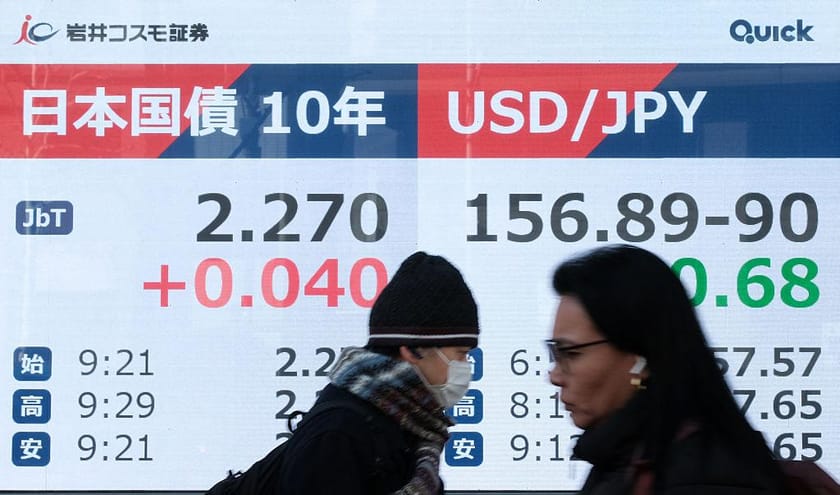
Japan’s borrowing costs have climbed to their highest in 30 years as investors grow increasingly concerned about the country’s heavy debt burden, weakening yen and a $2.3 trillion long-term spending plan proposed by Prime Minister Sanae Takaichi.
A sharp sell-off in Japanese government bonds has pushed the benchmark 10-year Japanese Government Bond (JGB) yield to 2.87%, its highest level since 1996. The 30-year JGB yield has risen above 4.0%, hovering close to its record intraday high of 4.2% reached in May 2026. Meanwhile, the Bank of Japan (BOJ) raised its short-term policy rate to 1.0% last month, the highest level in 31 years, as inflation remains above its 2.0% target.
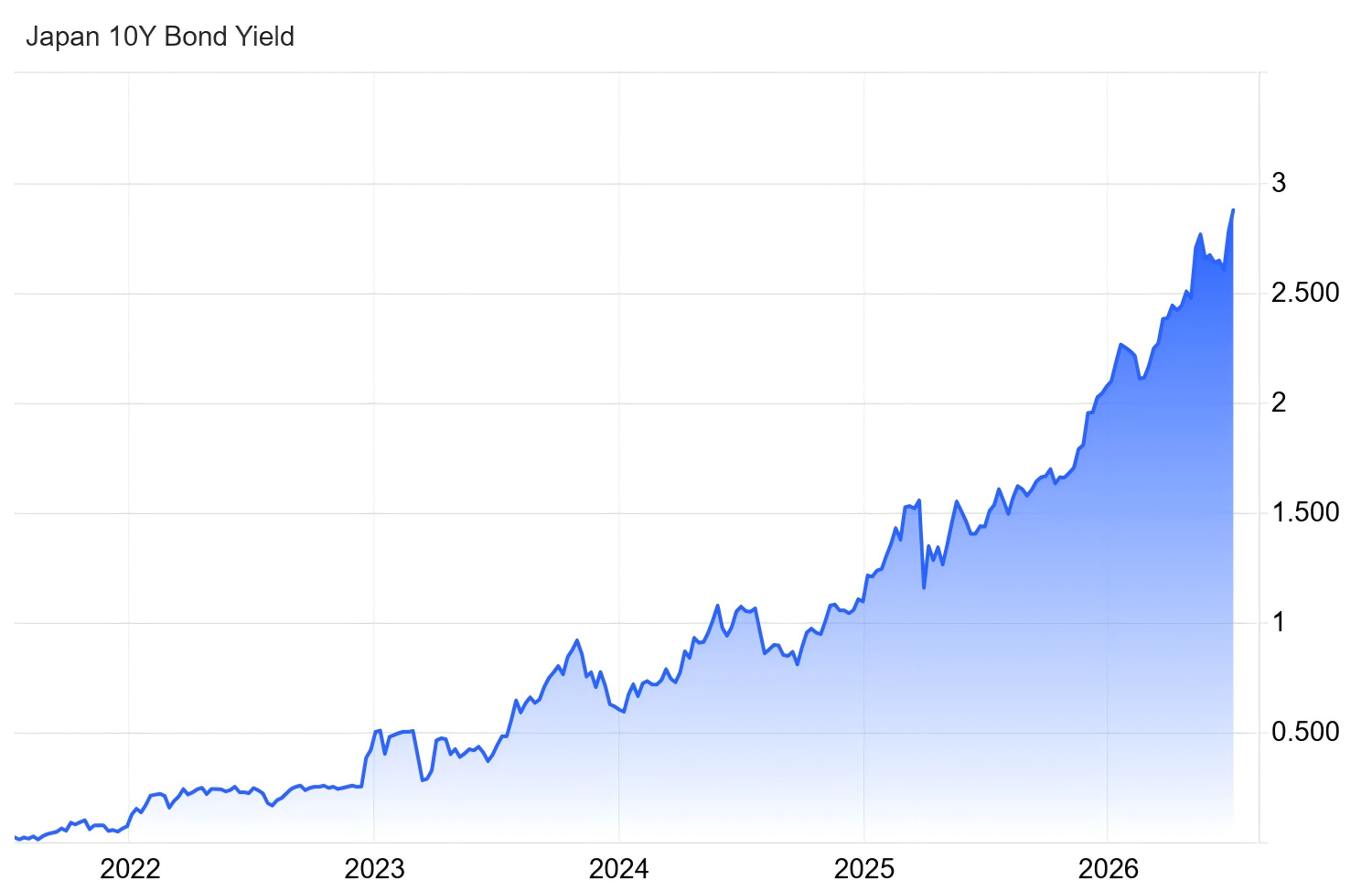
For decades, Japan was able to sustain government debt exceeding 200% of GDP because ultra-low interest rates and the BOJ's large-scale purchases of government bonds kept borrowing costs exceptionally low. That model is now being tested as the central bank normalizes monetary policy and gradually reduces its support for the bond market, prompting investors to demand higher yields on long-term government debt.
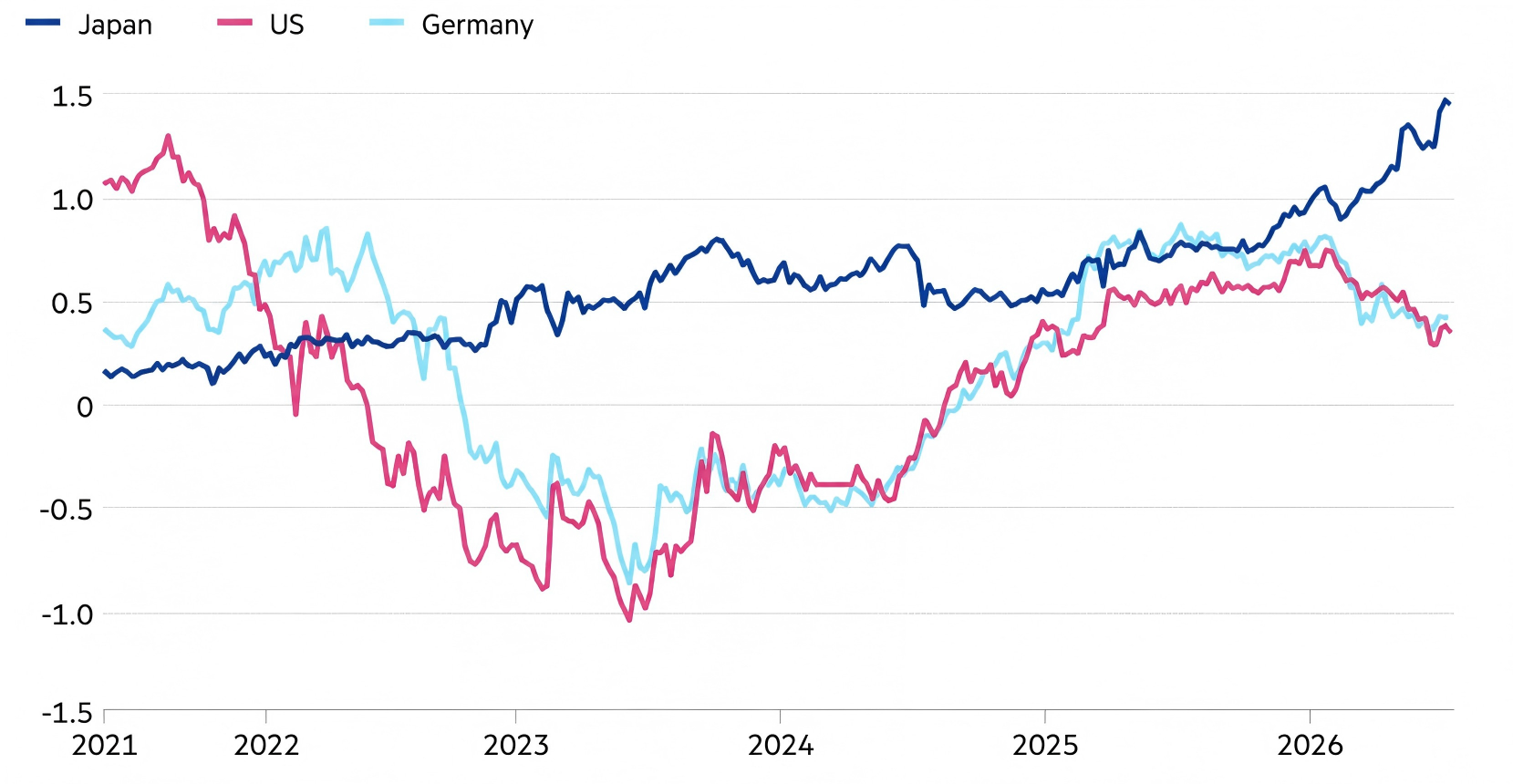
Investor concerns have intensified after Takaichi unveiled a $2.3 trillion fiscal spending plan to be implemented over the next 14 years, raising fresh questions about Japan's long-term fiscal sustainability. The growing anxiety is also reflected in the yield curve. The spread between Japan's 10-year and 2-year government bond yields has widened from less than 1.0 percentage point in April to approximately 1.4 percentage points, while equivalent yield spreads in the United States and Germany have remained flat or declined.
Stephen Spratt, a rates strategist at Société Générale, said Japan could face mounting scrutiny if the 10-year JGB yield climbs toward 3%, as higher borrowing costs risk outpacing government revenue growth and worsening the country's debt dynamics.
"We think the tipping point is somewhere above 3%, but investors will likely begin asking questions once the 10-year yield reaches 3%," Spratt said.
Will Japan's 10-year government bond yield reach 3.0% before 2026?
Higher borrowing costs are increasing pressure on Japan's public finances. Japan's government debt remains above 200% of GDP—the highest among major advanced economies—and rising refinancing costs could further increase interest payments, putting additional strain on the country's fiscal position.
The implications could also extend beyond Japan. Some institutional investors warn that a further rise in JGB yields could attract capital away from other sovereign bond markets, pushing global borrowing costs higher. Countries such as the United Kingdom, where long-term borrowing costs have already reached multi-decade highs earlier this year, could also come under additional pressure.
"That's the risk, that it creates a global sell-off," said Ludovic Subran, Chief Investment Officer at Allianz, adding that Japan's bond market could become "one more layer" of stress for global financial markets.
Source: https://www.ft.com/content/851aa883-073f-4423-a43e-9b09fdbe7c86?syn-25a6b1a6=1