The US military launched strikes on Iran Sunday aimed at further weakening the country’s ability to attack civilian vessels transiting the Strait of Hormuz, the US Central Command said. The latest action followed Iranian drone and missile attacks on US allies including Kuwait, Jordan and Qatar.
Iran’s Islamic Revolutionary Guard Corps set fire to several large missile depots and fuel storage tanks at Prince Hassan Air Base in Jordan, using missiles and drones, Iran’s state-run Islamic Republic News Agency reports in X post.
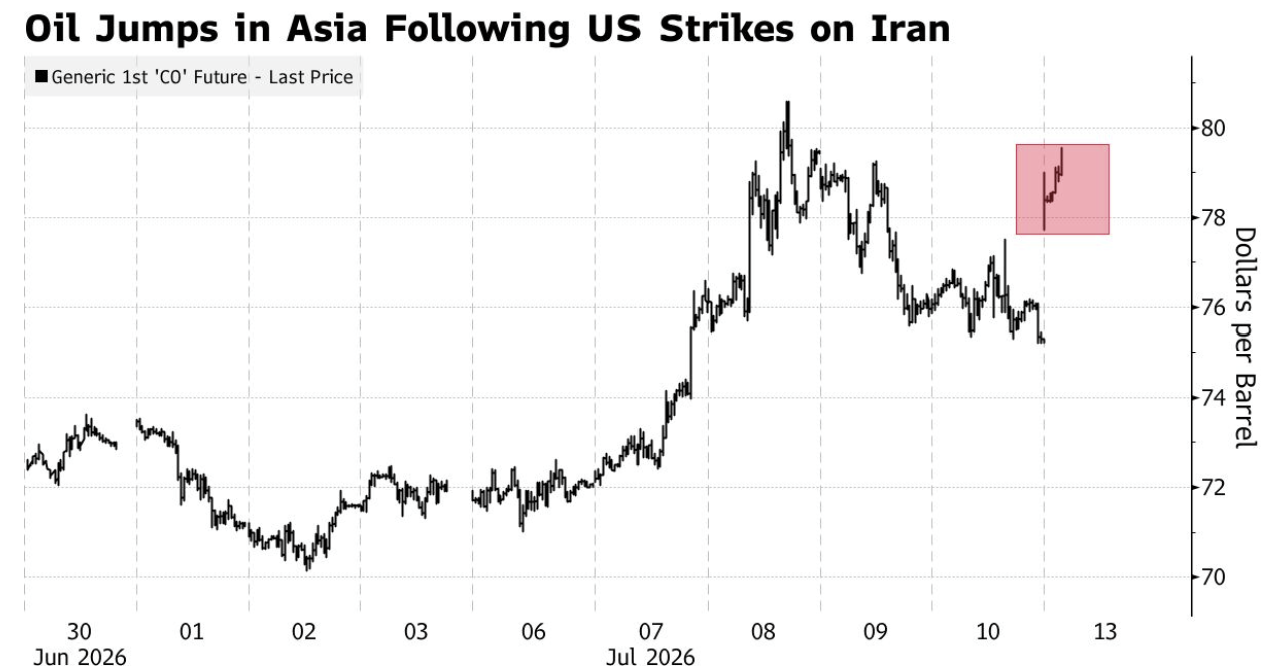
Oil rose and Treasuries fell after this round of strikes against Iran, aggravate uncertainty that higher energy prices will keep inflation elevated and interest rates higher for longer.
Brent crude climbed to $79 a barrel as conflicting claims over the status of the Strait of Hormuz fueled speculation about potential supply disruptions. Treasuries dropped across the curve with the yield on the rate-sensitive two-year note climbing three basis points to 4.24%, the highest since February 2025. Australian and Japanese sovereign bonds also fell, while the dollar strengthened against most of its Group-of-10 peers.
In other corners of the market, precious metals declined, with gold losing 1.2% to about $4,070 an ounce, while silver dropped 2.5%, as higher oil prices and inflation concerns boost the prospect for higher interest rates.
Meanwhile, traders have ramped up bets on further tightening, with swaps pricing almost 40 basis points of Federal Reserve rate hikes by December, up from about 15 basis points in early June.
Fed Chair Kevin Warsh will also make his first congressional appearance since taking the helm after pledging to scale back forward guidance on the rate outlook. Earlier this month in Sintra, Portugal, Warsh said price risks have come down in recent weeks and repeated his determination to bring inflation back to the US central bank’s 2% target.